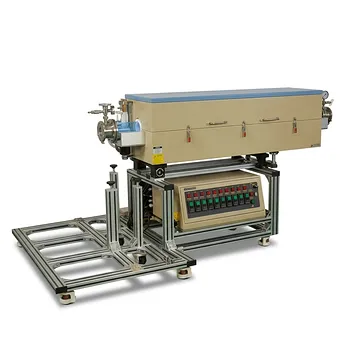
What role does a high-temperature tube furnace play in CeO2 thin film preparation? Achieving Atomic Surface Perfection
Updated 3 months ago
A high-temperature tube furnace is the critical instrument used to drive the atomic-scale restructuring required to achieve surface perfection in cerium oxide (CeO2) thin films. It provides a precisely controlled thermal annealing environment that facilitates the diffusion and rearrangement of surface atoms, effectively "healing" the film. This process transforms an initially porous or rough deposit into an atomically flat terrace structure by eliminating physical defects such as pits, cracks, and surface irregularities.
The high-temperature tube furnace acts as a catalyst for morphological evolution, using stable thermal energy to transition CeO2 films from a disordered, rough state into a highly ordered, atomically flat crystalline phase.
Driving Surface Morphology and Atomic Flatness
Facilitating Surface Atom Diffusion
The primary role of the furnace is to provide the thermal energy necessary for atoms to overcome energy barriers and move across the film surface. This atomic diffusion allows the material to migrate from high-energy peaks to low-energy valleys.
Elimination of Structural Defects
During the annealing process, the stable heat environment effectively "fills" microscopic pits and bridges cracks that occur during initial deposition. By removing these irregularities, the furnace ensures the film reaches a state of structural continuity and mechanical integrity.
Creation of Terrace Structures
The ultimate goal of using a tube furnace for CeO2 is the formation of atomically flat terraces. The controlled temperature allows atoms to self-assemble into discrete, repeating steps that are essential for high-performance epitaxial growth and advanced electronic applications.
Managing Phase Transitions and Purity
Transition to Cubic Fluorite Structure
Beyond surface flatness, the furnace triggers the phase transition from an amorphous or disordered state to a cubic fluorite crystal structure. In CeO2 specifically, temperatures around 500°C are often required to finalize this crystalline arrangement.
Removal of Volatile Impurities
The high-temperature environment ensures the complete volatilization of organic residues and precursors. By maintaining a clean thermal field, the furnace prevents contaminants from being trapped within the lattice, which would otherwise disrupt the atomic flatness.
Optimization of Interface Energy
Thermal treatment within the furnace helps to relax residual stresses at the interface between the CeO2 film and the substrate. This optimization of interface energy levels is vital for ensuring the film remains flat and does not delaminate or buckle over time.
Understanding the Trade-offs
Temperature Precision vs. Grain Growth
While high temperatures are necessary for atomic mobility, excessive heat can lead to unwanted grain growth. If the temperature is too high or the duration too long, the film may develop large crystalline grains that actually increase surface roughness, defeating the purpose of the annealing step.
Atmospheric Influence
The choice of atmosphere within the tube (e.g., air vs. inert gas) significantly impacts the oxygen stoichiometry of the CeO2. An incorrect atmosphere can lead to oxygen vacancies that alter the electrical properties of the film, even if the surface appears physically flat.
Substrate Compatibility
High-temperature processing requires a substrate that can withstand the thermal cycle without deforming. If there is a significant thermal expansion mismatch between the CeO2 and the substrate, the cooling phase can introduce new cracks, undermining the flatness achieved at peak temperature.
How to Apply This to Your Project
Making the Right Choice for Your Goal
- If your primary focus is achieving maximum surface smoothness: Prioritize a furnace with high thermal stability and a slow cooling ramp to allow atoms sufficient time to settle into terrace structures.
- If your primary focus is high-purity crystalline phases: Ensure the furnace environment is strictly controlled for atmospheric purity to prevent the re-incorporation of volatile contaminants during the phase transition.
- If your primary focus is substrate-film adhesion: Focus on optimizing the annealing duration to relieve interface stresses without triggering excessive grain boundary diffusion.
By mastering the thermal environment of a tube furnace, researchers can transition CeO2 from a simple coating into a sophisticated, atomically engineered thin film.
Summary Table:
| Key Process | Impact on CeO2 Thin Film | Critical Furnace Requirement |
|---|---|---|
| Atomic Diffusion | Eliminates peaks/valleys to create terrace structures | High thermal stability |
| Defect Elimination | Bridges microscopic cracks and fills structural pits | Uniform heating field |
| Phase Transition | Triggers transition to cubic fluorite crystal structure | Precise temperature control |
| Impurity Removal | Volatilizes organic residues for high-purity films | Controlled atmosphere/venting |
| Stress Relaxation | Optimizes interface energy to prevent delamination | Controlled cooling ramp |
Elevate Your Material Research with THERMUNITS Precision
Achieving atomically flat surfaces requires more than just heat—it requires the absolute precision and atmospheric control found in THERMUNITS high-temperature laboratory equipment. As a leading manufacturer for material science and industrial R&D, we empower researchers to master thermal processing with reliability and ease.
Our comprehensive range of solutions includes:
- Furnaces: Tube, Muffle, Vacuum, Atmosphere, Rotary, Hot Press, and Dental Furnaces.
- Advanced Systems: CVD/PECVD systems, Vacuum Induction Melting (VIM) furnaces, and Electric Rotary Kilns.
- Components: High-quality Thermal Elements and specialized heat treatment accessories.
Ready to transform your CeO2 thin film preparation or advanced material synthesis? Contact our technical team today to find the perfect thermal solution tailored to your laboratory's specific needs!
References
- Jan‐Christian Schober, Andreas Stierle. Atomically Smooth Fully Hydroxylated CeO<sub>2</sub>(001) Films on YSZ(001). DOI: 10.1021/acs.jpcc.4c04438
Mentioned Products
- High Temperature Tube Furnace 1500C with Sliding Flanges and 50mm OD for Rapid Thermal Processing Fast Heating and Cooling
- High Temperature 1700C Tube Furnace with High Vacuum Turbomolecular Pump System and Multi Channel Mass Flow Controller Gas Mixer
- High Temperature 1700C Benchtop Tube Furnace with 5 Inch Heating Zone High Purity Alumina Tube and Vacuum Sealing Flanges
- 1750°C High Temperature Benchtop Vacuum Atmosphere Tube Furnace with Kanthal Super 1800 Heating Elements and 60mm Alumina Processing Tube
- Compact High Temperature 1600C Tube Furnace with 50mm Alumina Tube and Vacuum Flanges for Material Sintering
People Also Ask
- How are high-temperature tube furnaces utilized to repair etching damage? Precision Lattice Restoration Solutions
- What core conditions does a high-temperature tube furnace provide for rGO aerogels? Mastering Precision Synthesis.
- What role does a high-temperature tube furnace play in CVD synthesis of silicon nanowires? Master VLS Growth Precision.
- How does precision tube furnace control influence CoFe nanoparticle formation? Master Your Bimetallic Synthesis.
- What role does a high-temperature tube furnace play in the sulfidation heat treatment of CoS@C/MXene nanocomposites? Guide

Tech Team · ThermUnits
Last updated on Jun 02, 2026
Related Products
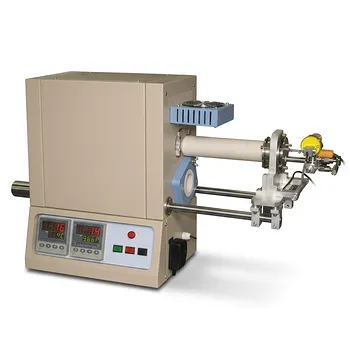
High Temperature Tube Furnace 1500C with Sliding Flanges and 50mm OD for Rapid Thermal Processing Fast Heating and Cooling
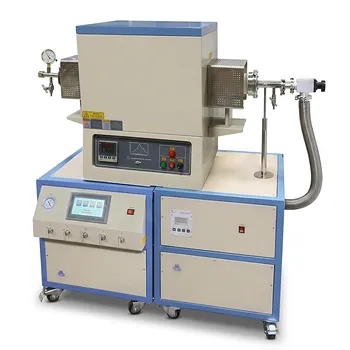
High Temperature 1700C Tube Furnace with High Vacuum Turbomolecular Pump System and Multi Channel Mass Flow Controller Gas Mixer

High Temperature 1700C Benchtop Tube Furnace with 5 Inch Heating Zone High Purity Alumina Tube and Vacuum Sealing Flanges
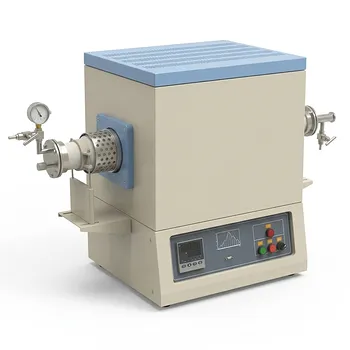
1750°C High Temperature Benchtop Vacuum Atmosphere Tube Furnace with Kanthal Super 1800 Heating Elements and 60mm Alumina Processing Tube
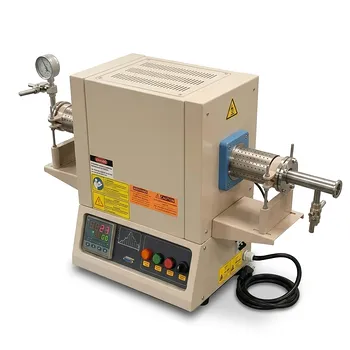
Compact High Temperature 1600C Tube Furnace with 50mm Alumina Tube and Vacuum Flanges for Material Sintering
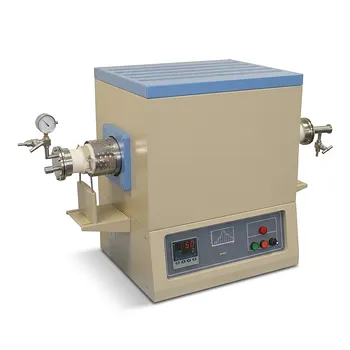
1700C High Temperature Alumina Tube Furnace with 18 Inch Heated Zone and Vacuum Sealing Flanges

1800C High Temperature Compact Vacuum Tube Furnace with 60mm OD Alumina Tube and Kanthal MoSi2 Heating Elements
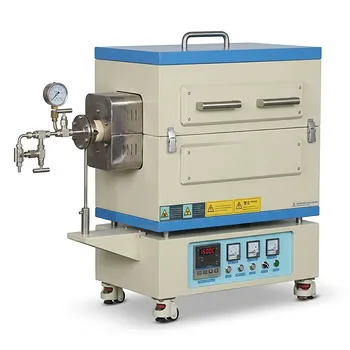
High Temperature Split Tube Furnace 1500C for Material Research Vacuum and Atmosphere Thermal Processing

High Temperature 1700C Vertical Tube Furnace for Powder Spherification and Material Sintering
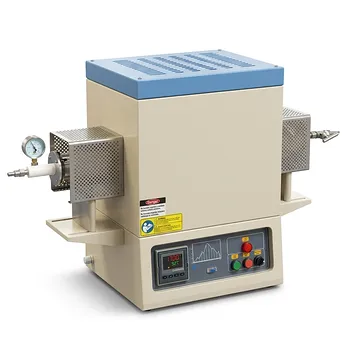
High Temperature Three Zone Tube Furnace 1700C with Alumina Tube and Water Cooled Flanges
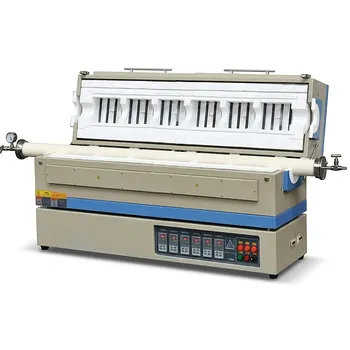
High Temperature 1700C Six Zone Split Tube Furnace with Alumina Tube and Water Cooled Flanges
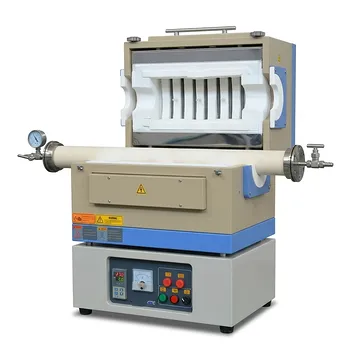
High Temperature 1600C Split Tube Furnace Vacuum Flanges Valves Optional 60mm 80mm Alumina Tube

High Temperature Automated 5 Inch Tube Furnace for Autonomous Material Research and Advanced Laboratory R&D
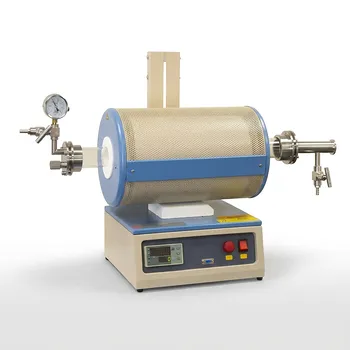
1100C Tube Furnace with Vacuum Flange and Programmable Temperature Controller for Material Science and Industrial Heat Treatment
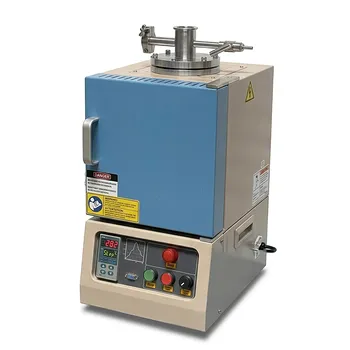
High Temperature Hybrid Muffle and Tube Furnace with Vacuum Capability and PID Control
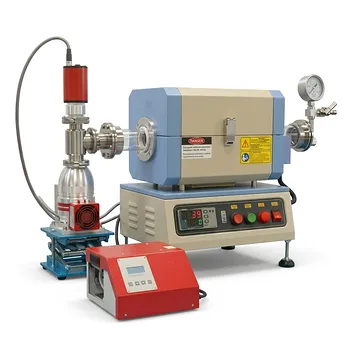
High Vacuum Compact Tube Furnace 1200C with Integrated Turbo Pump System and 8 Inch Heating Zone
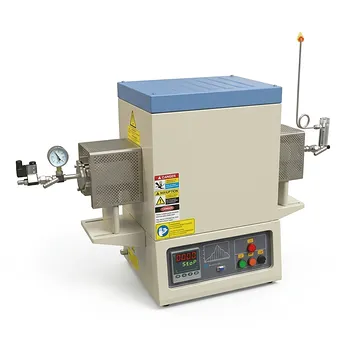
1700C Hydrogen Gas Tube Furnace with 60mm Alumina Process Tube and Integrated Hydrogen Safety Detector
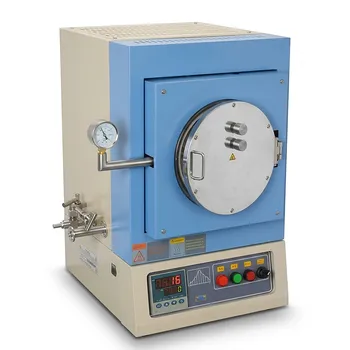
1100°C High Temperature Quartz Chamber Furnace 8 Inch OD with 7.6 Liter Capacity and Vacuum Atmosphere Capability
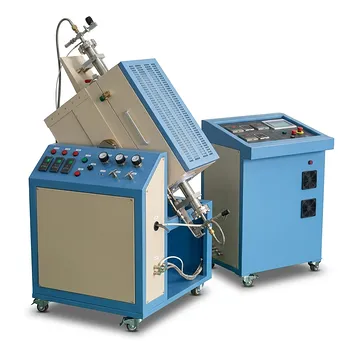
1100C High Pressure Rocking Tube Furnace with 2 Inch Super Alloy Processing Tube for Material Synthesis