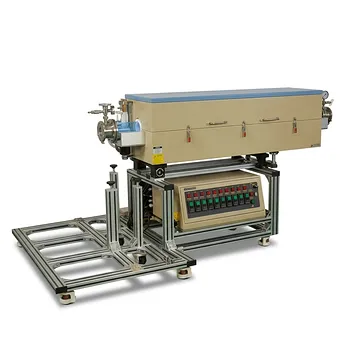
What role does a High-Temperature Tube Furnace play in the preparation of carbon nanosheets? Expert Catalyst Synthesis
Updated 3 months ago
The high-temperature tube furnace serves as the indispensable thermal reactor for the precise synthesis of heteroatom-doped carbon nanosheets. In this role, the furnace provides a strictly controlled inert atmosphere and specific temperature gradients—typically reaching 500°C and 920°C—to facilitate the pyrolysis of precursors. It acts as the primary driver for in-situ etching and the atomic rearrangement required to anchor iron, nitrogen, and sulfur atoms into high-efficiency, single-atom catalytic active centers within a high-surface-area lattice.
Core Takeaway: The high-temperature tube furnace provides the thermal energy and atmospheric isolation necessary to transform organic precursors into structured carbon nanosheets. By enabling precise temperature control, it drives the chemical coordination of iron with multiple heteroatoms to create specific catalytic active sites.
Providing the Controlled Chemical Environment
Atmospheric Isolation and Protection
The primary role of the furnace is to maintain a strictly inert atmosphere, such as Argon or high-purity Nitrogen. This environment is critical because it prevents the carbon structure from being lost to oxidation at extreme temperatures.
By ensuring a high-quality seal, the furnace allows the polymer or metal-organic framework (MOF) precursors to undergo carbonization rather than combustion. This preservation is what enables the formation of a highly conductive and stable carbon framework.
Precision Temperature Gradient Control
Synthesis of multi-heteroatom sites requires specific thermal stages, such as a multi-step process at 500°C and 920°C. The furnace’s control system manages these gradients to ensure that precursors decompose at the correct rate.
These precise temperatures are essential for driving dehydrogenation and polycondensation reactions. Without this level of control, the delicate balance of atomic migration would be lost, resulting in bulk clusters instead of the desired single-atom sites.
Driving Structural and Atomic Engineering
Facilitating In-Situ Etching and Exfoliation
The furnace provides the thermal driving force for agents like Potassium Thiocyanate (KSCN) to perform in-situ etching of the carbon structure. This process is what transforms a bulk ZIF-8 derived material into a nanosheet morphology.
The heat induces reactions that act as "pore-creating" agents, producing gases that expand the carbon layers. This results in a material with a high specific surface area, which is vital for exposing active catalytic sites to reactants.
Atomic Rearrangement and Heteroatom Coordination
High-temperature treatment (pyrolysis) allows for the rearrangement of iron (Fe), nitrogen (N), and sulfur (S) atoms within the carbon lattice. The furnace provides the energy needed to break existing chemical bonds and reform them into stable Fe-N-S coordination complexes.
These complexes serve as the high-efficiency single-atom catalytic active centers. The furnace ensures these atoms are "locked" into the lattice, preventing them from leaching or aggregating during subsequent use.
Understanding the Technical Trade-offs
Thermal Uniformity vs. Scale
Achieving a uniform temperature throughout the entire tube is a constant challenge in high-temperature synthesis. If the center of the precursor is cooler than the exterior, the degree of graphitization and heteroatom doping will be inconsistent across the batch.
Ramp Rates and Structural Integrity
The speed at which the furnace reaches its target temperature, known as the ramp rate, significantly impacts the final pore structure. A ramp rate that is too aggressive can cause the rapid release of gases, potentially shattering the nanosheet structure and reducing the effective surface area.
Atmospheric Purity and Contamination
Even trace amounts of oxygen leaking into the tube can poison the catalyst or oxidize the iron sites. Maintaining a strict oxygen-free environment is technically demanding but non-negotiable for producing high-performance electrocatalysts.
Implementing Precise Thermal Control for Your Synthesis
How to Apply This to Your Project
To achieve the best results when preparing carbon nanosheets with coordinated active sites, you should tailor your furnace settings based on your specific material requirements.
- If your primary focus is maximizing catalytic activity: Prioritize precise soaking times at the highest temperature (e.g., 920°C) to ensure full coordination of the Fe-N-S sites.
- If your primary focus is high surface area and porosity: Utilize slower ramp rates and optimize the concentration of etching agents like KSCN or KOH within the 500°C to 700°C range.
- If your primary focus is electrical conductivity: Ensure a strictly inert nitrogen or argon flow at temperatures above 900°C to promote a high degree of carbon graphitization.
By mastering the thermal and atmospheric parameters of the tube furnace, you can precisely engineer the atomic landscape of carbon nanosheets for superior catalytic performance.
Summary Table:
| Furnace Function | Effect on Nanosheets | Key Technical Parameter |
|---|---|---|
| Atmospheric Isolation | Prevents oxidation; ensures carbonization | High-purity Argon/Nitrogen flow |
| Temperature Gradients | Drives dehydrogenation & polycondensation | Precise multi-step control (500°C-920°C) |
| In-situ Etching | Facilitates exfoliation & high surface area | Controlled thermal driving force |
| Atomic Rearrangement | Anchors Fe-N-S into catalytic active sites | Uniform high-temp energy input |
Elevate Your Material Synthesis with THERMUNITS Precision Solutions
Achieving high-efficiency single-atom catalytic sites requires the extreme precision offered by THERMUNITS thermal systems. As a leading manufacturer of high-temperature laboratory equipment for material science and industrial R&D, we offer a comprehensive range of solutions including Tube Furnaces, CVD/PECVD systems, Vacuum, Atmosphere, and Rotary furnaces.
Our equipment is engineered to ensure the strict atmospheric isolation and thermal uniformity critical for successful heteroatom coordination and nanosheet morphology. Partner with THERMUNITS to bring expert-level heat treatment to your laboratory.
Contact Our Experts Today to Request a Quote
References
- Shichao Peng, Chuanbao Cao. One‐Pot Etching Pyrolysis to Defect‐Rich Carbon Nanosheets to Construct Multiheteroatom‐Coordinated Iron Sites for Efficient Oxygen Reduction. DOI: 10.1002/smll.202310637
Mentioned Products
- High Temperature Tube Furnace 1500C with Sliding Flanges and 50mm OD for Rapid Thermal Processing Fast Heating and Cooling
- High Temperature 1700C Tube Furnace with High Vacuum Turbomolecular Pump System and Multi Channel Mass Flow Controller Gas Mixer
- High Temperature 1700C Benchtop Tube Furnace with 5 Inch Heating Zone High Purity Alumina Tube and Vacuum Sealing Flanges
- 1750°C High Temperature Benchtop Vacuum Atmosphere Tube Furnace with Kanthal Super 1800 Heating Elements and 60mm Alumina Processing Tube
- Compact High Temperature 1600C Tube Furnace with 50mm Alumina Tube and Vacuum Flanges for Material Sintering
People Also Ask
- How are high-temperature tube furnaces utilized to repair etching damage? Precision Lattice Restoration Solutions
- What role does a high-temperature tube furnace play in CVD synthesis of silicon nanowires? Master VLS Growth Precision.
- What role does a high-temperature tube furnace play in the sulfidation heat treatment of CoS@C/MXene nanocomposites? Guide
- How does precision tube furnace control influence CoFe nanoparticle formation? Master Your Bimetallic Synthesis.
- What core conditions does a high-temperature tube furnace provide for rGO aerogels? Mastering Precision Synthesis.

Tech Team · ThermUnits
Last updated on Jun 03, 2026
Related Products
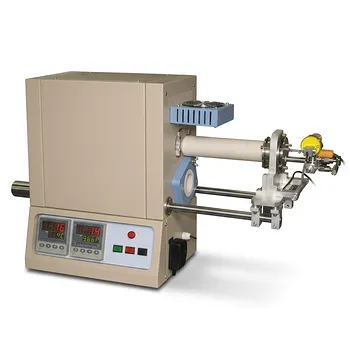
High Temperature Tube Furnace 1500C with Sliding Flanges and 50mm OD for Rapid Thermal Processing Fast Heating and Cooling

High Temperature 1700C Tube Furnace with High Vacuum Turbomolecular Pump System and Multi Channel Mass Flow Controller Gas Mixer
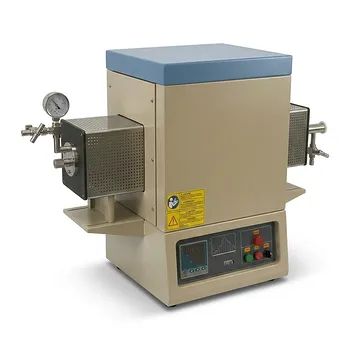
High Temperature 1700C Benchtop Tube Furnace with 5 Inch Heating Zone High Purity Alumina Tube and Vacuum Sealing Flanges
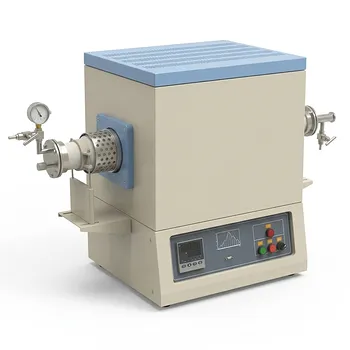
1750°C High Temperature Benchtop Vacuum Atmosphere Tube Furnace with Kanthal Super 1800 Heating Elements and 60mm Alumina Processing Tube

Compact High Temperature 1600C Tube Furnace with 50mm Alumina Tube and Vacuum Flanges for Material Sintering
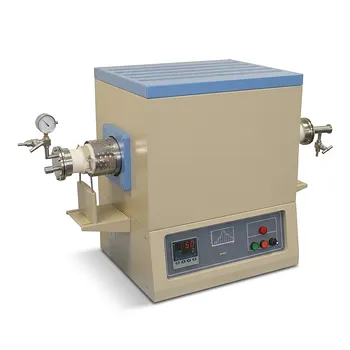
1700C High Temperature Alumina Tube Furnace with 18 Inch Heated Zone and Vacuum Sealing Flanges

1800C High Temperature Compact Vacuum Tube Furnace with 60mm OD Alumina Tube and Kanthal MoSi2 Heating Elements
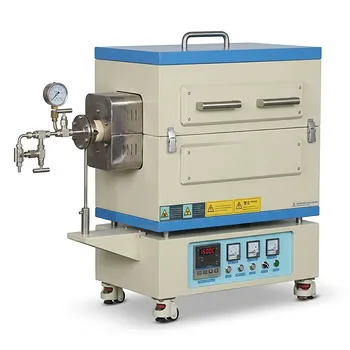
High Temperature Split Tube Furnace 1500C for Material Research Vacuum and Atmosphere Thermal Processing

High Temperature 1700C Vertical Tube Furnace for Powder Spherification and Material Sintering
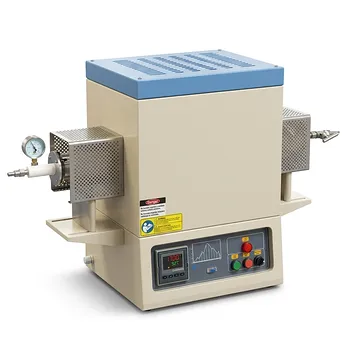
High Temperature Three Zone Tube Furnace 1700C with Alumina Tube and Water Cooled Flanges
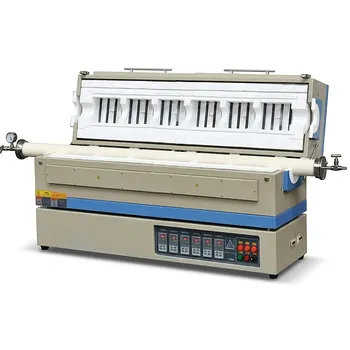
High Temperature 1700C Six Zone Split Tube Furnace with Alumina Tube and Water Cooled Flanges
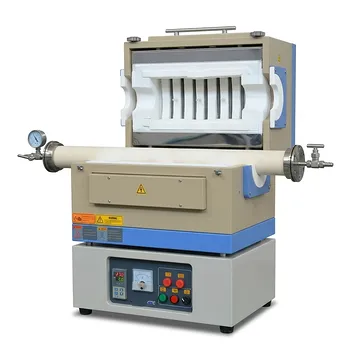
High Temperature 1600C Split Tube Furnace Vacuum Flanges Valves Optional 60mm 80mm Alumina Tube

High Temperature Automated 5 Inch Tube Furnace for Autonomous Material Research and Advanced Laboratory R&D
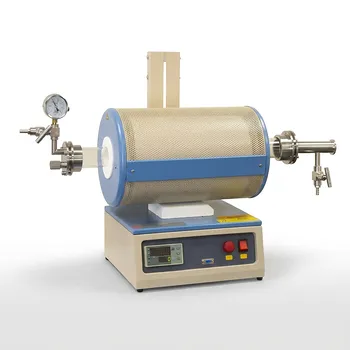
1100C Tube Furnace with Vacuum Flange and Programmable Temperature Controller for Material Science and Industrial Heat Treatment
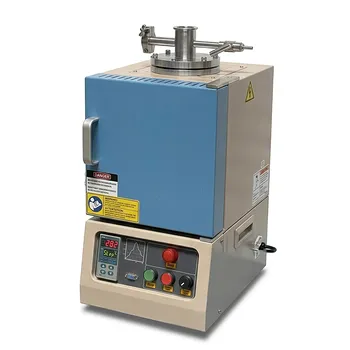
High Temperature Hybrid Muffle and Tube Furnace with Vacuum Capability and PID Control
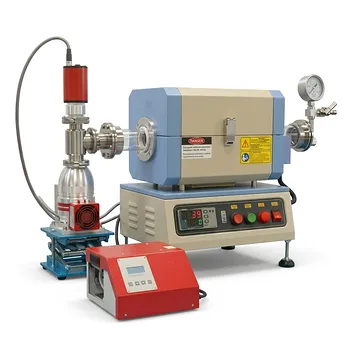
High Vacuum Compact Tube Furnace 1200C with Integrated Turbo Pump System and 8 Inch Heating Zone
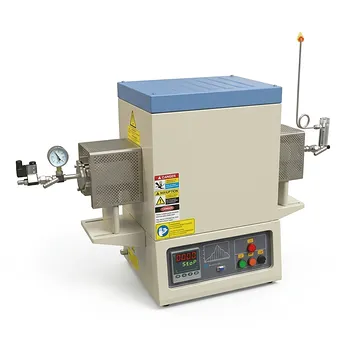
1700C Hydrogen Gas Tube Furnace with 60mm Alumina Process Tube and Integrated Hydrogen Safety Detector
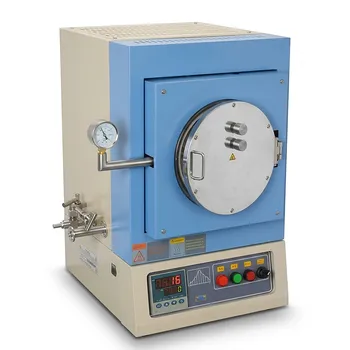
1100°C High Temperature Quartz Chamber Furnace 8 Inch OD with 7.6 Liter Capacity and Vacuum Atmosphere Capability
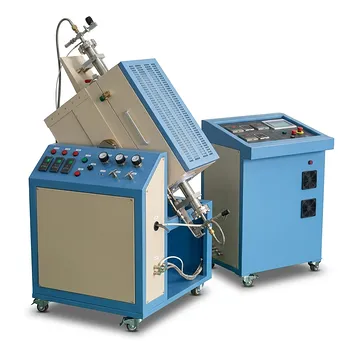
1100C High Pressure Rocking Tube Furnace with 2 Inch Super Alloy Processing Tube for Material Synthesis