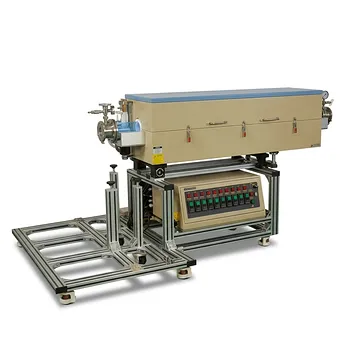
What role does a high-temperature tube furnace play in Co-HCC preparation? Key for Pyrolysis & Structural Evolution
Updated 3 months ago
The high-temperature tube furnace serves as the indispensable thermal reactor for the synthesis of cobalt-based hollow carbon cages (Co-HCC). It provides the strictly controlled, nitrogen-protected environment required for the simultaneous pyrolysis and structural evolution of ZIF-8@ZIF-67 precursors. By maintaining precise temperatures, typically around 800 °C, the furnace facilitates the conversion of organic ligands into graphitized carbon while orchestrating the removal of zinc to create the signature hollow architecture.
Core Takeaway: A high-temperature tube furnace acts as the primary tool for transforming metal-organic frameworks into Co-HCC by providing a stable, oxygen-free environment for carbon graphitization, metal reduction, and the sacrificial evaporation of zinc.
Facilitating Controlled Pyrolysis and Graphitization
Atmospheric Isolation and Oxidation Prevention
The primary role of the tube furnace is to maintain a nitrogen-protected atmosphere. This inert environment is critical because it prevents the direct combustion of organic ligands and the oxidation of cobalt components.
Under these oxygen-free conditions, the furnace enables pyrolysis, allowing the precursor to decompose thermally rather than burning. This ensures that the carbon skeleton is preserved and transformed into a stable, conductive framework.
Transformation of Organic Ligands
As the furnace reaches temperatures like 800 °C, it induces the rearrangement of the organic framework. The organic ligands within the ZIF precursors are converted into a highly graphitized carbon structure.
This graphitization is essential for the material's final performance. A higher degree of graphitization, facilitated by precise thermal control, improves the electrical conductivity and mechanical stability of the hollow carbon cages.
Engineering the Hollow Cage Architecture
Cobalt Reduction and Nanoparticle Formation
The tube furnace provides the thermal energy necessary to reduce cobalt metal nodes within the precursor framework. These nodes are transformed into active cobalt nanoparticles embedded within the carbon matrix.
The furnace's ability to maintain a consistent temperature gradient ensures that these nanoparticles are distributed effectively. This process is vital for creating the active sites required for catalytic applications.
Zinc Evaporation and Void Creation
A defining role of the furnace in Co-HCC preparation is the management of zinc's low boiling point. At the operating temperatures of the furnace, the zinc components located in the center of the precursor evaporate.
The furnace's ventilation or gas flow carries this evaporated zinc away, leaving behind a hollow interior. This specific mechanism is what transforms a solid precursor into a "cage," significantly increasing the material's surface area.
Understanding the Trade-offs
Temperature Sensitivity and Structural Integrity
Setting the furnace temperature too high can lead to excessive sintering or the collapse of the carbon framework. Conversely, temperatures that are too low may result in incomplete graphitization or residual zinc, which hinders catalytic performance.
Atmospheric Purity and Contamination
The integrity of the Co-HCC depends entirely on the purity of the inert gas and the seal of the tube furnace. Even minor oxygen leaks during the high-temperature phase can result in the formation of unwanted cobalt oxides rather than pure metallic nanoparticles.
Applying Furnace Parameters to Your Goals
To achieve the best results when using a high-temperature tube furnace for Co-HCC synthesis, parameters must be tuned to your specific objective.
- If your primary focus is Maximum Surface Area: Utilize a precise 800 °C hold to ensure complete zinc evaporation without triggering the collapse of the hollow structure.
- If your primary focus is Electrical Conductivity: Focus on longer dwell times at the target temperature to promote a higher degree of carbon graphitization.
- If your primary focus is Catalytic Activity: Carefully control the heating ramp rate to ensure cobalt nanoparticles are reduced and distributed without excessive agglomeration.
The high-temperature tube furnace is ultimately the master controller of the chemical environment, dictating the purity, conductivity, and porosity of the resulting cobalt-based hollow carbon cages.
Summary Table:
| Process Step | Furnace Function | Material Outcome |
|---|---|---|
| Atmospheric Isolation | Nitrogen-protected environment | Prevents oxidation and preserves carbon framework |
| Pyrolysis & Graphitization | Precise 800°C temperature control | Enhances electrical conductivity and stability |
| Hollow Architecture | Zinc evaporation management | Creates the signature void and high surface area |
| Metal Reduction | Controlled thermal energy | Forms active cobalt nanoparticles for catalysis |
Elevate Your Material Research with THERMUNITS
Precise thermal control is the difference between a collapsed structure and a high-performance catalyst. THERMUNITS is a leading manufacturer of high-temperature laboratory equipment, providing the stability and atmospheric purity required for advanced R&D in material science.
Our comprehensive range of thermal processing solutions includes:
- Tube & Atmosphere Furnaces (Ideal for Co-HCC synthesis)
- Muffle, Vacuum, and Rotary Furnaces
- Hot Press & Vacuum Induction Melting (VIM) Furnaces
- CVD/PECVD Systems & Dental Furnaces
- High-Quality Thermal Elements
Ready to optimize your synthesis process? Contact THERMUNITS today to find the perfect furnace for your laboratory’s heat treatment needs!
References
- Tian Mai, Ming‐Guo Ma. Hollow Metal–Organic Framework/MXene/Nanocellulose Composite Films for Giga/Terahertz Electromagnetic Shielding and Photothermal Conversion. DOI: 10.1007/s40820-024-01386-5
Mentioned Products
- High Temperature Tube Furnace 1500C with Sliding Flanges and 50mm OD for Rapid Thermal Processing Fast Heating and Cooling
- High Temperature 1700C Tube Furnace with High Vacuum Turbomolecular Pump System and Multi Channel Mass Flow Controller Gas Mixer
- High Temperature 1700C Benchtop Tube Furnace with 5 Inch Heating Zone High Purity Alumina Tube and Vacuum Sealing Flanges
- 1750°C High Temperature Benchtop Vacuum Atmosphere Tube Furnace with Kanthal Super 1800 Heating Elements and 60mm Alumina Processing Tube
- Compact High Temperature 1600C Tube Furnace with 50mm Alumina Tube and Vacuum Flanges for Material Sintering
People Also Ask
- How are high-temperature tube furnaces utilized to repair etching damage? Precision Lattice Restoration Solutions
- What role does a high-temperature tube furnace play in CVD synthesis of silicon nanowires? Master VLS Growth Precision.
- What core conditions does a high-temperature tube furnace provide for rGO aerogels? Mastering Precision Synthesis.
- What role does a high-temperature tube furnace play in the sulfidation heat treatment of CoS@C/MXene nanocomposites? Guide
- How does precision tube furnace control influence CoFe nanoparticle formation? Master Your Bimetallic Synthesis.

Tech Team · ThermUnits
Last updated on Jun 02, 2026
Related Products

High Temperature Tube Furnace 1500C with Sliding Flanges and 50mm OD for Rapid Thermal Processing Fast Heating and Cooling

High Temperature 1700C Tube Furnace with High Vacuum Turbomolecular Pump System and Multi Channel Mass Flow Controller Gas Mixer

High Temperature 1700C Benchtop Tube Furnace with 5 Inch Heating Zone High Purity Alumina Tube and Vacuum Sealing Flanges

1750°C High Temperature Benchtop Vacuum Atmosphere Tube Furnace with Kanthal Super 1800 Heating Elements and 60mm Alumina Processing Tube

Compact High Temperature 1600C Tube Furnace with 50mm Alumina Tube and Vacuum Flanges for Material Sintering

1700C High Temperature Alumina Tube Furnace with 18 Inch Heated Zone and Vacuum Sealing Flanges

1800C High Temperature Compact Vacuum Tube Furnace with 60mm OD Alumina Tube and Kanthal MoSi2 Heating Elements
High Temperature Split Tube Furnace 1500C for Material Research Vacuum and Atmosphere Thermal Processing

High Temperature 1700C Vertical Tube Furnace for Powder Spherification and Material Sintering
High Temperature Three Zone Tube Furnace 1700C with Alumina Tube and Water Cooled Flanges

High Temperature 1700C Six Zone Split Tube Furnace with Alumina Tube and Water Cooled Flanges
High Temperature 1600C Split Tube Furnace Vacuum Flanges Valves Optional 60mm 80mm Alumina Tube

High Temperature Automated 5 Inch Tube Furnace for Autonomous Material Research and Advanced Laboratory R&D

1100C Tube Furnace with Vacuum Flange and Programmable Temperature Controller for Material Science and Industrial Heat Treatment
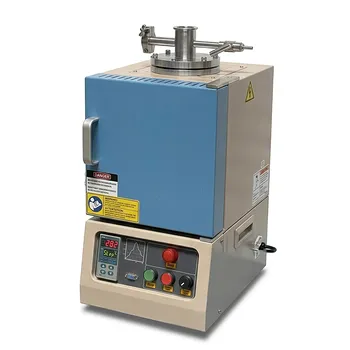
High Temperature Hybrid Muffle and Tube Furnace with Vacuum Capability and PID Control
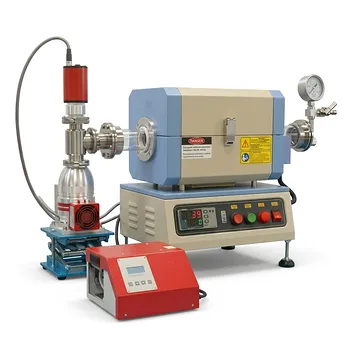
High Vacuum Compact Tube Furnace 1200C with Integrated Turbo Pump System and 8 Inch Heating Zone

1700C Hydrogen Gas Tube Furnace with 60mm Alumina Process Tube and Integrated Hydrogen Safety Detector
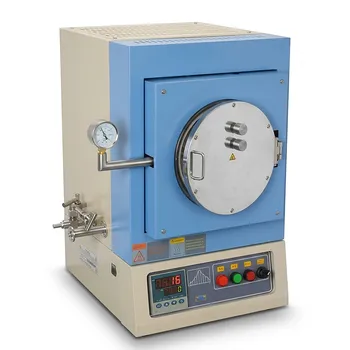
1100°C High Temperature Quartz Chamber Furnace 8 Inch OD with 7.6 Liter Capacity and Vacuum Atmosphere Capability
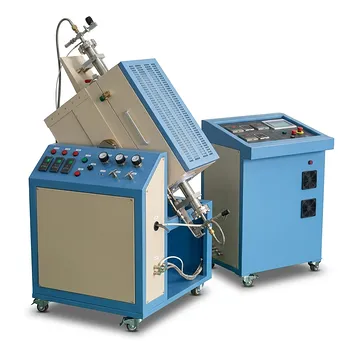
1100C High Pressure Rocking Tube Furnace with 2 Inch Super Alloy Processing Tube for Material Synthesis