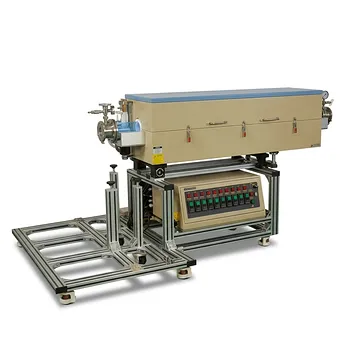
What role does a high-temperature tube furnace play in biochar/montmorillonite composite pyrolysis? Expert Guide
Updated 3 months ago
The high-temperature tube furnace serves as the foundational anaerobic reactor for the synthesis of biochar/montmorillonite composites. It provides a strictly controlled, oxygen-free environment—typically achieved through high-purity nitrogen purging—to facilitate the thermochemical degradation of organic biomass into carbon. This precise thermal management ensures the biomass carbonizes into a porous structure that can effectively integrate with montmorillonite minerals to form a functional composite.
Core Takeaway: A high-temperature tube furnace is essential for transitioning biomass from raw organic matter into a stable, porous carbon framework without accidental combustion, allowing for the precise structural engineering required for mineral-carbon composites.
Establishing the Anaerobic Reaction Environment
Oxygen Exclusion via Inert Atmosphere
The primary role of the tube furnace is to maintain a strictly anaerobic environment by introducing high-purity nitrogen ($N_2$) or Argon. This displacement of oxygen is critical because it prevents the biomass from undergoing combustion, which would result in ash rather than biochar.
Carbonization vs. Combustion
By operating in an oxygen-limited state, the furnace facilitates carbonization, the process of thermal decomposition that leaves behind a carbon-rich skeleton. This ensures the "fixed carbon" content remains high, providing the necessary substrate for the montmorillonite to adhere to.
Precision Control of Material Characteristics
Regulating Pyrolysis Temperature
The furnace allows for exact temperature settings, typically ranging from $400^{\circ}C$ to $800^{\circ}C$ depending on the specific biomass used, such as rice husk or wheat straw. Precise temperature control is vital because it determines the pore structure and the density of functional groups on the biochar surface.
Controlling Heating Rates and Residence Time
Technical advisors emphasize the heating rate (e.g., $10^{\circ}C/min$) and the duration the material stays at the peak temperature. These variables dictate the thoroughness of the chemical degradation of hemicellulose, cellulose, and lignin, which directly impacts the quality of the final composite.
Facilitating the Composite Synthesis
Structural Integration with Montmorillonite
The tube furnace provides the thermal energy required to integrate the decomposing organic matter with montmorillonite clay. As the biomass volatiles are released, the remaining carbon structure intertwines with the mineral layers, creating a composite material with enhanced stability and surface area.
Enabling Chemical Doping and Phase Transformation
For advanced applications, the furnace environment allows for the doping of elements like boron or nitrogen into the carbon framework. It can also facilitate the conversion of absorbed metal salts into magnetic oxides, such as magnetite, further functionalizing the biochar/montmorillonite composite.
Understanding Technical Trade-offs
Throughput vs. Precision
While tube furnaces offer unmatched precision in atmospheric control, they are often limited by batch size. Scaling up the production of biochar/montmorillonite composites in a tube furnace may require multiple units or continuous-feed systems, which can increase capital expenditure.
Energy Consumption and Maintenance
Maintaining high temperatures for extended residence times is energy-intensive. Furthermore, the release of tars and gases during pyrolysis can lead to residue buildup within the furnace tube, requiring regular cleaning to prevent contamination of subsequent batches.
How to Apply This to Your Project
Optimizing Your Synthesis Process
To achieve the best results when preparing biochar/montmorillonite composites, your approach should be dictated by your specific material goals.
- If your primary focus is maximizing surface area: Utilize a lower heating rate and a moderate pyrolysis temperature ($400^{\circ}C–$500^{\circ}C$) to allow for the gradual development of a complex micro-pore structure.
- If your primary focus is structural stability and carbon purity: Increase the peak temperature to $700^{\circ}C$ or higher to ensure complete devolatilization and a more crystalline carbon framework.
- If your primary focus is magnetic functionality: Ensure precise control of the cooling phase and atmospheric purity to allow for the consistent crystallization of magnetic iron oxides within the composite.
By mastering the thermal and atmospheric variables of the tube furnace, you can precisely engineer the physical and chemical properties of your biochar/montmorillonite composites.
Summary Table:
| Parameter | Function in Pyrolysis | Impact on Biochar/Montmorillonite Composite |
|---|---|---|
| Atmosphere Control | Provides anaerobic environment ($N_2$/Argon) | Prevents combustion; ensures high fixed carbon content. |
| Temperature ($400$-$800^{\circ}C$) | Regulates thermal decomposition | Determines pore structure and surface functional groups. |
| Heating Rate | Manages degradation speed | Dictates thoroughness of cellulose/lignin breakdown. |
| Structural Integration | Facilitates mineral-carbon bonding | Creates stable composites with high surface area. |
| Functionalization | Enables chemical doping/phase change | Allows for magnetic properties (e.g., magnetite formation). |
Elevate Your Material Research with THERMUNITS Precision Furnaces
Are you looking to optimize the synthesis of advanced composites like biochar/montmorillonite? THERMUNITS is a leading manufacturer of high-temperature laboratory equipment specifically designed for material science and industrial R&D. We provide the precise thermal and atmospheric control necessary to ensure your samples achieve the exact porosity, stability, and functionality your project demands.
Why Choose THERMUNITS?
- Comprehensive Solutions: From Tube and Atmosphere Furnaces ideal for pyrolysis to Muffle, Vacuum, Rotary, and Hot Press furnaces.
- Advanced Systems: High-performance CVD/PECVD systems, Vacuum Induction Melting (VIM), and Dental Furnaces.
- Expert Engineering: Durable thermal elements and tailored heat treatment equipment for complex R&D workflows.
Ready to enhance your lab's efficiency and research outcomes?
Contact Our Technical Experts Today to find the perfect thermal processing solution for your needs.
References
- Zhiyong Han, Zixuan Wang. Study on Methylene Blue Adsorption Properties of Biochar/Montmorillonite Composites. DOI: 10.11648/j.earth.20241304.15
Mentioned Products
- High Temperature Tube Furnace 1500C with Sliding Flanges and 50mm OD for Rapid Thermal Processing Fast Heating and Cooling
- High Temperature 1700C Tube Furnace with High Vacuum Turbomolecular Pump System and Multi Channel Mass Flow Controller Gas Mixer
- High Temperature 1700C Benchtop Tube Furnace with 5 Inch Heating Zone High Purity Alumina Tube and Vacuum Sealing Flanges
- 1750°C High Temperature Benchtop Vacuum Atmosphere Tube Furnace with Kanthal Super 1800 Heating Elements and 60mm Alumina Processing Tube
- Compact High Temperature 1600C Tube Furnace with 50mm Alumina Tube and Vacuum Flanges for Material Sintering
People Also Ask
- How are high-temperature tube furnaces utilized to repair etching damage? Precision Lattice Restoration Solutions
- What role does a high-temperature tube furnace play in CVD synthesis of silicon nanowires? Master VLS Growth Precision.
- What core conditions does a high-temperature tube furnace provide for rGO aerogels? Mastering Precision Synthesis.
- What role does a high-temperature tube furnace play in the sulfidation heat treatment of CoS@C/MXene nanocomposites? Guide
- How does precision tube furnace control influence CoFe nanoparticle formation? Master Your Bimetallic Synthesis.

Tech Team · ThermUnits
Last updated on Jun 02, 2026
Related Products
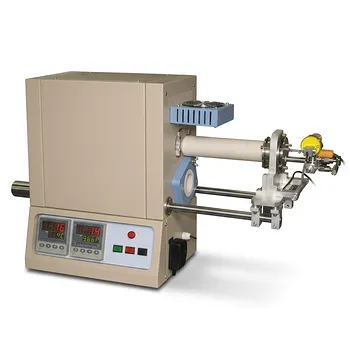
High Temperature Tube Furnace 1500C with Sliding Flanges and 50mm OD for Rapid Thermal Processing Fast Heating and Cooling

High Temperature 1700C Tube Furnace with High Vacuum Turbomolecular Pump System and Multi Channel Mass Flow Controller Gas Mixer

High Temperature 1700C Benchtop Tube Furnace with 5 Inch Heating Zone High Purity Alumina Tube and Vacuum Sealing Flanges

1750°C High Temperature Benchtop Vacuum Atmosphere Tube Furnace with Kanthal Super 1800 Heating Elements and 60mm Alumina Processing Tube

Compact High Temperature 1600C Tube Furnace with 50mm Alumina Tube and Vacuum Flanges for Material Sintering
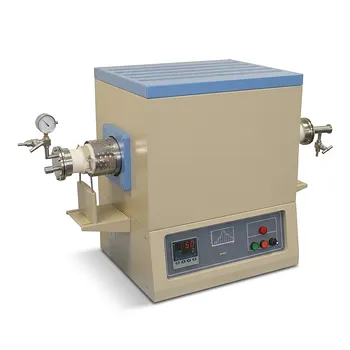
1700C High Temperature Alumina Tube Furnace with 18 Inch Heated Zone and Vacuum Sealing Flanges

1800C High Temperature Compact Vacuum Tube Furnace with 60mm OD Alumina Tube and Kanthal MoSi2 Heating Elements
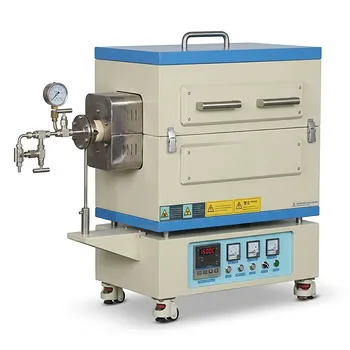
High Temperature Split Tube Furnace 1500C for Material Research Vacuum and Atmosphere Thermal Processing

High Temperature 1700C Vertical Tube Furnace for Powder Spherification and Material Sintering
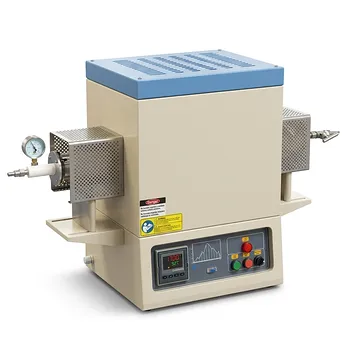
High Temperature Three Zone Tube Furnace 1700C with Alumina Tube and Water Cooled Flanges
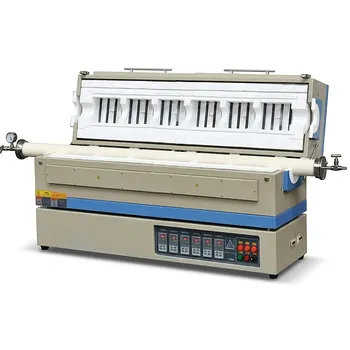
High Temperature 1700C Six Zone Split Tube Furnace with Alumina Tube and Water Cooled Flanges
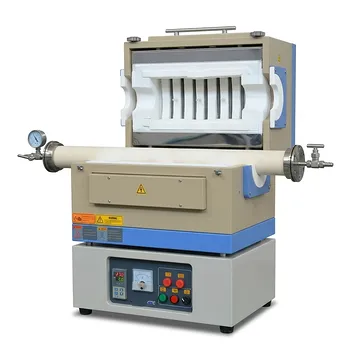
High Temperature 1600C Split Tube Furnace Vacuum Flanges Valves Optional 60mm 80mm Alumina Tube

High Temperature Automated 5 Inch Tube Furnace for Autonomous Material Research and Advanced Laboratory R&D
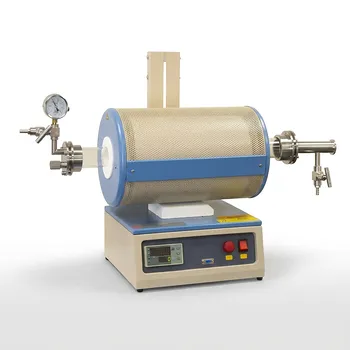
1100C Tube Furnace with Vacuum Flange and Programmable Temperature Controller for Material Science and Industrial Heat Treatment
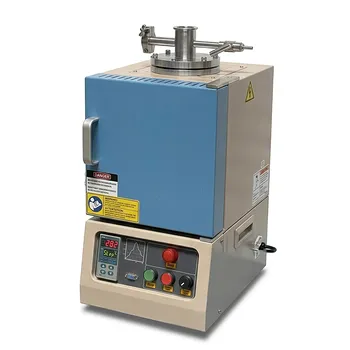
High Temperature Hybrid Muffle and Tube Furnace with Vacuum Capability and PID Control
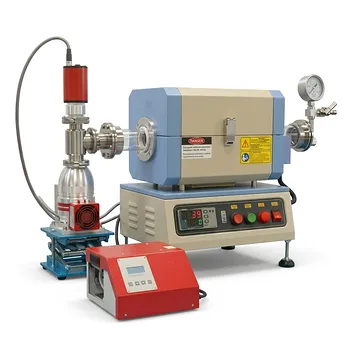
High Vacuum Compact Tube Furnace 1200C with Integrated Turbo Pump System and 8 Inch Heating Zone
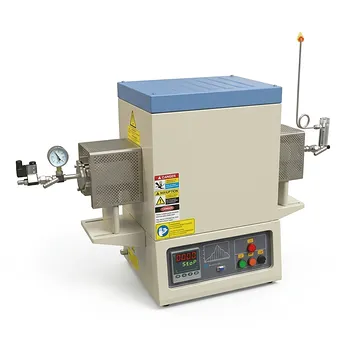
1700C Hydrogen Gas Tube Furnace with 60mm Alumina Process Tube and Integrated Hydrogen Safety Detector

1100°C High Temperature Quartz Chamber Furnace 8 Inch OD with 7.6 Liter Capacity and Vacuum Atmosphere Capability
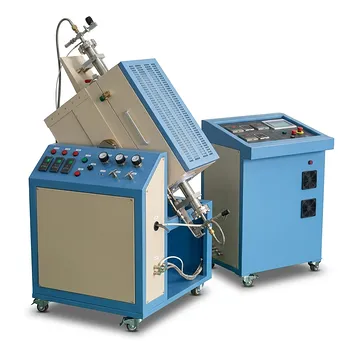
1100C High Pressure Rocking Tube Furnace with 2 Inch Super Alloy Processing Tube for Material Synthesis