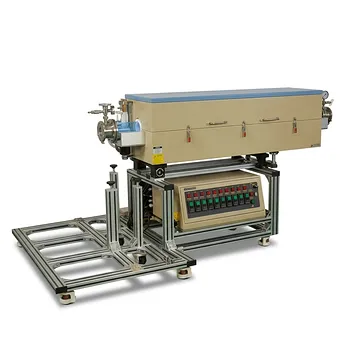
What role does a high-temperature tube furnace play in the pyrolysis process? Precision Engineering of Carbon Supports
Updated 3 months ago
A high-temperature tube furnace is the primary reaction vessel for synthesizing nitrogen-doped carbon supports, providing the critical thermal energy and atmospheric control required for pyrolysis. It enables the carbonization of organic precursors at temperatures typically between 700°C and 1100°C while simultaneously facilitating the incorporation of nitrogen atoms into the emerging carbon lattice under a strict inert gas environment.
The high-temperature tube furnace acts as a precision reactor that transforms organic or metal-organic precursors into stable, conductive, and nitrogen-rich frameworks. By maintaining an oxygen-free, high-heat environment, it ensures the structural integrity, porosity, and chemical functionality necessary for advanced carbon-based materials.
Precise Atmospheric Control and Protection
Preventing Oxidative Degradation
The tube furnace allows for a strict inert atmosphere, using gases such as Argon or Nitrogen to displace oxygen. This environment is essential to prevent the organic precursor from burning away, ensuring it instead undergoes thermal decomposition into a stable carbon skeleton.
Facilitating Chemical Doping
Beyond simple protection, the controlled atmosphere can influence the doping process. In an oxygen-free zone, nitrogen atoms from the precursor materials are successfully embedded into the carbon matrix, creating the active sites required for subsequent chemical applications.
Driving the Thermal Transformation
Carbonization and Graphitization
The furnace provides a stable thermal field, often maintained at approximately 900°C to 1100°C, to drive the carbonization of polymers or metal-organic frameworks (MOFs). This high-heat environment promotes graphitization, which increases the electrical conductivity and chemical stability of the resulting support.
Precise Kinetic Control
By offering controllable heating rates (such as 3°C/min), the tube furnace allows researchers to manage the speed of the chemical transformation. This precision is vital for creating a stable physicochemical platform that can later host and anchor active metal atoms at the atomic level.
Structural Engineering of the Carbon Support
Development of Porous Architectures
The pyrolysis process within the furnace is responsible for developing hierarchical pore structures and high specific surface areas. In materials like ZIF-8, the high temperature facilitates the volatilization of zinc, which leaves behind a porous, nitrogen-doped carbon skeleton.
Advanced Synthesis Techniques
The tube furnace environment supports specialized processes like molten salt etching or the exfoliation of carbon into layered structures. These techniques are used to induce specific porosities and morphologies that are critical for the material’s performance as a catalyst or support.
Understanding the Trade-offs
Temperature Sensitivity
The specific temperature chosen significantly impacts the final product; for instance, higher temperatures (above 1000°C) may increase graphitization and conductivity but risk reducing the total nitrogen content due to thermal instability. Finding the balance between conductivity and nitrogen retention is a core challenge in pyrolysis.
Uniformity and Scaling Issues
While tube furnaces provide excellent control for lab-scale synthesis, maintaining a uniform thermal zone across a large volume of precursor can be difficult. Variations in temperature or gas flow within the tube can lead to inconsistent doping levels or variations in the carbon’s pore structure.
Applying Furnace Parameters to Your Goal
How to Apply This to Your Project
To achieve the best results for your nitrogen-doped carbon support, you must tailor the furnace settings to your specific precursor and intended application.
- If your primary focus is high electrical conductivity: Use higher temperatures (1000°C - 1100°C) to promote a higher degree of graphitization within the carbon framework.
- If your primary focus is maximum nitrogen retention: Target a lower pyrolysis temperature (700°C - 900°C) to prevent the thermal decomposition of nitrogen-containing functional groups.
- If your primary focus is high surface area (porosity): Use a precursor like ZIF-8 and a temperature high enough to ensure the complete volatilization of zinc or other sacrificial templates.
- If your primary focus is atomic metal dispersion: Utilize a stable, long-term heating cycle (e.g., 900°C for 3 hours) to create abundant and uniform nitrogen anchoring sites across the support.
By masterfully controlling the thermal and atmospheric environment of the tube furnace, you can precisely engineer the structural and chemical properties of nitrogen-doped carbon supports.
Summary Table:
| Key Role | Technical Function | Impact on Material |
|---|---|---|
| Atmospheric Control | Inert gas (Ar/N2) displacement | Prevents oxidation; facilitates nitrogen doping. |
| Thermal Driver | Stable range (700°C - 1100°C) | Drives carbonization and increases conductivity. |
| Kinetic Regulation | Precise heating rates (e.g., 3°C/min) | Manages pore development and structural stability. |
| Structural Engineering | Template volatilization (e.g., Zinc) | Creates high specific surface areas and porosity. |
Elevate Your Material Synthesis with THERMUNITS Precision
Are you looking to achieve the perfect nitrogen-doped framework for your next breakthrough? At THERMUNITS, we specialize in providing the high-performance thermal environments required for advanced material science and industrial R&D. Our equipment is designed to offer the exact atmospheric purity and temperature uniformity needed for complex pyrolysis and carbonization processes.
As a leading manufacturer, we offer a comprehensive range of solutions, including:
- Tube & Atmosphere Furnaces for precise gas control and doping.
- CVD/PECVD Systems for advanced thin-film and carbon nanotubes synthesis.
- Vacuum, Muffle, and Rotary Furnaces for versatile heat treatments.
- Hot Press & Vacuum Induction Melting (VIM) for specialized industrial applications.
- Dental Furnaces & Thermal Elements to support diverse laboratory needs.
Ready to optimize your heat treatment results? Contact us today to discuss your project requirements with our technical experts and find the ideal high-temperature solution tailored to your research goals.
References
- B.X. Wang, Yanwei Lum. Nanocurvature-induced field effects enable control over the activity of single-atom electrocatalysts. DOI: 10.1038/s41467-024-46175-1
Mentioned Products
- High Temperature Tube Furnace 1500C with Sliding Flanges and 50mm OD for Rapid Thermal Processing Fast Heating and Cooling
- High Temperature 1700C Tube Furnace with High Vacuum Turbomolecular Pump System and Multi Channel Mass Flow Controller Gas Mixer
- High Temperature 1700C Benchtop Tube Furnace with 5 Inch Heating Zone High Purity Alumina Tube and Vacuum Sealing Flanges
- 1750°C High Temperature Benchtop Vacuum Atmosphere Tube Furnace with Kanthal Super 1800 Heating Elements and 60mm Alumina Processing Tube
- Compact High Temperature 1600C Tube Furnace with 50mm Alumina Tube and Vacuum Flanges for Material Sintering
People Also Ask
- How are high-temperature tube furnaces utilized to repair etching damage? Precision Lattice Restoration Solutions
- What role does a high-temperature tube furnace play in CVD synthesis of silicon nanowires? Master VLS Growth Precision.
- What core conditions does a high-temperature tube furnace provide for rGO aerogels? Mastering Precision Synthesis.
- What role does a high-temperature tube furnace play in the sulfidation heat treatment of CoS@C/MXene nanocomposites? Guide
- How does precision tube furnace control influence CoFe nanoparticle formation? Master Your Bimetallic Synthesis.

Tech Team · ThermUnits
Last updated on Jun 03, 2026
Related Products
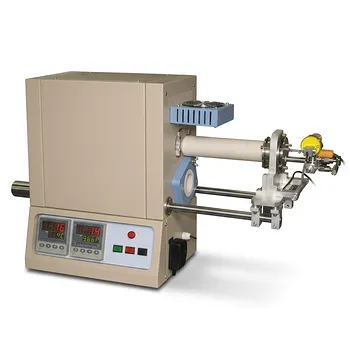
High Temperature Tube Furnace 1500C with Sliding Flanges and 50mm OD for Rapid Thermal Processing Fast Heating and Cooling

High Temperature 1700C Tube Furnace with High Vacuum Turbomolecular Pump System and Multi Channel Mass Flow Controller Gas Mixer

High Temperature 1700C Benchtop Tube Furnace with 5 Inch Heating Zone High Purity Alumina Tube and Vacuum Sealing Flanges
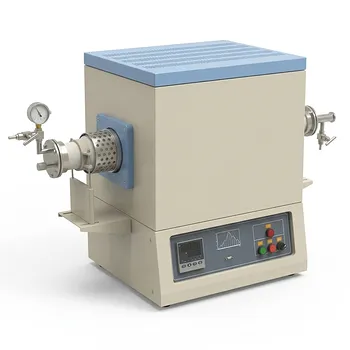
1750°C High Temperature Benchtop Vacuum Atmosphere Tube Furnace with Kanthal Super 1800 Heating Elements and 60mm Alumina Processing Tube

Compact High Temperature 1600C Tube Furnace with 50mm Alumina Tube and Vacuum Flanges for Material Sintering
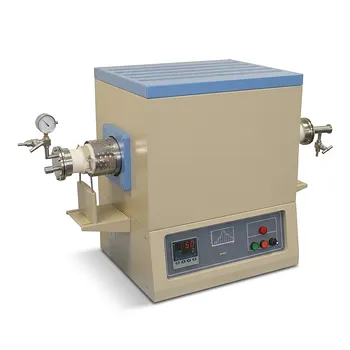
1700C High Temperature Alumina Tube Furnace with 18 Inch Heated Zone and Vacuum Sealing Flanges

1800C High Temperature Compact Vacuum Tube Furnace with 60mm OD Alumina Tube and Kanthal MoSi2 Heating Elements
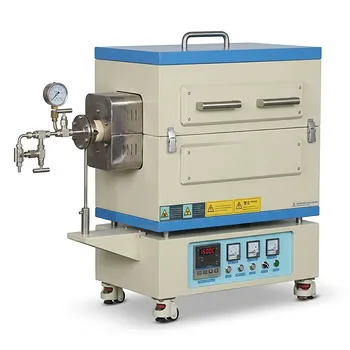
High Temperature Split Tube Furnace 1500C for Material Research Vacuum and Atmosphere Thermal Processing

High Temperature 1700C Vertical Tube Furnace for Powder Spherification and Material Sintering
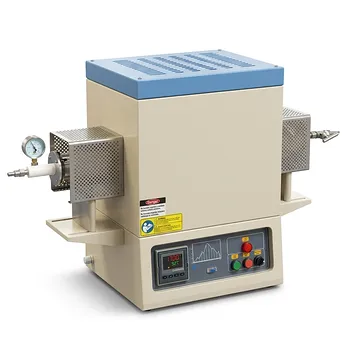
High Temperature Three Zone Tube Furnace 1700C with Alumina Tube and Water Cooled Flanges

High Temperature 1700C Six Zone Split Tube Furnace with Alumina Tube and Water Cooled Flanges
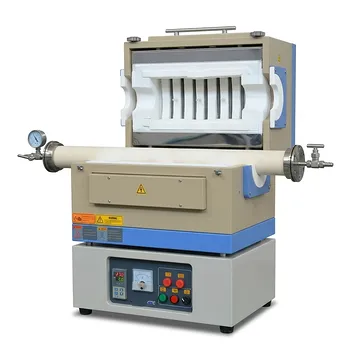
High Temperature 1600C Split Tube Furnace Vacuum Flanges Valves Optional 60mm 80mm Alumina Tube

High Temperature Automated 5 Inch Tube Furnace for Autonomous Material Research and Advanced Laboratory R&D

1100C Tube Furnace with Vacuum Flange and Programmable Temperature Controller for Material Science and Industrial Heat Treatment
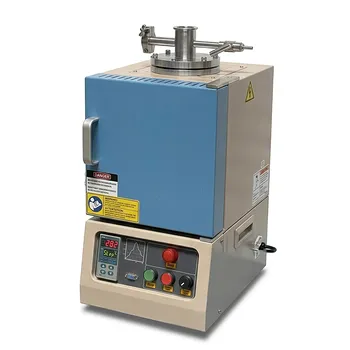
High Temperature Hybrid Muffle and Tube Furnace with Vacuum Capability and PID Control
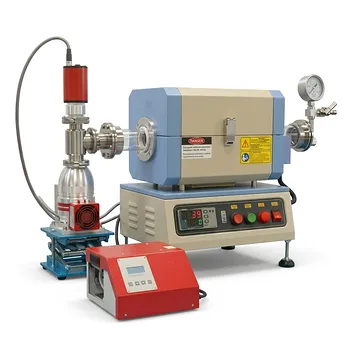
High Vacuum Compact Tube Furnace 1200C with Integrated Turbo Pump System and 8 Inch Heating Zone
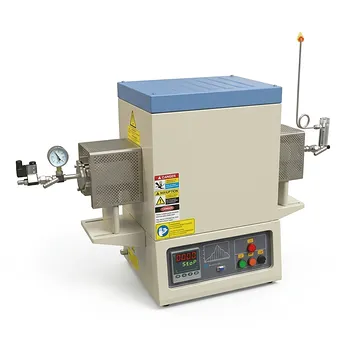
1700C Hydrogen Gas Tube Furnace with 60mm Alumina Process Tube and Integrated Hydrogen Safety Detector
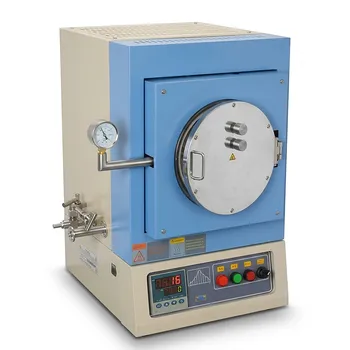
1100°C High Temperature Quartz Chamber Furnace 8 Inch OD with 7.6 Liter Capacity and Vacuum Atmosphere Capability
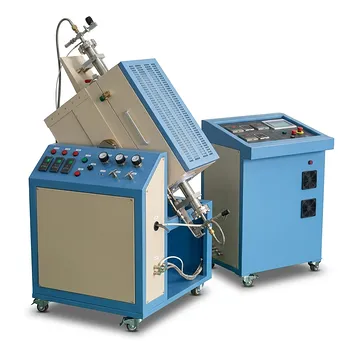
1100C High Pressure Rocking Tube Furnace with 2 Inch Super Alloy Processing Tube for Material Synthesis