What role does a high-temperature tube furnace play in the surface modification process of Halloysite Nanotubes? Expert Guide
Updated 3 months ago
A high-temperature tube furnace acts as the critical thermal reactor for the molten salt etching of Halloysite Nanotubes (HNTs) by maintaining a precise 350°C environment. This specific temperature triggers the phase change of sodium nitrate into a liquid state, enabling chemical agents to uniformly react with the nanotube’s surface. The process successfully introduces surface roughness and chemical defects while ensuring the fundamental tubular architecture remains intact.
The primary role of the tube furnace is to provide the stable, controlled thermal energy required to liquefy salts, which then act as a medium for uniform chemical etching of the HNT surface. This creates a high-activity surface area without compromising the material's structural morphology.
The Mechanics of Molten Salt Etching
Facilitating Phase Transitions
The furnace is responsible for heating sodium nitrate to its melting point to create a molten salt medium. In this liquid state, the salt acts as a solvent that allows weakly alkaline sodium carbonate to move freely. This fluidity is essential for the chemical agents to reach and penetrate the complex surfaces of the nanotubes.
Driving Chemical Surface Reactions
Once the salts are molten, the furnace maintains the energy required for the sodium carbonate to react with the silica and alumina layers of the HNTs. This controlled chemical attack is what strips away specific surface atoms to create a "rough" texture. Without the constant 350°C environment, the reaction would be uneven or fail to initiate entirely.
Preserving Tubular Morphology
Unlike high-heat sintering (which can exceed 1100°C), the tube furnace allows for modification at a relatively "low" high temperature. By keeping the thermal energy strictly regulated, the furnace ensures the etching process creates defect sites and roughness without melting or collapsing the hollow tube structure. This balance is vital for applications that rely on the HNT's specific shape.
Engineering the Nanotube Surface
Creation of Active Defect Sites
The thermal environment provided by the tube furnace facilitates the formation of abundant defect sites across the HNT surface. These defects serve as anchoring points for future chemical functionalization or catalytic activity. The furnace’s stability ensures these sites are distributed uniformly across the entire batch.
Optimizing Surface Roughness
By controlling the duration and temperature within the tube, researchers can fine-tune the degree of surface roughness. A precise tube furnace prevents the "over-etching" that could lead to the total degradation of the alumina-silicate layers. This precision transforms a smooth, relatively inert tube into a high-surface-area nanomaterial.
Understanding the Trade-offs
Temperature Sensitivity and Over-Processing
If the furnace temperature fluctuates significantly above the target 350°C, the etching reaction can become too aggressive. This may lead to the dissolution of the nanotube walls, effectively destroying the very structure the process aims to modify. Conversely, even a slight drop in temperature can cause the salt to solidify, halting the modification entirely.
Atmosphere and Contamination Risks
While the primary modification occurs via molten salt, the atmosphere inside the tube can still influence the outcome. If the furnace is not properly sealed or purged, oxygen or moisture could interfere with the chemical reaction between the salts and the HNTs. This can lead to unwanted oxidation or the formation of byproduct impurities on the nanotube surface.
Applying Thermal Modification to Your Project
Recommendations for Process Success
- If your primary focus is maximizing surface area: Utilize the furnace to maintain the 350°C threshold for extended periods to ensure deep, uniform etching across all nanotubes.
- If your primary focus is structural reinforcement: Limit the thermal exposure time within the furnace to create light surface roughness while keeping the tube walls at maximum thickness.
- If your primary focus is catalytic activity: Use the furnace to precisely control the cooling rate after etching to stabilize the newly formed defect sites.
Mastering the thermal environment of the tube furnace allows you to unlock the full chemical potential of Halloysite Nanotubes while protecting their unique structural advantages.
Summary Table:
| Process Step | Furnace Function | Key Outcome |
|---|---|---|
| Phase Transition | Maintains precise 350°C to liquefy sodium nitrate | Creates a molten salt solvent for uniform reaction |
| Surface Etching | Sustains thermal energy for alumina-silicate reaction | Introduces surface roughness and active defect sites |
| Morphology Control | Regulates "low" high-temperature range | Preserves the hollow tubular structure from collapsing |
| Quality Stability | Provides a sealed, stable thermal environment | Ensures uniform batches and prevents unwanted oxidation |
Optimize Your Nanomaterial Processing with THERMUNITS
Precision is the difference between a successful surface modification and a destroyed sample. THERMUNITS is a leading manufacturer of high-temperature laboratory equipment, providing the stability and control required for advanced material science and industrial R&D.
Our comprehensive range of thermal solutions—including Tube Furnaces, Muffle Furnaces, Vacuum/Atmosphere systems, and CVD/PECVD equipment—is engineered to meet the rigorous demands of researchers working on Halloysite Nanotubes, ceramics, and advanced composites.
Why choose THERMUNITS for your lab?
- Unmatched Thermal Stability: Crucial for delicate processes like molten salt etching.
- Versatile Applications: From dental furnaces to industrial electric rotary kilns and VIM systems.
- Expert Support: We help you select the right heating elements and configurations for your specific heat treatment needs.
Elevate your research efficiency and achieve superior material properties. Contact THERMUNITS today to request a quote or consultation!
References
- Jingmin Duan, Bing Zhang. Decoration of Pt–Ni Alloy on Molten Salt Etched Halloysite Nanotubes for Enhanced Catalytic Reduction of 4-Nitrophenol. DOI: 10.3390/separations11110305
Mentioned Products
- High Temperature Tube Furnace 1500C with Sliding Flanges and 50mm OD for Rapid Thermal Processing Fast Heating and Cooling
- High Temperature 1700C Tube Furnace with High Vacuum Turbomolecular Pump System and Multi Channel Mass Flow Controller Gas Mixer
- High Temperature 1700C Benchtop Tube Furnace with 5 Inch Heating Zone High Purity Alumina Tube and Vacuum Sealing Flanges
- 1750°C High Temperature Benchtop Vacuum Atmosphere Tube Furnace with Kanthal Super 1800 Heating Elements and 60mm Alumina Processing Tube
- Compact High Temperature 1600C Tube Furnace with 50mm Alumina Tube and Vacuum Flanges for Material Sintering
People Also Ask
- How are high-temperature tube furnaces utilized to repair etching damage? Precision Lattice Restoration Solutions
- What core conditions does a high-temperature tube furnace provide for rGO aerogels? Mastering Precision Synthesis.
- What role does a high-temperature tube furnace play in CVD synthesis of silicon nanowires? Master VLS Growth Precision.
- How does precision tube furnace control influence CoFe nanoparticle formation? Master Your Bimetallic Synthesis.
- What role does a high-temperature tube furnace play in the sulfidation heat treatment of CoS@C/MXene nanocomposites? Guide

Tech Team · ThermUnits
Last updated on Jun 03, 2026
Related Products
High Temperature Tube Furnace 1500C with Sliding Flanges and 50mm OD for Rapid Thermal Processing Fast Heating and Cooling

High Temperature 1700C Tube Furnace with High Vacuum Turbomolecular Pump System and Multi Channel Mass Flow Controller Gas Mixer

High Temperature 1700C Benchtop Tube Furnace with 5 Inch Heating Zone High Purity Alumina Tube and Vacuum Sealing Flanges
1750°C High Temperature Benchtop Vacuum Atmosphere Tube Furnace with Kanthal Super 1800 Heating Elements and 60mm Alumina Processing Tube

Compact High Temperature 1600C Tube Furnace with 50mm Alumina Tube and Vacuum Flanges for Material Sintering
1700C High Temperature Alumina Tube Furnace with 18 Inch Heated Zone and Vacuum Sealing Flanges

1800C High Temperature Compact Vacuum Tube Furnace with 60mm OD Alumina Tube and Kanthal MoSi2 Heating Elements
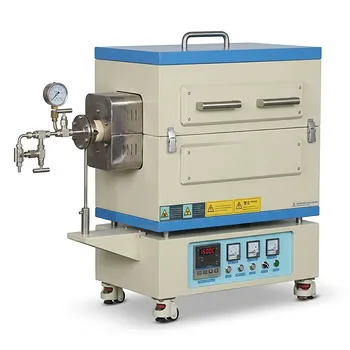
High Temperature Split Tube Furnace 1500C for Material Research Vacuum and Atmosphere Thermal Processing

High Temperature 1700C Vertical Tube Furnace for Powder Spherification and Material Sintering
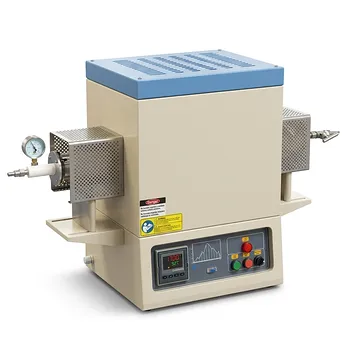
High Temperature Three Zone Tube Furnace 1700C with Alumina Tube and Water Cooled Flanges

High Temperature 1700C Six Zone Split Tube Furnace with Alumina Tube and Water Cooled Flanges
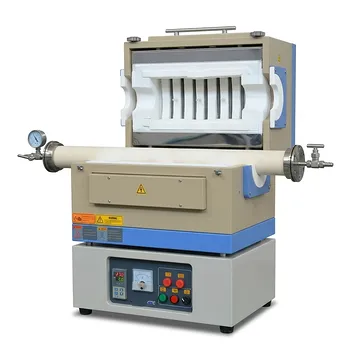
High Temperature 1600C Split Tube Furnace Vacuum Flanges Valves Optional 60mm 80mm Alumina Tube

High Temperature Automated 5 Inch Tube Furnace for Autonomous Material Research and Advanced Laboratory R&D

1100C Tube Furnace with Vacuum Flange and Programmable Temperature Controller for Material Science and Industrial Heat Treatment
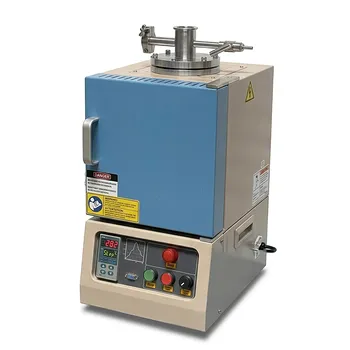
High Temperature Hybrid Muffle and Tube Furnace with Vacuum Capability and PID Control
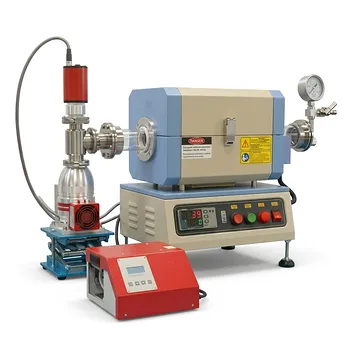
High Vacuum Compact Tube Furnace 1200C with Integrated Turbo Pump System and 8 Inch Heating Zone
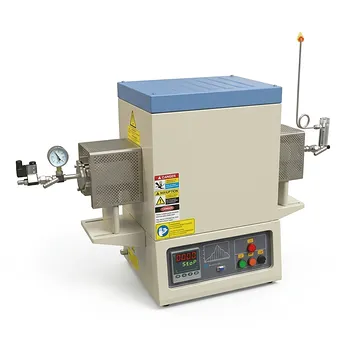
1700C Hydrogen Gas Tube Furnace with 60mm Alumina Process Tube and Integrated Hydrogen Safety Detector
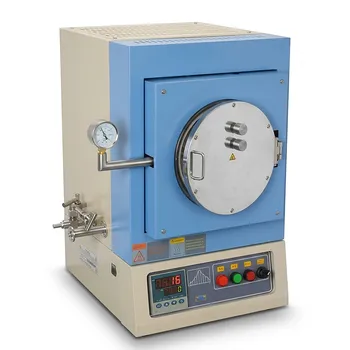
1100°C High Temperature Quartz Chamber Furnace 8 Inch OD with 7.6 Liter Capacity and Vacuum Atmosphere Capability
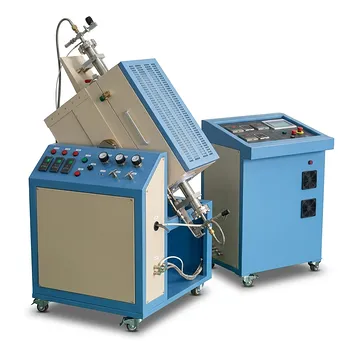
1100C High Pressure Rocking Tube Furnace with 2 Inch Super Alloy Processing Tube for Material Synthesis