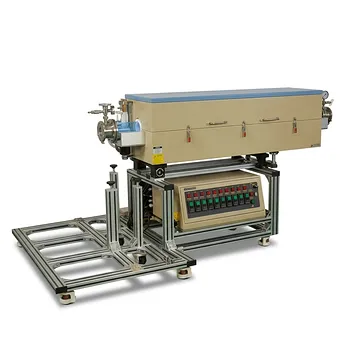
What role does a high-temperature tube furnace play in the synthesis of Fe-doped Co3O4 nanoparticles? Optimize Growth
Updated 5 months ago
The high-temperature tube furnace is the primary reactor for transforming chemical precursors into functional Fe-doped $Co_3O_4$ nanoparticles. It provides the precisely controlled thermal environment necessary for calcination, typically ranging from 400°C to 600°C. During this process, the furnace drives the solid-phase reactions required to remove volatile functional groups and organize the atomic structure into a specific cubic spinel lattice.
Core Takeaway: The tube furnace acts as the definitive regulator of a nanoparticle’s physical identity, directly determining its crystallinity, grain size, and resulting electromagnetic properties through precise thermal and atmospheric control.
Driving Chemical and Structural Transformation
Removal of Volatile Components
The synthesis begins with a precursor material, often containing hydroxyl groups or organic ligands. The tube furnace provides the thermal energy needed to break these chemical bonds, effectively removing hydroxyls and moisture to purify the metallic components.
Induction of Solid-Phase Reactions
At temperatures like 400°C, the furnace facilitates a solid-phase reaction where cobalt and iron ions rearrange. This process transforms the dried intermediate powder into a cubic spinel structure, which is the defining crystalline phase of $Co_3O_4$.
Facilitating Dopant Integration
For Fe-doped variants, the furnace environment ensures that iron atoms are successfully incorporated into the cobalt oxide lattice. This thermal diffusion is critical for achieving a uniform distribution of the dopant, which modifies the material's underlying electronic behavior.
Engineering Nanoscale Physical Properties
Precision Control of Grain Size
The furnace's temperature stability directly dictates the final dimensions of the nanoparticles. By maintaining specific soaking times, researchers can limit or promote grain growth, typically achieving sizes between 15 and 24 nm.
Optimization of Crystallinity
High-temperature calcination eliminates internal stresses and promotes the formation of high-purity crystals. The level of crystallinity achieved in the furnace is a primary factor in the material's catalytic activity, particularly in applications like hydrogen evolution reactions.
Tuning Magnetic and Electrical Attributes
The furnace settings allow for the manipulation of the nanoparticles' magnetic saturation and electrical conductivity. By precisely controlling the cooling and heating ramps, the furnace ensures the final product meets specific performance benchmarks for industrial or laboratory use.
Advantages of the Tube Furnace Configuration
Atmospheric Sealing and Control
Unlike standard muffle furnaces, a tube furnace allows for synthesis under inert atmospheres (such as Argon) or reactive gases (such as Hydrogen or Methane). This capability is essential for preventing unwanted oxidation or for facilitating specific reactions like nitrogen doping.
Thermal Uniformity and Stability
Tube furnaces provide a stable "hot zone" that ensures all precursor material experiences the same thermal history. This uniformity is what allows for the production of nanoparticles with consistent morphology and predictable chemical characteristics.
Understanding the Trade-offs
Temperature vs. Grain Growth
While higher temperatures (e.g., 600°C to 700°C) improve crystallinity and phase purity, they also increase the risk of particle agglomeration. Larger grain sizes may reduce the total surface area, potentially lowering the catalytic efficiency of the $Co_3O_4$ nanoparticles.
Throughput vs. Precision
Tube furnaces are designed for high precision rather than high volume. While they offer superior atmospheric control, they generally process smaller batches of material compared to industrial muffle furnaces, making them more suited for specialized synthesis than bulk manufacturing.
How to Apply This to Your Project
Recommendations Based on Your Objectives
- If your primary focus is maximizing catalytic surface area: Utilize lower calcination temperatures (around 400°C) and shorter soaking times to maintain a smaller grain size (15–18 nm).
- If your primary focus is high structural purity and stability: Increase the calcination temperature to 600°C to ensure complete precursor conversion and a well-defined spinel lattice.
- If your primary focus is altering electronic properties via doping: Ensure the tube furnace is sealed with an inert gas like Argon to prevent atmospheric oxygen from interfering with the Fe-doping process.
The precise thermal management of a tube furnace is the fundamental requirement for turning raw chemical precursors into high-performance Fe-doped $Co_3O_4$ nanoparticles.
Summary Table:
| Furnace Function | Impact on Nanoparticles | Process Detail |
|---|---|---|
| Phase Transformation | Converts precursors to cubic spinel lattice | 400°C - 600°C Calcination |
| Dopant Integration | Ensures uniform Fe-ion distribution | Thermal Diffusion Control |
| Size Engineering | Limits grain growth to 15-24 nm range | Precise Soaking Times |
| Atmospheric Control | Enables synthesis under Argon/Hydrogen | Sealed Gas Management |
Elevate Your Material Research with THERMUNITS
As a leading manufacturer of high-temperature laboratory equipment, THERMUNITS provides the precision and stability required for complex synthesis like Fe-doped $Co_3O_4$ nanoparticles. Our thermal solutions are engineered specifically for material science and industrial R&D excellence.
Whether your workflow requires Tube, Vacuum, Atmosphere, or Muffle furnaces, or advanced CVD/PECVD systems, our comprehensive range—including Hot Press furnaces, Rotary kilns, Dental Furnaces, Vacuum Induction Melting (VIM), and Thermal Elements—delivers the uniform heating and atmospheric integrity your project demands.
Ready to optimize your nanoparticle heat treatment results? Contact us today to find the perfect furnace solution for your lab!
References
- Numan Abbas, Muhammad Jehanzaib Aslam. Emerging pathways in electrical, magnetic and thermoelectric performance of different concentration of iron doped cobalt oxide nanoparticles. DOI: 10.1016/j.jksus.2024.103565
Mentioned Products
- High Temperature Tube Furnace 1500C with Sliding Flanges and 50mm OD for Rapid Thermal Processing Fast Heating and Cooling
- High Temperature 1700C Tube Furnace with High Vacuum Turbomolecular Pump System and Multi Channel Mass Flow Controller Gas Mixer
- High Temperature 1700C Benchtop Tube Furnace with 5 Inch Heating Zone High Purity Alumina Tube and Vacuum Sealing Flanges
- 1750°C High Temperature Benchtop Vacuum Atmosphere Tube Furnace with Kanthal Super 1800 Heating Elements and 60mm Alumina Processing Tube
- Compact High Temperature 1600C Tube Furnace with 50mm Alumina Tube and Vacuum Flanges for Material Sintering
People Also Ask
- How are high-temperature tube furnaces utilized to repair etching damage? Precision Lattice Restoration Solutions
- What core conditions does a high-temperature tube furnace provide for rGO aerogels? Mastering Precision Synthesis.
- What role does a high-temperature tube furnace play in CVD synthesis of silicon nanowires? Master VLS Growth Precision.
- How does precision tube furnace control influence CoFe nanoparticle formation? Master Your Bimetallic Synthesis.
- What role does a high-temperature tube furnace play in the sulfidation heat treatment of CoS@C/MXene nanocomposites? Guide

Tech Team · ThermUnits
Last updated on Apr 14, 2026
Related Products

High Temperature Tube Furnace 1500C with Sliding Flanges and 50mm OD for Rapid Thermal Processing Fast Heating and Cooling

High Temperature 1700C Tube Furnace with High Vacuum Turbomolecular Pump System and Multi Channel Mass Flow Controller Gas Mixer

High Temperature 1700C Benchtop Tube Furnace with 5 Inch Heating Zone High Purity Alumina Tube and Vacuum Sealing Flanges
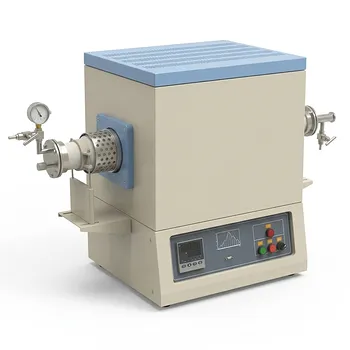
1750°C High Temperature Benchtop Vacuum Atmosphere Tube Furnace with Kanthal Super 1800 Heating Elements and 60mm Alumina Processing Tube

Compact High Temperature 1600C Tube Furnace with 50mm Alumina Tube and Vacuum Flanges for Material Sintering
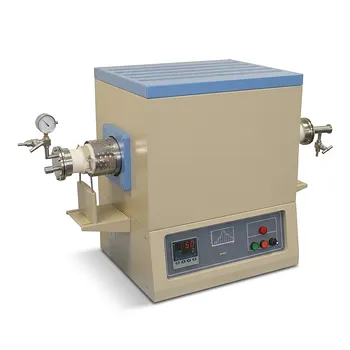
1700C High Temperature Alumina Tube Furnace with 18 Inch Heated Zone and Vacuum Sealing Flanges

1800C High Temperature Compact Vacuum Tube Furnace with 60mm OD Alumina Tube and Kanthal MoSi2 Heating Elements
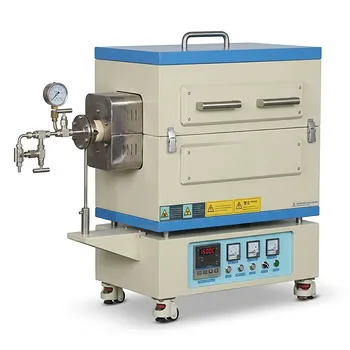
High Temperature Split Tube Furnace 1500C for Material Research Vacuum and Atmosphere Thermal Processing

High Temperature 1700C Vertical Tube Furnace for Powder Spherification and Material Sintering
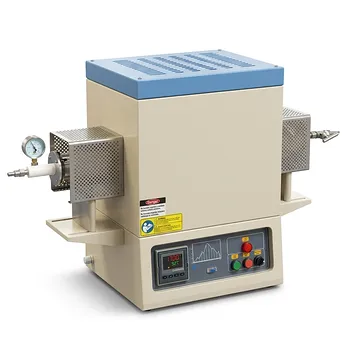
High Temperature Three Zone Tube Furnace 1700C with Alumina Tube and Water Cooled Flanges

High Temperature 1700C Six Zone Split Tube Furnace with Alumina Tube and Water Cooled Flanges
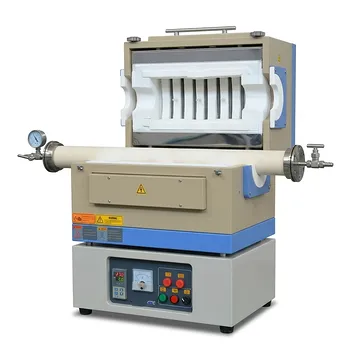
High Temperature 1600C Split Tube Furnace Vacuum Flanges Valves Optional 60mm 80mm Alumina Tube

High Temperature Automated 5 Inch Tube Furnace for Autonomous Material Research and Advanced Laboratory R&D

1100C Tube Furnace with Vacuum Flange and Programmable Temperature Controller for Material Science and Industrial Heat Treatment
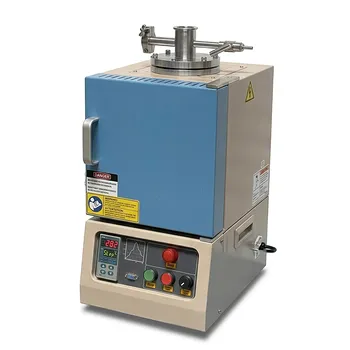
High Temperature Hybrid Muffle and Tube Furnace with Vacuum Capability and PID Control
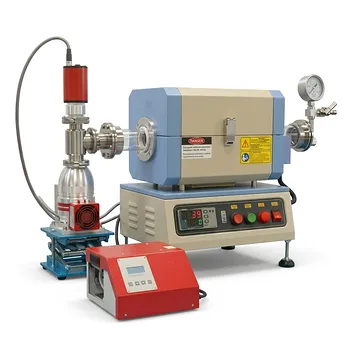
High Vacuum Compact Tube Furnace 1200C with Integrated Turbo Pump System and 8 Inch Heating Zone
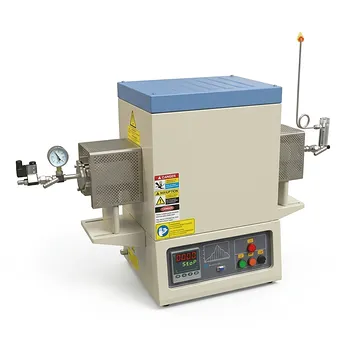
1700C Hydrogen Gas Tube Furnace with 60mm Alumina Process Tube and Integrated Hydrogen Safety Detector
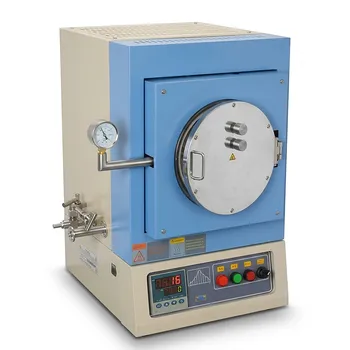
1100°C High Temperature Quartz Chamber Furnace 8 Inch OD with 7.6 Liter Capacity and Vacuum Atmosphere Capability
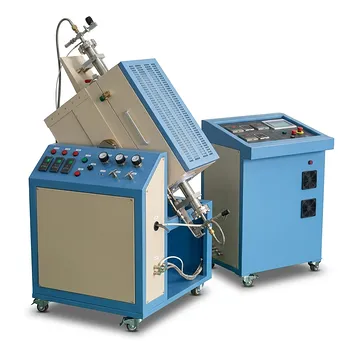
1100C High Pressure Rocking Tube Furnace with 2 Inch Super Alloy Processing Tube for Material Synthesis