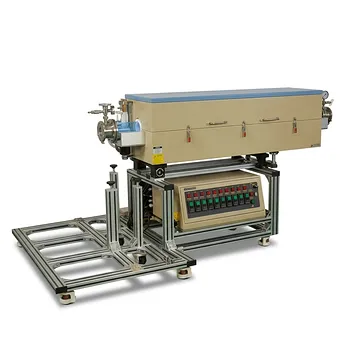
What role does a high-temperature tube furnace play in MoS2 synthesis? Precision Control for Superior 2D Materials
Updated 3 months ago
The high-temperature tube furnace serves as the foundational reaction environment for the synthesis of Molybdenum Disulfide (MoS2). It provides the precise thermal energy required to sublimate solid precursors, facilitates the chemical vapor deposition (CVD) process, and ensures the structural integrity of the resulting material through controlled cooling and annealing. By maintaining a stable temperature range—typically between 600°C and 800°C—and a protective atmosphere, the furnace enables the critical sulfidation reaction between molybdenum sources and sulfur.
Core Takeaway: A high-temperature tube furnace is the indispensable "engine" of MoS2 synthesis, acting as a precision-controlled reactor that manages precursor sublimation, gas-phase chemical reactions, and post-treatment crystallization to determine the material's final electronic and structural properties.
Thermal Activation and Precursor Management
Sublimation of Solid Precursors
The tube furnace provides the high-intensity heat necessary to transform solid Molybdenum Trioxide (MoO3) and sulfur powder into vapor phases. This phase change is the first critical step in Chemical Vapor Deposition (CVD), as it allows the reactants to mix and interact in the gas phase.
Multi-Zone Temperature Control
Advanced furnaces often utilize multi-zone heating, which allows researchers to manage the evaporation gradients of the metal and sulfur sources independently. This independence is vital because sulfur and molybdenum sources have different sublimation temperatures; precise control ensures a consistent reaction rate on the substrate surface.
Uniform Thermal Field Distribution
The furnace chamber is designed to maintain a uniform thermal field, which is essential for growing large-area, high-quality monolayer crystals. Without this uniformity, the resulting MoS2 films would suffer from irregular morphology and inconsistent thickness, degrading their electrical performance.
Atmospheric Protection and Reaction Control
Prevention of Oxidation
MoS2 synthesis requires a strictly controlled environment, often using Nitrogen (N2) or Argon (Ar) as protective carrier gases. The tube furnace maintains this atmosphere to prevent the molybdenum from reacting with oxygen, which would result in unwanted oxides rather than the desired disulfide structure.
Regulation of Nucleation and Growth
By adjusting the furnace's internal pressure and the flow rate of the carrier gas, the system regulates nucleation and growth kinetics. This level of control allows for the production of high-purity films on various substrates, such as sapphire or pre-deposited molybdenum thin films.
Facilitating Vapor-Phase Sulfurization
In processes where a molybdenum thin film is already deposited on a substrate, the furnace acts as a sulfurization vessel. It induces the reaction by delivering sulfur vapor to the heated film surface at temperatures around 700°C, transforming the metal into a crystalline MoS2 structure.
Post-Treatment and Material Optimization
Improving Crystalline Quality
Beyond initial synthesis, the furnace is used for post-recrystallization to refine the crystalline structure of MoS2 powder. This heat treatment improves the stable electronic performance of the material by reducing structural defects.
Phase Transformation and Interfacial Bonding
High-temperature treatment (often post-hydrothermal synthesis) converts MoS2 into the stable 2H phase structure. Furthermore, it strengthens the interfacial bonding between MoS2 nanosheets and conductive substrates like carbon nanotubes, significantly reducing resistance and improving carrier transfer efficiency.
Precise Defect Engineering
The furnace is a tool for annealing and defect regulation, particularly for creating sulfur vacancies. By heating samples between 400°C and 900°C under a high vacuum or inert atmosphere, the furnace can trigger a transition from a diamagnetic state to room-temperature ferromagnetism.
Understanding the Trade-offs
Temperature Uniformity vs. Throughput
While tube furnaces provide exceptional control, they are often limited in scalability. Achieving a perfectly uniform thermal field across a very large tube is technically challenging, which can lead to variations in film quality if the reaction zone is pushed to its physical limits.
Contamination and Maintenance
The use of high-purity quartz tubes is essential to prevent contamination, but these tubes can become degraded by repeated exposure to sulfur vapor at high temperatures. Frequent maintenance and cleaning are required to ensure that residual precursors from previous runs do not interfere with the stoichiometry of new batches.
Heating and Cooling Rates
Rapid thermal cycling can cause mechanical stress on both the quartz tube and the substrates. However, slow cooling rates are often necessary to ensure proper crystallization, which increases the overall processing time and limits the daily output of the equipment.
How to Apply This to Your Project
Recommendations for Synthesis Goals
- If your primary focus is large-area monolayer films: Prioritize a furnace with high-precision flow controllers and a high-vacuum system to strictly regulate nucleation kinetics.
- If your primary focus is doped or alloyed MoS2 (e.g., W-doped): Use a multi-zone tube furnace to independently manage the evaporation temperatures of different metal precursors.
- If your primary focus is improving electrical conductivity: Utilize the furnace for post-synthesis annealing to enhance interfacial bonding with your substrate and ensure 2H phase purity.
- If your primary focus is magnetic properties: Focus on high-temperature annealing (700°C-900°C) under high vacuum to precisely control the density of sulfur vacancies.
The high-temperature tube furnace is the definitive tool for transforming raw precursors into high-performance Molybdenum Disulfide by providing the exact thermal and atmospheric conditions required for molecular-level precision.
Summary Table:
| Synthesis Phase | Furnace Function | Impact on MoS2 Quality |
|---|---|---|
| Precursor Management | Multi-zone heating & sublimation | Ensures consistent vapor rates of MoO3 and Sulfur. |
| Growth & Nucleation | Atmospheric control (Ar/N2) | Prevents oxidation and regulates film thickness/purity. |
| Post-Treatment | Controlled annealing & cooling | Improves crystallinity, 2H phase stability, and electronic properties. |
| Defect Engineering | High-vacuum thermal cycling | Triggers sulfur vacancies for specific magnetic applications. |
Elevate Your 2D Material Research with THERMUNITS
As a global leader in high-temperature laboratory equipment, THERMUNITS provides the precision and reliability essential for cutting-edge material science. Our high-performance Tube Furnaces and CVD/PECVD systems are specifically engineered to handle the rigorous demands of Molybdenum Disulfide (MoS2) synthesis, ensuring uniform thermal fields and contamination-free environments.
Why Choose THERMUNITS for Your R&D?
- Comprehensive Solutions: We offer a wide range of equipment including Muffle, Vacuum, Atmosphere, Rotary, and Hot Press furnaces, as well as Electric Rotary Kilns and VIM systems.
- Precision Control: Our multi-zone heating technology allows for independent management of precursor evaporation for flawless chemical vapor deposition.
- Industrial-Grade Durability: Designed for both laboratory research and industrial-scale material optimization.
Ready to achieve superior crystalline quality and reproducible results? Contact THERMUNITS Today to find the perfect thermal processing solution for your project!
References
- X-MoS2/GO/Graphene Heterostructures and Doping Effects: KPFM Based Study of Surface Potential. DOI: 10.33263/briac145.118
Mentioned Products
- High Temperature Tube Furnace 1500C with Sliding Flanges and 50mm OD for Rapid Thermal Processing Fast Heating and Cooling
- High Temperature 1700C Tube Furnace with High Vacuum Turbomolecular Pump System and Multi Channel Mass Flow Controller Gas Mixer
- High Temperature 1700C Benchtop Tube Furnace with 5 Inch Heating Zone High Purity Alumina Tube and Vacuum Sealing Flanges
- 1750°C High Temperature Benchtop Vacuum Atmosphere Tube Furnace with Kanthal Super 1800 Heating Elements and 60mm Alumina Processing Tube
- Compact High Temperature 1600C Tube Furnace with 50mm Alumina Tube and Vacuum Flanges for Material Sintering
People Also Ask
- How are high-temperature tube furnaces utilized to repair etching damage? Precision Lattice Restoration Solutions
- What core conditions does a high-temperature tube furnace provide for rGO aerogels? Mastering Precision Synthesis.
- What role does a high-temperature tube furnace play in CVD synthesis of silicon nanowires? Master VLS Growth Precision.
- How does precision tube furnace control influence CoFe nanoparticle formation? Master Your Bimetallic Synthesis.
- What role does a high-temperature tube furnace play in the sulfidation heat treatment of CoS@C/MXene nanocomposites? Guide

Tech Team · ThermUnits
Last updated on Jun 02, 2026
Related Products
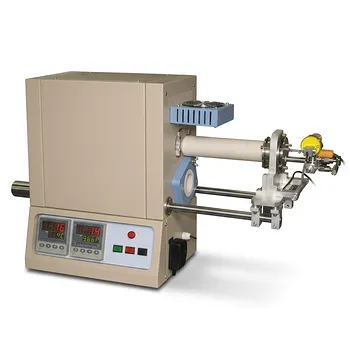
High Temperature Tube Furnace 1500C with Sliding Flanges and 50mm OD for Rapid Thermal Processing Fast Heating and Cooling

High Temperature 1700C Tube Furnace with High Vacuum Turbomolecular Pump System and Multi Channel Mass Flow Controller Gas Mixer

High Temperature 1700C Benchtop Tube Furnace with 5 Inch Heating Zone High Purity Alumina Tube and Vacuum Sealing Flanges
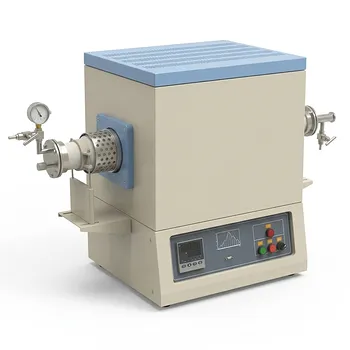
1750°C High Temperature Benchtop Vacuum Atmosphere Tube Furnace with Kanthal Super 1800 Heating Elements and 60mm Alumina Processing Tube

Compact High Temperature 1600C Tube Furnace with 50mm Alumina Tube and Vacuum Flanges for Material Sintering
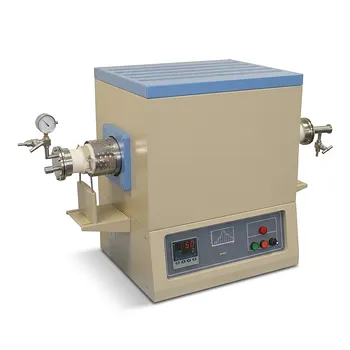
1700C High Temperature Alumina Tube Furnace with 18 Inch Heated Zone and Vacuum Sealing Flanges

1800C High Temperature Compact Vacuum Tube Furnace with 60mm OD Alumina Tube and Kanthal MoSi2 Heating Elements
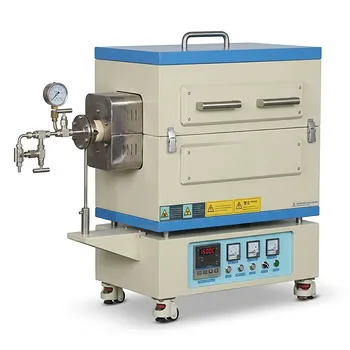
High Temperature Split Tube Furnace 1500C for Material Research Vacuum and Atmosphere Thermal Processing

High Temperature 1700C Vertical Tube Furnace for Powder Spherification and Material Sintering
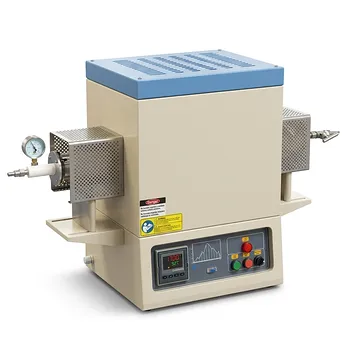
High Temperature Three Zone Tube Furnace 1700C with Alumina Tube and Water Cooled Flanges

High Temperature 1700C Six Zone Split Tube Furnace with Alumina Tube and Water Cooled Flanges
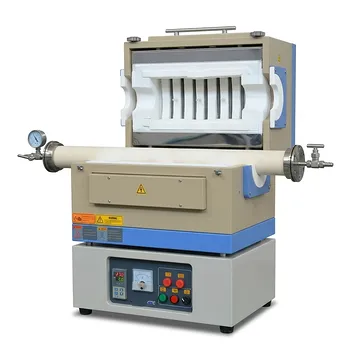
High Temperature 1600C Split Tube Furnace Vacuum Flanges Valves Optional 60mm 80mm Alumina Tube

High Temperature Automated 5 Inch Tube Furnace for Autonomous Material Research and Advanced Laboratory R&D

1100C Tube Furnace with Vacuum Flange and Programmable Temperature Controller for Material Science and Industrial Heat Treatment
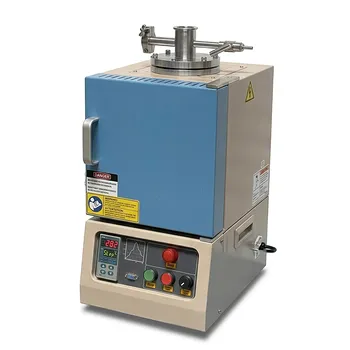
High Temperature Hybrid Muffle and Tube Furnace with Vacuum Capability and PID Control
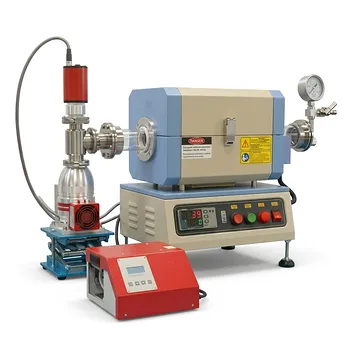
High Vacuum Compact Tube Furnace 1200C with Integrated Turbo Pump System and 8 Inch Heating Zone
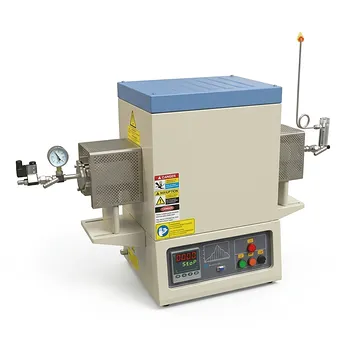
1700C Hydrogen Gas Tube Furnace with 60mm Alumina Process Tube and Integrated Hydrogen Safety Detector
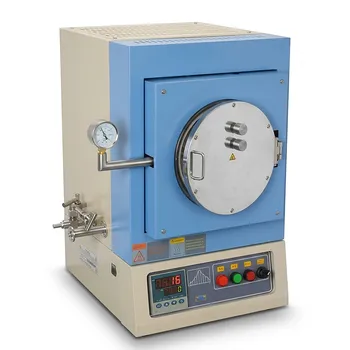
1100°C High Temperature Quartz Chamber Furnace 8 Inch OD with 7.6 Liter Capacity and Vacuum Atmosphere Capability
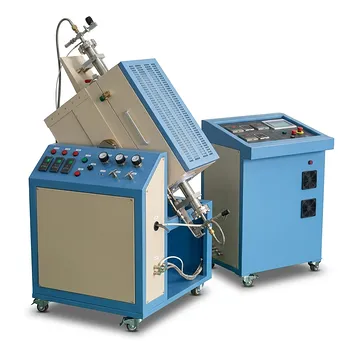
1100C High Pressure Rocking Tube Furnace with 2 Inch Super Alloy Processing Tube for Material Synthesis