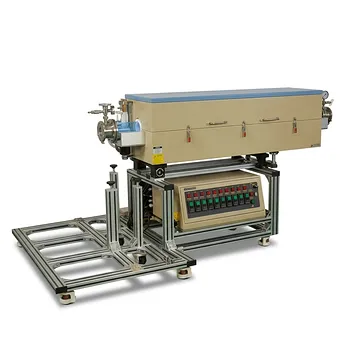
What role does a high-temperature tube furnace serve during the CVT growth of monolayer WS2? Optimize Your Synthesis
Updated 3 months ago
The high-temperature tube furnace serves as the foundational reaction chamber and thermal regulator for Chemical Vapor Transport (CVT). It provides the precise high-temperature environment (up to 1000°C) required to sublimate $WS_2$ powder and maintains a controlled argon (Ar) atmosphere to transport gas-phase reactants to a downstream substrate for uniform monolayer growth.
The tube furnace acts as a precision-controlled reactor that manages the thermodynamics and kinetics of $WS_2$ synthesis. By balancing stable isothermal zones with regulated gas flow, it ensures that precursors transition from bulk powder to high-quality, uniform triangular monolayer crystals.
Precise Thermal Environment and Sublimation
Reaching Critical Sublimation Temperatures
The furnace provides the intense thermal energy necessary to vaporize $WS_2$ precursors, often reaching operating temperatures near 1000°C. This high heat is essential for the transition of solid powders into the gas phase, a prerequisite for the epitaxial growth of monolayer films.
Ensuring Uniformity via Isothermal Zones
A critical role of the furnace is maintaining an isothermal zone, where the temperature remains constant across a specific area. This stability ensures that the chemical reactions occur uniformly, preventing fluctuations that could lead to inconsistent crystal thickness or multi-layer clusters.
Regulating Vaporization Rates
By utilizing programmed heating rates, the furnace controls how quickly precursors evaporate. This precise management of the vapor phase concentration is vital for achieving the atomic-layer precision required for monolayer $WS_2$ rather than bulk material.
Controlled Atmospheric and Gas Dynamics
Protection and Transport via Carrier Gases
The furnace facilitates a strictly controlled argon (Ar) protective atmosphere, which prevents the oxidation of the tungsten source. Beyond protection, the carrier gas acts as a vehicle, moving the vaporized reactants at a constant rate toward the cooler downstream substrate.
Maintaining Chemical Purity
The high-purity quartz tube lining the furnace serves as an isolated reaction chamber that withstands extreme thermal cycles. This enclosure prevents external atmospheric impurities from entering the system, ensuring the resulting $WS_2$ flakes maintain high lattice quality and chemical purity.
Vacuum and Pressure Regulation
Many tube furnaces incorporate vacuum systems to maintain specific internal pressures during the transport process. This regulation allows researchers to optimize the kinetic conditions of the sulfurization or transport reaction, influencing the final size and shape of the crystals.
Managing Growth Kinetics and Crystal Quality
Directing Gas-Phase Reactants
The geometry of the tube furnace, combined with controlled gas flow, directs reaction products toward the downstream substrate. This directional flow is what enables the deposition of gas-phase atoms onto the substrate surface in an organized, epitaxial manner.
Facilitating Large-Area Uniformity
By providing a stable thermal and chemical environment over a large physical area, the furnace enables the growth of large-scale monolayer wafers. This scalability is essential for moving beyond small laboratory flakes to industrial-grade semiconductor applications.
Controlled Cooling for Structural Integrity
The furnace’s ability to manage the cooling phase is just as important as the heating phase. Controlled cooling rates help in releasing internal stresses and preventing structural defects in the $WS_2$ lattice as the crystal solidifies on the substrate.
Common Pitfalls and Technical Trade-offs
Temperature Gradient Challenges
While isothermal zones are ideal for uniformity, accidental temperature gradients can lead to "dendritic" or irregular growth. If the substrate is too cool relative to the source, the reactants may deposit too quickly, resulting in multi-layer islands rather than a clean monolayer.
Contamination and Cross-Precursor Interference
Using the same quartz tube for different materials can lead to cross-contamination. Even trace amounts of residual sulfur or other transition metals from previous runs can drastically alter the electronic properties of the $WS_2$ monolayer.
Gas Flow Turbulence
If the carrier gas flow rate is too high, it can create turbulence within the tube, disrupting the laminar flow required for smooth deposition. Conversely, a flow rate that is too low may result in insufficient precursor transport, leading to sparse or incomplete crystal coverage.
How to Optimize Your Furnace Setup for $WS_2$ Growth
To achieve the best results in monolayer synthesis, the furnace parameters must be aligned with your specific material goals.
- If your primary focus is crystal size (Large-Area Monolayers): Prioritize a furnace with a long, stable isothermal zone and high-precision mass flow controllers to ensure a steady, slow supply of reactants.
- If your primary focus is crystalline purity: Utilize a high-vacuum-capable tube furnace with a dedicated high-purity quartz liner that is strictly reserved for tungsten-based materials.
- If your primary focus is growth speed: Focus on a multi-zone furnace that allows you to independently control the sublimation temperature of the source and the deposition temperature of the substrate.
The tube furnace is not merely a heater, but a sophisticated tool that dictates the structural and chemical identity of the $WS_2$ monolayer.
Summary Table:
| Key Role | Specific Function | Impact on WS2 Quality |
|---|---|---|
| Thermal Regulation | Provides stable 1000°C isothermal zones | Ensures uniform monolayer thickness and sublimation |
| Atmosphere Control | Manages Ar gas flow and protective environment | Prevents oxidation and ensures high lattice purity |
| Growth Kinetics | Regulates pressure and directional gas transport | Facilitates large-area epitaxial crystal growth |
| Cooling Management | Controlled temperature reduction | Prevents structural defects and internal stresses |
Elevate Your Material Research with THERMUNITS
Achieving perfect monolayer $WS_2$ synthesis requires extreme precision. THERMUNITS is a leading manufacturer of high-temperature laboratory equipment for material science and industrial R&D. We provide the advanced thermal tools needed for cutting-edge discovery, including Tube, CVD/PECVD, Vacuum, and Atmosphere furnaces specifically engineered for precise chemical vapor transport.
From high-purity quartz liners to multi-zone heating control, our solutions—including Muffle, Rotary, Hot Press furnaces, and Vacuum Induction Melting (VIM) systems—are built to support your most demanding research goals.
Ready to optimize your lab’s heat treatment capabilities?
Contact our experts today to find your solution!
References
- Weihu Kong, Jie Ma. Excitonic Evolution in WS2/MoS2 van der Waals Heterostructures Turned by Out-of-Plane Localized Pressure. DOI: 10.3390/app14052179
Mentioned Products
- High Temperature Tube Furnace 1500C with Sliding Flanges and 50mm OD for Rapid Thermal Processing Fast Heating and Cooling
- High Temperature 1700C Tube Furnace with High Vacuum Turbomolecular Pump System and Multi Channel Mass Flow Controller Gas Mixer
- High Temperature 1700C Benchtop Tube Furnace with 5 Inch Heating Zone High Purity Alumina Tube and Vacuum Sealing Flanges
- 1750°C High Temperature Benchtop Vacuum Atmosphere Tube Furnace with Kanthal Super 1800 Heating Elements and 60mm Alumina Processing Tube
- Compact High Temperature 1600C Tube Furnace with 50mm Alumina Tube and Vacuum Flanges for Material Sintering
People Also Ask
- How are high-temperature tube furnaces utilized to repair etching damage? Precision Lattice Restoration Solutions
- What role does a high-temperature tube furnace play in the sulfidation heat treatment of CoS@C/MXene nanocomposites? Guide
- What core conditions does a high-temperature tube furnace provide for rGO aerogels? Mastering Precision Synthesis.
- How does precision tube furnace control influence CoFe nanoparticle formation? Master Your Bimetallic Synthesis.
- What role does a high-temperature tube furnace play in CVD synthesis of silicon nanowires? Master VLS Growth Precision.

Tech Team · ThermUnits
Last updated on Jun 03, 2026
Related Products
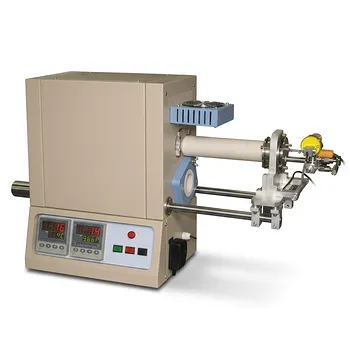
High Temperature Tube Furnace 1500C with Sliding Flanges and 50mm OD for Rapid Thermal Processing Fast Heating and Cooling

High Temperature 1700C Tube Furnace with High Vacuum Turbomolecular Pump System and Multi Channel Mass Flow Controller Gas Mixer

High Temperature 1700C Benchtop Tube Furnace with 5 Inch Heating Zone High Purity Alumina Tube and Vacuum Sealing Flanges

1750°C High Temperature Benchtop Vacuum Atmosphere Tube Furnace with Kanthal Super 1800 Heating Elements and 60mm Alumina Processing Tube

Compact High Temperature 1600C Tube Furnace with 50mm Alumina Tube and Vacuum Flanges for Material Sintering
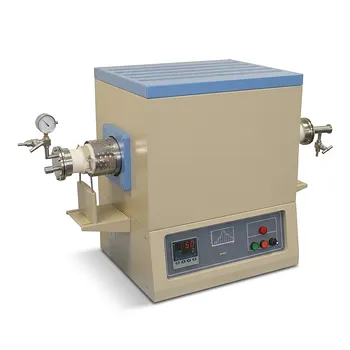
1700C High Temperature Alumina Tube Furnace with 18 Inch Heated Zone and Vacuum Sealing Flanges

1800C High Temperature Compact Vacuum Tube Furnace with 60mm OD Alumina Tube and Kanthal MoSi2 Heating Elements
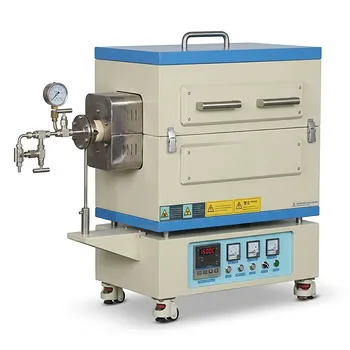
High Temperature Split Tube Furnace 1500C for Material Research Vacuum and Atmosphere Thermal Processing

High Temperature 1700C Vertical Tube Furnace for Powder Spherification and Material Sintering
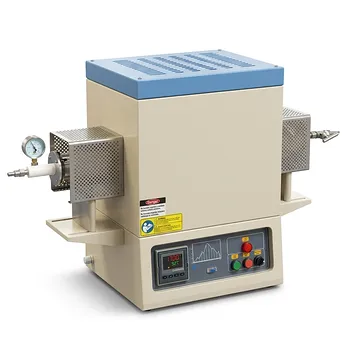
High Temperature Three Zone Tube Furnace 1700C with Alumina Tube and Water Cooled Flanges

High Temperature 1700C Six Zone Split Tube Furnace with Alumina Tube and Water Cooled Flanges
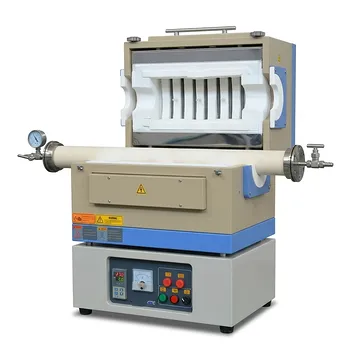
High Temperature 1600C Split Tube Furnace Vacuum Flanges Valves Optional 60mm 80mm Alumina Tube

High Temperature Automated 5 Inch Tube Furnace for Autonomous Material Research and Advanced Laboratory R&D

1100C Tube Furnace with Vacuum Flange and Programmable Temperature Controller for Material Science and Industrial Heat Treatment
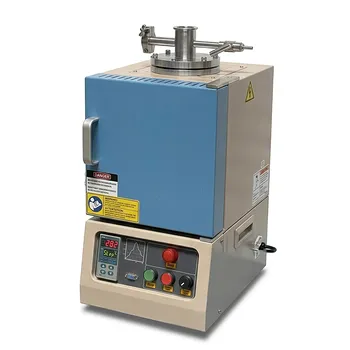
High Temperature Hybrid Muffle and Tube Furnace with Vacuum Capability and PID Control
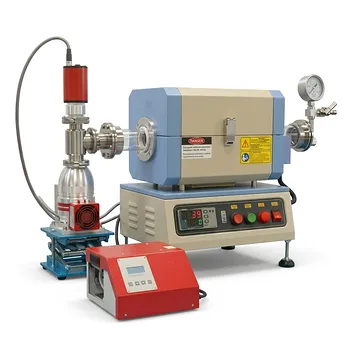
High Vacuum Compact Tube Furnace 1200C with Integrated Turbo Pump System and 8 Inch Heating Zone
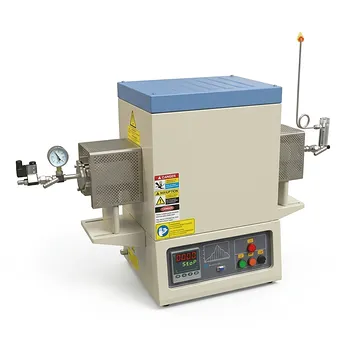
1700C Hydrogen Gas Tube Furnace with 60mm Alumina Process Tube and Integrated Hydrogen Safety Detector
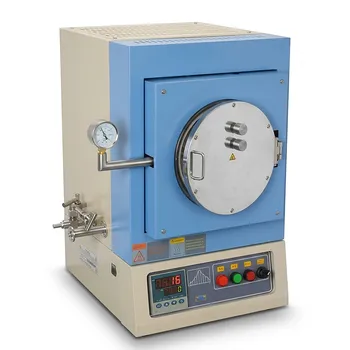
1100°C High Temperature Quartz Chamber Furnace 8 Inch OD with 7.6 Liter Capacity and Vacuum Atmosphere Capability
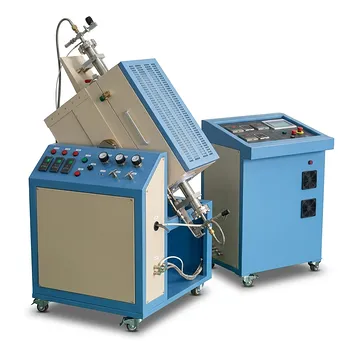
1100C High Pressure Rocking Tube Furnace with 2 Inch Super Alloy Processing Tube for Material Synthesis