What role does a high-vacuum tube sintering furnace play in NAB composites? Enhance Density and Phase Control.
Updated 3 months ago
A high-vacuum tube sintering furnace is the critical catalyst for achieving high-density, oxidation-free Nickel-Aluminum Bronze (NAB) composites. This specialized equipment provides a controlled environment—typically at pressures as low as 10⁻⁴ torr—to prevent the rapid oxidation of reactive elements like aluminum and iron while facilitating the precise atomic diffusion required for structural integrity.
The furnace serves a dual role as both a protective barrier against atmospheric contamination and a precision thermal reactor that regulates the complex phase transformations and interfacial bonding necessary for high-performance powder metallurgy.
Preventing Oxidation of Reactive Alloying Elements
Protection of Highly Oxidizable Aluminum and Iron
NAB composites contain elements like aluminum and iron, which have a high affinity for oxygen at elevated temperatures. The high-vacuum environment effectively inhibits oxidation reactions, ensuring that the alloying elements remain chemically pure and available for bonding rather than forming brittle oxide layers.
Eliminating Gas Absorption and Nitridation
Beyond oxygen, the vacuum prevents the alloy from absorbing nitrogen or other impurity gases from the atmosphere. This ensures that the final material's interstitial oxygen content remains within strict limits, preventing the formation of harmful oxides or oxygen segregation that could weaken the composite.
Preserving Surface Coatings on Reinforcements
In many NAB composites, nano-coatings (such as copper or nickel) are applied to reinforcements to improve compatibility. The oxygen-free environment of the furnace protects these nano-layers from degrading, allowing them to facilitate better wetting and bonding between the matrix and the reinforcement phases.
Facilitating Densification and Atomic Diffusion
Development of Sintering Necks
The high-vacuum environment provides the ideal kinetic conditions for the formation of sintering necks between powder particles. As temperatures rise, the lack of surface oxides allows atoms to move freely across particle boundaries, filling voids and reducing porosity.
Atomic Diffusion and Intermetallic Formation
High-temperature vacuum sintering (often reaching 900°C to 1150°C) provides the energy required for significant atomic diffusion. This process promotes the formation of trace intermetallic compounds like Al₃NiSi or AlCu, which significantly enhance the interfacial bonding strength and overall densification of the material.
Removal of Volatile Impurities and Pores
The vacuum environment assists in the removal of residual impurities, such as paraffin waxes used as binders or other volatile gases trapped within the powder compact. This "degassing" effect is essential for achieving a high relative density, often reaching levels as high as 98%.
Precision Control of Microstructural Evolution
Regulation of Phase Transformation Kinetics
NAB composites rely on specific phases—such as kappa, alpha, and beta-prime martensite—to achieve their unique mechanical properties. The furnace’s high-precision programmed temperature control allows for the strict regulation of heating rates and holding times needed to manage these transformations.
Implementation of Multi-Stage Sintering
The furnace enables complex two-stage sintering programs (e.g., holding at 630°C and 930°C). This structured approach allows for initial degassing and pre-sintering before moving into the intensive sintering stage where final microstructural reconstruction occurs.
Transitioning from Metastable to Stable Structures
Mechanical alloying often creates metastable structures that are not ideal for service. The thermal treatment in a high-vacuum furnace provides the energy needed to transform these into stable, high-performance dual-phase structures, ensuring the material's long-term consistency and strength.
Understanding the Trade-offs and Limitations
High Operational Costs and Complexity
High-vacuum systems require specialized pumps and robust seals to maintain 10⁻⁴ torr levels, leading to higher capital and maintenance costs compared to atmosphere furnaces. The need for precise cooling and heating cycles also increases the total processing time per batch.
Size and Throughput Constraints
Tube furnaces are often limited in diameter, which can restrict the size of the NAB components that can be produced. This makes the process highly effective for specialized, high-precision parts but less efficient for large-scale, bulk manufacturing.
Sensitivity to Powder Cleanliness
While the vacuum removes some volatiles, it cannot compensate for heavily contaminated starting powders. If the initial powder has high internal oxygen, the vacuum may only prevent further oxidation rather than reversing existing damage, potentially leading to sub-optimal mechanical properties.
How to Optimize Your Sintering Strategy
Choosing the right furnace parameters depends entirely on the intended application of your NAB composite.
- If your primary focus is Maximum Tensile Strength: Prioritize a multi-stage sintering program with a high-temperature "intensive" stage (approx. 1000°C) to maximize atomic diffusion and intermetallic formation.
- If your primary focus is Corrosion Resistance: Ensure the vacuum level is maintained strictly at 10⁻⁴ torr or lower to prevent any trace aluminum oxides, which can act as initiation sites for localized corrosion.
- If your primary focus is Dimensional Precision: Utilize slower heating rates and dedicated "soak" times at lower temperatures (e.g., 630°C) to allow for uniform gas removal and to prevent warping during the final densification.
By mastering the vacuum environment and thermal program, you transform a simple powder mixture into a sophisticated, high-performance engineering material.
Summary Table:
| Key Role | Benefit for NAB Composites | Technical Specification/Outcome |
|---|---|---|
| Oxidation Prevention | Protects reactive Al and Fe | Maintains vacuum levels at 10⁻⁴ torr |
| Densification | Eliminates voids and pores | Achieves up to 98% relative density |
| Atomic Diffusion | Strengthens interfacial bonding | Facilitates intermetallic (Al₃NiSi) formation |
| Phase Control | Regulates mechanical properties | Precise management of kappa and alpha phases |
| Degassing | Removes volatile impurities | Eliminates paraffin waxes and trapped gases |
Elevate Your Material Research with THERMUNITS Precision
Mastering the complex metallurgy of Nickel-Aluminum Bronze (NAB) composites requires uncompromising thermal control. THERMUNITS is a leading manufacturer of high-temperature laboratory equipment, providing the high-vacuum technology essential for preventing oxidation and achieving maximum densification in material science and industrial R&D.
Whether you need specialized Vacuum Tube Furnaces for NAB sintering or other advanced solutions like Muffle, Atmosphere, Rotary, Hot Press furnaces, and CVD/PECVD systems, our equipment is engineered for excellence. We also offer Dental Furnaces, Vacuum Induction Melting (VIM) furnaces, and high-quality Thermal Elements to support your entire heat treatment workflow.
Ready to optimize your sintering strategy and achieve superior material performance?
Contact THERMUNITS Today to discuss your specific requirements with our technical experts.
References
- Shahad Ali Hammood, Haydar Al-Ethari. A Tribological Study on NAB-Y2O3-CNT Composite prepared by the Powder Metallurgy Method. DOI: 10.48084/etasr.8150
Mentioned Products
- Compact High Temperature 1600C Tube Furnace with 50mm Alumina Tube and Vacuum Flanges for Material Sintering
- High Vacuum Pressure Chamber Furnace 800C 3.5 Bar Sintering System for Superconducting Materials
- High Temperature 1700C Vertical Tube Furnace for Powder Spherification and Material Sintering
- High Temperature 1100C Compact Top Loading Vertical Vacuum Tube Furnace for High Vacuum Noble Metal Melting and Material Research
- 500C Vacuum Vertical Tube Furnace 84mm OD Sample Rotation Lifting System
People Also Ask
- How does a high-temperature tube furnace contribute to MoS2/CNT photocathode formation? Optimizing Phase & Interface
- What role does a high-temperature tube furnace play in CVD synthesis of silicon nanowires? Master VLS Growth Precision.
- Function of tube furnaces in cellulose aerogel carbonization? Achieve High-Performance Materials
- What is the role of a high-temperature tube furnace in the calcination process of ZnO/In2O3 nanocomposites?
- What role does a high-temperature tube furnace play in the sulfidation heat treatment of CoS@C/MXene nanocomposites? Guide

Tech Team · ThermUnits
Last updated on Jun 03, 2026
Related Products

Compact High Temperature 1600C Tube Furnace with 50mm Alumina Tube and Vacuum Flanges for Material Sintering
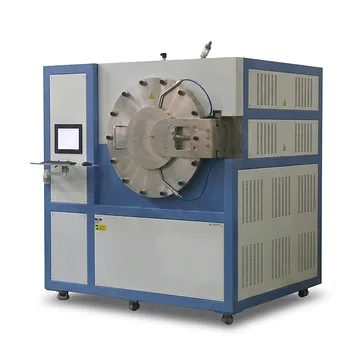
High Vacuum Pressure Chamber Furnace 800C 3.5 Bar Sintering System for Superconducting Materials

High Temperature 1700C Vertical Tube Furnace for Powder Spherification and Material Sintering
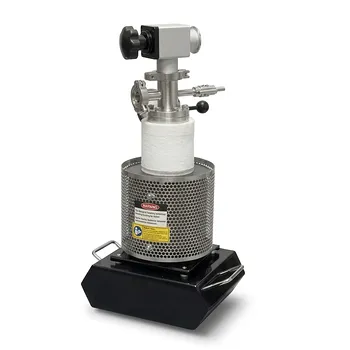
High Temperature 1100C Compact Top Loading Vertical Vacuum Tube Furnace for High Vacuum Noble Metal Melting and Material Research
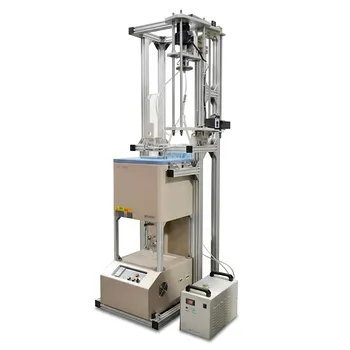
500C Vacuum Vertical Tube Furnace 84mm OD Sample Rotation Lifting System
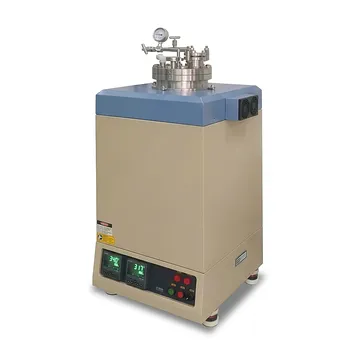
High Temperature 1000C Vacuum Furnace with 8 Inch ID Chamber for Material Sintering and Research Annealing

1800C High Temperature Compact Vacuum Tube Furnace with 60mm OD Alumina Tube and Kanthal MoSi2 Heating Elements
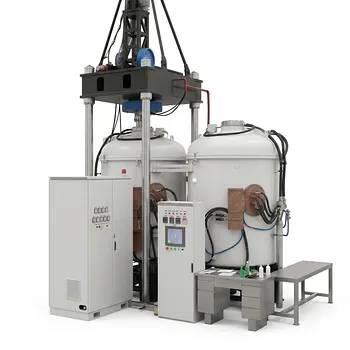
High Pressure 600T Vacuum Induction Hot Press Furnace for Advanced Material Heat Treatment and Sintering
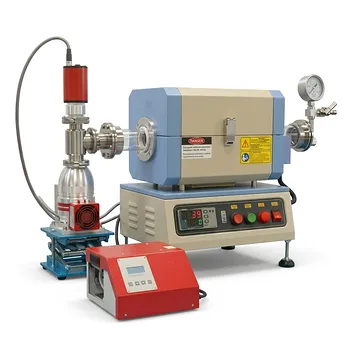
High Vacuum Compact Tube Furnace 1200C with Integrated Turbo Pump System and 8 Inch Heating Zone

1750°C High Temperature Benchtop Vacuum Atmosphere Tube Furnace with Kanthal Super 1800 Heating Elements and 60mm Alumina Processing Tube
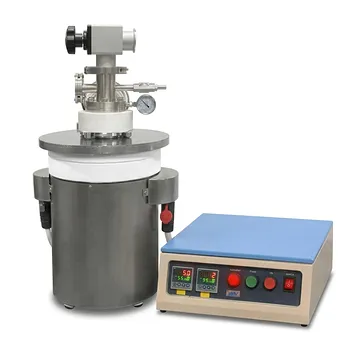
1100C High Temperature Vacuum Crucible Furnace with Quartz Chamber for Thermal Processing and Sintering
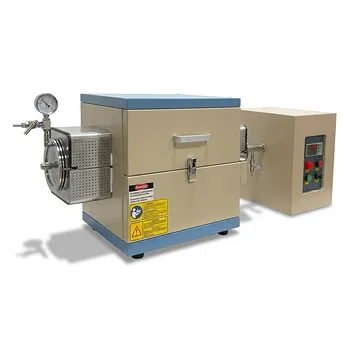
1200C High Temperature 5 Inch Split Vacuum Tube Furnace with 12 Inch Heating Zone and Separated PID Controller
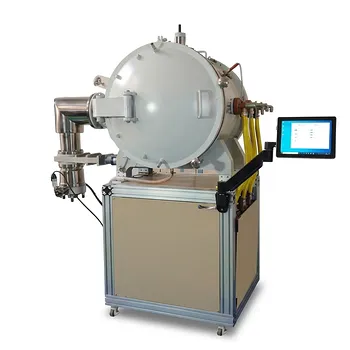
High Temperature Cold Wall Vacuum Furnace for Advanced Material Sintering and Annealing 1600C Heating Area 200x200x300mm
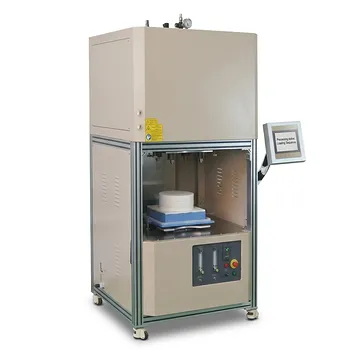
High Temperature Vertical Atmosphere Controlled Furnace with Automatic Bottom Loading and 1700°C Capacity for Advanced Material Research
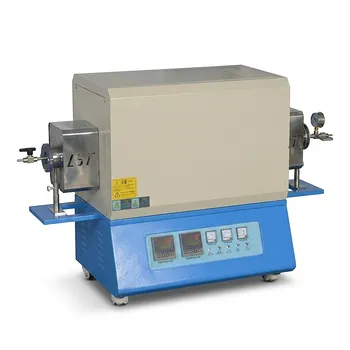
High Temperature Dual Zone Vacuum Tube Furnace for Material Research and CVD Processing
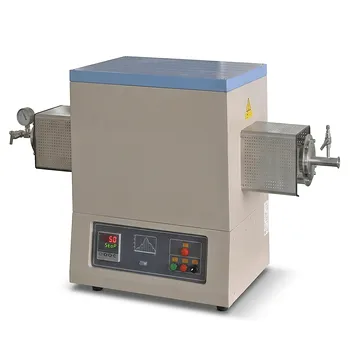
High Temperature 1700C Tube Furnace with 4 Inch OD Alumina Tube and Vacuum Sealing Flanges

High Temperature Automated 5 Inch Tube Furnace for Autonomous Material Research and Advanced Laboratory R&D
High Temperature Split Tube Furnace 1500C for Material Research Vacuum and Atmosphere Thermal Processing

1100C Tube Furnace with Vacuum Flange and Programmable Temperature Controller for Material Science and Industrial Heat Treatment
