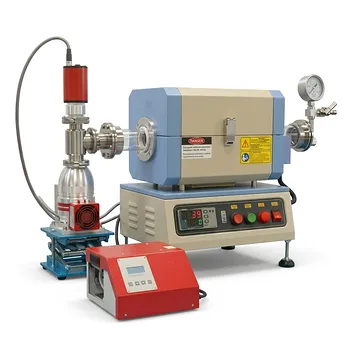
What role does a programmable temperature-controlled tube furnace play in the heat treatment of TiO2:Ag films?
Updated 3 months ago
The programmable temperature-controlled tube furnace acts as the definitive thermal architect for TiO2:Ag films. It provides a highly stable and precise environment necessary to transition the films from a disordered, amorphous state into functional crystalline structures. By meticulously regulating temperature ranges and ramp rates, the furnace dictates the final phase composition, silver distribution, and optical performance of the material.
Core Takeaway: The tube furnace is essential for converting amorphous titanium dioxide into specific crystal phases while simultaneously managing the nucleation of silver particles. This precise thermal control is what allows researchers to tune the film's grain size and optical properties for specific technical applications.
Orchestrating Phase Transformations in the TiO2 Matrix
Facilitating the Amorphous-to-Crystalline Transition
In its as-deposited state, titanium dioxide is often amorphous and lacks the structural order required for advanced applications. The tube furnace provides the thermal energy necessary to drive the phase transition into anatase or rutile structures, which are critical for photocatalytic and electronic performance.
Controlling Temperature Ranges
The furnace typically operates within a 300°C to 600°C range for these specific films. Precise control within this window is vital, as different temperatures favor different crystalline outcomes, allowing the user to select the specific phase that best suits their project goals.
Managing Heating and Cooling Rates
The "programmable" nature of the furnace allows for strict control over heating and cooling rates. Stable ramp rates ensure that the film reaches its target temperature without suffering from thermal shock, which can cause cracking or delamination from the substrate.
Regulating Silver (Ag) Phase Evolution
Driving Precipitation and Nucleation
A key role of the heat treatment is the management of the silver dopant. The furnace provides the environment required for the precipitation and nucleation of silver phases from within the TiO2 matrix, ensuring the metallic particles are correctly integrated or surfaced.
Tuning Optical Properties
The distribution and size of these silver particles directly influence the optical properties of the film. By adjusting the annealing duration and temperature, the furnace allows for the fine-tuning of light absorption and scattering characteristics.
Controlling Grain Size
Thermal energy provided by the furnace facilitates grain growth. Through precise timing, the furnace helps achieve an optimal grain size that balances the surface area of the film with its overall structural crystallinity.
Enhancing Structural Integrity and Quality
Relieving Internal Stresses
The annealing process effectively relieves internal stresses that often accumulate during the initial film deposition. This stress relief is critical for preventing film failure and ensuring long-term mechanical stability.
Reducing Defect Density
A controlled thermal environment helps in the rearrangement of crystal grains, which reduces the density of internal defects. This improvement in crystallinity often leads to better charge separation efficiency and improved ultraviolet-visible transparency.
Optimizing Interfaces
For films used in heterojunctions or multi-layer devices, the tube furnace ensures effective diffusion and bonding between layers. This creates atomically smooth interfaces and enhances the structural stability of the entire device architecture.
Understanding the Trade-offs
The Risk of Phase Over-Transition
While heat is necessary for crystallinity, excessive temperatures can drive the film toward the rutile phase prematurely. While stable, the rutile phase often exhibits lower photocatalytic activity than anatase, which may be detrimental depending on the intended use.
Grain Overgrowth and Surface Area
Extended periods at high temperatures can lead to excessive grain growth. While this improves crystallinity, it can significantly reduce the specific surface area of the film, potentially lowering its efficiency in chemical or catalytic reactions.
Silver Agglomeration
Improperly managed thermal cycles can cause silver particles to agglomerate into large clusters. This uneven distribution can disrupt the film's uniformity and negatively impact its localized surface plasmon resonance (LSPR) effects.
How to Apply This to Your Project
Recommendations for Targeted Results
- If your primary focus is high photocatalytic activity: Target the lower end of the temperature range (approx. 400°C-450°C) to maximize the formation of the anatase phase while preventing over-growth.
- If your primary focus is maximum chemical stability: Utilize higher temperatures (above 600°C) to encourage the transition to the rutile phase and ensure complete lattice integration.
- If your primary focus is optical transparency: Use a programmable ramp rate of approximately 5°C/min to ensure uniform grain growth and minimize internal scattering defects.
Precise thermal management via a programmable furnace is the single most important factor in transforming a raw TiO2:Ag deposit into a high-performance functional film.
Summary Table:
| Key Role | Specific Mechanism | Impact on TiO2:Ag Films |
|---|---|---|
| Phase Transition | Regulates 300°C–600°C range | Determines Anatase vs. Rutile crystalline structure. |
| Ag Management | Controls nucleation & precipitation | Tunes optical absorption and LSPR effects. |
| Structural Integrity | Programmable ramp rates | Relieves internal stresses; prevents cracking or peeling. |
| Morphology Control | Precise soaking time | Balances grain size with specific surface area. |
| Defect Reduction | Stable thermal environment | Lowers defect density for better charge separation. |
Elevate Your Material Research with THERMUNITS Precision
Achieving the perfect crystalline phase and silver distribution in TiO2:Ag films requires uncompromising thermal accuracy. THERMUNITS is a leading manufacturer of high-temperature laboratory equipment, providing the specialized tools material scientists and industrial R&D teams need for breakthrough results.
From high-precision Tube and Vacuum Furnaces to advanced CVD/PECVD systems and Atmosphere Furnaces, our equipment is engineered to give you absolute control over heating rates, atmosphere, and temperature uniformity. Whether you are working on photocatalysis, electronics, or advanced coatings, we offer the comprehensive thermal solutions—including Muffle, Rotary, and Hot Press furnaces—to ensure your project's success.
Ready to optimize your heat treatment process?
Contact our technical experts today to find the ideal furnace for your laboratory requirements.
References
- T. Ivanova, Raphaël Closset. Crystallization and Optical Behaviour of Nanocomposite Sol-Gel TiO2:Ag Films. DOI: 10.3390/molecules29215156
Mentioned Products
- 1100C Tube Furnace with Vacuum Flange and Programmable Temperature Controller for Material Science and Industrial Heat Treatment
- 1250C Compact Split Tube Furnace with 8 Inch Heating Zone and Programmable Controller
- High Temperature Dual Zone Tube Furnace for Material Science Research and Professional Thermal Processing
- Mini Rotary Tubular Furnaces for Precision Powder Heat Treatment and Thermogravimetric Analysis
- Laboratory Tilting Rotary Tubular Furnaces for Material Science and Industrial Heat Treatment
People Also Ask
- What are the advantages of 1100°C tube furnaces for ORR catalysts? Boost Conductivity and Structural Stability.
- What role does a tube furnace play in PS template removal? Ensure ZnO/SiO2 Structural Integrity & High Performance.
- What core functions does a high-temperature vacuum tube furnace provide? Optimize np-CuSn Sintering & Joint Integrity
- What is the role of a high-temperature tube furnace in the calcination process of ZnO/In2O3 nanocomposites?
- What impact does the heating rate of a tube furnace have on biochar microstructure? Optimize Your Material R&D.

Tech Team · ThermUnits
Last updated on Jun 02, 2026
Related Products

1100C Tube Furnace with Vacuum Flange and Programmable Temperature Controller for Material Science and Industrial Heat Treatment
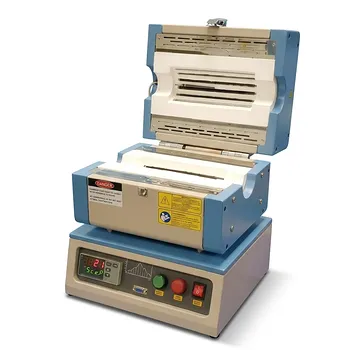
1250C Compact Split Tube Furnace with 8 Inch Heating Zone and Programmable Controller
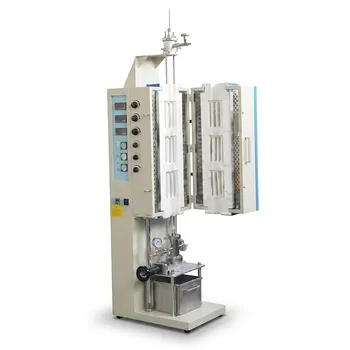
High Temperature Dual Zone Tube Furnace for Material Science Research and Professional Thermal Processing
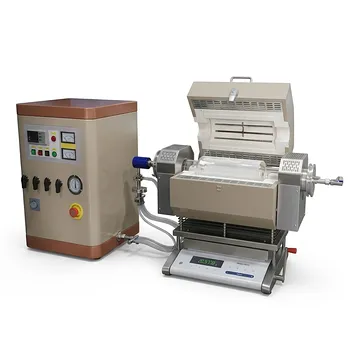
Mini Rotary Tubular Furnaces for Precision Powder Heat Treatment and Thermogravimetric Analysis
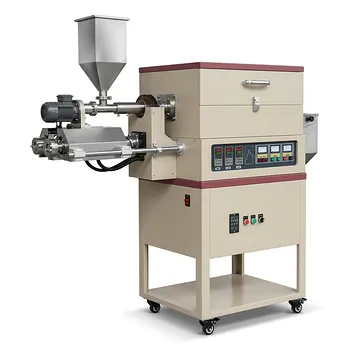
Laboratory Tilting Rotary Tubular Furnaces for Material Science and Industrial Heat Treatment
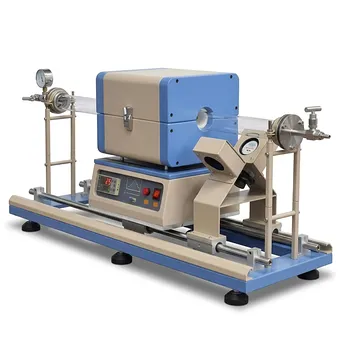
Automated Sliding Tube Furnace for Fast Heating and Cooling 2 Inch OD 1100C Max
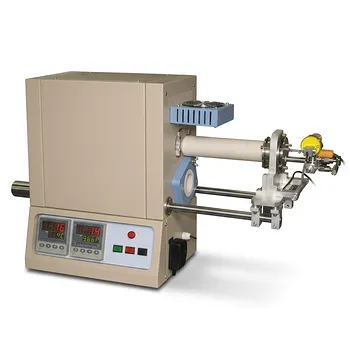
High Temperature Tube Furnace 1500C with Sliding Flanges and 50mm OD for Rapid Thermal Processing Fast Heating and Cooling
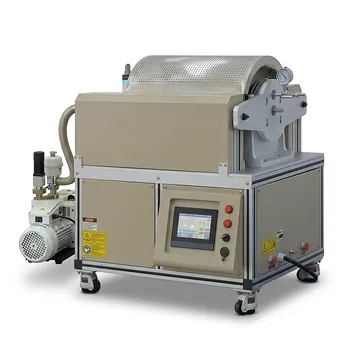
Automated 1200 C Tube Furnace for AI Material Research with 6 Inch OD and Sliding Flange
Rapid Thermal Processing Sliding Tube Furnace with 4 Inch OD Quartz Tube and 900C IR Heating

1800C High Temperature Compact Vacuum Tube Furnace with 60mm OD Alumina Tube and Kanthal MoSi2 Heating Elements
900°C Max Rotary Tube Furnace with 8 Inch 310S Alloy Tube and Optional Multi Zone Heating for Industrial Material Calcination
Two Zone IR Heating Rapid Thermal Processing RTP Tube Furnace with 4 Inch ID Quartz Tube and Sliding Sample Holders
900 ºC Max Sliding RTP Tube Furnace with Rapid IR Heating and 4 Inch OD Quartz Tube
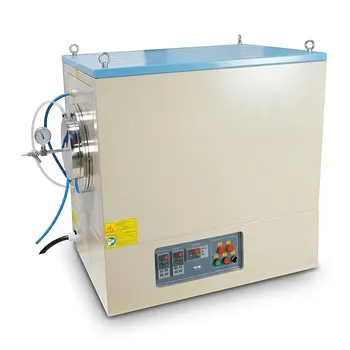
Dual Zone Tube Furnace 1100C with 11 Inch Quartz Tube and Vacuum Flanges for 8 Inch Wafer Processing

Compact High Temperature 1600C Tube Furnace with 50mm Alumina Tube and Vacuum Flanges for Material Sintering
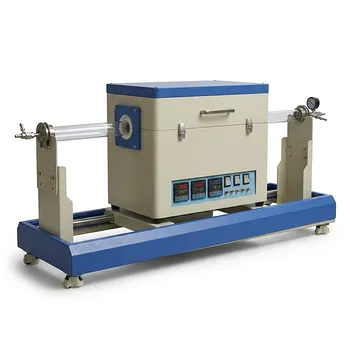
Double Temperature Zone Double Cover Tube Furnace for High Temperature CVD and Vacuum Annealing

High Temperature 1700C Benchtop Tube Furnace with 5 Inch Heating Zone High Purity Alumina Tube and Vacuum Sealing Flanges

Vertical 1700C Vacuum and Atmosphere Tube Furnace with 80mm Alumina Tube
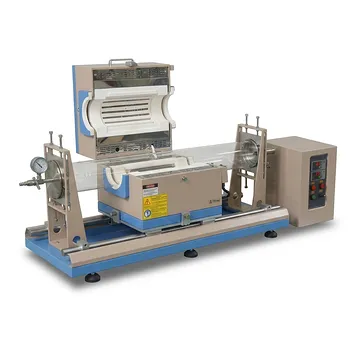
1200C High Temperature 5 Inch Sliding Tube Furnace for Rapid Thermal Processing RTP and Wafer Annealing