What role does a tube furnace play during the air-atmosphere heat treatment of titanium nitride-based catalyst precursors?
Updated 3 months ago
The tube furnace serves as a precision thermal reactor for the dehydration and stabilization of catalyst precursors. During air-atmosphere treatment at moderate temperatures (typically around 110°C), the furnace removes residual moisture and volatile organic compounds while physically anchoring metal precursors, such as platinum, to the titanium nitride (TiN) support. This phase is critical because it establishes a stable structural foundation, preventing the agglomeration of active sites during later high-temperature reduction stages.
The tube furnace provides the controlled environment necessary to transition a raw, impregnated support into a stabilized intermediate. By precisely managing temperature and atmosphere, it ensures that active components are uniformly fixed and the support is prepared for subsequent chemical activation.
Fundamental Functions in Air-Atmosphere Treatment
Removal of Trace Moisture and Volatiles
The primary role of the tube furnace at this stage is to eliminate any remaining solvent or moisture from the pre-dried precursor.
Even after initial drying, trace water and volatile organic compounds (VOCs) can remain trapped within the pores of the TiN support. The furnace provides a consistent, elevated temperature (e.g., 110°C) to drive these impurities out, ensuring they do not interfere with future chemical reactions.
Initial Stabilization of Metal Precursors
The furnace facilitates the first stage of "anchoring" active metal species, such as platinum (Pt), onto the TiN surface.
This thermal energy allows the metal ions to settle into stable positions on the support's lattice. This early stabilization is vital for maintaining a uniform distribution of metal particles before the catalyst undergoes more aggressive high-temperature processing.
Establishing the Structural Foundation
Preparing for High-Temperature Reduction
The air-atmosphere heat treatment acts as a "pre-conditioning" step for the catalyst.
By creating a dry, stable intermediate, the furnace ensures that the subsequent high-temperature reduction—often performed in hydrogen or inert atmospheres—is effective. Without this foundation, the rapid loss of moisture or volatiles at high temperatures could cause structural collapse or "sintering" of the active metal sites.
Maintaining Support Integrity
Titanium Nitride (TiN) is a robust but sensitive support material that requires careful handling.
The tube furnace allows for gradual heating curves, which prevent thermal shock to the TiN structure. This precision ensures that the support maintains its high surface area and conductivity, which are essential for its catalytic performance.
Understanding the Trade-offs and Risks
Atmosphere Sensitivity and Oxidation
While air is used for initial stabilization, high temperatures in an oxygen-rich environment can be detrimental to TiN.
Titanium Nitride can begin to oxidize into Titanium Dioxide (TiO2) if temperatures exceed specific thresholds in air. This transformation can drastically change the electrical conductivity and catalytic synergy of the material, making precise temperature control within the tube furnace non-negotiable.
The Impact of Heating Rates
Applying heat too rapidly can lead to uneven "calcination" or the uneven distribution of active sites.
If the furnace ramps up too quickly, the escaping gases can physically displace the metal precursors, leading to poor dispersion. A slow, controlled ramp is necessary to ensure that the chemical bond between the metal and the TiN support is uniform across the entire batch.
How to Apply This to Your Project
Recommendations Based on Your Research Goals
- If your primary focus is maximizing active site dispersion: Utilize the tube furnace to perform a slow, low-temperature ramp in air to fix the metal precursors firmly before switching to a reducing atmosphere.
- If your primary focus is preserving the TiN lattice structure: Strictly limit the air-atmosphere duration and temperature (ideally below 200°C) to prevent unwanted oxidation of the nitride into an oxide.
- If your primary focus is removing complex organic ligands: Use the tube furnace to provide a stable, long-duration soak at a moderate temperature to ensure all VOCs are evolved before the final activation step.
The tube furnace is the bridge between a chemical mixture and a functional catalyst, providing the precise thermal control required to stabilize active sites while protecting the integrity of the titanium nitride support.
Summary Table:
| Function | Impact on Catalyst Precursor | Critical Control Parameter |
|---|---|---|
| Dehydration | Eliminates moisture/VOCs to prevent structural collapse | 110°C - 200°C Soak Time |
| Metal Anchoring | Fixes active species (e.g., Pt) to prevent agglomeration | Gradual Heating Ramp |
| Structural Prep | Conditions TiN surface for high-temp reduction | Atmosphere Composition |
| Oxidation Control | Prevents TiN transformation into non-conductive TiO2 | Precise Temp Thresholds |
Elevate Your Catalyst Research with THERMUNITS Precision
At THERMUNITS, we understand that catalyst stability depends on exact thermal control. As a leading manufacturer of high-temperature laboratory equipment, we provide the specialized tools you need for material science and industrial R&D.
Our advanced Tube Furnaces, CVD/PECVD systems, and Atmosphere Furnaces are engineered to deliver precise heating curves and atmosphere stability, ensuring your TiN-based precursors are perfectly stabilized without unwanted oxidation. Whether you require vacuum induction melting (VIM), rotary kilns, or hot press solutions, we deliver high-performance equipment tailored to your heat treatment goals.
Ready to optimize your thermal processes?
Contact our experts today to find the perfect furnace for your laboratory’s next breakthrough!
References
- Yunjie Zou, Lan Ling. Surface frustrated Lewis pairs in titanium nitride enable gas phase heterogeneous CO2 photocatalysis. DOI: 10.1038/s41467-024-54951-2
Mentioned Products
- High Temperature 1200C Split Tube Furnace for CVD Research and Vacuum Atmosphere Heat Treatment
- 900 ºC Max Sliding RTP Tube Furnace with Rapid IR Heating and 4 Inch OD Quartz Tube
- 1100C Tube Furnace with Vacuum Flange and Programmable Temperature Controller for Material Science and Industrial Heat Treatment
- Gas Pre-Heating Tube Furnace for High Temperature Pyrolysis Reactors and Material Science Research
- Compact Vertical Split Quartz Tube Furnace with Stainless Steel Vacuum Flanges for Rapid Thermal Quenching and Controlled Atmosphere Material Processing
People Also Ask
- What is the primary function of a high-temperature split tube furnace in nitrogen metastable particle research? Expert Guide
- What core functions does a high-temperature vacuum tube furnace provide? Optimize np-CuSn Sintering & Joint Integrity
- Why is a Tube Furnace typically utilized for CVD? Achieve Precision in Graphene and 2D Material Synthesis
- What role does a high-temperature tube atmosphere furnace play in the carbonization of 3D-printed precursors? Expert Guide
- What role does a high-temperature tube atmosphere furnace play in the solid-state synthesis of CaGa4O7:Mn2+ phosphor?

Tech Team · ThermUnits
Last updated on Jun 02, 2026
Related Products
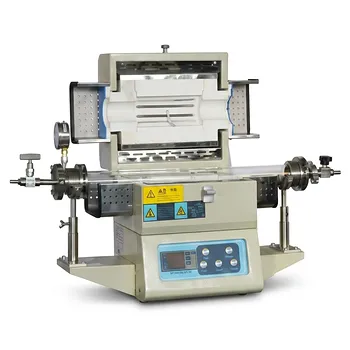
High Temperature 1200C Split Tube Furnace for CVD Research and Vacuum Atmosphere Heat Treatment
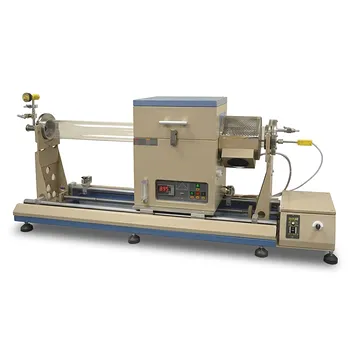
900 ºC Max Sliding RTP Tube Furnace with Rapid IR Heating and 4 Inch OD Quartz Tube
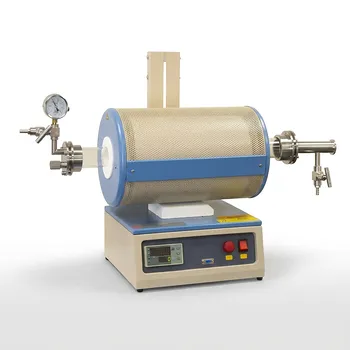
1100C Tube Furnace with Vacuum Flange and Programmable Temperature Controller for Material Science and Industrial Heat Treatment
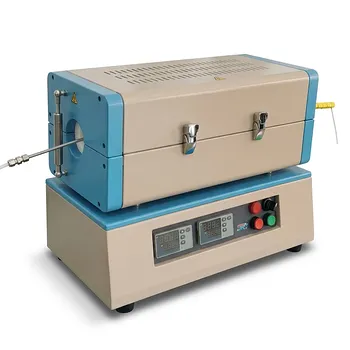
Gas Pre-Heating Tube Furnace for High Temperature Pyrolysis Reactors and Material Science Research

Compact Vertical Split Quartz Tube Furnace with Stainless Steel Vacuum Flanges for Rapid Thermal Quenching and Controlled Atmosphere Material Processing

1750°C High Temperature Benchtop Vacuum Atmosphere Tube Furnace with Kanthal Super 1800 Heating Elements and 60mm Alumina Processing Tube
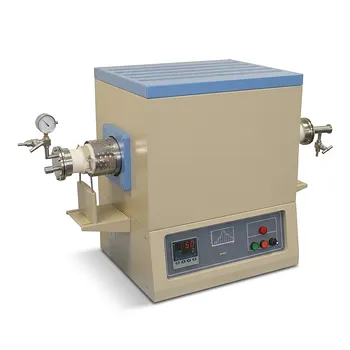
1700C High Temperature Alumina Tube Furnace with 18 Inch Heated Zone and Vacuum Sealing Flanges

Vertical 1700C Vacuum and Atmosphere Tube Furnace with 80mm Alumina Tube

1800C High Temperature Compact Vacuum Tube Furnace with 60mm OD Alumina Tube and Kanthal MoSi2 Heating Elements
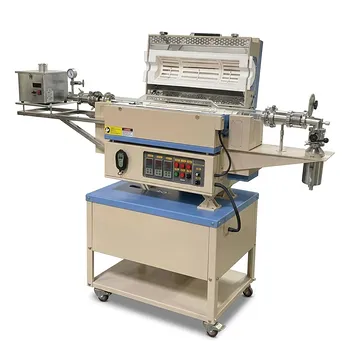
5 Inch Rotary Tube Furnace with Automatic Feeding and Receiving System 1200C Three Zone CVD Powder Processing
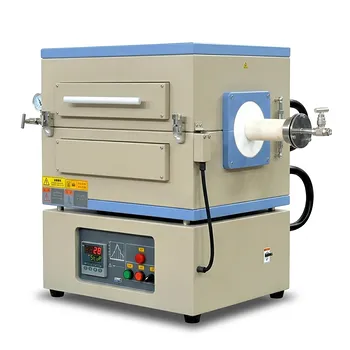
1500°C Split Tube Furnace with Alumina Tube and Vacuum Sealing Flanges for Material Research

High Temperature 1700C Benchtop Tube Furnace with 5 Inch Heating Zone High Purity Alumina Tube and Vacuum Sealing Flanges
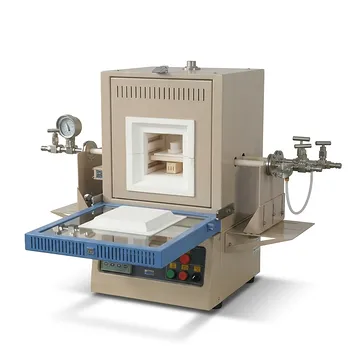
1700C Compact Hybrid Furnace with Dual Layer Box Sintering and Controlled Atmosphere Alumina Tubes

1100°C High Temperature Quartz Chamber Furnace 8 Inch OD with 7.6 Liter Capacity and Vacuum Atmosphere Capability
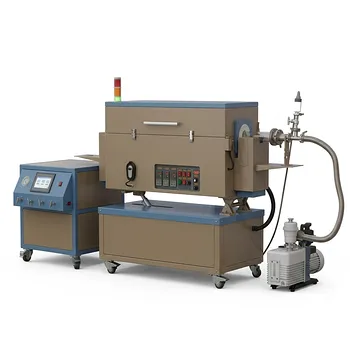
5 Inch Three Zone Rotary Tube Furnace with Integrated Gas Delivery System and 1200C Capability for Advanced Material CVD Processing

High Temperature 1700C Vertical Tube Furnace for Powder Spherification and Material Sintering
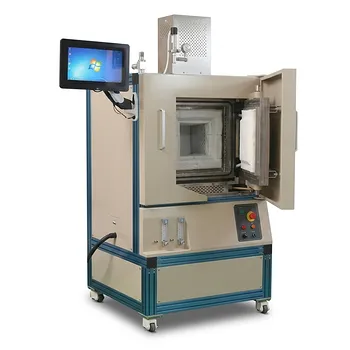
High Temperature Oxygen and Inert Atmosphere Controlled Furnace 8 Liter 1700C Sintering System for Advanced Materials RD
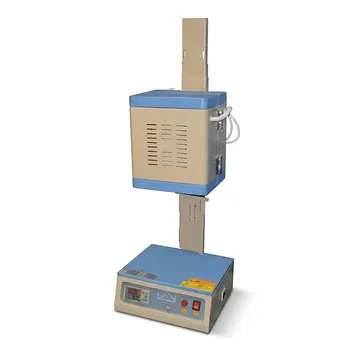
High Temperature Vertical Split Tube Furnace with PID Temperature Controller for 1 and 2 Inch Processing Tubes
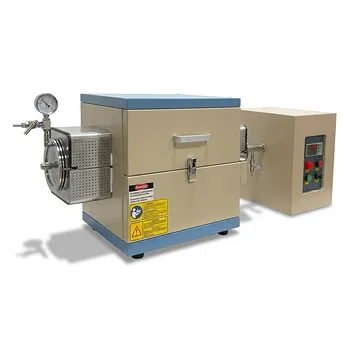
1200C High Temperature 5 Inch Split Vacuum Tube Furnace with 12 Inch Heating Zone and Separated PID Controller