What role does an atmosphere-controlled tube furnace play in the final formation stage of Ni–TiN catalysts? Key Benefits
Updated 3 months ago
The atmosphere-controlled tube furnace is the fundamental tool for the thermal transformation of catalyst precursors into their final active state. It provides a strictly regulated environment—such as flowing nitrogen—and specific heating programs that convert nickel precursors into nickel oxide while ensuring they are firmly anchored to the Titanium Nitride (TiN) support. This process is the decisive factor in defining the grain size of the active components and the structural strength of the metal-support interaction.
The tube furnace serves as the "reaction chamber" where thermal energy and atmospheric chemistry converge to define the physical structure and catalytic activity of the Ni–TiN system. By meticulously controlling heating rates and gas composition, it prevents particle sintering and optimizes the dispersion of active sites on the TiN surface.
Chemical Transformation and Phase Control
Converting Precursors to Active Phases
The primary role of the furnace is to facilitate the chemical transition from metal salts or precursors into the desired nickel oxide phase. This transformation is driven by precise heating curves that dictate the rate of decomposition and oxidation.
Atmospheric Regulation
By utilizing a controlled atmosphere, such as flowing nitrogen, the furnace prevents unwanted side reactions like excessive oxidation or contamination from ambient air. This protection is vital for ensuring that the nickel components reach the specific oxidation state required for catalytic performance.
Removing Impurities and Volatiles
During the initial stages of heating, the furnace environment serves to drive off residual moisture and volatile organic compounds. This "cleaning" phase stabilizes the precursors and establishes a clean surface for the metal to bond with the TiN support.
Structural Integrity and Anchoring
Establishing Metal-Support Interactions (MSI)
The thermal energy provided by the furnace facilitates a high-strength bond between the nickel and the Titanium Nitride (TiN) support. This "anchoring" effect is critical because it prevents the active nickel particles from migrating or aggregating during high-temperature catalytic reactions.
Controlling Grain Size and Dispersion
By managing the heating rate (e.g., 2°C per minute), the furnace limits the growth of nickel grains. Slower, more precise heating ensures that the metal is distributed as uniformly dispersed nanoparticles rather than large, inefficient clumps.
Constructing Heterogeneous Interfaces
The furnace allows for the creation of unique heterostructures where the nickel and TiN meet. These interfaces are often the most active parts of the catalyst, and their formation depends entirely on the stability of the temperature and gas flow during the final calcination stage.
Understanding the Trade-offs
The Risk of Thermal Sintering
If the furnace temperature is too high or the heating duration is too long, the active nickel particles can undergo sintering. This process causes particles to fuse together, drastically reducing the surface area and the overall efficiency of the catalyst.
Balancing Atmosphere and Oxidation
Choosing the wrong gas environment can lead to incomplete conversion or the formation of the wrong chemical phase. For instance, too much oxygen might over-oxidize the support, while a purely inert atmosphere might fail to fully convert certain nickel precursors into the required oxide form.
How to Apply This to Your Project
The specific configuration of your furnace treatment should be dictated by the final application of your Ni–TiN catalyst.
- If your primary focus is maximizing active surface area: Use a slower heating rate and a moderate peak temperature to prevent the aggregation of nickel nanoparticles.
- If your primary focus is catalyst longevity and stability: Focus on higher-temperature calcination to strengthen the anchoring between the nickel and the TiN support, even if it slightly increases grain size.
- If your primary focus is specific phase purity (e.g., Ni3N vs. NiO): Precisely select your atmosphere (e.g., ammonia for nitridation or nitrogen for stabilization) to drive the specific chemical transformation required.
The atmosphere-controlled tube furnace is not merely a heater, but a precision instrument that dictates the catalytic potential of the Ni–TiN system through environmental and thermal mastery.
Summary Table:
| Function | Impact on Catalyst | Key Control Parameters |
|---|---|---|
| Phase Conversion | Converts metal precursors into active NiO phases | Heating curves & Peak temperature |
| Atmospheric Control | Prevents unwanted oxidation; ensures phase purity | Gas composition (e.g., N2 flow) |
| Structural Anchoring | Strengthens Metal-Support Interactions (MSI) | Calcination duration & Energy input |
| Grain Size Regulation | Prevents sintering; ensures nanoparticle dispersion | Precise heating rates (e.g., 2°C/min) |
Elevate Your Material Research with THERMUNITS
Precision in thermal processing is the bridge between a precursor and a high-performance catalyst. THERMUNITS is a leading manufacturer of high-temperature laboratory equipment specifically designed for material science and industrial R&D.
We provide a comprehensive range of thermal solutions tailored for the synthesis of advanced catalysts like Ni–TiN, including:
- Atmosphere and Tube Furnaces for precise gas and phase control.
- Vacuum, Muffle, and Rotary Furnaces for versatile material processing.
- CVD/PECVD Systems, Hot Press Furnaces, and Vacuum Induction Melting (VIM) for complex heterostructure engineering.
Whether you are refining grain size or strengthening metal-support interactions, our equipment ensures the stability and uniformity your research demands.
Ready to optimize your catalytic results? Contact us today to find the perfect thermal processing solution for your laboratory.
References
- Yi Zhu, Emma C. Lovell. Making light work: designing plasmonic structures for the selective photothermal methanation of carbon dioxide. DOI: 10.1039/d3ey00315a
Mentioned Products
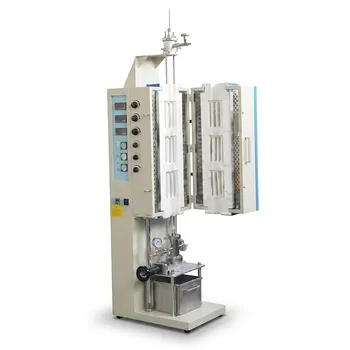
- 1200°C Atmosphere Controlled Automatic Bottom Loading Furnace with 6 Inch Quartz Tube
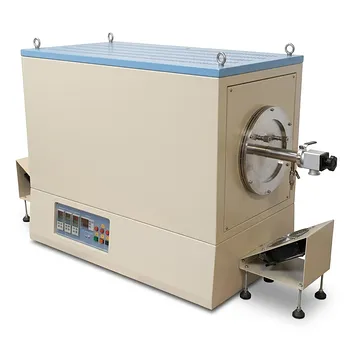
- Compact Hybrid Muffle and Tube Furnace for 1000C Controlled Atmosphere Laboratory Material Sintering
- Compact Vertical Split Quartz Tube Furnace with Stainless Steel Vacuum Flanges for Rapid Thermal Quenching and Controlled Atmosphere Material Processing
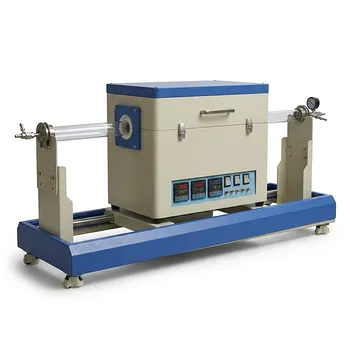
- 1700C Compact Hybrid Furnace with Dual Layer Box Sintering and Controlled Atmosphere Alumina Tubes
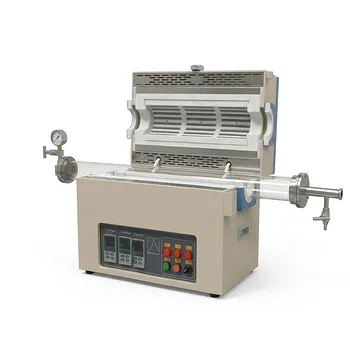
- 1500°C Split Tube Furnace with Alumina Tube and Vacuum Sealing Flanges for Material Research
People Also Ask
- Why is a tube furnace required for FGM-PhG structural color ceramics? Key to Carbon Preservation & Vibrant Color
- Why is an atmosphere-controlled tube furnace required for 800 °C CNF annealing? Essential for Oxidative Protection.
- Why is an atmosphere-controlled tube furnace required for the pre-sulfidation of NiMo/gamma-Al2O3 catalysts?
- Why is an atmosphere-controlled tube furnace required for [email protected]/C preparation? Key for Purity & Structure
- Why is an atmosphere-controlled tube furnace required for single-atom sensor calcination? Ensure Atomic Dispersion.

Tech Team · ThermUnits
Last updated on Jun 03, 2026
Related Products
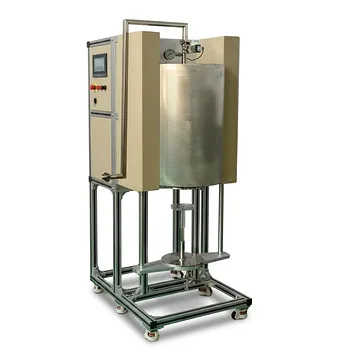
1200°C Atmosphere Controlled Automatic Bottom Loading Furnace with 6 Inch Quartz Tube
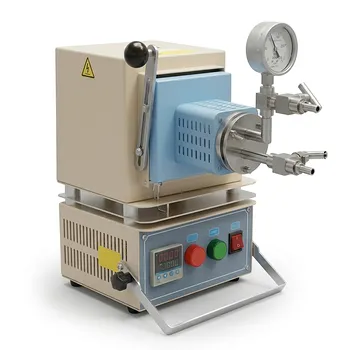
Compact Hybrid Muffle and Tube Furnace for 1000C Controlled Atmosphere Laboratory Material Sintering

Compact Vertical Split Quartz Tube Furnace with Stainless Steel Vacuum Flanges for Rapid Thermal Quenching and Controlled Atmosphere Material Processing
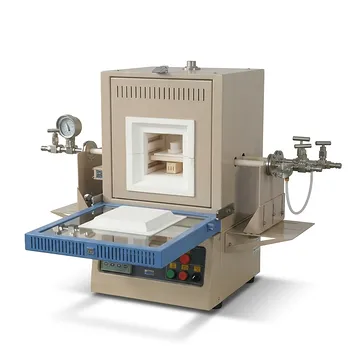
1700C Compact Hybrid Furnace with Dual Layer Box Sintering and Controlled Atmosphere Alumina Tubes
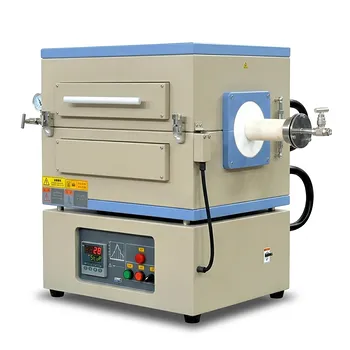
1500°C Split Tube Furnace with Alumina Tube and Vacuum Sealing Flanges for Material Research
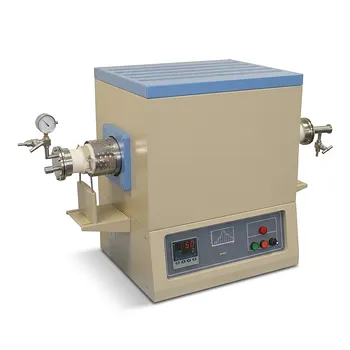
1700C High Temperature Alumina Tube Furnace with 18 Inch Heated Zone and Vacuum Sealing Flanges
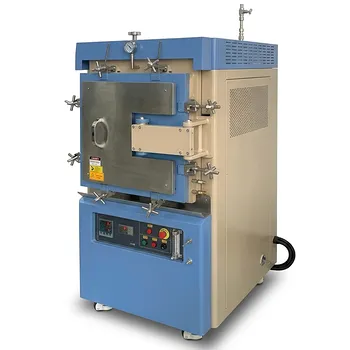
Atmosphere Controlled Muffle Furnace 1700C Maximum Temperature 80L High Capacity Vacuum Inert Gas Box Furnace

Vertical 1700C Vacuum and Atmosphere Tube Furnace with 80mm Alumina Tube
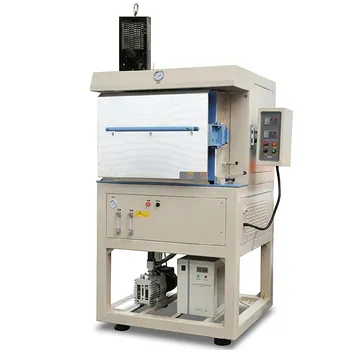
1200C Hydrogen Atmosphere Box Furnace with 5 Heated Sides and 64L Chamber

Three Zone Tube Furnace with 11 Inch or 15 Inch Quartz Tube and Hinged Flanges for Vacuum Atmosphere Heat Treatment
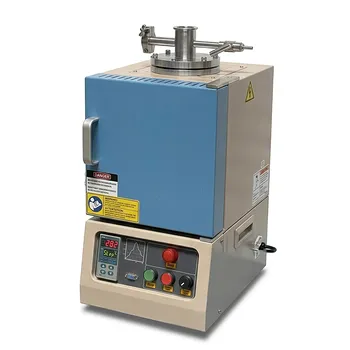
High Temperature Hybrid Muffle and Tube Furnace with Vacuum Capability and PID Control
High Temperature Dual Zone Tube Furnace for Material Science Research and Professional Thermal Processing
Four Zone Tube Furnace 1100C with 600mm Large Diameter Quartz Tube and Vacuum Flanges

High Temperature 1700C Tube Furnace with High Vacuum Turbomolecular Pump System and Multi Channel Mass Flow Controller Gas Mixer

1200°C 5 Inch Vertical Quartz Tube Furnace with Stainless Steel Vacuum Flanges
1200°C Three Zone Split Tube Furnace with 18 Inch Heating Length and Vacuum Flanges
Double Temperature Zone Double Cover Tube Furnace for High Temperature CVD and Vacuum Annealing

High Temperature Automated 5 Inch Tube Furnace for Autonomous Material Research and Advanced Laboratory R&D
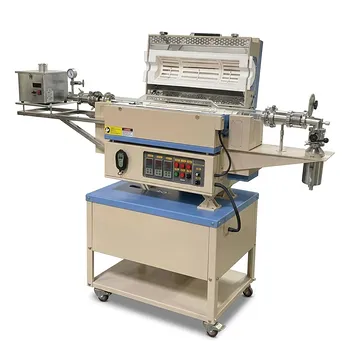
5 Inch Rotary Tube Furnace with Automatic Feeding and Receiving System 1200C Three Zone CVD Powder Processing
