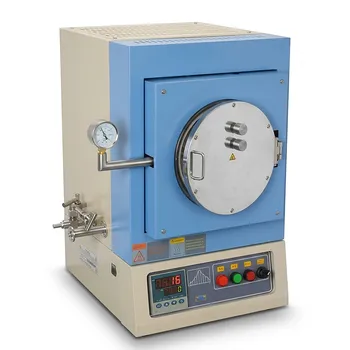
Conditions for Fe-N-C catalyst pyrolysis in tube furnaces? Optimize Heat & Atmosphere for Superior R&D
Updated 3 months ago
An industrial high-temperature tube furnace provides three critical process conditions for Fe-N-C catalyst synthesis: precise thermal ramping up to 1100 °C, a strictly controlled oxygen-deficient atmosphere (inert or reducing), and a stable environment for solid-phase molecular restructuring. These conditions are essential for transforming organic precursors into conductive carbon networks while anchoring iron atoms into active nitrogen-doped coordination sites.
Core Takeaway: The tube furnace acts as a high-precision chemical reactor that uses programmed heat and specific gas flows to convert organometallic frameworks into electrochemically active catalysts. Its primary role is to facilitate carbonization while preventing oxidation and ensuring the thermodynamic stability of the Fe-N4 active sites.
Precise Thermal Management
The furnace is responsible for the kinetic pathway of the catalyst's formation through highly controlled temperature profiles.
High-Temperature Limits and Stability
Industrial tube furnaces provide the extreme heat necessary for pyrolysis, typically ranging from 900 °C to 1100 °C. This energy level is required to induce the molecular-level collapse of organic ligands, such as those found in ZIF-8 precursors. Maintaining a stable isothermal process at these peaks ensures the carbon framework reaches the necessary degree of graphitization for electrical conductivity.
Programmed Ramping and Rhythmic Heating
The furnace utilizes precise programmed heating rates to control how the precursor decomposes. Controlled ramping (often measured in degrees per minute) prevents the sudden release of volatile species that could destroy the catalyst's surface area. This steady increase allows iron atoms to redistribute and anchor into the nitrogen-doped layers rather than aggregating into inactive metallic clusters.
Atmospheric Control and Sealing
Beyond heat, the furnace manages the chemical environment by excluding unwanted reactants and introducing specific gas phases.
Maintenance of an Oxygen-Deficient Environment
The furnace’s sealing performance is critical to ensure a completely oxygen-deficient environment. Excluding oxygen prevents the carbon substrate from oxidizing or burning away at high temperatures, preserving the catalyst's structural integrity. This "clean" environment allows for the delicate formation of Fe-N4 single-atom structures without the interference of oxide formation.
Dynamic Gas Flow (Inert and Reducing)
Furnaces provide a constant flow of protective gases, most commonly Argon (Ar) or Nitrogen (N2). In some specialized synthesis routes, a reducing atmosphere (such as a 5% H2/Ar mixture) is used to reduce metal oxides or induce specific structural defects like oxygen vacancies. The flow also serves to sweep away vaporized templates, such as zinc (Zn), which must be removed from the framework to create high porosity.
Facilitating Structural Transformation
The interaction between the thermal energy and the atmosphere triggers the actual chemical evolution of the material.
Carbonization of Organic Frameworks
The furnace environment facilitates the carbonization of organic ligands, turning a non-conductive precursor into a conductive carbon network. This process triggers a solid-phase reaction where nitrogen from the precursor is integrated into the carbon lattice. The resulting nitrogen-doped layers act as the "host" for the iron atoms, which are locked into place during this transition.
In-Situ Chemical Reactions
For specific catalyst types, the furnace environment triggers in-situ phosphidation or the incorporation of other dopants like boron. The high heat allows for the thermodynamic anchoring of metal atoms across the matrix, ensuring they remain as single atoms rather than forming nanoparticles. This ensures a high active site density, which is the primary driver of the catalyst’s oxygen reduction reaction (ORR) performance.
Understanding the Trade-offs
While high-temperature tube furnaces are indispensable, they present specific technical challenges.
Thermal Gradients and Uniformity
In larger industrial tubes, maintaining temperature uniformity across the entire length of the tube can be difficult. If the precursor in the center of the boat experiences a different temperature than the edges, the resulting catalyst will have inconsistent active site density. This often requires careful placement of the sample within the furnace's "constant temperature zone."
Gas Flow Dynamics and Turbulence
High flow rates of argon or nitrogen are necessary to remove byproducts, but they can create thermal instability. Cold gas entering the hot zone can create local temperature drops, potentially leading to incomplete carbonization in some sections of the material. Furthermore, if the gas flow is too low, byproduct vapors (like Zinc) may redeposit on the catalyst, clogging the pores.
How to Apply This to Your Project
To achieve the best results for Fe-N-C catalyst synthesis, align your furnace parameters with your specific material goals.
- If your primary focus is High Electrical Conductivity: Prioritize higher temperatures (near 1100 °C) and longer isothermal holding times to maximize graphitization.
- If your primary focus is High Surface Porosity: Use a steady flow of Argon to ensure the efficient vaporization and removal of zinc templates during the pyrolysis of ZIF precursors.
- If your primary focus is Active Site Purity: Ensure the furnace seals are vacuum-tight and use high-purity (99.999%) inert gases to prevent the formation of iron oxides.
- If your primary focus is Single-Atom Dispersion: Utilize slower heating ramps (2–5 °C/min) to allow iron atoms to find nitrogen coordination sites before the carbon framework hardens.
The industrial tube furnace is the definitive tool for transforming raw organometallic precursors into high-performance electrocatalysts through the precise application of thermal energy and atmospheric control.
Summary Table:
| Process Condition | Parameter Range | Impact on Fe-N-C Catalyst |
|---|---|---|
| Temperature | 900°C – 1100°C | Facilitates carbonization and graphitization of precursors. |
| Atmosphere | Inert (Ar/N2) or Reducing | Prevents carbon oxidation; preserves Fe-N4 active sites. |
| Heating Rate | 2°C – 5°C/min (Programmed) | Ensures stable atom anchoring; prevents precursor collapse. |
| Gas Flow | Dynamic Flow Control | Sweeps away volatile byproducts (like Zinc) to increase porosity. |
| Environment | Vacuum-tight/Sealed | Eliminates oxygen interference for high-purity synthesis. |
Elevate Your Material Research with THERMUNITS
Precision is non-negotiable when synthesizing high-performance catalysts like Fe-N-C. THERMUNITS is a leading manufacturer of high-temperature laboratory equipment, providing the stability and atmospheric control required for cutting-edge material science.
Whether you need Tube, Muffle, Vacuum, or Atmosphere furnaces, or advanced systems like CVD/PECVD and Vacuum Induction Melting (VIM), our thermal solutions ensure uniform heating and reliable molecular restructuring.
Ready to optimize your pyrolysis process? Contact our experts today to find the perfect furnace for your R&D or industrial application.
References
- Yumei Liu, Quanquan Pang. Integrated energy storage and CO2 conversion using an aqueous battery with tamed asymmetric reactions. DOI: 10.1038/s41467-023-44283-y
Mentioned Products
- High Temperature Tube Furnace 1500C with Sliding Flanges and 50mm OD for Rapid Thermal Processing Fast Heating and Cooling
- High Temperature 1700C Tube Furnace with High Vacuum Turbomolecular Pump System and Multi Channel Mass Flow Controller Gas Mixer
- 1100C Tube Furnace with Vacuum Flange and Programmable Temperature Controller for Material Science and Industrial Heat Treatment
- Compact High Temperature 1600C Tube Furnace with 50mm Alumina Tube and Vacuum Flanges for Material Sintering
- High Temperature 1700C Benchtop Tube Furnace with 5 Inch Heating Zone High Purity Alumina Tube and Vacuum Sealing Flanges
People Also Ask
- How are high-temperature tube furnaces utilized to repair etching damage? Precision Lattice Restoration Solutions
- What role does a high-temperature tube furnace play in CVD synthesis of silicon nanowires? Master VLS Growth Precision.
- What core conditions does a high-temperature tube furnace provide for rGO aerogels? Mastering Precision Synthesis.
- What role does a high-temperature tube furnace play in the sulfidation heat treatment of CoS@C/MXene nanocomposites? Guide
- How does precision tube furnace control influence CoFe nanoparticle formation? Master Your Bimetallic Synthesis.

Tech Team · ThermUnits
Last updated on Jun 03, 2026
Related Products
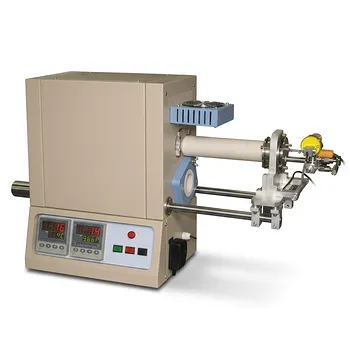
High Temperature Tube Furnace 1500C with Sliding Flanges and 50mm OD for Rapid Thermal Processing Fast Heating and Cooling

High Temperature 1700C Tube Furnace with High Vacuum Turbomolecular Pump System and Multi Channel Mass Flow Controller Gas Mixer

1100C Tube Furnace with Vacuum Flange and Programmable Temperature Controller for Material Science and Industrial Heat Treatment

Compact High Temperature 1600C Tube Furnace with 50mm Alumina Tube and Vacuum Flanges for Material Sintering
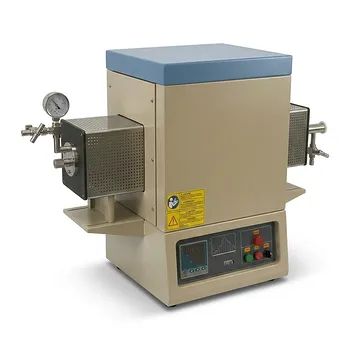
High Temperature 1700C Benchtop Tube Furnace with 5 Inch Heating Zone High Purity Alumina Tube and Vacuum Sealing Flanges

1800C High Temperature Compact Vacuum Tube Furnace with 60mm OD Alumina Tube and Kanthal MoSi2 Heating Elements
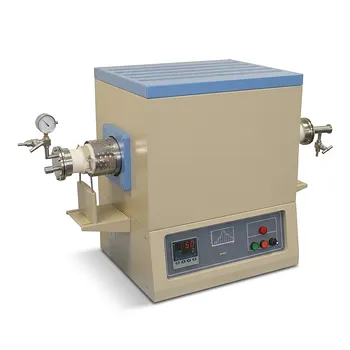
1700C High Temperature Alumina Tube Furnace with 18 Inch Heated Zone and Vacuum Sealing Flanges
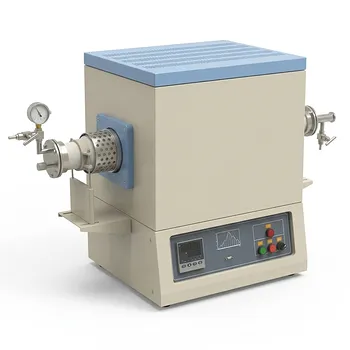
1750°C High Temperature Benchtop Vacuum Atmosphere Tube Furnace with Kanthal Super 1800 Heating Elements and 60mm Alumina Processing Tube

High Temperature 1700C Vertical Tube Furnace for Powder Spherification and Material Sintering
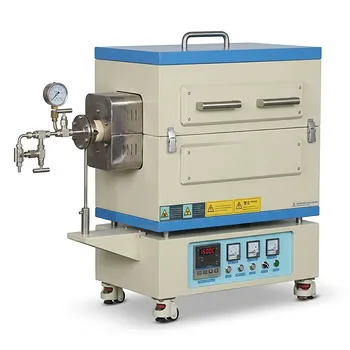
High Temperature Split Tube Furnace 1500C for Material Research Vacuum and Atmosphere Thermal Processing
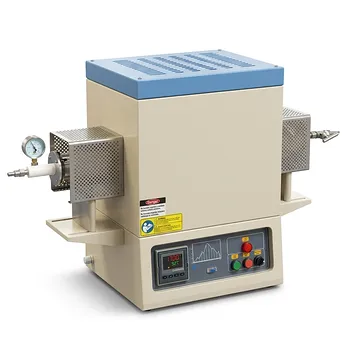
High Temperature Three Zone Tube Furnace 1700C with Alumina Tube and Water Cooled Flanges
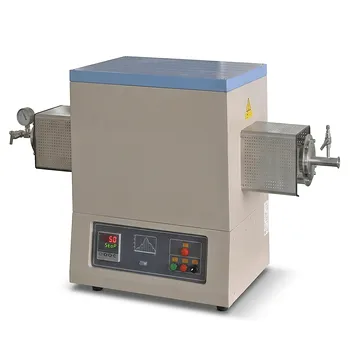
High Temperature 1700C Tube Furnace with 4 Inch OD Alumina Tube and Vacuum Sealing Flanges
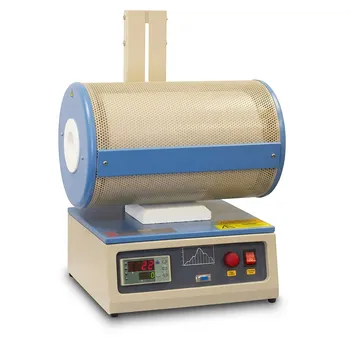
Multi Position Tube Furnace 1100C for Laboratory Material Research and Advanced Industrial Thermal Processing
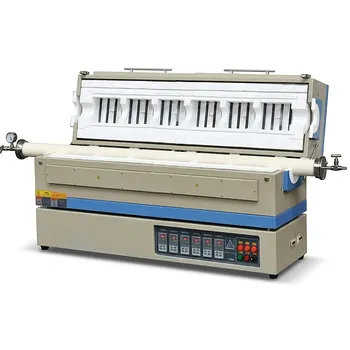
High Temperature 1700C Six Zone Split Tube Furnace with Alumina Tube and Water Cooled Flanges

High Temperature Automated 5 Inch Tube Furnace for Autonomous Material Research and Advanced Laboratory R&D
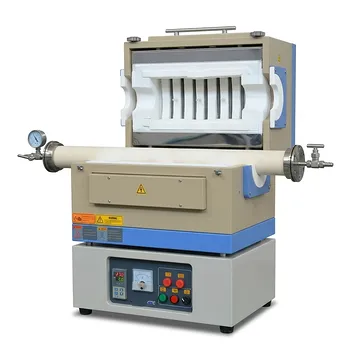
High Temperature 1600C Split Tube Furnace Vacuum Flanges Valves Optional 60mm 80mm Alumina Tube
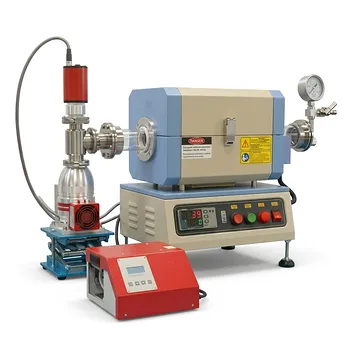
High Vacuum Compact Tube Furnace 1200C with Integrated Turbo Pump System and 8 Inch Heating Zone
1700C Hydrogen Gas Tube Furnace with 60mm Alumina Process Tube and Integrated Hydrogen Safety Detector
High Temperature Hybrid Muffle and Tube Furnace with Vacuum Capability and PID Control