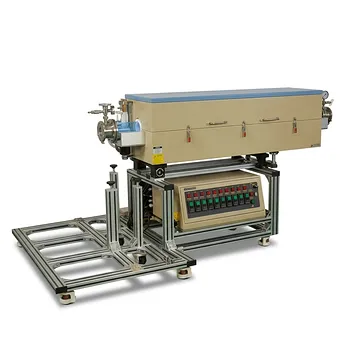
What technical advantages do high-temperature tube furnaces provide in the synthesis of multimodal luminescent materials?
Updated 3 months ago
High-temperature tube furnaces enable the synthesis of multimodal luminescent materials by providing a stable, high-precision thermal environment that facilitates full lattice development. This technical capability ensures the uniform distribution of rare earth activators and the creation of specific defect energy levels, known as trap centers. These trap centers serve as the essential physical foundation for advanced optical properties, such as long afterglow and thermoluminescence.
High-temperature tube furnaces provide the precise thermodynamic control necessary to engineer a material's atomic structure. By regulating thermal gradients and atmospheres, these systems allow researchers to create the specific crystal defects required for storing and releasing light energy.
Engineering the Crystal Lattice and Trap Centers
Facilitating Full Lattice Development
The primary technical advantage of a tube furnace is its ability to maintain stable isothermal environments over extended periods. This stability is critical for the solid-state synthesis of complex oxides and semiconductors, allowing atoms to migrate into their ideal positions. Without this precise heat, the host lattice may remain disordered, quenching the desired luminescent properties.
Creating Targeted Defect Energy Levels
Multimodal luminescence relies on trap centers—intentional "flaws" in the crystal structure that capture charge carriers. High-temperature treatment drives the formation of these specific energy levels, which act as reservoirs for light energy. By controlling the soaking time and peak temperature, engineers can tune the depth and density of these traps.
Enabling Rare Earth Activator Uniformity
Rare earth ions must be dispersed evenly throughout the host lattice to prevent "concentration quenching," where activators interfere with each other. Tube furnaces provide the thermal uniformity necessary for effective powder diffusion. This ensures that every part of the material responds consistently to excitation, which is vital for high-performance optical applications.
Managing Thermodynamics via Atmospheric Regulation
Precise Control of Stoichiometry
Many luminescent materials are sensitive to their chemical environment during heating. Tube furnaces allow for sealed or controlled atmospheres, such as inert nitrogen or reducing gases, to prevent unintended oxidation. This control is essential for maintaining the precise stoichiometry of the material, ensuring the final product matches the intended chemical formula.
Regulated Heating and Cooling Rates
The ability to set specific heating rates (e.g., 300°C/h) prevents thermal shock and allows for controlled phase transitions. This regulation is vital for the thermal decomposition of precursors without triggering explosive volatile release. Controlled cooling is equally important for "freezing" the high-temperature crystal structures and defects in place as the material returns to room temperature.
Promotion of Atomic Diffusion
In the solid-state synthesis of material series like Sr2MO3CuCh, the furnace maintains the high-heat environment required for atoms to diffuse between different precursors like metal oxides and chalcogenides. This diffusion is the mechanism that transforms raw powders into stable layered crystal structures. These structures directly determine the crystalline quality and the resulting transport properties of the semiconductor.
Understanding the Trade-offs
Thermal Gradients and Edge Effects
While tube furnaces offer excellent uniformity in the center of the heating zone, thermal gradients often exist near the tube ends. Researchers must be careful to place samples within the "constant temperature zone" to avoid inconsistent synthesis results. Failure to account for these gradients can lead to variations in crystal structure within a single batch.
Throughput and Scalability Limitations
Tube furnaces are generally designed for low-to-medium volume research rather than mass production. The physical constraints of the ceramic or quartz tube limit the size and quantity of samples that can be processed simultaneously. This makes them ideal for precision engineering but less efficient for industrial-scale manufacturing compared to large batch or continuous furnaces.
How to Apply This to Your Project
Making the Right Choice for Your Goal
To maximize the performance of your luminescent materials, align your furnace parameters with your specific structural requirements.
- If your primary focus is maximizing afterglow duration: Prioritize precise control over soaking times and cooling rates to optimize the density of deep-level trap centers.
- If your primary focus is phase purity in complex oxides: Utilize a controlled atmosphere to prevent oxidation and ensure the furnace is calibrated for a large isothermal zone.
- If your primary focus is uniform light emission intensity: Focus on a slow heating rate and extended diffusion time to ensure the rare earth activators are perfectly distributed within the host lattice.
By mastering the thermal field within a high-temperature tube furnace, you gain the ability to manipulate matter at the atomic level for advanced optical functionality.
Summary Table:
| Technical Advantage | Engineering Mechanism | Material Outcome |
|---|---|---|
| Stable Thermal Zones | Isothermal environment for solid-state diffusion | Full lattice development & phase purity |
| Atmosphere Control | Inert/Reducing gas regulation | Prevented oxidation & precise stoichiometry |
| Precise Cooling Rates | Controlled thermal gradients | Engineered trap centers for long afterglow |
| High-Heat Uniformity | Even activator distribution | Prevention of concentration quenching |
Elevate Your Material Research with THERMUNITS Precision
To achieve superior results in the synthesis of complex luminescent materials, precise thermal engineering is non-negotiable. THERMUNITS is a leading manufacturer of high-temperature laboratory equipment dedicated to supporting material science and industrial R&D excellence.
We offer a comprehensive range of thermal processing solutions tailored for high-performance applications, including:
- Tube, Rotary, and Muffle Furnaces for advanced powder and material synthesis.
- Vacuum, Atmosphere, and Hot Press Systems for controlled-environment engineering.
- CVD/PECVD Systems for sophisticated vapor deposition.
- Dental, Vacuum Induction Melting (VIM) Furnaces, and Thermal Elements for specialized heat treatments.
Ready to optimize your crystal lattice engineering and enhance your material's optical properties? Contact our technical team today to discover how our high-precision systems can empower your next breakthrough.
References
- Jiaren Du, Dirk Poelman. Manipulation of Multimodal and Multicolor Luminescence via Interplay of Traps and Rare Earth Emission Centers in Calcium Tungstate. DOI: 10.1021/acs.inorgchem.4c02423
Mentioned Products
- High Temperature Tube Furnace 1500C with Sliding Flanges and 50mm OD for Rapid Thermal Processing Fast Heating and Cooling
- High Temperature 1700C Tube Furnace with High Vacuum Turbomolecular Pump System and Multi Channel Mass Flow Controller Gas Mixer
- High Temperature 1700C Benchtop Tube Furnace with 5 Inch Heating Zone High Purity Alumina Tube and Vacuum Sealing Flanges
- 1750°C High Temperature Benchtop Vacuum Atmosphere Tube Furnace with Kanthal Super 1800 Heating Elements and 60mm Alumina Processing Tube
- Compact High Temperature 1600C Tube Furnace with 50mm Alumina Tube and Vacuum Flanges for Material Sintering
People Also Ask
- How are high-temperature tube furnaces utilized to repair etching damage? Precision Lattice Restoration Solutions
- What role does a high-temperature tube furnace play in CVD synthesis of silicon nanowires? Master VLS Growth Precision.
- What core conditions does a high-temperature tube furnace provide for rGO aerogels? Mastering Precision Synthesis.
- What role does a high-temperature tube furnace play in the sulfidation heat treatment of CoS@C/MXene nanocomposites? Guide
- How does precision tube furnace control influence CoFe nanoparticle formation? Master Your Bimetallic Synthesis.

Tech Team · ThermUnits
Last updated on Jun 03, 2026
Related Products
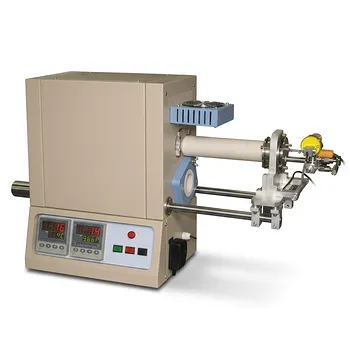
High Temperature Tube Furnace 1500C with Sliding Flanges and 50mm OD for Rapid Thermal Processing Fast Heating and Cooling

High Temperature 1700C Tube Furnace with High Vacuum Turbomolecular Pump System and Multi Channel Mass Flow Controller Gas Mixer

High Temperature 1700C Benchtop Tube Furnace with 5 Inch Heating Zone High Purity Alumina Tube and Vacuum Sealing Flanges

1750°C High Temperature Benchtop Vacuum Atmosphere Tube Furnace with Kanthal Super 1800 Heating Elements and 60mm Alumina Processing Tube

Compact High Temperature 1600C Tube Furnace with 50mm Alumina Tube and Vacuum Flanges for Material Sintering
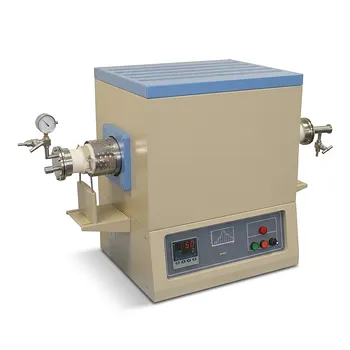
1700C High Temperature Alumina Tube Furnace with 18 Inch Heated Zone and Vacuum Sealing Flanges

1800C High Temperature Compact Vacuum Tube Furnace with 60mm OD Alumina Tube and Kanthal MoSi2 Heating Elements
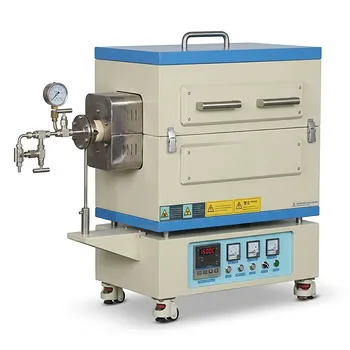
High Temperature Split Tube Furnace 1500C for Material Research Vacuum and Atmosphere Thermal Processing

High Temperature 1700C Vertical Tube Furnace for Powder Spherification and Material Sintering
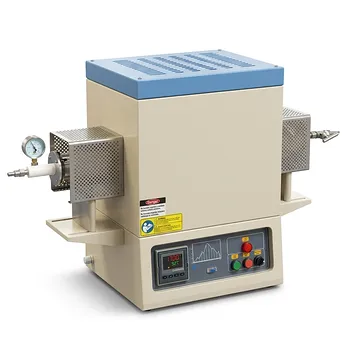
High Temperature Three Zone Tube Furnace 1700C with Alumina Tube and Water Cooled Flanges
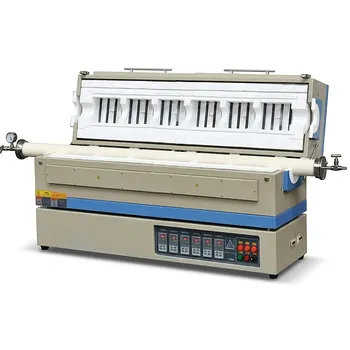
High Temperature 1700C Six Zone Split Tube Furnace with Alumina Tube and Water Cooled Flanges
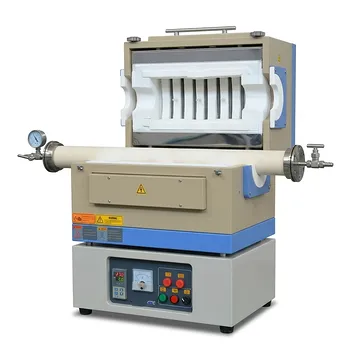
High Temperature 1600C Split Tube Furnace Vacuum Flanges Valves Optional 60mm 80mm Alumina Tube

High Temperature Automated 5 Inch Tube Furnace for Autonomous Material Research and Advanced Laboratory R&D
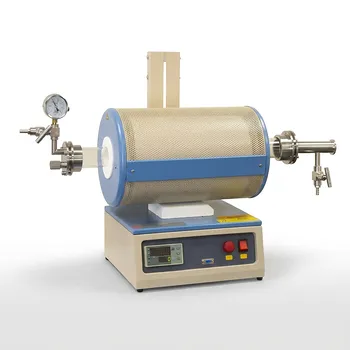
1100C Tube Furnace with Vacuum Flange and Programmable Temperature Controller for Material Science and Industrial Heat Treatment
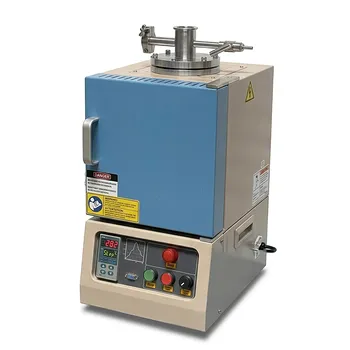
High Temperature Hybrid Muffle and Tube Furnace with Vacuum Capability and PID Control
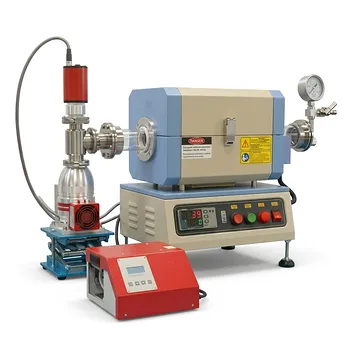
High Vacuum Compact Tube Furnace 1200C with Integrated Turbo Pump System and 8 Inch Heating Zone
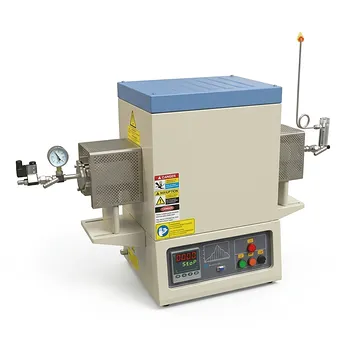
1700C Hydrogen Gas Tube Furnace with 60mm Alumina Process Tube and Integrated Hydrogen Safety Detector

1100°C High Temperature Quartz Chamber Furnace 8 Inch OD with 7.6 Liter Capacity and Vacuum Atmosphere Capability
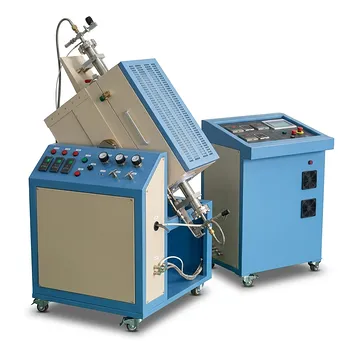
1100C High Pressure Rocking Tube Furnace with 2 Inch Super Alloy Processing Tube for Material Synthesis