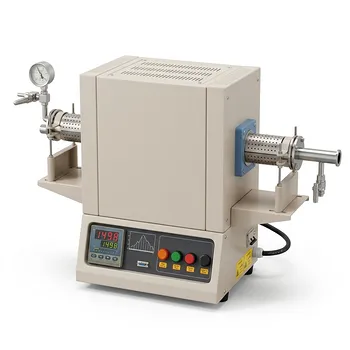
What technical advantages does a high-temp vertical tube furnace offer for Jarosite reduction? Maximize Your Yields.
Updated 3 months ago
The technical advantages of using a high-temperature vertical tube furnace for Jarosite Residue reduction include a stable thermal field up to 1400°C and a vertical configuration that facilitates direct gas injection into the melt. This setup ensures superior gas-liquid contact efficiency, allows for precise control over the reaction atmosphere, and promotes uniform reduction throughout the molten material, which is critical for recovering valuable metals from slag.
A vertical tube furnace provides the necessary thermal stability and atmospheric precision to transform Jarosite Residue from a waste product into a source of recovered metals. By integrating top-down gas injection, the furnace overcomes the mass transfer limitations common in traditional horizontal systems, ensuring high-purity yields.
Superior Gas-Liquid Interaction and Reaction Kinetics
Direct Injection via Vertical Gas Lances
The vertical orientation of these furnaces allows for the insertion of a gas lance from the top directly into the molten Jarosite. This setup enables researchers to inject reducing gases, such as hydrogen or carbon monoxide, directly into the heart of the melt.
Enhanced Mass Transfer Efficiency
By injecting gas directly into the liquid phase, the furnace significantly improves the gas-liquid contact efficiency. This turbulence and direct contact ensure that reduction reactions occur uniformly, preventing the formation of unreacted "dead zones" within the crucible.
Acceleration of Reduction Rates
The combination of high heat and optimized gas contact accelerates the kinetics of the reduction process. This allows for the rapid conversion of metal oxides into their metallic or matte phases, which is essential for efficient metallurgical processing.
Precise Atmospheric and Thermal Management
Strict Isothermal Control
High-temperature vertical tube furnaces provide a stable constant temperature zone, which is vital for simulating the molten reduction processes found in industrial smelters. Precise thermal management allows for the investigation of reaction rates under rigorous isothermal conditions up to 1400°C and beyond.
Controlled Reducing Environments
These furnaces excel at maintaining specific, programmed atmospheres, such as 5% H2/Ar mixtures or inert argon shields. This precision prevents the unwanted oxidation of recovered metals and allows for the precise reduction of species into specific valence states.
Equilibrium Drive via Byproduct Removal
The flow-through design of a tube furnace facilitates the rapid removal of water vapor, which is often the primary gaseous byproduct of hydrogen reduction. Maintaining a low partial pressure of water vapor drives the chemical equilibrium toward a higher purity of metallic recovery, sometimes reaching near 100% iron purity.
Simulating Industrial Metallurgical Environments
Replicating Smelter Conditions
For Jarosite processing, the furnace can simulate the environment of industrial nickel slag smelting or steelmaking converters. This capability allows for the concentration of valuable metals like cobalt, nickel, and iron into a collectible matte phase or metal alloy.
Analysis of Slag-Metal Interface Reactions
The vertical configuration is ideal for determining equilibrium constants and mass transfer coefficients at the interface of the slag and metal. This data is critical for optimizing industrial-scale recovery processes and improving the economic viability of residue treatment.
Understanding the Trade-offs
Refractory Material Limitations
While these furnaces offer high precision, the internal ceramic tubes are susceptible to thermal shock if heated or cooled too rapidly. Additionally, certain corrosive slag compositions can degrade the tube material over time, requiring frequent inspections.
Scaling and Volume Constraints
Vertical tube furnaces are primarily laboratory or pilot-scale instruments designed for high precision rather than high-throughput production. Data gathered in these environments must be carefully modeled before being applied to large-scale industrial blast furnaces.
Complexity of Gas Management
Injecting gases via a lance requires sophisticated pressure and flow control systems to prevent splashing or crucible damage. Improper gas flow rates can lead to temperature fluctuations within the reaction zone, undermining the stability of the thermal field.
Applying This Technology to Your Metallurgical Goals
To effectively utilize a high-temperature vertical tube furnace for Jarosite reduction, you must align the furnace configuration with your specific recovery objectives.
- If your primary focus is high-purity iron recovery: Utilize a continuous flow of high-purity hydrogen to aggressively remove water vapor and drive the reaction toward pure metallic iron.
- If your primary focus is investigating reaction kinetics: Leverage the high-precision programmed temperature controls to maintain strict isothermal conditions and measure mass transfer at the slag-metal interface.
- If your primary focus is simulating industrial smelting: Use an inert gas protection system (like Argon) and top-down lance injection to replicate the atmospheric and turbulence conditions of a commercial converter.
By mastering the vertical tube furnace's unique gas-delivery and thermal capabilities, you can turn hazardous Jarosite waste into a predictable, manageable source of valuable metallic resources.
Summary Table:
| Key Feature | Technical Advantage | Research & Industrial Benefit |
|---|---|---|
| Vertical Orientation | Top-down gas lance injection | Superior gas-liquid contact & reaction kinetics |
| Thermal Stability | Constant field up to 1400°C | Precise isothermal control for industrial simulation |
| Flow-through Design | Rapid removal of water vapor | Higher purity yields (up to 100% iron purity) |
| Atmosphere Control | Programmed H2/Ar mixtures | Prevention of oxidation & targeted metal recovery |
| Simulated Environment | Replicates smelter conditions | Reliable data for scaling to industrial production |
Elevate Your Metallurgical Research with THERMUNITS
As a leading manufacturer of high-temperature laboratory equipment for material science and industrial R&D, THERMUNITS provides the precision and reliability needed for complex processes like Jarosite Residue reduction. Our comprehensive range of thermal processing solutions—including Tube, Muffle, Vacuum, Atmosphere, Rotary, and Hot Press furnaces, CVD/PECVD systems, and Vacuum Induction Melting (VIM) furnaces—is designed to deliver superior thermal stability and atmospheric control.
Whether you are focusing on high-purity iron recovery or investigating reaction kinetics, our equipment helps you transform waste into valuable resources. Contact us today to discuss your thermal processing needs and find out how our customized solutions can enhance your lab's efficiency and industrial output.
References
- Cancio Jiménez-Lugos, Eduardo Colin García. Recovery of Silver and Lead from Jarosite Residues by Roasting and Reducing Pyrometallurgical Processes. DOI: 10.3390/met14080954
Mentioned Products
- High Temperature 1700C Vertical Tube Furnace for Powder Spherification and Material Sintering
- High Temperature 1700C Vertical Split Tube Furnace for Material Quenching and Single Crystal Growth
- Vertical Hybrid High Temperature Furnace 1500C Alumina Tube SOFC Fuel Cell Testing Laboratory Heat Treatment Research Equipment
- High Temperature Vertical Crucible Furnace with 22L Heating Chamber and 1200C Maximum Temperature
- High Temperature 1100C Compact Top Loading Vertical Vacuum Tube Furnace for High Vacuum Noble Metal Melting and Material Research
People Also Ask
- What role does a high-temperature vertical tube furnace play in simulating high-carbon ferromanganese slag formation?
- What functions does a vertical high-temperature tube furnace perform? Master Industrial Sintering & R&D Simulation
- What is the primary function of a high-temperature tube furnace in Cu1-N-C synthesis? Precision Thermal Control.
- High-Temp Tube Furnace Role in Converting Microbial Proteins to Iron Single-Atom Sites: Expert Synthesis Guide
- What impact does the heating rate of a tube furnace have on biochar microstructure? Optimize Your Material R&D.

Tech Team · ThermUnits
Last updated on Jun 02, 2026
Related Products

High Temperature 1700C Vertical Tube Furnace for Powder Spherification and Material Sintering
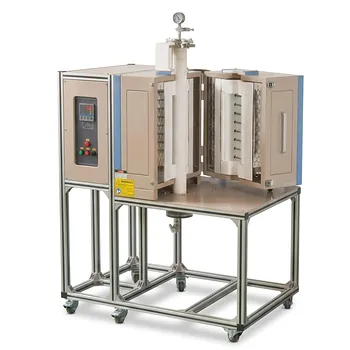
High Temperature 1700C Vertical Split Tube Furnace for Material Quenching and Single Crystal Growth
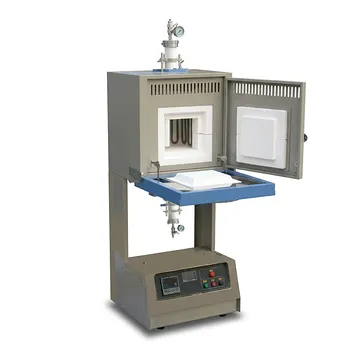
Vertical Hybrid High Temperature Furnace 1500C Alumina Tube SOFC Fuel Cell Testing Laboratory Heat Treatment Research Equipment
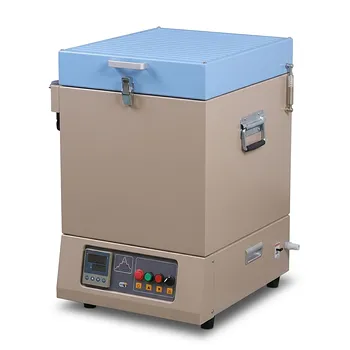
High Temperature Vertical Crucible Furnace with 22L Heating Chamber and 1200C Maximum Temperature
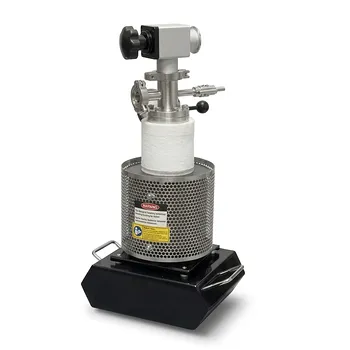
High Temperature 1100C Compact Top Loading Vertical Vacuum Tube Furnace for High Vacuum Noble Metal Melting and Material Research
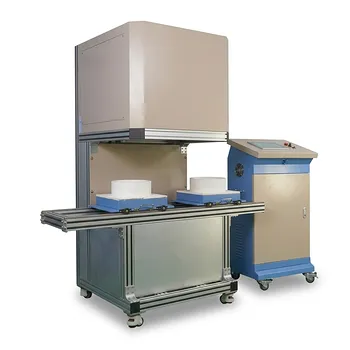
High Temperature Bottom Loading Vertical Furnace 1700C Dual Stage Sample Processing System 18L Large Capacity Thermal Treatment Equipment
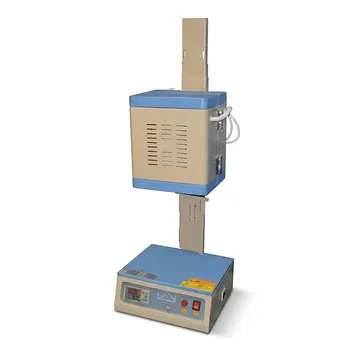
High Temperature Vertical Split Tube Furnace with PID Temperature Controller for 1 and 2 Inch Processing Tubes
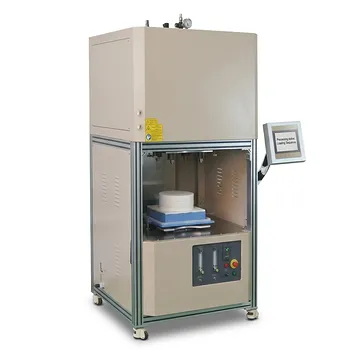
High Temperature Vertical Atmosphere Controlled Furnace with Automatic Bottom Loading and 1700°C Capacity for Advanced Material Research
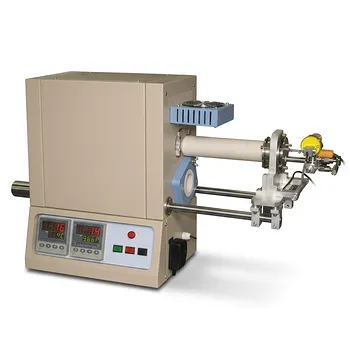
High Temperature Tube Furnace 1500C with Sliding Flanges and 50mm OD for Rapid Thermal Processing Fast Heating and Cooling

1200°C 5 Inch Vertical Quartz Tube Furnace with Stainless Steel Vacuum Flanges
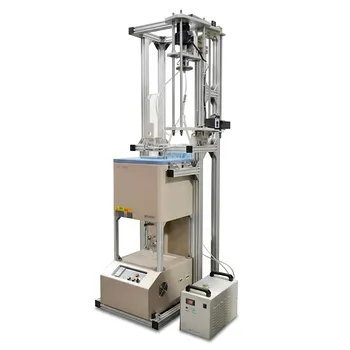
500C Vacuum Vertical Tube Furnace 84mm OD Sample Rotation Lifting System

High Temperature 1700C Tube Furnace with High Vacuum Turbomolecular Pump System and Multi Channel Mass Flow Controller Gas Mixer

Vertical 1700C Vacuum and Atmosphere Tube Furnace with 80mm Alumina Tube

Compact High Temperature 1600C Tube Furnace with 50mm Alumina Tube and Vacuum Flanges for Material Sintering
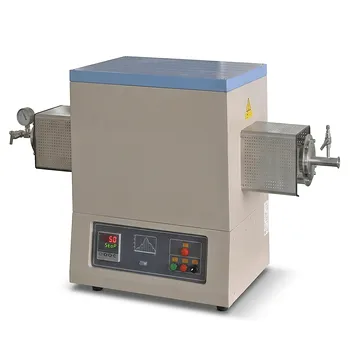
High Temperature 1700C Tube Furnace with 4 Inch OD Alumina Tube and Vacuum Sealing Flanges
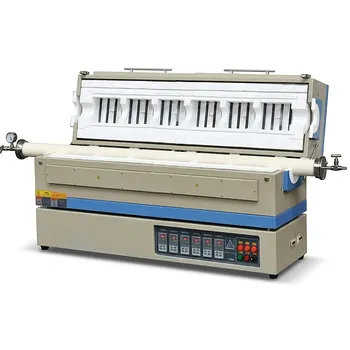
High Temperature 1700C Six Zone Split Tube Furnace with Alumina Tube and Water Cooled Flanges
1700C High Temperature Alumina Tube Furnace with 18 Inch Heated Zone and Vacuum Sealing Flanges
High Temperature 1700C Benchtop Tube Furnace with 5 Inch Heating Zone High Purity Alumina Tube and Vacuum Sealing Flanges
1100°C Split Vertical Tube Furnace with 80mm Quartz Tube and Stainless Steel Vacuum Flanges