What atmosphere tube furnace requirements exist for titania-carbon sulfidation? Expert Heat Treatment Performance Guide
Updated 3 months ago
Technical requirements for titania-carbon sulfidation focus on atmospheric integrity and specialized material durability. To successfully treat titania-carbon composites, an atmosphere tube furnace must provide precise gas flow control for hydrogen sulfide ($H_2S$) and argon while maintaining a uniform temperature field at 650°C. Crucially, the system must incorporate a specialized corrosion-resistant sealing design to handle the chemically aggressive nature of sulfur-bearing gases.
The core requirement for this process is the synthesis of thermal precision and chemical isolation. By strictly controlling vapor concentrations and excluding oxygen, the furnace facilitates the in-situ transformation of titanium components within a carbon shell while preventing the oxidative degradation of the composite structure.
Managing Reactive and Inert Gas Environments
Precision Flow Control for $H_2S$ and Argon
The furnace must be equipped with high-accuracy mass flow controllers to manage the ratio of hydrogen sulfide ($H_2S$) and argon. This precision is vital for controlling the vapor concentrations that drive the sulfidation reaction.
Creation of a Strict Reducing Atmosphere
In many cases, a hydrogen and argon ($H_2/Ar$) mixed gas is required to create a precise reducing environment. This atmosphere enables the dynamic adjustment of tin or titanium components, such as introducing sulfur vacancies or constructing heterogeneous interfaces that enhance the material's final properties.
Prevention of Oxidative Loss
A primary function of the atmosphere furnace is the total exclusion of oxygen through a continuous supply of high-purity inert gas (Nitrogen or Argon). This ensures that the carbon components of the composite are protected from oxidation, which would otherwise occur rapidly at the high temperatures required for sulfidation.
Thermal Precision and Material Transformation
Maintaining a Uniform Temperature Field
The furnace must be capable of holding a steady 650°C environment with minimal fluctuations across the heating zone. Temperature uniformity is critical to ensure that the chemical transformation occurs evenly throughout the entire batch of titania-carbon precursors.
Programmable Heat Treatment
Advanced furnaces offer precise programmable temperature control to manage complex cycles, such as isothermal processes at lower temperatures (e.g., 155°C for melt-diffusion) or high-temperature carbonization. These programs allow for the simultaneous carbonization of precursors and the crystallization of titanium dioxide into specific phases like anatase or rutile.
Facilitating In-Situ Chemical Transformations
The thermal environment must provide the specific thermodynamic conditions required for in-situ conversion. This allows the sulfur source to penetrate nanometer-sized slits or pores in the titania-carbon structure, effectively anchoring the sulfur and creating a stable, functional composite.
Structural Integrity and Safety Requirements
Specialized Corrosion-Resistant Sealing
Because hydrogen sulfide is highly corrosive, the furnace must feature a specialized sealing design that prevents gas leaks and protects the mechanical integrity of the tube. Standard seals often fail under prolonged exposure to sulfur-rich environments, making corrosion-resistant materials a non-negotiable requirement.
Safe Sulfur Deposition and Pyrolysis
The furnace design must account for sulfur deposition within the tube and exhaust systems. Effective sealing and gas management ensure that the chemical transformation of titanium components happens safely within the carbon shell without contaminating the laboratory environment or damaging the furnace heating elements.
Understanding the Trade-offs
Corrosion Resistance vs. Equipment Cost
Utilizing high-grade, corrosion-resistant alloys and specialized seals significantly increases the upfront capital expenditure of the furnace. However, attempting to use standard atmosphere furnaces for $H_2S$ treatment usually leads to rapid equipment failure and compromised experimental results.
Atmospheric Purity vs. Gas Consumption
Achieving a "strict" inert environment requires high flow rates and high-purity gases, which increases operational costs. There is a constant trade-off between the speed of purging the tube and the total volume of expensive inert gas consumed during the process.
How to Apply This to Your Project
Recommendations Based on Your Objectives
- If your primary focus is structural integrity: Prioritize a furnace with a specialized corrosion-resistant sealing design to ensure the $H_2S$ does not degrade the equipment or the sample environment over time.
- If your primary focus is phase purity: Invest in a system with precise programmable temperature control to maintain the exact 650°C field required for consistent sulfidation and crystallization.
- If your primary focus is preventing carbon loss: Ensure the furnace setup includes high-purity gas delivery systems and airtight fittings to maintain a strictly anaerobic environment.
By strictly adhering to these technical requirements, you ensure the successful creation of high-performance titania-carbon composites through a safe and repeatable sulfidation process.
Summary Table:
| Requirement | Technical Specification | Purpose |
|---|---|---|
| Gas Management | Mass Flow Controllers (H2S/Ar) | Precise vapor concentration for sulfidation |
| Thermal Control | Uniform 650°C Field | Ensures even phase transformation & crystallization |
| Sealing System | Corrosion-Resistant Seals | Prevents H2S leaks & equipment degradation |
| Atmosphere | Strict Reducing/Inert | Prevents carbon oxidation & creates sulfur vacancies |
| Programmability | Multi-stage heat cycles | Manages carbonization and in-situ conversion |
Elevate Your Material Research with THERMUNITS
As a leading manufacturer of high-temperature laboratory equipment, THERMUNITS provides the specialized thermal processing solutions required for complex chemical transformations. Whether you need Atmosphere Tube Furnaces with corrosion-resistant sealing for sulfidation or advanced CVD/PECVD systems, our equipment is engineered for material science excellence.
Our comprehensive range includes:
- Furnaces: Muffle, Vacuum, Atmosphere, Tube, Rotary, and Hot Press.
- Specialized Systems: Dental Furnaces, Electric Rotary Kilns, and Vacuum Induction Melting (VIM).
- Components: Thermal Elements and custom heat treatment accessories.
Ready to optimize your R&D workflow? Contact our engineering team today to discuss your specific requirements and find the perfect thermal solution for your lab.
References
- Behnoosh Bornamehr, Volker Presser. High-Performance Lithium-Ion Batteries with High Stability Derived from Titanium-Oxide- and Sulfur-Loaded Carbon Spherogels. DOI: 10.1021/acsami.3c16851
Mentioned Products
- High Temperature Vertical Hybrid Furnace with Alumina Tube and SiC Heating for SOFC Coin Cell Testing and Atmosphere Processing
- High Temperature Dual Zone Split Tube Furnace for Advanced Atmosphere Sintering and Vacuum CVD Applications
- Compact Vertical Split Quartz Tube Furnace with Stainless Steel Vacuum Flanges for Rapid Thermal Quenching and Controlled Atmosphere Material Processing
- Compact Hybrid Muffle and Tube Furnace for 1000C Controlled Atmosphere Laboratory Material Sintering
- 1000C Mini Tube Furnace with 20mm Quartz Tube and Vacuum Flanges for Material Science Research and Controlled Atmosphere Small Sample Processing
People Also Ask
- Purpose of Nitrogen Flow in Carbon Activation? Optimize Yield with High-Purity Tube Furnace Environments
- Technical Value of Tube Furnaces for Pomegranate Peel Hard Carbon: Precision Carbonization & Battery Material Synthesis
- What technical conditions does a horizontal alumina tube furnace provide? Optimize Liquid Copper Infiltration
- What role do alumina preheating tubes and heating elements play in flash smelting simulation? Optimize Thermal Precision
- What critical process conditions does a high-temperature tube furnace provide? Mastering Catalyst Activation Success

Tech Team · ThermUnits
Last updated on Jun 03, 2026
Related Products
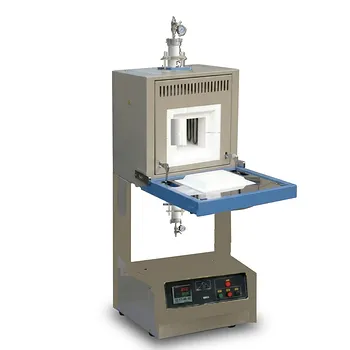
High Temperature Vertical Hybrid Furnace with Alumina Tube and SiC Heating for SOFC Coin Cell Testing and Atmosphere Processing
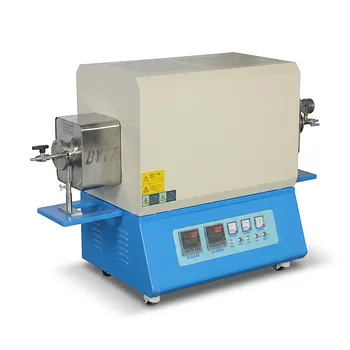
High Temperature Dual Zone Split Tube Furnace for Advanced Atmosphere Sintering and Vacuum CVD Applications

Compact Vertical Split Quartz Tube Furnace with Stainless Steel Vacuum Flanges for Rapid Thermal Quenching and Controlled Atmosphere Material Processing
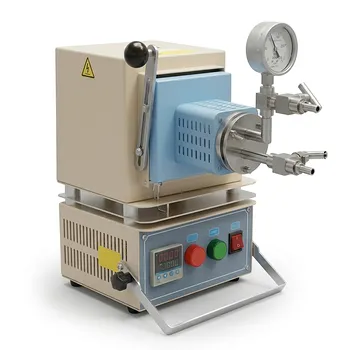
Compact Hybrid Muffle and Tube Furnace for 1000C Controlled Atmosphere Laboratory Material Sintering
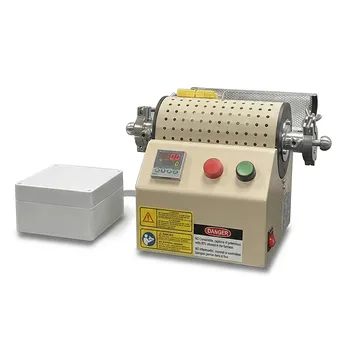
1000C Mini Tube Furnace with 20mm Quartz Tube and Vacuum Flanges for Material Science Research and Controlled Atmosphere Small Sample Processing

Vertical 1700C Vacuum and Atmosphere Tube Furnace with 80mm Alumina Tube
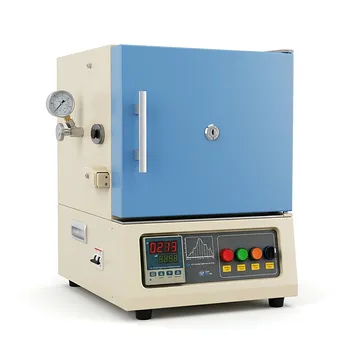
1200C Hybrid Muffle and Tube Furnace for Material Research with Dual Atmosphere Control Quartz Tubes

1750°C High Temperature Benchtop Vacuum Atmosphere Tube Furnace with Kanthal Super 1800 Heating Elements and 60mm Alumina Processing Tube
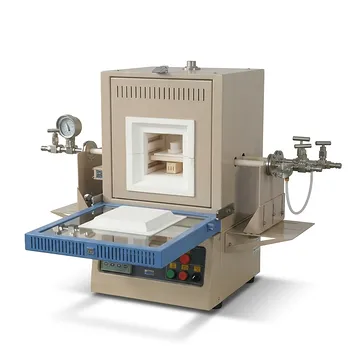
1700C Compact Hybrid Furnace with Dual Layer Box Sintering and Controlled Atmosphere Alumina Tubes
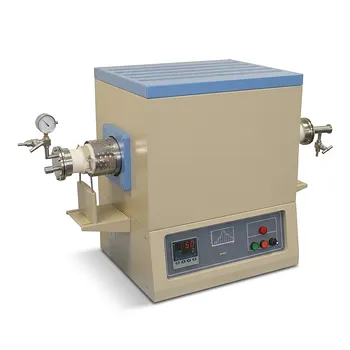
1700C High Temperature Alumina Tube Furnace with 18 Inch Heated Zone and Vacuum Sealing Flanges

High Temperature 1700C Vertical Tube Furnace for Powder Spherification and Material Sintering
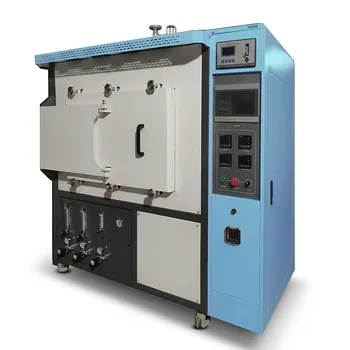
Roller Table Atmosphere Furnace 1500C High Temperature Battery Material Sintering System 112L Capacity
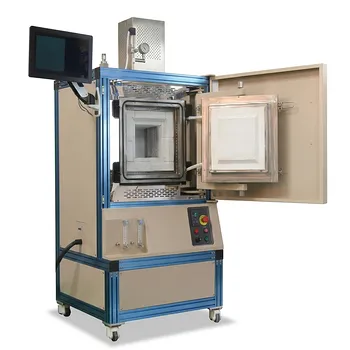
High Temperature Hydrogen Atmosphere Box Furnace 1650C Max Reducing Environment Material Synthesis System 8x8x8 Chamber

Compact High Temperature 1600C Tube Furnace with 50mm Alumina Tube and Vacuum Flanges for Material Sintering

High Temperature Automated 5 Inch Tube Furnace for Autonomous Material Research and Advanced Laboratory R&D

1800C High Temperature Compact Vacuum Tube Furnace with 60mm OD Alumina Tube and Kanthal MoSi2 Heating Elements

High Temperature 1700C Tube Furnace with High Vacuum Turbomolecular Pump System and Multi Channel Mass Flow Controller Gas Mixer
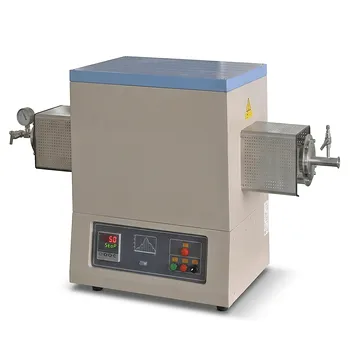
High Temperature 1700C Tube Furnace with 4 Inch OD Alumina Tube and Vacuum Sealing Flanges
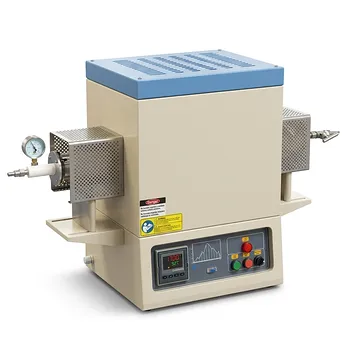
High Temperature Three Zone Tube Furnace 1700C with Alumina Tube and Water Cooled Flanges
