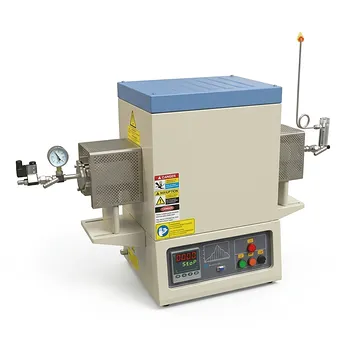
Technical Role of Tube Furnaces in 3D PG Reduction & Annealing: Optimizing Conductivity and Stability
Updated 3 months ago
The high-temperature tube furnace serves as the critical reaction chamber for transforming graphene oxide into functional three-dimensional porous graphene (3D PG). By providing a stable environment—typically reaching temperatures up to 900°C—it facilitates the thorough reduction of oxygen-containing functional groups. This thermal process is essential for restoring the material's pi-conjugated structure, which directly enhances electronic conductivity and reinforces the mechanical stability of the 3D architecture.
The tube furnace is the central engine for 3D PG synthesis, providing the precise thermal energy and inert atmosphere required to chemically reduce graphene oxide while simultaneously annealing the structure to ensure long-term mechanical durability and high electrical performance.
Restoring Conductivity Through Thermal Reduction
Restoration of the Pi-Conjugated System
The primary role of the furnace is to provide the thermal energy necessary to break the bonds of unstable oxygen-containing groups on the graphene surface. As these groups are removed, the pi-conjugated structure of the graphene lattice is restored. This restoration is the fundamental mechanism that allows electrons to flow freely, significantly improving the material's overall electronic conductivity.
Generation of Active Sites
High-temperature treatment at ranges between 850°C and 1000°C promotes the fracture of edge sites and oxygen clusters. This process enables the in-situ generation of active sites without compromising the integrity of the host crystal lattice. These sites are often crucial for subsequent chemical grafting or further functionalization of the 3D porous network.
Expansion of Interlayer Spacing
When subjected to rapid thermal reduction, the sudden decomposition of functional groups releases gases that create internal pressure. This controlled thermal shock can expand the interlayer spacing of the material. The result is a reduced graphene oxide structure with a high surface area and a porous framework suitable for energy storage or filtration.
Enhancing Structural and Mechanical Integrity
Thermal Annealing for Stability
Beyond chemical reduction, the tube furnace acts as an annealing chamber that stabilizes the three-dimensional porous network. The intense heat facilitates the reorganization of carbon atoms, reducing internal stresses within the 3D PG structure. This thermal treatment is what ensures the material remains mechanically robust and prevents the porous network from collapsing during use.
Facilitating Heteroatom Doping
For advanced applications, the furnace environment allows for the doping of p-block elements like nitrogen or phosphorus into the graphene lattice. By maintaining a stable temperature (e.g., 900°C) and a nitrogen-rich atmosphere, the furnace provides the conditions required for chemical bonding and crystal structure reorganization. This process tailors the 3D PG for specific electrochemical roles.
Uniformity Through Multi-Zone Heating
Advanced tube furnaces utilize multi-zone temperature control to ensure a uniform thermal field throughout the reaction tube. This uniformity is vital for 3D PG because temperature fluctuations can lead to uneven reduction or structural weak points. Consistent heating ensures that the entire batch of material exhibits identical mechanical and electrical properties.
Understanding the Trade-offs
Thermal Shock vs. Lattice Defects
While rapid heating is excellent for creating porosity through gas release, it can also introduce excessive structural defects. If the temperature ramp is too aggressive, the resulting 3D PG may have diminished electrical performance despite having a high surface area.
Atmospheric Purity Risks
The success of the reduction process is entirely dependent on the purity of the inert atmosphere (typically Argon or Nitrogen). Even trace amounts of oxygen within the tube at 900°C can cause the graphene to combust or oxidize further. This necessitates the use of high-precision mass flow controllers and vacuum seals to maintain an oxygen-free environment.
Applying Furnace Precision to Your Process
Recommendations for Material Optimization
- If your primary focus is Maximum Conductivity: Prioritize a slow ramp-up to 900°C or higher under a pure Argon atmosphere to ensure complete restoration of the pi-conjugated system with minimal defects.
- If your primary focus is High Surface Area/Porosity: Utilize rapid thermal shock protocols to trigger the explosive release of oxygen groups, which expands the 3D network.
- If your primary focus is Mechanical Durability: Incorporate a dedicated annealing phase at a stable temperature of 1000°C to allow the lattice to settle and strengthen the 3D conductive network.
By mastering the thermal and atmospheric variables of the tube furnace, a researcher can precisely tune the 3D PG architecture to meet the demands of high-performance technical applications.
Summary Table:
| Process Step | Technical Function | Impact on 3D Porous Graphene |
|---|---|---|
| Thermal Reduction | Restores pi-conjugated lattice | Maximizes electronic conductivity |
| Thermal Shock | Controlled gas release | Expands interlayer spacing and porosity |
| Structural Annealing | Atomic reorganization | Enhances mechanical robustess and durability |
| Heteroatom Doping | Chemical bonding (e.g., N, P) | Tailors electrochemical performance |
| Multi-Zone Heating | Uniform thermal field | Ensures consistent batch quality and properties |
Precision Thermal Solutions for Advanced Material Science
Unlock the full potential of your graphene research with THERMUNITS. As a global leader in high-temperature laboratory equipment, we specialize in providing the precise thermal environments necessary for 3D Porous Graphene synthesis, reduction, and annealing.
From Advanced Tube and Vacuum Furnaces to specialized CVD/PECVD and Atmosphere systems, our equipment is engineered to provide the multi-zone temperature control and atmospheric purity (Argon/Nitrogen) that high-performance R&D demands. Whether you are focused on energy storage, filtration, or conductive networks, our solutions ensure structural integrity and superior electrical properties.
Explore our full range of thermal processing solutions:
- Tube & Rotary Furnaces for uniform material processing.
- Vacuum & Atmosphere Furnaces for oxygen-free environments.
- Muffle, Hot Press, & VIM Furnaces for diverse heat treatment needs.
- CVD/PECVD Systems for precise material synthesis.
Ready to enhance your lab's capabilities? Contact THERMUNITS Today for a Custom Quote
References
- Yanna Liu, Xiao Liang. Binder-Free Three-Dimensional Porous Graphene Cathodes via Self-Assembly for High-Capacity Lithium–Oxygen Batteries. DOI: 10.3390/nano14090754
Mentioned Products
- High Temperature 1700C Vertical Tube Furnace for Powder Spherification and Material Sintering
- Ultra High Temperature 2300C Induction Heated Graphite Tube Furnace with Infrared Control
- High Temperature Tube Furnace 1500C with Sliding Flanges and 50mm OD for Rapid Thermal Processing Fast Heating and Cooling
- High Temperature Three Temperature Zone Tube Furnace for Advanced Material Science Sintering and Chemical Vapor Deposition Applications
- High Temperature 1700C Three Zone Tube Furnace with Alumina Tube 50mm 60mm 80mm OD for Material Research and Industrial Heat Treatment
People Also Ask
- What role does a high-temperature vertical tube furnace play in simulating high-carbon ferromanganese slag formation?
- What functions does a vertical high-temperature tube furnace perform? Master Industrial Sintering & R&D Simulation
- What is the primary function of a high-temperature tube furnace in Cu1-N-C synthesis? Precision Thermal Control.
- High-Temp Tube Furnace Role in Converting Microbial Proteins to Iron Single-Atom Sites: Expert Synthesis Guide
- What impact does the heating rate of a tube furnace have on biochar microstructure? Optimize Your Material R&D.

Tech Team · ThermUnits
Last updated on Jun 03, 2026
Related Products

High Temperature 1700C Vertical Tube Furnace for Powder Spherification and Material Sintering
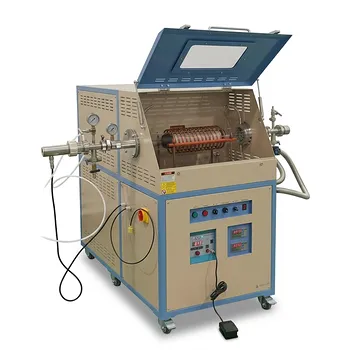
Ultra High Temperature 2300C Induction Heated Graphite Tube Furnace with Infrared Control

High Temperature Tube Furnace 1500C with Sliding Flanges and 50mm OD for Rapid Thermal Processing Fast Heating and Cooling
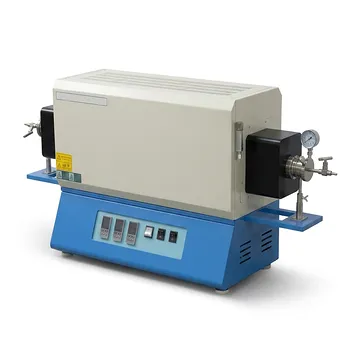
High Temperature Three Temperature Zone Tube Furnace for Advanced Material Science Sintering and Chemical Vapor Deposition Applications
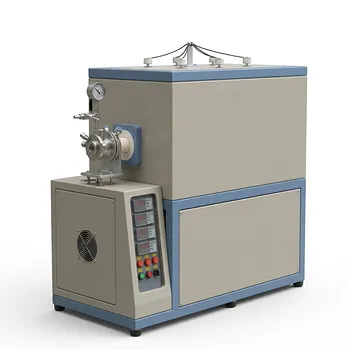
High Temperature 1700C Three Zone Tube Furnace with Alumina Tube 50mm 60mm 80mm OD for Material Research and Industrial Heat Treatment
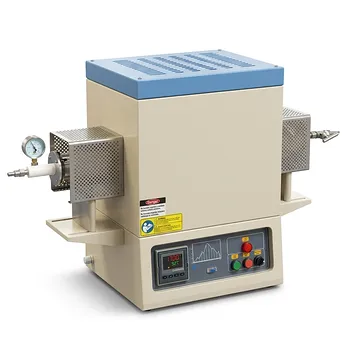
High Temperature Three Zone Tube Furnace 1700C with Alumina Tube and Water Cooled Flanges
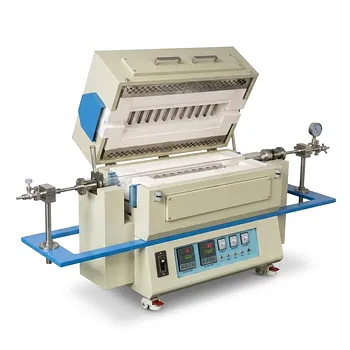
High Temperature Dual Zone Rotating Tube Furnace 1500C Silicon Carbide Heating for Advanced Material Synthesis

High Temperature 1700C Tube Furnace with High Vacuum Turbomolecular Pump System and Multi Channel Mass Flow Controller Gas Mixer
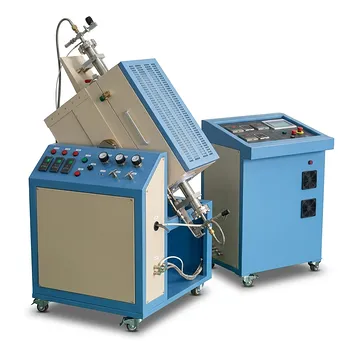
1100C High Pressure Rocking Tube Furnace with 2 Inch Super Alloy Processing Tube for Material Synthesis
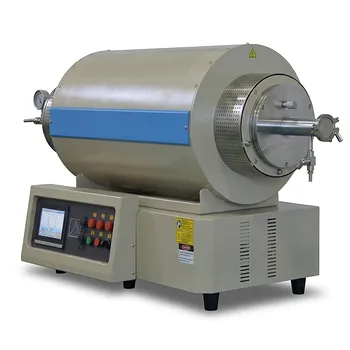
1200C Max Three Zone Tube Furnace 6 Inch OD Max with Tube and Flange

High Temperature 1700C Benchtop Tube Furnace with 5 Inch Heating Zone High Purity Alumina Tube and Vacuum Sealing Flanges

High Temperature Automated 5 Inch Tube Furnace for Autonomous Material Research and Advanced Laboratory R&D
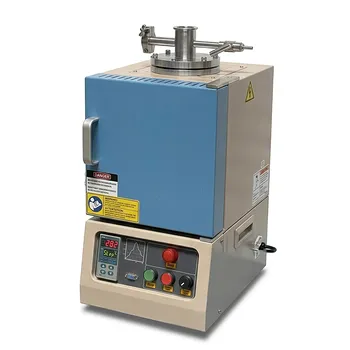
High Temperature Hybrid Muffle and Tube Furnace with Vacuum Capability and PID Control
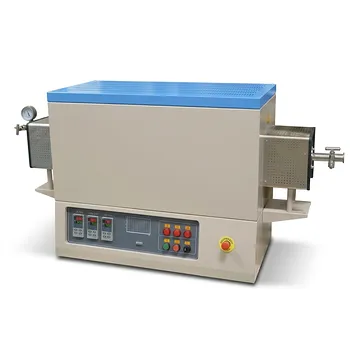
Three Zone Alumina Tube Furnace with Vacuum Flanges High Temperature 1700C Thermal Gradient CVD System
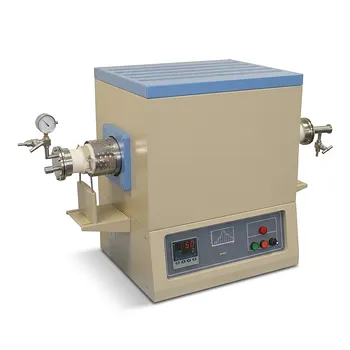
1700C High Temperature Alumina Tube Furnace with 18 Inch Heated Zone and Vacuum Sealing Flanges
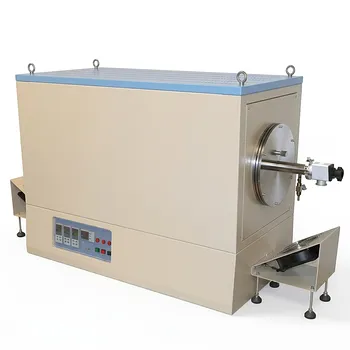
1100°C Three Zone Tube Furnace with 8.5 to 11 Inch OD Quartz Tube and Vacuum Flanges for Large Wafer Processing

1800C High Temperature Compact Vacuum Tube Furnace with 60mm OD Alumina Tube and Kanthal MoSi2 Heating Elements

1750°C High Temperature Benchtop Vacuum Atmosphere Tube Furnace with Kanthal Super 1800 Heating Elements and 60mm Alumina Processing Tube

1100C Tube Furnace with Vacuum Flange and Programmable Temperature Controller for Material Science and Industrial Heat Treatment