Why are high-purity quartz tubes required for the long-term isothermal aging of Fe-Pd alloy? Ensure Phase Stability
Updated 3 months ago
High-purity quartz tubes are essential for the isothermal aging of Fe-Pd alloys because they provide a hermetically sealed, chemically inert environment that prevents surface oxidation and contamination. During extended heat treatments lasting 10 to 21 days at temperatures such as 525°C or 650°C, these tubes isolate the alloy from oxygen and other atmospheric impurities. This protection ensures that the resulting microstructure and phase equilibrium are true reflections of the material’s bulk properties rather than artifacts of surface degradation.
Core Takeaway: High-purity quartz encapsulation acts as a definitive barrier against atmospheric interference, ensuring that long-term isothermal aging processes accurately reveal the intrinsic thermodynamic and structural evolution of Fe-Pd alloys.
Preservation of Chemical and Structural Integrity
Preventing Oxidation and Decarburization
At elevated temperatures, iron-based alloys like Fe-Pd are highly susceptible to reacting with residual oxygen and moisture. High-purity quartz tubes allow for vacuum or forming gas encapsulation, which effectively blocks these elements from reaching the sample surface. This prevents the formation of oxide scales or the loss of carbon, both of which would fundamentally alter the alloy's surface chemistry.
Ensuring Accurate Phase Equilibrium
The goal of isothermal aging is to observe how atoms rearrange themselves into stable configurations over time. If a surface oxide layer or Fe-Pd impurities were to form, they could interfere with the atomic ordering process or create false phase boundaries. By maintaining a pristine environment, researchers ensure that the microstructure observed is representative of the entire bulk sample.
Protecting Atomic Rearrangement
In alloys requiring long-duration annealing, such as those undergoing order-disorder transitions, any chemical interference can stall or redirect atomic diffusion. High-purity quartz ensures that the energy provided by the furnace is used exclusively for the ordered rearrangement of atomic sites. This allows the material to reach its true thermodynamic equilibrium without interference from external chemical reactions.
Material Advantages of High-Purity Quartz
Exceptional Thermal Stability
High-purity quartz is chosen for its ability to withstand extreme temperatures, often exceeding 800°C to 1200°C, without deforming or losing its structural integrity. This stability is critical for Fe-Pd aging processes that require constant, unchanging conditions for hundreds of hours. The material remains a reliable airtight chamber even under the prolonged thermal stress of a 21-day cycle.
Low Chemical Reactivity and High Purity
Unlike standard glass or metal containers, high-purity quartz has extremely low chemical activity. It does not outgas significant impurities or react with the alloy samples even when in direct contact at high temperatures. This prevents cross-contamination from the furnace heating elements or the tube itself, which is vital for maintaining the high catalytic activity or magnetic properties of the Fe-based material.
Achieving Ultra-Low Pressure Environments
Quartz tubes can be torch-sealed to maintain high-performance vacuum levels (as low as 3x10⁻⁵ mbar). This ultra-low-pressure environment inhibits unintended pre-oxidation or the evaporation of volatile alloying elements. Such a controlled micro-environment is necessary to eliminate segregation and ensure the full diffusion of internal components.
Understanding the Trade-offs
Mechanical Fragility and Handling
While quartz offers superior thermal and chemical properties, it is inherently brittle and sensitive to thermal shock if cooled too rapidly. Any micro-scratches or surface contaminants (like skin oils) can lead to devitrification or structural failure during long-term heating. This requires rigorous cleaning protocols and careful handling to prevent the tube from shattering during the aging process.
Sealing Complexity
Achieving a true vacuum seal requires specialized equipment, such as an oxy-hydrogen torch, and significant technical expertise. An improper seal can lead to slow leaks over a 21-day aging period, which might not be detected until the experiment is concluded. If the vacuum fails, the sample may be completely oxidized, resulting in the loss of weeks of experimental progress.
How to Apply This to Your Project
Recommendations for Material Encapsulation
- If your primary focus is phase stability research: Utilize vacuum-sealed quartz tubes to ensure that your observed phase transitions are caused by temperature, not by oxygen-induced chemical changes.
- If your primary focus is long-term (20+ days) aging: Opt for high-purity quartz over standard grades to minimize the risk of devitrification or tube failure during the extended heating cycle.
- If your primary focus is preventing surface oxidation: Ensure the tube is evacuated to at least 10⁻³ mbar before sealing to remove all traces of reactive gases.
- If your primary focus is high-temperature homogenization: Use quartz to provide a stable, non-reactive boundary that prevents the alloy from bonding with the furnace or reaction vessel.
By utilizing high-purity quartz encapsulation, researchers can guarantee that their Fe-Pd alloy samples remain chemically isolated and structurally pure throughout the most demanding thermal treatments.
Summary Table:
| Key Requirement | Role of High-Purity Quartz | Impact on Fe-Pd Alloy |
|---|---|---|
| Atmospheric Control | Hermetic vacuum/gas sealing | Prevents surface oxidation and scale formation |
| Chemical Purity | Inert, low-activity material | Eliminates cross-contamination during aging |
| Thermal Stability | High deformation resistance | Sustains 10-21 day cycles at 500°C-1200°C |
| Phase Integrity | Controlled micro-environment | Ensures results reflect true bulk properties |
Elevate Your Material Research with THERMUNITS Precision Solutions
Are you conducting critical isothermal aging or high-temperature phase stability studies? At THERMUNITS, we understand that the integrity of your Fe-Pd alloys and advanced materials depends on a perfectly controlled, contamination-free environment.
As a leading manufacturer of high-temperature laboratory equipment for material science and industrial R&D, we provide the tools you need for success:
- Advanced Furnaces: Including Muffle, Vacuum, Atmosphere, Tube, Rotary, and Hot Press furnaces.
- Specialized Systems: CVD/PECVD systems, Dental Furnaces, and Vacuum Induction Melting (VIM) furnaces.
- Quality Components: High-purity quartz tubes, thermal elements, and specialized heat treatment accessories.
Whether you are refining microstructures or developing new alloys, our comprehensive thermal processing solutions ensure your experiments deliver accurate and repeatable results.
Contact THERMUNITS Today to discuss your project requirements and discover how our expert thermal solutions can accelerate your R&D goals!
References
- Adrian Savovici, Jerrold A. Floro. Ordered-Phase Equilibria in the Eutectoid Region of Bulk Fe-Pd. DOI: 10.1007/s11661-024-07577-4
Mentioned Products
- 1200C Four Zone Split Tube Furnace with Touch Screen Control and High Purity Quartz Tube and Vacuum Sealing Flanges
- High Throughput 1200C Four Channel Tube Furnace with 3 Inch Quartz Tubes for Multi Zone Annealing and Material Research
- 1100°C High Temperature Quartz Chamber Furnace 8 Inch OD with 7.6 Liter Capacity and Vacuum Atmosphere Capability
- 1100°C Large Diameter Quartz Tube Furnace with 24 Inch Heating Zone and Water Cooled Flanges
- 1200°C 5 Inch Vertical Quartz Tube Furnace with Stainless Steel Vacuum Flanges
People Also Ask
- What are the functions of a high-purity quartz tube in IF-MoS2 sulfurization? Ensure Purity and Precise Thermal Control
- What are the primary functions of a high-purity quartz tube furnace during the molten salt treatment of MXene? Expert Guide
- What are the technical advantages of using a multi-zone independently controlled tube furnace in the modified USP process?
- Why is a quartz tube furnace necessary for phosphorus-doped MoS2/GO preparation? Ensure Purity & Precise Synthesis
- What role does a single-temperature zone quartz tube furnace play in the growth of monolayer MoS2? Optimize 2D Synthesis

Tech Team · ThermUnits
Last updated on Jun 03, 2026
Related Products
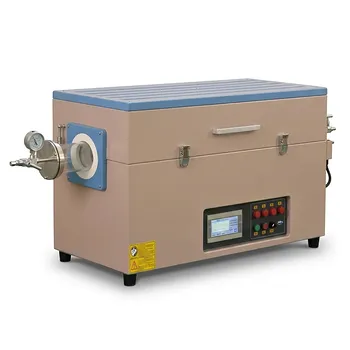
1200C Four Zone Split Tube Furnace with Touch Screen Control and High Purity Quartz Tube and Vacuum Sealing Flanges
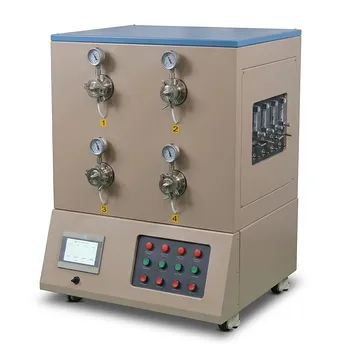
High Throughput 1200C Four Channel Tube Furnace with 3 Inch Quartz Tubes for Multi Zone Annealing and Material Research
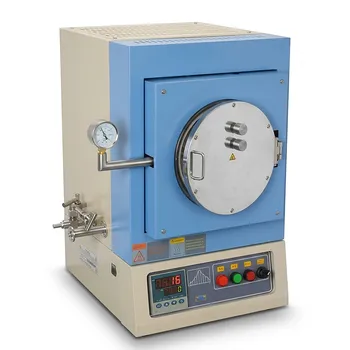
1100°C High Temperature Quartz Chamber Furnace 8 Inch OD with 7.6 Liter Capacity and Vacuum Atmosphere Capability
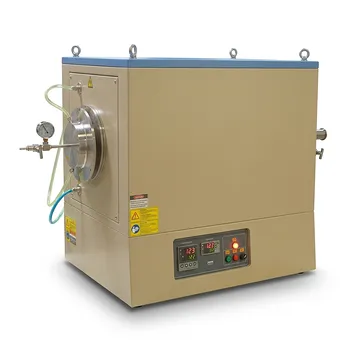
1100°C Large Diameter Quartz Tube Furnace with 24 Inch Heating Zone and Water Cooled Flanges

1200°C 5 Inch Vertical Quartz Tube Furnace with Stainless Steel Vacuum Flanges
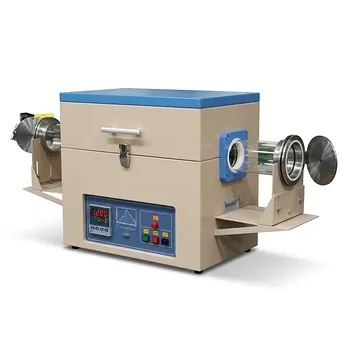
High Temperature 1200C Split Tube Furnace with Hinged Vacuum Flanges and 4 Inch Quartz Tube for Laboratory Research
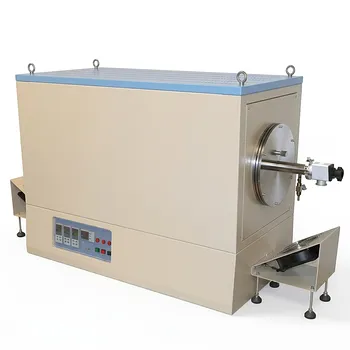
1100°C Three Zone Tube Furnace with 8.5 to 11 Inch OD Quartz Tube and Vacuum Flanges for Large Wafer Processing

High Temperature Automated 5 Inch Tube Furnace for Autonomous Material Research and Advanced Laboratory R&D
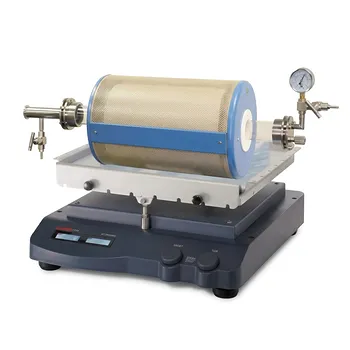
High Temperature Rocking Tube Furnace with Quartz Tube and Vacuum Flange for Materials Synthesis
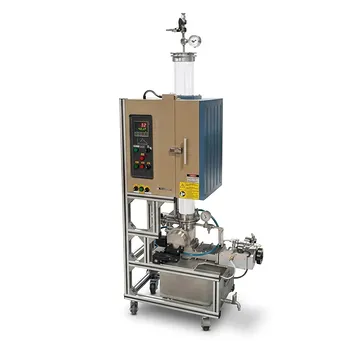
1200C High Temperature Atmosphere Controlled Vertical Quenching Tube Furnace with 4 Inch Quartz Tube
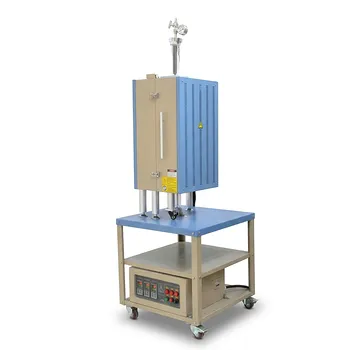
1200C Three Zone Vertical Tube Furnace with 2 Inch Quartz Tube and Vacuum Flanges
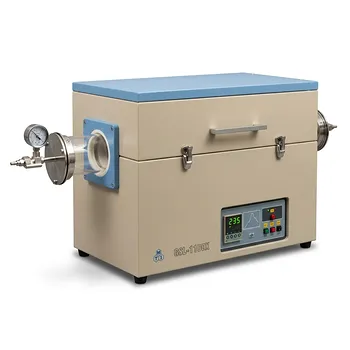
Single Zone Tube Furnace 5 Inch Quartz Tube 36 Inch Heating Zone Vacuum Flanges
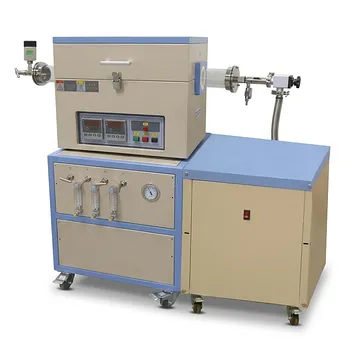
Dual Zone Quartz Tube Furnace with 80mm Diameter 1200C Max Temperature 3 Channel Gas Mixer and Vacuum Pump System

Compact Vertical Split Quartz Tube Furnace with Stainless Steel Vacuum Flanges for Rapid Thermal Quenching and Controlled Atmosphere Material Processing
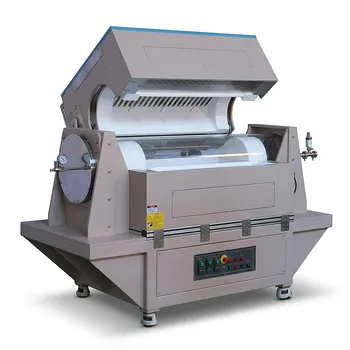
Three Zone Tube Furnace with 11 Inch or 15 Inch Quartz Tube and Hinged Flanges for Vacuum Atmosphere Heat Treatment
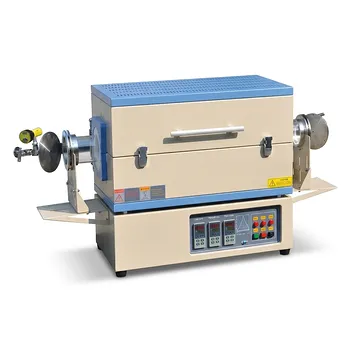
Three Zone Tube Furnace with 24 Inch Heating Length and Hinged Flange Quartz Tube System
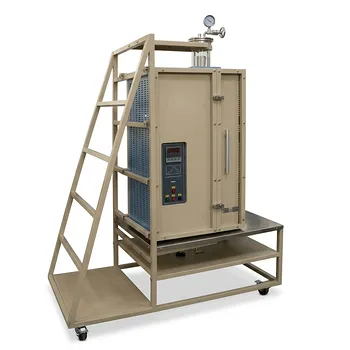
Split Vertical Tube Furnace with 1200C Quartz Tube and Stainless Steel Vacuum Flanges for Rapid Thermal Processing
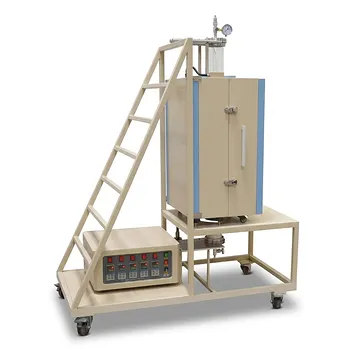
Five Zone Split Vertical Tube Furnace 1200C Max with 4 Inch Quartz Tube and Stainless Steel Vacuum Flanges
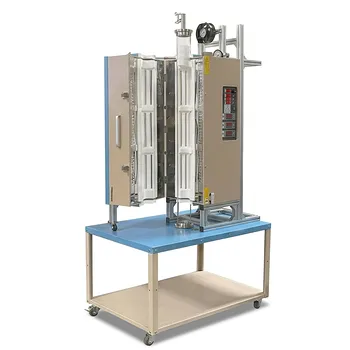
1200C Three Zone Split Vertical Tube Furnace 4 Inch Quartz Tube Stainless Steel Vacuum Flanges