Why use atmosphere-controlled tube furnaces for g-C3N4? Master Nitrogen Vacancy Engineering for Enhanced Catalysis
Updated 3 months ago
Tube furnaces equipped with atmosphere control systems are essential for engineering defect-rich graphitic carbon nitride ($g-C_3N_4$) because they provide the precise, oxygen-free environment required to induce nitrogen vacancies without destroying the material. By replacing air with inert or reducing gases like nitrogen or argon, these systems allow researchers to regulate the degree of nitrogen loss while preventing the oxidative decomposition that would otherwise occur at high synthesis temperatures.
Core Takeaway: Atmosphere-controlled tube furnaces serve as a "chemical shield" that isolates the synthesis process from oxygen, enabling the intentional creation of nitrogen vacancies to tune the material’s electronic energy band structure and enhance its photocatalytic performance.
Preserving Structural Integrity through Oxygen Exclusion
Preventing Oxidative Decomposition
At the high temperatures required for $g-C_3N_4$ synthesis—typically around 550°C—the presence of oxygen causes the oxidative decomposition of both the precursors and the final product. Atmosphere control systems displace air with nitrogen or argon, ensuring the material does not combust or degrade into unwanted byproducts.
Maintaining a Pure Pi-Conjugated System
By excluding oxygen interference, the tube furnace ensures the formation of a pure two-dimensional layered structure. This high-purity environment is critical for maintaining the highly delocalized pi-conjugated system that gives $g-C_3N_4$ its unique semiconducting properties.
Engineering Defects and Energy Band Structures
Precise Regulation of Nitrogen Vacancies
When working in an inert atmosphere, the degree of nitrogen vacancy generation can be precisely regulated by adjusting the gas environment and temperature. These vacancies are "defects" by design; they are intentionally introduced to modify the material’s energy band structure, making it more efficient for specific applications.
Inhibiting Charge Carrier Recombination
The primary goal of creating a defect-rich structure is to optimize the material's photoelectric chemical properties. These defects act as sites that inhibit the recombination of photogenerated charge carriers, thereby increasing the efficiency of the material when used in solar energy conversion or water splitting.
Kinetic Control and Chemical Equilibrium
The Role of Mass Flow Controllers
Modern tube furnaces utilize mass flow controllers to maintain a constant gas flow (e.g., 50 mL/min). This continuous flow is not just for protection; it actively removes gaseous byproducts like ammonia ($NH_3$) that are released during polycondensation.
Shifting Reaction Equilibrium
By stripping away these byproduct gases, the furnace shifts the chemical equilibrium toward the desired polymerization. This ensures that the precursors, such as urea or melamine, transform thoroughly into a stable, high-crystallinity carbon nitride network rather than remaining as partially reacted monomers.
Understanding the Trade-offs
The Risk of Over-Reduction
While nitrogen vacancies improve performance, an atmosphere that is too "aggressive" or a temperature that is too high can lead to structural collapse. Excessive vacancies can compromise the structural integrity of the $g-C_3N_4$ nanosheets, turning a high-surface-area catalyst into an amorphous, inactive powder.
Gas Flow Sensitivity
The rate of gas flow is a critical but sensitive variable. If the flow rate is too low, gaseous byproducts can stagnate and contaminate the sample; if it is too high, it may create thermal gradients within the tube, leading to non-uniform crystallinity across the batch.
How to Apply This to Your Project
When preparing defect-rich $g-C_3N_4$, your choice of furnace parameters should align with your specific performance targets.
- If your primary focus is maximizing photocatalytic activity: Use a high-precision mass flow controller to introduce a steady stream of nitrogen, which facilitates the creation of stable nitrogen vacancies while preventing charge recombination.
- If your primary focus is high structural crystallinity: Prioritize a tube furnace with superior thermal uniformity and slow heating rates to ensure the precursors undergo orderly deamination and polycondensation.
- If your primary focus is heteroatom doping (e.g., with Phosphorus): Utilize an argon atmosphere to isolate oxygen effectively, allowing for the successful incorporation of secondary atoms into the carbon network without oxidative interference from the biomass precursors.
Advanced atmosphere control transforms the tube furnace from a simple heating tool into a sophisticated reactor for atomic-level material engineering.
Summary Table:
| Feature | Function in g-C3N4 Synthesis | Impact on Material Properties |
|---|---|---|
| Oxygen Exclusion | Prevents oxidative decomposition | Maintains high purity and structural integrity |
| Inert Atmosphere | Regulates nitrogen vacancy creation | Tunes energy band structure for better catalysis |
| Mass Flow Control | Removes byproduct gases like NH3 | Shifts chemical equilibrium toward polymerization |
| Kinetic Control | Manages heating rates and flow | Inhibits charge carrier recombination |
Optimize Your Material Synthesis with THERMUNITS
As a leading manufacturer of high-temperature laboratory equipment, THERMUNITS provides the precision thermal solutions required for advanced material science and industrial R&D. Our high-performance Tube Furnaces, Atmosphere Furnaces, and CVD/PECVD systems offer the exact environment control needed to engineer defect-rich g-C3N4 and other advanced catalysts.
From Muffle and Vacuum furnaces to Rotary, Hot Press, and Vacuum Induction Melting (VIM) systems, our comprehensive range—including Thermal Elements and Dental Furnaces—is designed to enhance your lab's efficiency and research accuracy.
Ready to elevate your research? Contact THERMUNITS today to find the perfect heat treatment solution for your laboratory!
References
- Shuhan Li, Jiaming Li. Recent Research Progress on Surface Modified Graphite Carbon Nitride Nanocomposites and Their Photocatalytic Applications: An Overview. DOI: 10.3390/catal14090636
Mentioned Products
- Compact Vertical Split Quartz Tube Furnace with Stainless Steel Vacuum Flanges for Rapid Thermal Quenching and Controlled Atmosphere Material Processing
- 1200C High Temperature Atmosphere Controlled Vertical Quenching Tube Furnace with 4 Inch Quartz Tube
- 1000C Mini Tube Furnace with 20mm Quartz Tube and Vacuum Flanges for Material Science Research and Controlled Atmosphere Small Sample Processing
- Compact Hybrid Muffle and Tube Furnace for 1000C Controlled Atmosphere Laboratory Material Sintering
- 1700C Compact Hybrid Furnace with Dual Layer Box Sintering and Controlled Atmosphere Alumina Tubes
People Also Ask
- Why integrate a vertical split tube furnace with hydraulic loading for HSECC? Essential for In-Situ Fire Simulation.
- What is the role of a split vertical tube furnace during flash sintering of 8YSZ and 20SDC? Master Ultra-Fast R&D
- What is the primary engineering purpose for using a customized ventilation hood when operating a split tube furnace? RCF Safety
- Why is a quartz tube furnace necessary for phosphorus-doped MoS2/GO preparation? Ensure Purity & Precise Synthesis
- What is the primary function of a Quartz Tube Furnace in ZnO VLS growth? Master High-Precision Nanowire Synthesis

Tech Team · ThermUnits
Last updated on Jun 03, 2026
Related Products

Compact Vertical Split Quartz Tube Furnace with Stainless Steel Vacuum Flanges for Rapid Thermal Quenching and Controlled Atmosphere Material Processing
1200C High Temperature Atmosphere Controlled Vertical Quenching Tube Furnace with 4 Inch Quartz Tube
1000C Mini Tube Furnace with 20mm Quartz Tube and Vacuum Flanges for Material Science Research and Controlled Atmosphere Small Sample Processing
Compact Hybrid Muffle and Tube Furnace for 1000C Controlled Atmosphere Laboratory Material Sintering
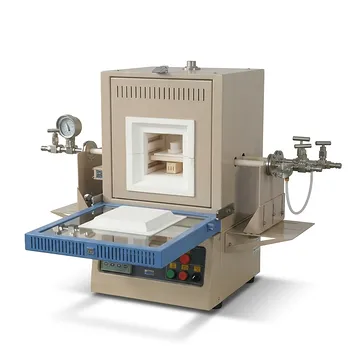
1700C Compact Hybrid Furnace with Dual Layer Box Sintering and Controlled Atmosphere Alumina Tubes
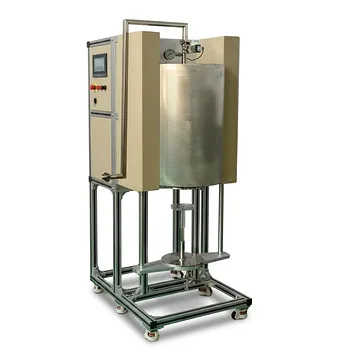
1200°C Atmosphere Controlled Automatic Bottom Loading Furnace with 6 Inch Quartz Tube
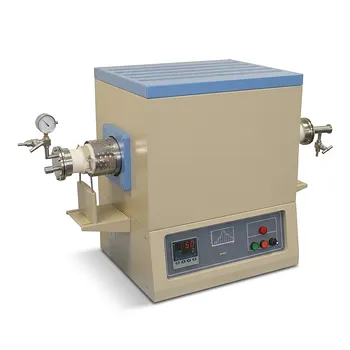
1700C High Temperature Alumina Tube Furnace with 18 Inch Heated Zone and Vacuum Sealing Flanges

Vertical 1700C Vacuum and Atmosphere Tube Furnace with 80mm Alumina Tube
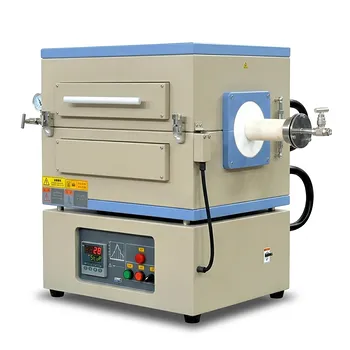
1500°C Split Tube Furnace with Alumina Tube and Vacuum Sealing Flanges for Material Research
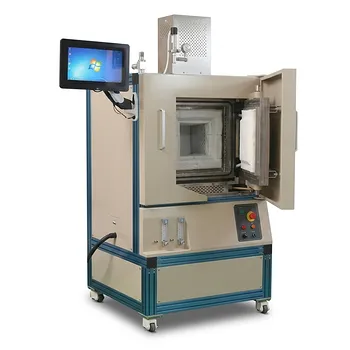
High Temperature Oxygen and Inert Atmosphere Controlled Furnace 8 Liter 1700C Sintering System for Advanced Materials RD
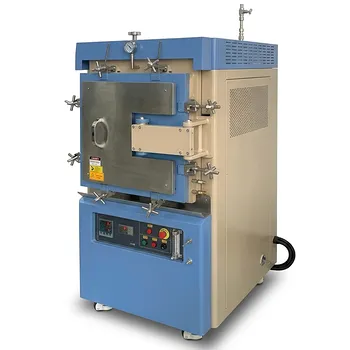
Atmosphere Controlled Muffle Furnace 1700C Maximum Temperature 80L High Capacity Vacuum Inert Gas Box Furnace
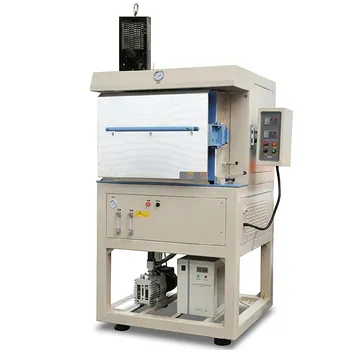
1200C Hydrogen Atmosphere Box Furnace with 5 Heated Sides and 64L Chamber
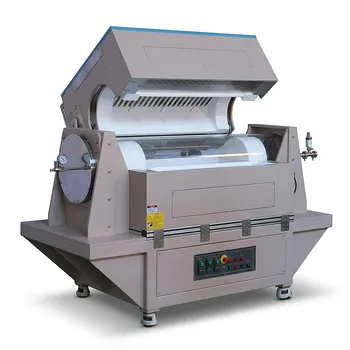
Three Zone Tube Furnace with 11 Inch or 15 Inch Quartz Tube and Hinged Flanges for Vacuum Atmosphere Heat Treatment
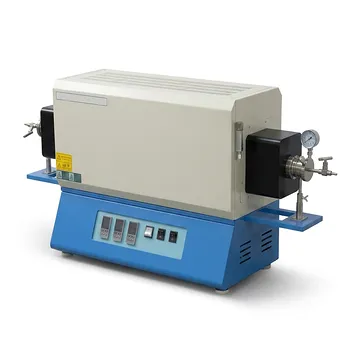
High Temperature Three Temperature Zone Tube Furnace for Advanced Material Science Sintering and Chemical Vapor Deposition Applications
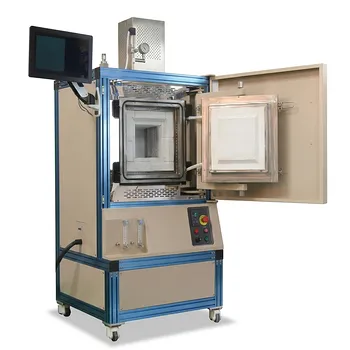
High Temperature Hydrogen Atmosphere Box Furnace 1650C Max Reducing Environment Material Synthesis System 8x8x8 Chamber
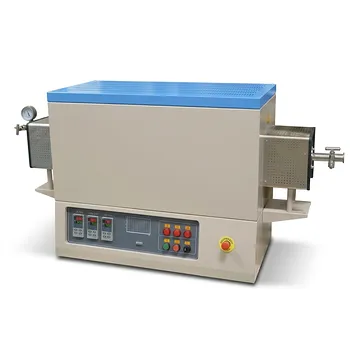
Three Zone Alumina Tube Furnace with Vacuum Flanges High Temperature 1700C Thermal Gradient CVD System
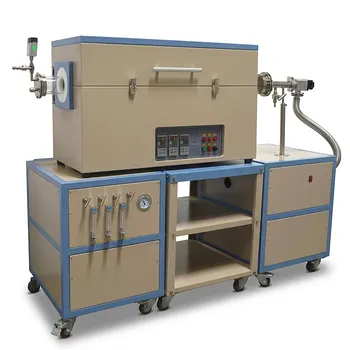
Three Zone Quartz Tube Furnace with 3 Channel Gas Mixer Vacuum Pump and Anti Corrosive Vacuum Gauge

High Temperature 1700C Tube Furnace with High Vacuum Turbomolecular Pump System and Multi Channel Mass Flow Controller Gas Mixer

High Temperature 1700C Vertical Tube Furnace for Powder Spherification and Material Sintering