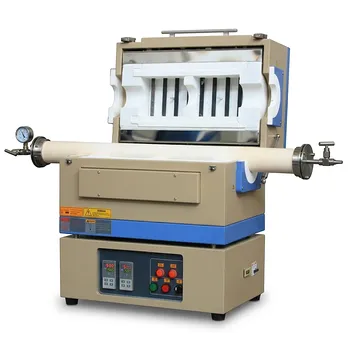
Why CO2 adsorbent synthesis needs atmosphere-controlled tube furnaces: Ensure pore precision and material integrity.
Updated 3 months ago
The synthesis of high-performance carbon dioxide adsorption materials relies on atmosphere-controlled tube furnaces to prevent the catastrophic oxidation of carbon structures at high temperatures. These systems provide a strictly inert environment—typically using high-purity nitrogen or argon—that allows for precise chemical etching and structural tuning between 700°C and 900°C. Without this precision control, the carbon precursor would undergo oxidative combustion, destroying the delicate pore architecture required for effective gas capture.
Core Takeaway: A precision atmosphere control system is the fundamental safeguard that enables anaerobic pyrolysis and chemical activation. It allows for the precise engineering of specific surface areas and pore distributions while protecting the chemical integrity of the carbon framework from oxygen-induced degradation.
Preserving the Carbon Framework Through Anaerobic Processing
Preventing Oxidative Burnout
At the elevated temperatures required for carbonization (700°C–900°C), carbon materials become highly reactive. A precision atmosphere system introduces high-purity nitrogen (N2) or argon (Ar) to displace oxygen, preventing the material from simply burning away into ash.
Maximizing Carbon Yield
By maintaining a stable, inert environment, the tube furnace ensures that biomass or synthetic precursors undergo dehydration and carbonization rather than combustion. This maximizes the yield of the carbon skeleton, which serves as the physical substrate for $CO_{2}$ adsorption.
Protecting Metal Nanoparticles
In advanced composite adsorbents, atmosphere control prevents the intense oxidation of metal species or metal-organic frameworks (MOFs). This allows metal ions to be reduced into catalytically active nanoparticles, which can then induce the in-situ growth of carbon nanotubes for enhanced structural stability.
Precision Engineering of Pore Architecture
Facilitating Chemical Etching
High-performance $CO_{2}$ adsorbents require a specific hierarchy of micropores and mesopores. The controlled atmosphere ensures that chemical activators, such as potassium hydroxide (KOH), can precisely etch the carbon framework to create these pores without interference from atmospheric oxygen.
Tuning Pore Size Distribution
The ability to maintain constant-temperature dwell times under a regulated gas flow provides the core thermodynamic conditions for controlled pyrolysis. This level of precision allows researchers to tune the pore size distribution to match the molecular diameter of carbon dioxide, optimizing adsorption kinetics.
Removal of Decomposition Byproducts
A constant flow of inert gas does more than just exclude oxygen; it also flushes out gaseous byproducts like $CO_{2}$ and $SO_{2}$ produced during ligand decomposition. Removing these gases prevents secondary reactions that could clog pores or poison active sites on the material's surface.
Enhancing Chemical Affinity and Surface Functionality
Successful Heteroatom Doping
For high $CO_{2}$ selectivity, carbon networks are often "doped" with nitrogen, phosphorus, or oxygen. A stable, inert atmosphere is a core requirement for the incorporation of these heteroatoms into the carbon matrix, as it prevents them from reacting with stray oxygen during the high-temperature sintering stage.
Creating High-Activity Vacancies
In certain oxide-based adsorbents, atmosphere control promotes the generation of oxygen vacancies. These vacancies serve as critical active sites that significantly enhance the material's chemical adsorption capacity by providing high-energy points for gas molecules to bind.
Maintaining Specific Ionic Ratios
Precision control helps maintain specific oxidation states, such as the ratio of $Co^{2+}/Co^{3+}$ or $Fe^{2+}/Fe^{3+}$. Preserving these specific electronic states is vital for the electrochemical properties and surface chemistry that drive the adsorption of $CO_{2}$ and other pollutants.
Understanding the Trade-offs and Challenges
Gas Flow Dynamics and Uniformity
While high flow rates ensure a clean environment, they can also cause temperature fluctuations within the tube. If the gas is not pre-heated or the flow is too turbulent, it can create "cold spots" that result in non-uniform carbonization and inconsistent pore structures across the sample.
Cost and Complexity of High-Purity Gases
Operating a precision system requires a continuous supply of ultra-high-purity (99.999%) gases. Any leak in the delivery lines or a drop in gas quality can introduce trace oxygen, which can bridge the gap between "activation" and "destruction" at 800°C, leading to failed batches.
Equipment Maintenance and Sealing
Tube furnaces rely on vacuum-tight seals (often O-rings) to maintain the atmosphere. These seals are subject to thermal fatigue; a minor failure in the seal during a 10-hour dwell time can result in the total oxidation of the material, making regular maintenance a critical, yet time-consuming, necessity.
Implementing Precision Control for Adsorption Goals
How to Apply This to Your Project
- If your primary focus is maximizing surface area: Prioritize a system with high-precision KOH activation protocols and a steady nitrogen flow to ensure deep, clean etching of the carbon matrix.
- If your primary focus is $CO_{2}$ selectivity: Ensure your furnace can maintain a strictly anaerobic environment to preserve nitrogen-containing functional groups during the carbonization of protic salts or biomass.
- If your primary focus is catalytic adsorption: Choose a system with argon capabilities and precise heating rates (e.g., 5°C/min) to induce specific oxygen vacancies and maintain metal ion ratios.
The integration of precision atmosphere control transforms the tube furnace from a simple heater into a sophisticated reactor capable of engineering the atomic-level features necessary for next-generation carbon capture.
Summary Table:
| System Function | Impact on Carbon Materials | Key Benefit for CO2 Capture |
|---|---|---|
| Anaerobic Processing | Prevents oxidative combustion at 700°C-900°C | Maximizes carbon skeleton yield |
| Controlled Etching | Regulates KOH/activator chemical reactions | Creates precise micropore distributions |
| Heteroatom Doping | Prevents N, P, or O from reacting with stray oxygen | Enhances CO2 selectivity and affinity |
| Byproduct Removal | Flushes out CO2 and SO2 during decomposition | Prevents pore clogging and site poisoning |
| Vacancy Generation | Promotes specific oxygen vacancies/ionic states | Increases chemical adsorption capacity |
Elevate Your Material Research with THERMUNITS Precision Solutions
For researchers in material science and industrial R&D, achieving perfect carbon architecture requires absolute thermal control. THERMUNITS is a leading manufacturer of high-performance laboratory equipment designed to meet the rigorous demands of next-generation gas capture research.
Our comprehensive range of thermal solutions—including Tube, Vacuum, Atmosphere, Muffle, Rotary, and Hot Press furnaces, as well as CVD/PECVD systems and Electric Rotary Kilns—ensures your synthesis remains free from oxidative degradation while maximizing pore efficiency.
Ready to optimize your carbonization and activation processes? Contact THERMUNITS today to discover how our specialized heat treatment equipment can bring unparalleled precision to your laboratory.
References
- Joanna Sreńscek-Nazzal, Beata Michalkiewicz. Chemical Activation of Banana Peel Waste-Derived Biochar Using KOH and Urea for CO2 Capture. DOI: 10.3390/ma17040872
Mentioned Products
- Compact Vertical Split Quartz Tube Furnace with Stainless Steel Vacuum Flanges for Rapid Thermal Quenching and Controlled Atmosphere Material Processing
- Compact Atmosphere Controlled Rapid Thermal Processing RTP Furnace with 4 Inch ID Quartz Tube 1100C
- 1200°C Atmosphere Controlled Automatic Bottom Loading Furnace with 6 Inch Quartz Tube
- Compact Hybrid Muffle and Tube Furnace for 1000C Controlled Atmosphere Laboratory Material Sintering
- 1700C Compact Hybrid Furnace with Dual Layer Box Sintering and Controlled Atmosphere Alumina Tubes
People Also Ask
- Why integrate a vertical split tube furnace with hydraulic loading for HSECC? Essential for In-Situ Fire Simulation.
- What is the role of a split vertical tube furnace during flash sintering of 8YSZ and 20SDC? Master Ultra-Fast R&D
- What is the primary engineering purpose for using a customized ventilation hood when operating a split tube furnace? RCF Safety
- Why is a quartz tube furnace necessary for phosphorus-doped MoS2/GO preparation? Ensure Purity & Precise Synthesis
- What is the primary function of a Quartz Tube Furnace in ZnO VLS growth? Master High-Precision Nanowire Synthesis

Tech Team · ThermUnits
Last updated on Jun 02, 2026
Related Products

Compact Vertical Split Quartz Tube Furnace with Stainless Steel Vacuum Flanges for Rapid Thermal Quenching and Controlled Atmosphere Material Processing
Compact Atmosphere Controlled Rapid Thermal Processing RTP Furnace with 4 Inch ID Quartz Tube 1100C
1200°C Atmosphere Controlled Automatic Bottom Loading Furnace with 6 Inch Quartz Tube
Compact Hybrid Muffle and Tube Furnace for 1000C Controlled Atmosphere Laboratory Material Sintering
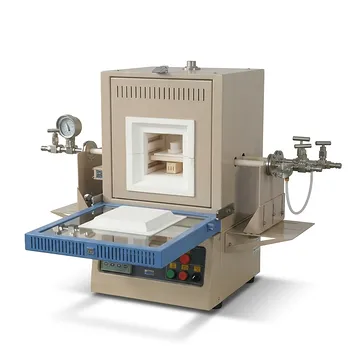
1700C Compact Hybrid Furnace with Dual Layer Box Sintering and Controlled Atmosphere Alumina Tubes
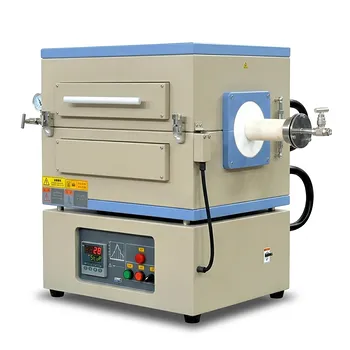
1500°C Split Tube Furnace with Alumina Tube and Vacuum Sealing Flanges for Material Research
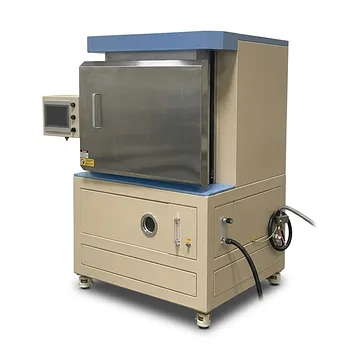
1650C High Temperature Atmosphere Controlled Box Furnace with 65L Chamber for Advanced Material Sintering and Industrial Heat Treatment
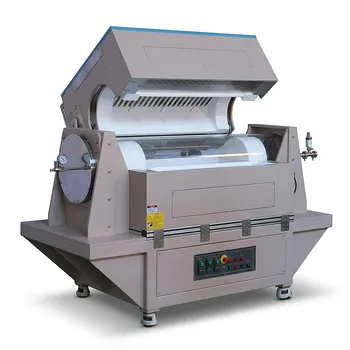
Three Zone Tube Furnace with 11 Inch or 15 Inch Quartz Tube and Hinged Flanges for Vacuum Atmosphere Heat Treatment

Vertical 1700C Vacuum and Atmosphere Tube Furnace with 80mm Alumina Tube
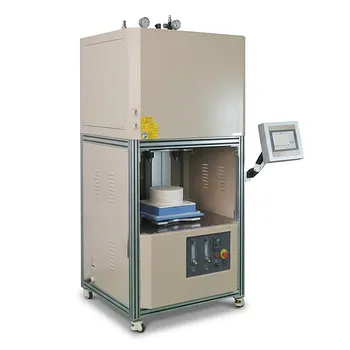
High Temperature Vertical Atmosphere Controlled Furnace 1700C Automatic Bottom Loading 13 Liter Vacuum Thermal System
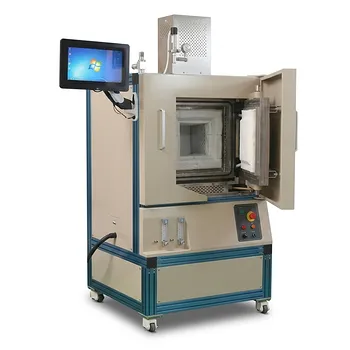
High Temperature Oxygen and Inert Atmosphere Controlled Furnace 8 Liter 1700C Sintering System for Advanced Materials RD
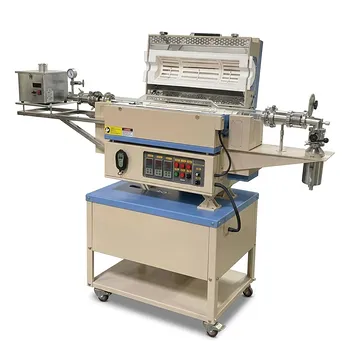
5 Inch Rotary Tube Furnace with Automatic Feeding and Receiving System 1200C Three Zone CVD Powder Processing
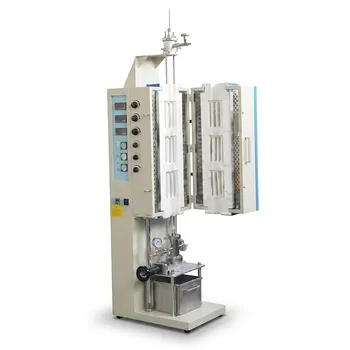
High Temperature Dual Zone Tube Furnace for Material Science Research and Professional Thermal Processing
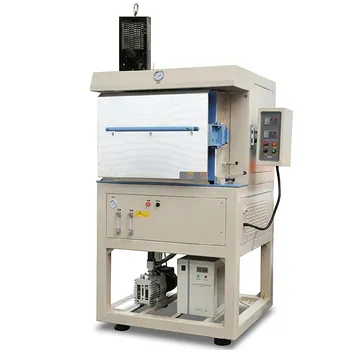
1200C Hydrogen Atmosphere Box Furnace with 5 Heated Sides and 64L Chamber
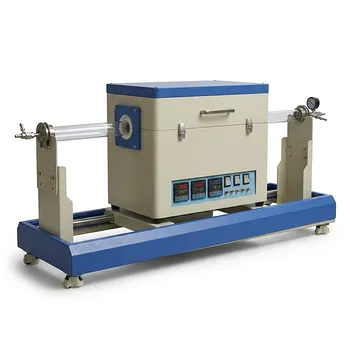
Double Temperature Zone Double Cover Tube Furnace for High Temperature CVD and Vacuum Annealing
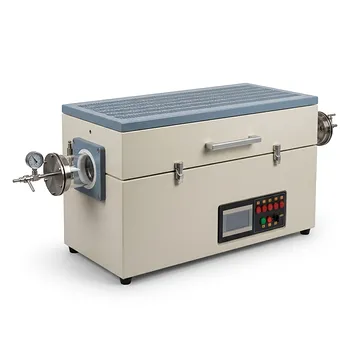
Five Zone 1200C High Temperature Split Tube Furnace with Touch Screen Controller and Multiple Quartz Tube Options
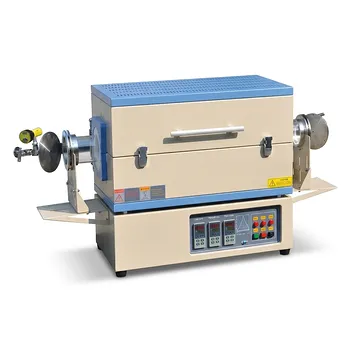
Three Zone Tube Furnace with 24 Inch Heating Length and Hinged Flange Quartz Tube System
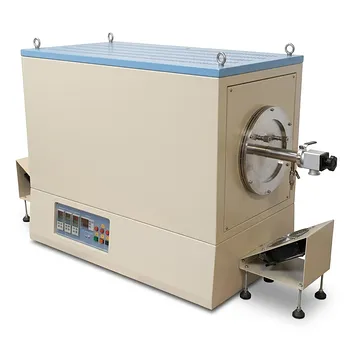
Four Zone Tube Furnace 1100C with 600mm Large Diameter Quartz Tube and Vacuum Flanges

1200°C 5 Inch Vertical Quartz Tube Furnace with Stainless Steel Vacuum Flanges