Why is a 4-hour holding time superior for V2AlC MAX phase synthesis? Achieve Structural Maturity & Purity
Updated 3 months ago
The transition from a 2-hour to a 4-hour holding time is the critical threshold for achieving structural maturity in $V_2AlC$ MAX phase synthesis. This extended window ensures that the constituent elements have sufficient time to diffuse completely, resulting in a highly ordered layered structure with significantly fewer residual impurities.
A 4-hour holding time optimizes the kinetic window for atomic diffusion, transforming a mixture of precursors into a well-aligned, high-purity $V_2AlC$ crystal. This duration is essential for minimizing secondary phases like $VC_x$ and $Al_2O_3$ that compromise material performance.
The Role of Kinetics in Structural Perfection
Achieving Full Atomic Diffusion
The synthesis of $V_2AlC$ relies on the movement of atoms into a specific, complex lattice arrangement. Atomic diffusion is a time-dependent process; a 2-hour window often proves insufficient for all elements to reach their designated positions within the crystal structure.
Extending the holding time to 4 hours provides the necessary kinetic window for these atoms to migrate effectively. This results in a "more perfect" lattice where the vanadium, aluminum, and carbon atoms are distributed with high precision.
Optimization of the Layered Arrangement
The $V_2AlC$ MAX phase is defined by its unique hexagonal, layered structure. At shorter holding times, the layers may be poorly defined or misaligned due to incomplete reaction cycles.
The 4-hour duration allows the layered structure to become well-aligned and regular. This improvement in crystallization quality is vital for the material to exhibit its characteristic mechanical and electrical properties.
Managing Phase Purity and Impurities
Eliminating Residual Secondary Phases
During the initial stages of heating, intermediate phases like vanadium carbides ($VC_x$) and oxides frequently form. If the reaction is halted at 2 hours, these impurities remain trapped within the material.
A 4-hour holding time facilitates the chemical conversion of these residuals into the final $V_2AlC$ phase. This significantly reduces the presence of $VC_x$, leading to a more homogenous and high-quality final product.
The Impact of the Thermal Environment
Vanadium and aluminum powders are highly sensitive to oxygen, which can lead to the formation of alumina ($Al_2O_3$). While a high-purity argon or vacuum environment is used to exclude oxygen, time remains a factor in managing existing surface oxides.
Longer heat treatment times at stable temperatures help in refining the phase purity. This ensures that the resulting material achieves the desired layered crystal structure without the interference of brittle oxide inclusions.
Understanding the Trade-offs
Energy Consumption and Throughput
The most immediate trade-off for doubling the holding time is the increased energy cost and reduced equipment throughput. In an industrial or high-volume setting, the 4-hour requirement significantly increases the "per-batch" production time.
Risk of Grain Coarsening
While a 4-hour hold improves crystallinity, excessive time at high temperatures can sometimes lead to grain growth. If grains become too large, certain mechanical properties, such as fracture toughness, might be affected, though this is usually secondary to the benefits of phase purity in $V_2AlC$.
How to Apply This to Your Synthesis Project
When deciding on your furnace parameters, consider the specific requirements of your end-use application.
- If your primary focus is Phase Purity: Use the 4-hour holding time to ensure the complete conversion of $VC_x$ and the elimination of residual intermediates.
- If your primary focus is Structural Integrity: Opt for the 4-hour duration to achieve a well-aligned, regular layered arrangement that maximizes the material's unique properties.
- If your primary focus is Rapid Prototyping: A 2-hour hold may suffice for preliminary testing, but realize that the material will likely contain significant impurities and lower crystallization quality.
By prioritizing a 4-hour holding window, you ensure the kinetic and chemical maturity required for high-performance $V_2AlC$ MAX phase materials.
Summary Table:
| Feature | 2-Hour Holding Time | 4-Hour Holding Time |
|---|---|---|
| Atomic Diffusion | Incomplete / Limited | Full / Optimized Kinetic Window |
| Crystal Structure | Poorly Defined Layers | Well-Aligned / Mature Lattice |
| Phase Purity | Higher Residual $VC_x$ & Oxides | High Purity / Homogenous |
| Main Trade-off | Higher Impurity Risk | Increased Energy Consumption |
Elevate Your Material Research with THERMUNITS
Achieving structural perfection in V2AlC MAX phase synthesis requires precise thermal control and reliable equipment. THERMUNITS is a leading manufacturer of high-temperature laboratory furnaces tailored for material science and industrial R&D.
Our comprehensive range of thermal solutions—including Tube, Vacuum, Atmosphere, and Muffle furnaces, as well as CVD/PECVD systems and Vacuum Induction Melting (VIM) furnaces—is engineered to provide the stable heating environments necessary for complete atomic diffusion and phase purity. Whether you are developing advanced ceramics or conducting complex heat treatments, THERMUNITS delivers the precision your work demands.
Ready to optimize your synthesis process? Contact our expert team today to find the perfect thermal processing solution for your laboratory.
References
- Process Optimization for the Synthesis of V2AlC MAX Phase to Enhance Sustainable Production. DOI: 10.55373/mjchem.v26i3.161
Mentioned Products
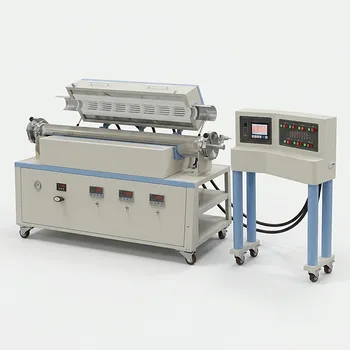
- 1500C Max Dual Zone Rotary Tube Furnace with 60 mm OD Alumina Tube for High Temperature Material Synthesis
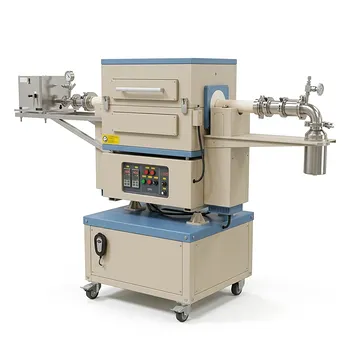
- High Temperature Dual Zone Rotating Tube Furnace 1500C Silicon Carbide Heating for Advanced Material Synthesis
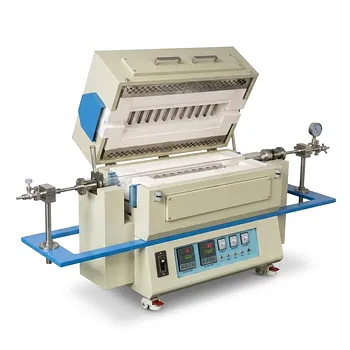
- High Temperature Compact Vacuum Tube Furnace 1750C Max 60mm OD Alumina Tube
- 1100C High Pressure Rocking Tube Furnace with 2 Inch Super Alloy Processing Tube for Material Synthesis
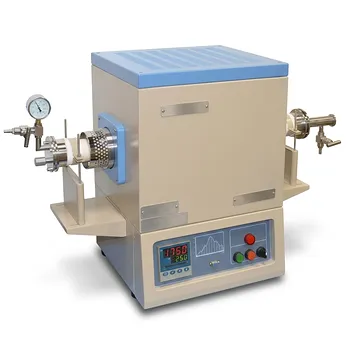
- Compact High Temperature 1600C Tube Furnace with 50mm Alumina Tube and Vacuum Flanges for Material Sintering
People Also Ask
- How does a rotary tube furnace improve the processing of granular materials? Enhance Uniformity and Reaction Kinetics
- Why is the precise optimization of residence time essential in the catalyst calcination process? Maximize Your Yields.
- Why use a rotary tube furnace for FACS carbonization? Ensure uniform morphology and prevent sphere agglomeration.
- In what ways do rotary tube furnaces enhance chemical and specialty mineral processing? Drive Precision and Uniformity.
- What parameters must operators control to maintain product quality in a rotary furnace? Master Your Heat Treatment.

Tech Team · ThermUnits
Last updated on Jun 02, 2026
Related Products
1500C Max Dual Zone Rotary Tube Furnace with 60 mm OD Alumina Tube for High Temperature Material Synthesis
High Temperature Dual Zone Rotating Tube Furnace 1500C Silicon Carbide Heating for Advanced Material Synthesis
High Temperature Compact Vacuum Tube Furnace 1750C Max 60mm OD Alumina Tube
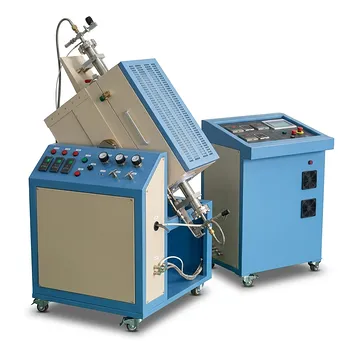
1100C High Pressure Rocking Tube Furnace with 2 Inch Super Alloy Processing Tube for Material Synthesis

Compact High Temperature 1600C Tube Furnace with 50mm Alumina Tube and Vacuum Flanges for Material Sintering
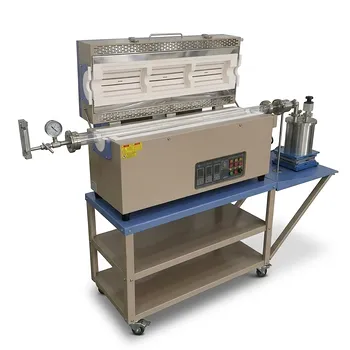
5 Inch Two Zone Rotary Tube Furnace 1100C for Powder CVD and Material Synthesis

High Temperature 1700C Vertical Tube Furnace for Powder Spherification and Material Sintering
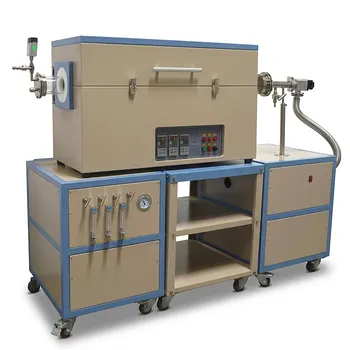
Three Zone Quartz Tube Furnace with 3 Channel Gas Mixer Vacuum Pump and Anti Corrosive Vacuum Gauge
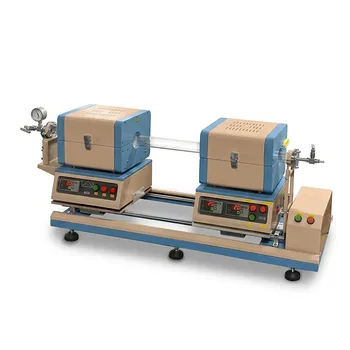
High Temperature 1200C Automatic Sliding Dual Zone Tube Furnace for 2D Transition Metal Dichalcogenides Growth and Material Sublimation Research
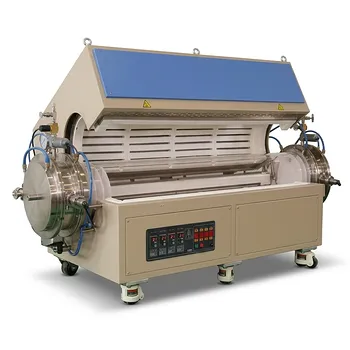
1200C Max Four Zone Split Tube Furnace with Optional Large Diameter Quartz Tubes

1800C High Temperature Compact Vacuum Tube Furnace with 60mm OD Alumina Tube and Kanthal MoSi2 Heating Elements

Vertical 1700C Vacuum and Atmosphere Tube Furnace with 80mm Alumina Tube
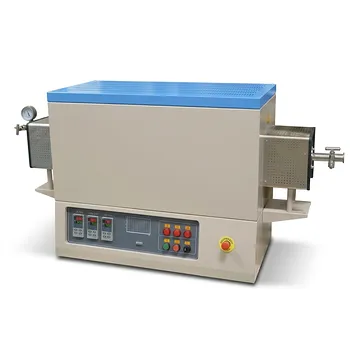
Three Zone Alumina Tube Furnace with Vacuum Flanges High Temperature 1700C Thermal Gradient CVD System
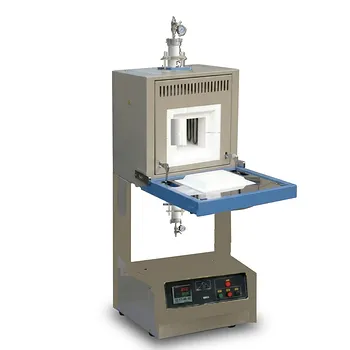
High Temperature Vertical Hybrid Furnace with Alumina Tube and SiC Heating for SOFC Coin Cell Testing and Atmosphere Processing
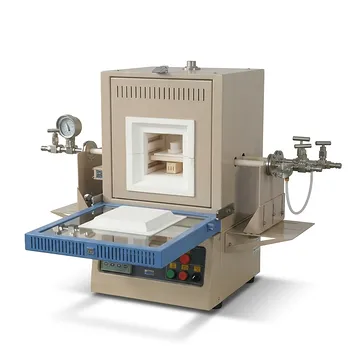
1700C Compact Hybrid Furnace with Dual Layer Box Sintering and Controlled Atmosphere Alumina Tubes
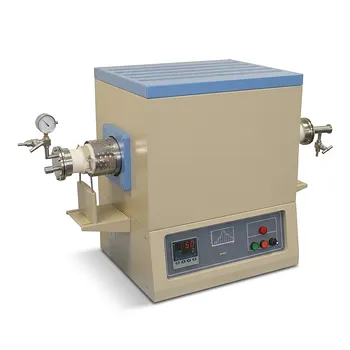
1700C High Temperature Alumina Tube Furnace with 18 Inch Heated Zone and Vacuum Sealing Flanges

High Temperature 1700C Six Zone Split Tube Furnace with Alumina Tube and Water Cooled Flanges
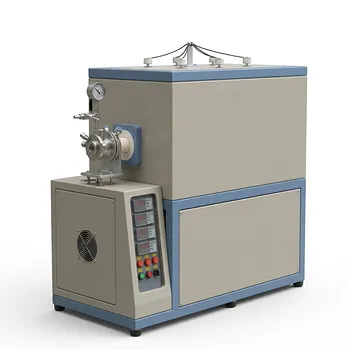
High Temperature 1700C Three Zone Tube Furnace with Alumina Tube 50mm 60mm 80mm OD for Material Research and Industrial Heat Treatment

1700C Hydrogen Gas Tube Furnace with 60mm Alumina Process Tube and Integrated Hydrogen Safety Detector