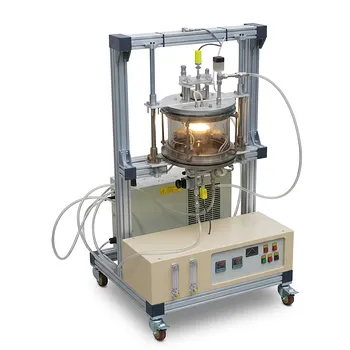
Why is a high-precision thin film deposition system required for vanadium on VACNTs? Protect Templates & Control Growth
Updated 3 months ago
High-precision thin film deposition is the critical link between a carbon nanotube template and a functional metal-oxide composite. Using systems like electron beam evaporators allows for the exact application of vanadium layers—typically between 50 nm and 200 nm—onto Vertically Aligned Carbon Nanotubes (VACNTs). This precision is mandatory because the vanadium thickness dictates the final morphology of the resulting Vanadium Pentoxide ($V_2O_5$) and serves as a vital thermal barrier that prevents the carbon nanotubes from being destroyed during high-temperature processing.
Core Takeaway: High-precision deposition ensures that vanadium films are thick enough to shield the underlying carbon nanotubes from oxidation while remaining precise enough to achieve the specific surface morphology required for the final device.
Precision as a Tool for Morphological Control
Defining the Final Oxide Structure
The thickness of the initial vanadium layer is the primary variable determining the shape and structure of the $V_2O_5$ formed during thermal oxidation.
Accurate control within the 50 nm to 200 nm range allows researchers to tune the surface characteristics of the composite material.
Even minor deviations in thickness can lead to inconsistent nanostructures, which negatively impacts the performance of the final material in applications like energy storage or sensing.
Achieving Atomic-Scale Uniformity
High-precision systems, including advanced Chemical Vapor Deposition (CVD), provide stable gas-flow dynamics and uniform thermal fields.
This stability is essential for ensuring that the vanadium covers the high-surface-area VACNTs evenly from top to bottom.
Without this level of control, the film would be non-uniform, leading to "hot spots" where the coating is too thin to perform its intended function.
The Barrier Effect: Protecting the Template
Preventing Template Oxidation
Vertically Aligned Carbon Nanotubes are highly susceptible to oxidation and can be completely consumed when exposed to oxygen at high temperatures.
The vanadium film acts as a sacrificial and protective barrier that intercepts oxygen during the thermal oxidation process.
A high-precision system ensures the film is continuous and dense enough to protect the internal carbon core while the outer metal layer converts to $V_2O_5$.
Maintaining Structural Integrity
If the deposition system lacks precision, regions of the VACNTs may receive insufficient coverage.
These gaps allow oxygen to penetrate the vanadium shield, leading to the "burning off" of the carbon nanotubes and the total collapse of the vertical structure.
Precise thickness control ensures the structural benefits of the VACNTs—such as high conductivity and surface area—are preserved within the final oxide shell.
The Importance of High Vacuum Environments
Minimizing Residual Contamination
High-precision deposition often requires high vacuum levels, frequently below $5 \times 10^{-6}$ mTorr, to eliminate residual oxygen and water molecules.
This environment prevents the vanadium from oxidizing prematurely or incorporating impurities during the deposition phase.
Ensuring a pure metal-to-carbon interface is critical for the mechanical adhesion and electrical connectivity of the resulting composite.
Securing Material Properties
Just as with other transition metals, the presence of oxygen during deposition can alter the metallic properties of the film.
A controlled, high-precision environment guarantees that the vanadium layer behaves predictably during its subsequent conversion to an oxide.
This reliability is what allows for the mass production of high-quality, large-area nano-thin films with adjustable properties.
Understanding the Trade-offs and Pitfalls
The Risk of Excessive Thickness
While a thicker film provides a better barrier against oxidation, exceeding the 200 nm threshold can be counterproductive.
Excessive vanadium deposition can "clog" the spaces between the vertically aligned nanotubes, reducing the effective surface area of the device.
This loss of porosity negates the primary reason for using VACNTs as a template in the first place.
The Failure of Low-Precision Methods
Low-precision deposition methods often result in "shadowing" effects, where the tops of the nanotubes are heavily coated while the base remains exposed.
This lack of uniformity leads to structural failure during the heating phase, as the unprotected bases of the nanotubes oxidize and detach from the substrate.
Investment in high-precision hardware is therefore a requirement, not an option, for maintaining the 3D architecture of the composite.
How to Apply This to Your Project
Making the Right Choice for Your Goal
- If your primary focus is protecting the VACNT template: Ensure your deposition system can maintain a minimum, uniform thickness of at least 50 nm to act as a reliable oxygen barrier.
- If your primary focus is maximizing surface area: Utilize an electron beam evaporator to keep the film as thin as possible (near 50 nm) while maintaining total coverage.
- If your primary focus is material purity and performance: Prioritize systems capable of reaching ultra-high vacuum levels to prevent interstitial contamination during the metal coating phase.
The success of a VACNT-metal oxide composite depends entirely on the precision of the initial deposition, which balances the need for structural protection with the requirement for nanostructured morphology.
Summary Table:
| Key Factor | Requirement/Range | Critical Impact on Final Material |
|---|---|---|
| Layer Thickness | 50 nm – 200 nm | Dictates $V_2O_5$ morphology and device performance. |
| Oxidation Barrier | Continuous Coverage | Prevents VACNT template from burning off at high temps. |
| Vacuum Level | Below $5 \times 10^{-6}$ mTorr | Eliminates impurities and ensures strong film adhesion. |
| Deposition Control | Atomic-Scale Uniformity | Avoids "shadowing" and mechanical structural failure. |
Elevate Your Material Research with THERMUNITS Precision
At THERMUNITS, we understand that in material science, the difference between a breakthrough and a failure lies in the precision of your thermal processing. As a leading manufacturer of high-temperature laboratory equipment, we provide the advanced tools necessary for high-stakes R&D.
Whether you are depositing critical metal films or performing complex thermal oxidations, our comprehensive range of equipment—including CVD/PECVD systems, Vacuum and Atmosphere furnaces, Tube furnaces, and Hot Press systems—is designed to deliver the stable gas flows and uniform thermal fields your projects demand.
Ready to optimize your thin-film deposition and protect your nanostructures?
Contact THERMUNITS Today to discuss how our laboratory heat treatment solutions can enhance your lab's efficiency and material performance.
References
- Matías Picuntureo, Samuel A. Hevia. The Synthesis of Sponge-like V2O5/CNT Hybrid Nanostructures Using Vertically Aligned CNTs as Templates. DOI: 10.3390/nano14020211
Mentioned Products
- Radio Frequency Plasma Enhanced Chemical Vapor Deposition RF PECVD System for Laboratory and Industrial Thin Film Growth
- Inclined Rotary Plasma Enhanced Chemical Vapor Deposition PECVD System for Thin Film Deposition and Nanomaterial Synthesis
- 1200C Sliding Internal Crucible Tube Furnace for Controlled Atmosphere Thin Film Deposition and Material Sublimation Research
- 950C Rapid Thermal Processing Furnace for 12 Inch Wafer CSS Coating with Rotating Substrate Holder
- HFCVD Machine System for Nano Diamond Coating on Drawing Dies and Industrial Tools
People Also Ask
- What are the advantages of PECVD systems for nano flame retardant films? Protect Heat-Sensitive Polymers with Precision
- How does PECVD differ from conventional thermal CVD? Key Advantages of Low-Temperature Deposition for R&D
- What is the role of CVD/PECVD systems in the research of optoelectronic materials and functional coatings? Expert Guide
- What are the benefits of using PECVD for optical and photonic coatings? Achieve High-Precision Thin-Film Deposition
- How do RF frequency and power settings influence the characteristics of a PECVD process? Master Quality & Efficiency

Tech Team · ThermUnits
Last updated on Jun 03, 2026
Related Products
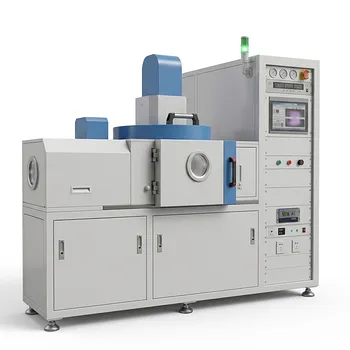
Radio Frequency Plasma Enhanced Chemical Vapor Deposition RF PECVD System for Laboratory and Industrial Thin Film Growth
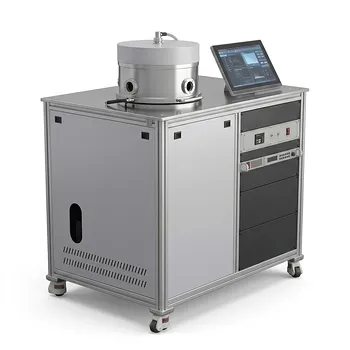
Inclined Rotary Plasma Enhanced Chemical Vapor Deposition PECVD System for Thin Film Deposition and Nanomaterial Synthesis
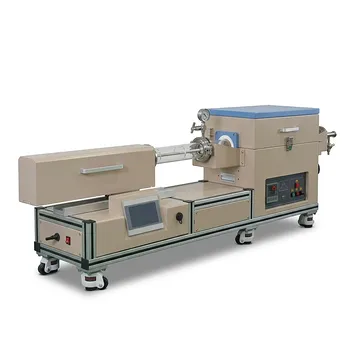
1200C Sliding Internal Crucible Tube Furnace for Controlled Atmosphere Thin Film Deposition and Material Sublimation Research
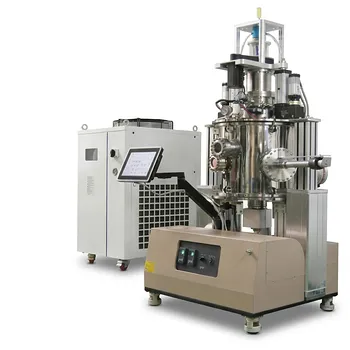
950C Rapid Thermal Processing Furnace for 12 Inch Wafer CSS Coating with Rotating Substrate Holder
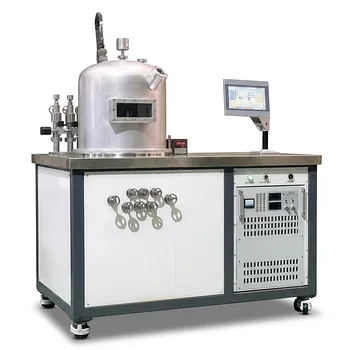
HFCVD Machine System for Nano Diamond Coating on Drawing Dies and Industrial Tools
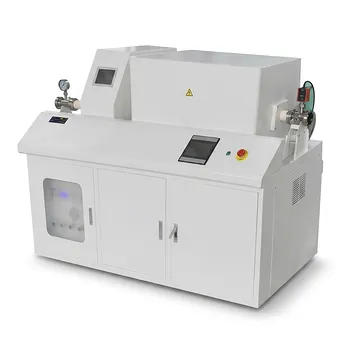
Chemical Vapor Deposition CVD System Slide PECVD Tube Furnace with Liquid Gasifier PECVD Machine
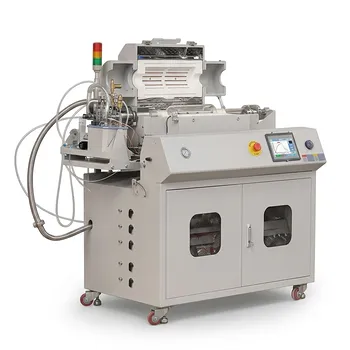
Versatile Chemical Vapor Deposition Tube Furnace System for Advanced Material Research and Industrial Coating Processes
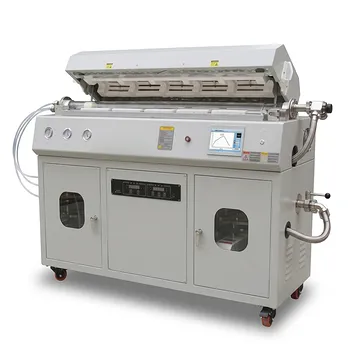
Multi Heating Zones CVD Tube Furnace System for Precision Chemical Vapor Deposition and Advanced Material Synthesis
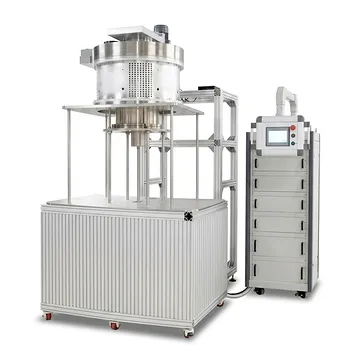
915MHz MPCVD Diamond Machine Microwave Plasma Chemical Vapor Deposition System Reactor
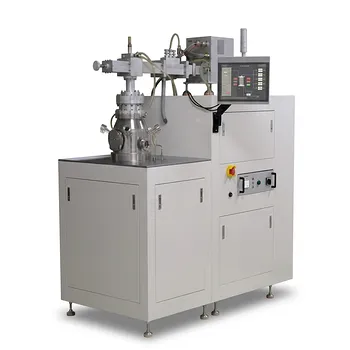
Cylindrical Resonator MPCVD Machine System for Microwave Plasma Chemical Vapor Deposition and Lab Diamond Growth
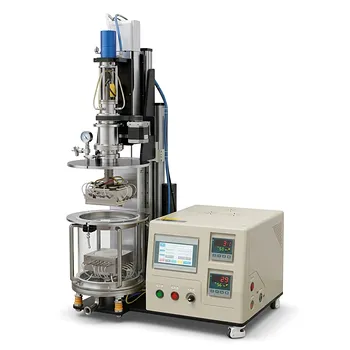
High Temperature 800C Rapid Thermal Processing Furnace with Rotating Sample Holder for Close Spaced Sublimation and Thin Film Solar Cell Research
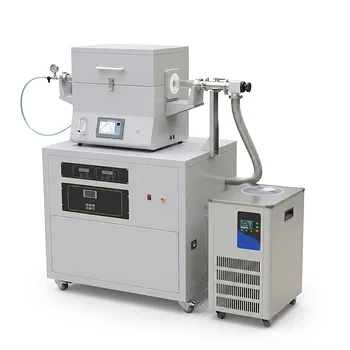
Split Chamber CVD Tube Furnace with Vacuum Station Chemical Vapor Deposition System Machine
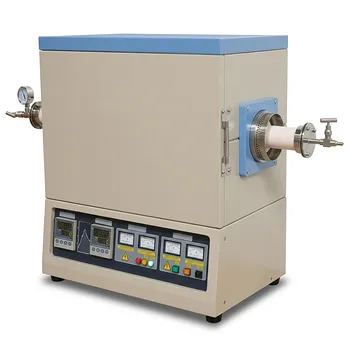
High Temperature 1700C Dual Zone Tube Furnace for Material Science and Industrial Chemical Vapor Deposition Research