Why is a high-precision tube furnace utilized for NiCoFeLDH calcination? Optimal Phase & Morphology Control
Updated 3 months ago
The high-precision tube furnace is the critical instrument for transforming NiCoFeLDH into its oxide form while maintaining its catalytic architecture. This specialized equipment provides a stable 350 °C oxidative environment and a uniform thermal field necessary to convert hydrothermal precursors into NiCoFeOx. This precision ensures complete phase transformation and dehydration without damaging the delicate mesoporous nanosheet structure required for subsequent chemical processes.
A high-precision tube furnace is indispensable because it offers the exact thermal stability and atmospheric control required to drive chemical phase changes while preserving the physical morphology of the precursor. By preventing sintering and localized overheating, it ensures the resulting oxides retain the high surface area and active sites necessary for high-performance applications.
Ensuring Precise Phase Transformation and Dehydration
Facilitating the Conversion to NiCoFeOx
The primary role of the furnace is to provide the energy required to convert hydrothermal synthesized NiCoFeLDH (Layered Double Hydroxides) into NiCoFeOx oxides. This transition occurs at a specific thermal threshold, typically around 350 °C, where the chemical bonds of the hydroxide precursor are broken to form a stable oxide phase.
Controlling the Removal of Crystalline Water
Precise temperature control is essential for the complete dehydration of the precursor. The furnace allows for the steady removal of crystalline water and the elimination of ligands without causing abrupt structural collapse.
Managing Gaseous Byproduct Release
As the metal salts decompose, they release gaseous molecules that must exit the material structure predictably. A high-precision environment ensures this thermal decomposition happens at a controlled rate, preventing internal pressure buildup that could rupture the nanosheets.
Preserving the Delicate Mesoporous Structure
Preventing Active Site Sintering
One of the greatest risks in thermal treatment is sintering, where high temperatures cause small particles to fuse together, reducing surface area. The precision of the tube furnace prevents temperature "overshoot," thereby protecting the active sites and the carrier structure from damage.
Maintaining Nanosheet Morphology
The NiCoFeLDH precursor possesses a delicate mesoporous structure that is vital for its eventual performance. By maintaining a uniform thermal field, the tube furnace ensures that the nanosheets undergo phase transformation while keeping their porous network intact.
Establishing Uniformity Across the Sample
Unlike standard ovens, a high-precision tube furnace ensures that every part of the precursor experiences the exact same temperature and atmosphere. This uniformity is critical for achieving a consistent material phase and preventing localized variations in the catalyst’s properties.
Enabling Efficient Downstream Processing
Preparation for Phosphidation
The oxidation of NiCoFeLDH is often a precursor step to phosphidation. The high-precision furnace ensures the resulting NiCoFeOx is perfectly prepared for gas-phase reactions with phosphorus vapor, which later forms high-conductivity metal phosphide heterostructures like Ni2P and Fe2P.
Regulating Pore Structure
The furnace acts as a tool for pore structure regulation, ensuring the support material achieves the intended physicochemical properties. This control is necessary for non-carbon-based catalysts to maintain their intended mass-transport characteristics during operation.
Understanding the Trade-offs and Limitations
Precision vs. Throughput
While high-precision tube furnaces offer unparalleled control over the thermal environment, they are often limited in sample volume. Achieving a perfectly uniform thermal field is more difficult in larger tubes, meaning researchers must often choose between high-quality material consistency and large-scale production.
Heating Rate Sensitivity
Using an incorrect ramping rate can be catastrophic even if the final temperature is correct. For example, heating faster than 2-3 °C/min can cause rapid gas evolution, leading to the mechanical failure of the nanosheets or the formation of undesired secondary phases.
Atmospheric Purity Requirements
The success of the calcination depends heavily on the stability of the air atmosphere. Any fluctuations in oxygen concentration or the accidental introduction of moisture during the heating cycle can alter the oxidation state of the Ni, Co, or Fe components, leading to inconsistent catalytic performance.
How to Apply This to Your Project
Recommendations for Material Synthesis
- If your primary focus is preserving surface area: Utilize a slow heating rate (2 °C/min) to ensure gaseous byproducts are released gently without collapsing the mesoporous framework.
- If your primary focus is phase purity: Ensure the furnace is calibrated to maintain a stable dwell temperature with less than 1 °C of fluctuation to prevent the formation of mixed-phase impurities.
- If your primary focus is downstream reactivity: Prioritize a furnace with a uniform thermal field to ensure the precursor is evenly oxidized, providing a consistent baseline for subsequent phosphidation or nitridation.
The precise mastery of the thermal environment is the only way to bridge the gap between a raw hydrothermal precursor and a high-performance, structured catalyst.
Summary Table:
| Key Requirement | Role in NiCoFeLDH Processing |
|---|---|
| Temperature Precision | Essential for converting precursors to NiCoFeOx at ~350°C without impurities. |
| Uniform Thermal Field | Prevents localized overheating to preserve delicate mesoporous nanosheet structures. |
| Ramping Rate Control | Limits heating to 2-3°C/min to prevent structural collapse during gas release. |
| Atmospheric Stability | Ensures consistent oxidation states across Ni, Co, and Fe for catalytic performance. |
| Sintering Prevention | Protects active sites by eliminating temperature overshoot during dehydration. |
Elevate Your Material Research with THERMUNITS
Precise thermal processing is the bridge between a raw precursor and a high-performance catalyst. THERMUNITS is a leading manufacturer of high-precision high-temperature laboratory equipment dedicated to material science and industrial R&D. We understand that even a 1°C fluctuation can compromise your nanosheet morphology.
Our comprehensive range of thermal solutions—including Atmosphere Tube Furnaces, Vacuum and Muffle Furnaces, CVD/PECVD systems, and Rotary Kilns—is engineered to provide the exact stability and atmospheric control your NiCoFeLDH precursors require.
Ready to optimize your calcination process? Contact our technical experts today to discuss how our high-precision tube furnaces and thermal elements can ensure the structural integrity and reactivity of your next-generation materials.
References
- Gouda K. Helal, Pingping Zhao. Electrochemical water splitting enhancement by introducing mesoporous NiCoFe-trimetallic phosphide nanosheets as catalysts for the oxygen evolution reaction. DOI: 10.1039/d4ra02344g
Mentioned Products
- 900°C Max Rotary Tube Furnace with 8 Inch 310S Alloy Tube and Optional Multi Zone Heating for Industrial Material Calcination
- 4 Inch Two Zone Rotary CVD Tube Furnace for High Temperature Battery Material Synthesis and Advanced Material Calcination
- Vertical Openable Tube Furnace 0-1700c High Temperature Laboratory System for CVD and Vacuum Heat Treatment
- 1200C Max Dual Sliding Tube Furnace with 50 mm Tube Flanges for CVD
- 1200C Sliding Tube Furnace for Rapid Thermal Processing and CVD Graphene Growth with 100mm OD Capacity
People Also Ask
- How does a rotary tube furnace improve the processing of granular materials? Enhance Uniformity and Reaction Kinetics
- Why use a rotary tube furnace for FACS carbonization? Ensure uniform morphology and prevent sphere agglomeration.
- Why is the precise optimization of residence time essential in the catalyst calcination process? Maximize Your Yields.
- In what ways do rotary tube furnaces enhance chemical and specialty mineral processing? Drive Precision and Uniformity.
- What parameters must operators control to maintain product quality in a rotary furnace? Master Your Heat Treatment.

Tech Team · ThermUnits
Last updated on Jun 02, 2026
Related Products
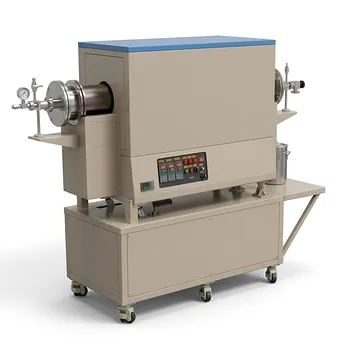
900°C Max Rotary Tube Furnace with 8 Inch 310S Alloy Tube and Optional Multi Zone Heating for Industrial Material Calcination
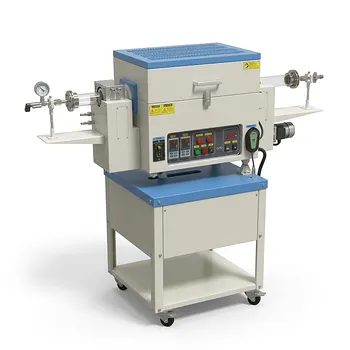
4 Inch Two Zone Rotary CVD Tube Furnace for High Temperature Battery Material Synthesis and Advanced Material Calcination
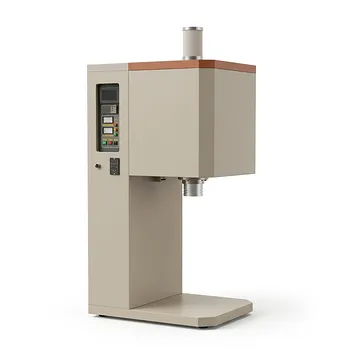
Vertical Openable Tube Furnace 0-1700c High Temperature Laboratory System for CVD and Vacuum Heat Treatment
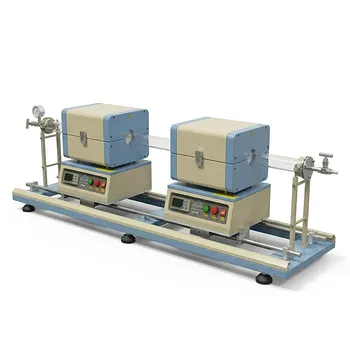
1200C Max Dual Sliding Tube Furnace with 50 mm Tube Flanges for CVD
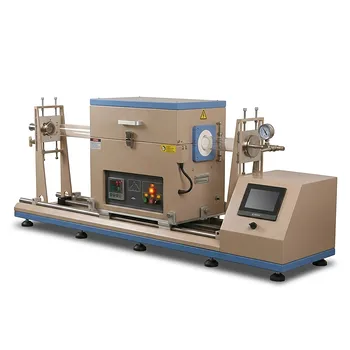
1200C Sliding Tube Furnace for Rapid Thermal Processing and CVD Graphene Growth with 100mm OD Capacity
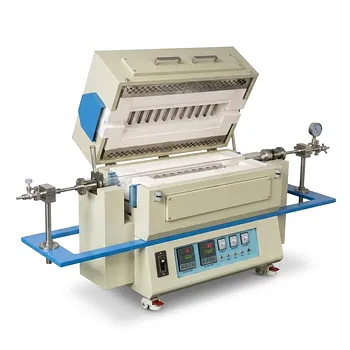
High Temperature Dual Zone Rotating Tube Furnace 1500C Silicon Carbide Heating for Advanced Material Synthesis

Compact High Temperature 1600C Tube Furnace with 50mm Alumina Tube and Vacuum Flanges for Material Sintering
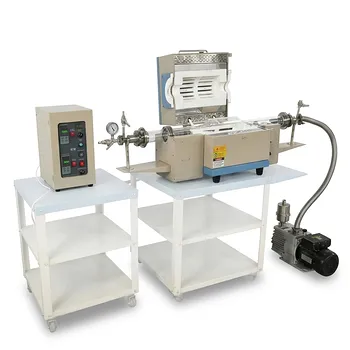
Two Zone Rotary Tube Furnace for Powder CVD Coating and Core Shell Material Synthesis 1100C
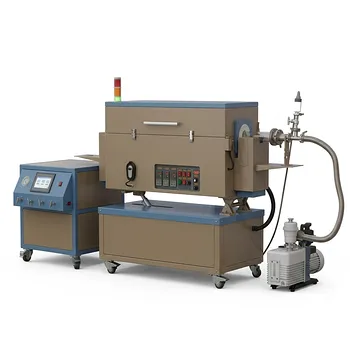
5 Inch Three Zone Rotary Tube Furnace with Integrated Gas Delivery System and 1200C Capability for Advanced Material CVD Processing
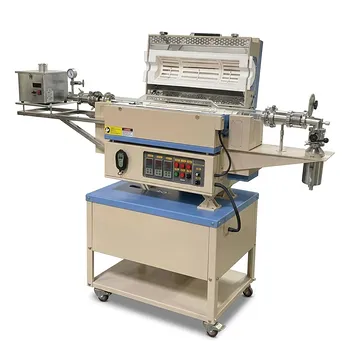
5 Inch Rotary Tube Furnace with Automatic Feeding and Receiving System 1200C Three Zone CVD Powder Processing
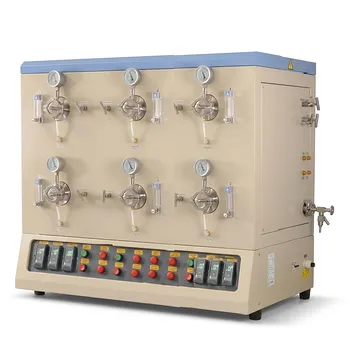
1200C High Throughput Multi Channel Tube Furnace with 50mm Quartz Tubes for Annealing and Material Phase Diagram Research

High Temperature Tube Furnace 1500C with Sliding Flanges and 50mm OD for Rapid Thermal Processing Fast Heating and Cooling
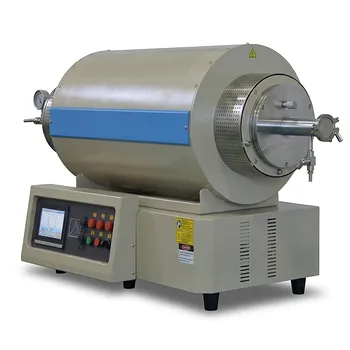
1200C Max Three Zone Tube Furnace 6 Inch OD Max with Tube and Flange

1800C High Temperature Compact Vacuum Tube Furnace with 60mm OD Alumina Tube and Kanthal MoSi2 Heating Elements
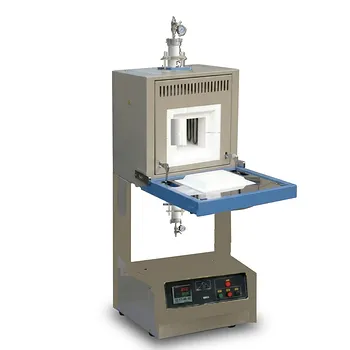
High Temperature Vertical Hybrid Furnace with Alumina Tube and SiC Heating for SOFC Coin Cell Testing and Atmosphere Processing
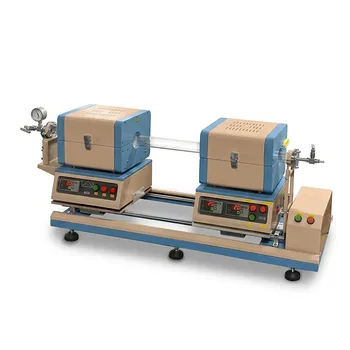
High Temperature 1200C Automatic Sliding Dual Zone Tube Furnace for 2D Transition Metal Dichalcogenides Growth and Material Sublimation Research
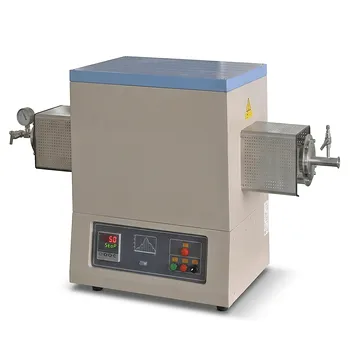
High Temperature 1700C Tube Furnace with 4 Inch OD Alumina Tube and Vacuum Sealing Flanges
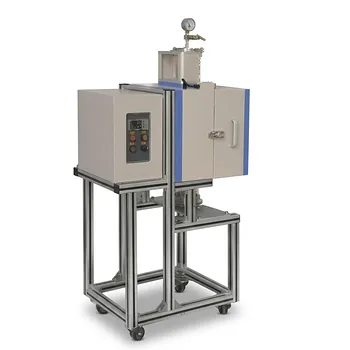
1200°C 5 Inch Vertical Quartz Tube Furnace with Stainless Steel Vacuum Flanges
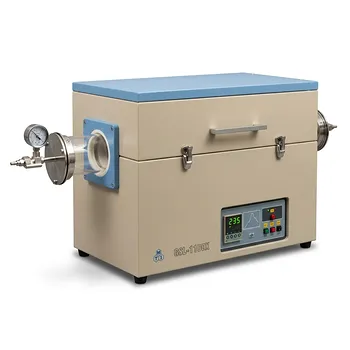
Single Zone Tube Furnace 5 Inch Quartz Tube 36 Inch Heating Zone Vacuum Flanges
