Why is a high-purity nitrogen (N2) atmosphere necessary during 800 °C catalyst pyrolysis? Protect Your Material Integrity
Updated 3 months ago
Using a high-purity nitrogen (N2) atmosphere is critical because it prevents the catastrophic oxidation of carbon and metallic components at elevated temperatures. At 800 °C, oxygen would cause the raw materials to undergo combustion rather than controlled pyrolysis, destroying the catalyst's structure. Furthermore, the nitrogen flow acts as a dynamic medium that removes volatile by-products and facilitates the chemical doping required for a high-performance catalyst.
Core Takeaway: A high-purity N2 atmosphere serves a dual role as both a protective shield against oxidative degradation and a process regulator that ensures the correct chemical composition and porous structure of the final catalyst.
Preventing Oxidative Degradation of Active Sites
Protection of Metallic Nanoparticles
At the 800 °C threshold, metal components such as iron-based nanoparticles or zero-valent nickel are highly reactive. Without an inert N2 environment, these active sites would instantly oxidize, losing their catalytic potential and chemical stability.
Preservation of the Carbon Framework
Pyrolysis is intended to transform precursors into structured carbon, such as carbon nanotubes or graphene shells. High-purity N2 ensures the carbon source is carbonized rather than consumed by combustion, which would otherwise reduce the material to useless ash.
Shielding Surface Functional Groups
The absence of oxygen protects persistent free radicals (PFRs) and specific surface functional groups. These elements are essential for the catalyst's ability to facilitate electron transfer and reduce specific contaminants during its end-use.
Regulating Chemical Equilibrium and Doping
Efficient Nitrogen Doping
The N2 atmosphere supports the "doping" process, where nitrogen atoms are integrated directly into the carbon lattice. This is a fundamental requirement for creating the nitrogen-doped carbon substrates that provide the catalyst's high activity levels.
Removal of Volatile By-products
As precursors like melamine decompose, they release volatile vapors and gases. A continuous flow of N2 carries these by-products away from the high-temperature zone, preventing them from interfering with the reaction equilibrium.
Management of Metal Vapors
In specific catalyst formulations, such as those involving zinc, the nitrogen flow acts as a carrier to remove evaporated metal vapors. This controlled removal is vital for maintaining the desired atomic-level dispersion of metal sites within the catalyst.
Maintaining Physical and Structural Integrity
Development of Microporous Structures
The inert environment allows for the precise development of a catalyst's internal architecture. By preventing premature oxidation, the N2 atmosphere ensures that the resulting material has the high surface area and microporosity required for high catalytic performance.
Prevention of Structural Collapse
If oxygen were present, the localized heat from combustion would cause uncontrolled thermal expansion and structural collapse. High-purity nitrogen maintains a stable thermal environment, allowing the aromatic structures of the catalyst to form correctly.
Understanding the Trade-offs
Purity vs. Cost
While high-purity nitrogen is more expensive than lower grades, residual oxygen (even in small amounts) can lead to the partial oxidation of active metal sites. This significantly degrades the catalyst's efficiency and lifespan, making the higher upfront gas cost a necessary investment for quality.
Flow Rate Dynamics
Maintaining the correct N2 flow rate is a delicate balance. A flow that is too slow may fail to remove inhibitory volatile by-products, while an excessively high flow rate can cause temperature fluctuations within the furnace and potentially strip away necessary precursors.
How to Apply This to Your Project
To ensure the successful synthesis of a high-performance catalyst, your atmospheric control strategy must be rigorous.
- If your primary focus is maximizing catalytic activity: Prioritize nitrogen purity to ensure that zero-valent metal species and nitrogen-doped sites remain fully reduced and active.
- If your primary focus is structural surface area: Ensure a constant, steady flow of N2 to effectively remove volatiles and promote the formation of a rich microporous network.
- If your primary focus is material yield: Use N2 to purge the reaction chamber of all residual air before heating begins to prevent the combustion of the carbon source during the ramp-up phase.
By strictly controlling the N2 environment, you transition the process from simple heating to a precise molecular engineering of the catalyst's active surface.
Summary Table:
| Key Function | Role in Pyrolysis | Impact on Final Catalyst |
|---|---|---|
| Oxidation Shield | Prevents combustion of carbon and metals | Preserves active sites and yield |
| By-product Removal | Carries away volatile decomposition gases | Ensures chemical purity and equilibrium |
| Structural Support | Maintains stable thermal environment | Promotes high surface area & microporosity |
| Doping Facilitation | Supports N2 integration into carbon lattice | Enhances catalytic activity and efficiency |
Elevate Your Material Research with Precision Atmosphere Control
Achieving the perfect 800 °C pyrolysis requires more than just heat; it demands a flawlessly controlled environment. THERMUNITS is a leading manufacturer of high-temperature laboratory equipment, providing the advanced thermal processing solutions needed for high-performance catalyst production.
Whether you need Atmosphere Furnaces, Tube Furnaces, or CVD/PECVD systems, our equipment is engineered to provide the precise N2 flow and purity control your R&D projects demand. From protecting metallic nanoparticles to ensuring successful nitrogen doping, we empower material scientists to achieve consistent, high-yield results.
Ready to optimize your heat treatment process?
Contact THERMUNITS Today to discuss your specific laboratory requirements and discover how our furnace solutions can enhance your research efficiency.
References
- Zhenlu Zhao, Xin Wang. Prussian blue-derived FeN<sub><i>x</i></sub>/Fe-based N-doped carbon nanotube catalysts with high ORR electrochemical performance. DOI: 10.1039/d3ya00615h
Mentioned Products
- 1500C Three Zone Vertical Pyrolysis Furnace for Nanoparticle Synthesis and Advanced Oxide Coating
- High Temperature 1700C Vertical Tube Furnace for Powder Spherification and Material Sintering
- High Temperature Vertical Crucible Furnace with 22L Heating Chamber and 1200C Maximum Temperature
- High Temperature Tube Furnace 1500C with Sliding Flanges and 50mm OD for Rapid Thermal Processing Fast Heating and Cooling
- Compact High Temperature 1600C Tube Furnace with 50mm Alumina Tube and Vacuum Flanges for Material Sintering
People Also Ask
- Why is high-precision temperature control essential in a pyrolysis furnace? Master Pd NPs/NO-C Catalyst Synthesis
- Why is Nitrogen (N2) required for 3D carbon electrodes? Ensure material purity and structural integrity.
- What is the technical necessity of multiple high-temperature thermocouples in a pyrolysis furnace? Precision Control
- Why is it necessary to maintain a strict nitrogen (N2) atmosphere during the operation of a pyrolysis furnace? (Pro Tips)
- Why are precise nitrogen supply systems and flow meters necessary in the pyrolysis process? Optimize Purity & Yield.

Tech Team · ThermUnits
Last updated on Jun 03, 2026
Related Products
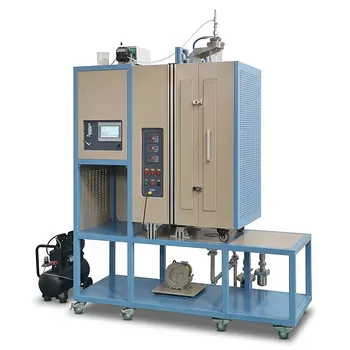
1500C Three Zone Vertical Pyrolysis Furnace for Nanoparticle Synthesis and Advanced Oxide Coating

High Temperature 1700C Vertical Tube Furnace for Powder Spherification and Material Sintering
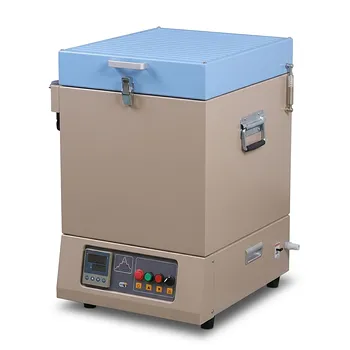
High Temperature Vertical Crucible Furnace with 22L Heating Chamber and 1200C Maximum Temperature

High Temperature Tube Furnace 1500C with Sliding Flanges and 50mm OD for Rapid Thermal Processing Fast Heating and Cooling

Compact High Temperature 1600C Tube Furnace with 50mm Alumina Tube and Vacuum Flanges for Material Sintering
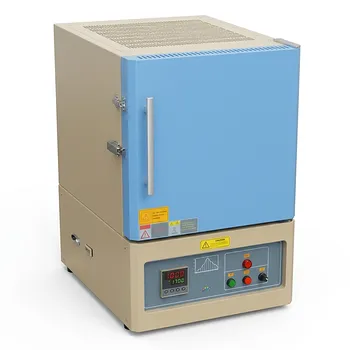
Large Bench Top 1700C High Temperature Muffle Furnace with 19L Chamber for Advanced Material Sintering and Annealing
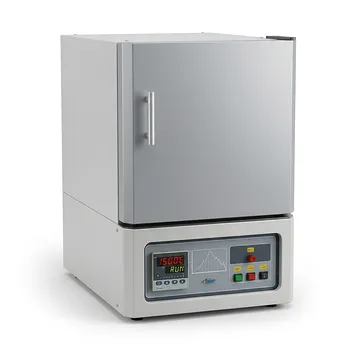
High Temperature 1500C Benchtop Muffle Furnace 3.6L Alumina Fiber Chamber Programmable Controller Sintering Annealing Carbonization Thermal Processing System

High Temperature 1700C Tube Furnace with High Vacuum Turbomolecular Pump System and Multi Channel Mass Flow Controller Gas Mixer
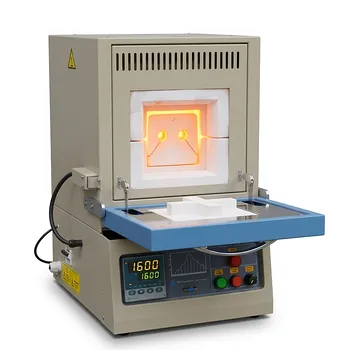
High Temperature Compact Muffle Furnace 1700 C with 30 Segment Programmable Controller and 1.7L Cubic Chamber
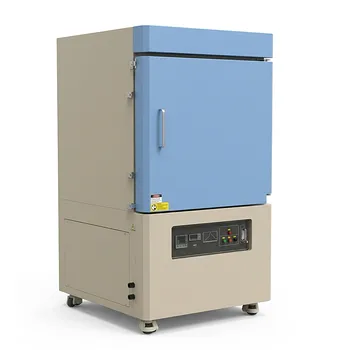
Industrial Large Box Furnace 1700C 216L High Temp Muffle Sintering System

High Temperature Automated 5 Inch Tube Furnace for Autonomous Material Research and Advanced Laboratory R&D

1100C Tube Furnace with Vacuum Flange and Programmable Temperature Controller for Material Science and Industrial Heat Treatment
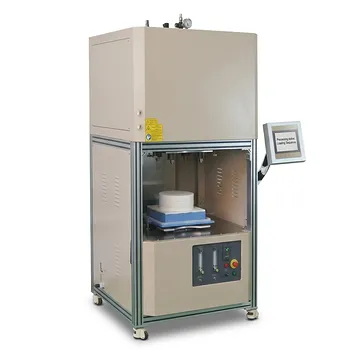
High Temperature Vertical Atmosphere Controlled Furnace with Automatic Bottom Loading and 1700°C Capacity for Advanced Material Research
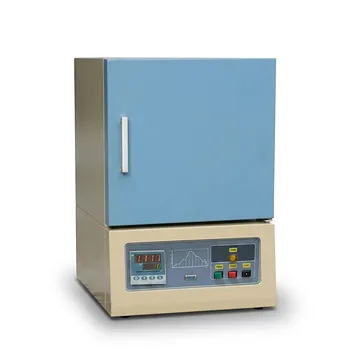
Ultra High Temperature Bench Top Muffle Furnace 1750C Sintering System with Kanthal Super Heating Elements and Precision Digital Control
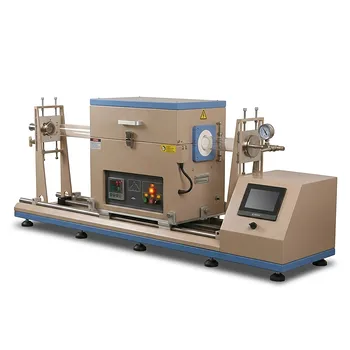
1200C Sliding Tube Furnace for Rapid Thermal Processing and CVD Graphene Growth with 100mm OD Capacity
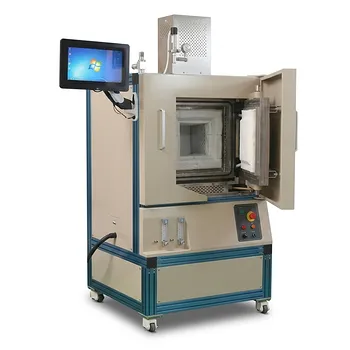
High Temperature Oxygen and Inert Atmosphere Controlled Furnace 8 Liter 1700C Sintering System for Advanced Materials RD
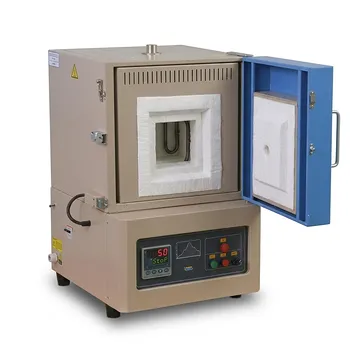
1800°C Bench Top Ultra High Temperature Muffle Furnace with Sapphire Observation Window and Top Feeding Port for Materials Research and Thermal Processing

1750°C High Temperature Benchtop Vacuum Atmosphere Tube Furnace with Kanthal Super 1800 Heating Elements and 60mm Alumina Processing Tube

1800C High Temperature Compact Vacuum Tube Furnace with 60mm OD Alumina Tube and Kanthal MoSi2 Heating Elements