Why is a high-temperature tube furnace essential for nanomaterials? Mastering Precision in Industrial Heat Treatment
Updated 3 months ago
High-temperature tube furnaces are indispensable for nanomaterial production because they offer unparalleled precision in thermal and atmospheric control. This environment is mandatory for critical processes like phase transformation, sintering, and chemical reduction, ensuring nanoparticles reach specific levels of purity, crystallinity, and structural integrity.
Core Takeaway: A high-temperature tube furnace is the essential tool for transitioning nanomaterial research to industrial production by providing the stable, contamination-free thermal field required to manipulate matter at the atomic and molecular levels.
Precision Control of the Thermal Environment
Achieving Desired Physicochemical Properties
High-temperature tube furnaces provide a stable and precisely controllable environment required for the calcination and reduction of nanomaterials. By accurately adjusting temperature gradients, manufacturers can ensure that nanoparticles achieve the specific crystallinity and purity needed for high-performance applications.
Managing Phase Transformations
These furnaces are critical for inducing specific phase transitions and controlling crystal growth. The ability to maintain a uniform thermal field allows for the regulation of a material’s microscopic structure, which directly dictates its final physical performance.
Enhancing Structural Integrity through Sintering
At temperatures reaching 900°C and above, the furnace facilitates atomic diffusion within particles. This process, known as sintering, eliminates crystal defects and increases material density, which is vital for the structural reliability of materials like zirconia.
Atmospheric Isolation and Chemical Purity
Prevention of Oxidation and Contamination
The tightly sealed environment of a tube furnace allows for the introduction of high-purity inert gases such as argon or nitrogen. This configuration excludes oxygen and moisture, safeguarding the chemical purity of easily oxidized materials and semiconductor precursors.
Facilitating Complex Chemical Reactions
Industrial-grade furnaces enable processes like the carbonization of biomass by maintaining oxygen-free environments. Under nitrogen protection, the furnace drives dehydrogenation and aromatization, transforming organic precursors into carbon skeletons with high specific surface areas.
Enabling Specialized Doping and Alloying
The thermal energy provided by these furnaces allows for the embedding of active atoms, such as nitrogen, into carbon frameworks. This creates active centers and stable structures that significantly enhance the electrical conductivity and charge transport capabilities of the final nanomaterial.
Transitioning from Laboratory to Industrial Scale
Consistency and Repeatability
High-temperature tube furnaces ensure high consistency during heat treatment, which is the primary challenge when scaling up. By maintaining stable physical and chemical parameters, they allow for the mass production of nanomaterials that match laboratory-grade quality.
Verification of Thermal Stability
These furnaces are used to evaluate the reliability of new materials, such as high-entropy alloy nanoparticles. Subjecting materials to long-term heat treatment under argon protective atmospheres confirms whether they can maintain their structure under extreme industrial conditions.
Understanding the Trade-offs
Equipment Maintenance and Calibration
While these furnaces offer extreme precision, they require rigorous calibration to ensure temperature uniformity across the entire heating zone. Inconsistent temperatures can lead to heterogeneous batches, where particles at different ends of the tube exhibit different properties.
Atmospheric Limitations and Safety
Maintaining a vacuum or specialized atmosphere requires sophisticated sealing and gas handling systems. Any leak can lead to material contamination or safety hazards, especially when using reducing gases like hydrogen or processing volatile precursors.
Applying This Technology to Your Goals
How to Match Furnace Capabilities to Your Project
To successfully integrate a high-temperature tube furnace into your workflow, you must align the equipment's specifications with your material's unique requirements.
- If your primary focus is Chemical Purity: Prioritize a furnace with advanced atmosphere control and vacuum sealing to prevent oxidation.
- If your primary focus is Structural Density: Select a unit capable of sustained high-temperature sintering to maximize atomic diffusion and eliminate defects.
- If your primary focus is Industrial Scaling: Invest in furnaces that offer programmable temperature zones to ensure consistency across larger material batches.
- If your primary focus is Carbon Nanomaterials: Ensure the system supports precise nitrogen or argon flow for stable carbonization and doping processes.
By masterfully controlling both heat and atmosphere, the high-temperature tube furnace remains the definitive tool for engineering the next generation of industrial nanomaterials.
Summary Table:
| Key Benefit | Process/Function | Outcome for Nanomaterials |
|---|---|---|
| Thermal Precision | Calcination & Reduction | High Crystallinity & Purity |
| Atmospheric Control | Inert Gas (Ar/N2) Protection | Prevention of Oxidation/Contamination |
| Atomic Diffusion | High-Temp Sintering | Increased Density & Structural Integrity |
| Industrial Scaling | Uniform Heating Zones | Consistent Batch-to-Batch Quality |
| Chemical Modification | Doping & Carbonization | Enhanced Conductivity & Surface Area |
Elevate Your Nanomaterial Innovation with THERMUNITS
As a leading manufacturer of high-temperature laboratory equipment, THERMUNITS empowers material science and industrial R&D with unmatched thermal processing solutions. Whether you require precise atmosphere control in a Tube Furnace for nanoparticle synthesis or advanced CVD/PECVD systems for thin-film deposition, our equipment ensures the purity and structural integrity your research demands.
Our comprehensive range includes Muffle, Vacuum, Atmosphere, Rotary, and Hot Press furnaces, as well as Electric Rotary Kilns and Vacuum Induction Melting (VIM) furnaces, designed to transition your materials seamlessly from the lab to industrial scale.
Ready to optimize your heat treatment process? Contact THERMUNITS Today to explore our full range of thermal elements and laboratory solutions tailored to your specific R&D goals.
References
- Muhammad Sheeraz Javed, Muhammad Sharjeel. A Multidisciplinary Role of Nano Particles Focusing Across the Industrial Scale. DOI: 10.36348/sjls.2024.v09i12.004
Mentioned Products
- High Temperature Tube Furnace 1500C with Sliding Flanges and 50mm OD for Rapid Thermal Processing Fast Heating and Cooling
- High Temperature 1700C Tube Furnace with High Vacuum Turbomolecular Pump System and Multi Channel Mass Flow Controller Gas Mixer
- High Temperature 1700C Benchtop Tube Furnace with 5 Inch Heating Zone High Purity Alumina Tube and Vacuum Sealing Flanges
- 1750°C High Temperature Benchtop Vacuum Atmosphere Tube Furnace with Kanthal Super 1800 Heating Elements and 60mm Alumina Processing Tube
- Compact High Temperature 1600C Tube Furnace with 50mm Alumina Tube and Vacuum Flanges for Material Sintering
People Also Ask
- How are high-temperature tube furnaces utilized to repair etching damage? Precision Lattice Restoration Solutions
- What core conditions does a high-temperature tube furnace provide for rGO aerogels? Mastering Precision Synthesis.
- What role does a high-temperature tube furnace play in CVD synthesis of silicon nanowires? Master VLS Growth Precision.
- How does precision tube furnace control influence CoFe nanoparticle formation? Master Your Bimetallic Synthesis.
- What role does a high-temperature tube furnace play in the sulfidation heat treatment of CoS@C/MXene nanocomposites? Guide

Tech Team · ThermUnits
Last updated on Jun 02, 2026
Related Products

High Temperature Tube Furnace 1500C with Sliding Flanges and 50mm OD for Rapid Thermal Processing Fast Heating and Cooling

High Temperature 1700C Tube Furnace with High Vacuum Turbomolecular Pump System and Multi Channel Mass Flow Controller Gas Mixer

High Temperature 1700C Benchtop Tube Furnace with 5 Inch Heating Zone High Purity Alumina Tube and Vacuum Sealing Flanges

1750°C High Temperature Benchtop Vacuum Atmosphere Tube Furnace with Kanthal Super 1800 Heating Elements and 60mm Alumina Processing Tube

Compact High Temperature 1600C Tube Furnace with 50mm Alumina Tube and Vacuum Flanges for Material Sintering
1700C High Temperature Alumina Tube Furnace with 18 Inch Heated Zone and Vacuum Sealing Flanges

1800C High Temperature Compact Vacuum Tube Furnace with 60mm OD Alumina Tube and Kanthal MoSi2 Heating Elements
High Temperature Split Tube Furnace 1500C for Material Research Vacuum and Atmosphere Thermal Processing

High Temperature 1700C Vertical Tube Furnace for Powder Spherification and Material Sintering
High Temperature Three Zone Tube Furnace 1700C with Alumina Tube and Water Cooled Flanges

High Temperature 1700C Six Zone Split Tube Furnace with Alumina Tube and Water Cooled Flanges
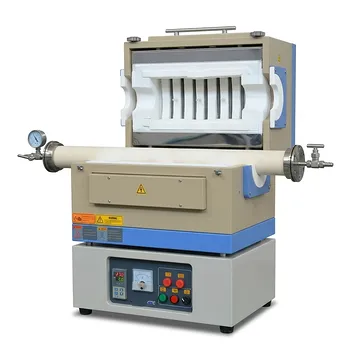
High Temperature 1600C Split Tube Furnace Vacuum Flanges Valves Optional 60mm 80mm Alumina Tube

High Temperature Automated 5 Inch Tube Furnace for Autonomous Material Research and Advanced Laboratory R&D

1100C Tube Furnace with Vacuum Flange and Programmable Temperature Controller for Material Science and Industrial Heat Treatment
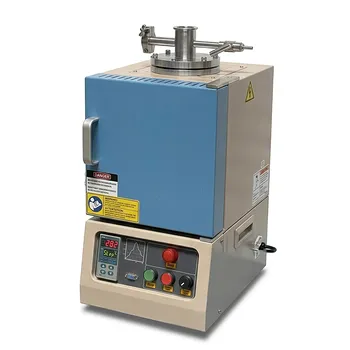
High Temperature Hybrid Muffle and Tube Furnace with Vacuum Capability and PID Control
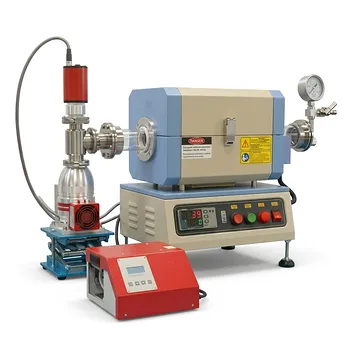
High Vacuum Compact Tube Furnace 1200C with Integrated Turbo Pump System and 8 Inch Heating Zone
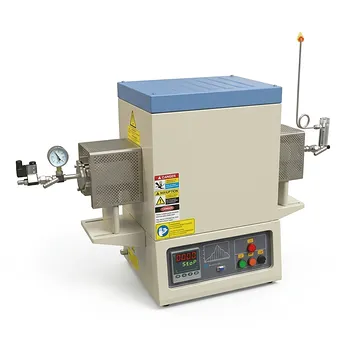
1700C Hydrogen Gas Tube Furnace with 60mm Alumina Process Tube and Integrated Hydrogen Safety Detector
1100°C High Temperature Quartz Chamber Furnace 8 Inch OD with 7.6 Liter Capacity and Vacuum Atmosphere Capability
1100C High Pressure Rocking Tube Furnace with 2 Inch Super Alloy Processing Tube for Material Synthesis