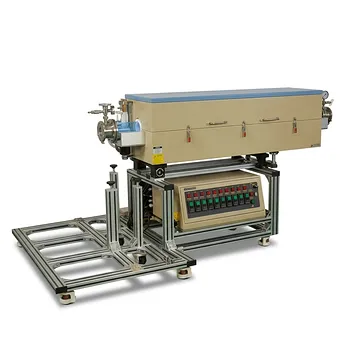
Why is a high-temperature tube furnace required for La2O3/SnO2 nanofibers? Precision Calcination for Advanced Sensors
Updated 3 months ago
High-temperature tube furnaces are essential for synthesizing $La_2O_3/SnO_2$ nanofibers because they provide the precise thermal and atmospheric control required to convert organic-inorganic precursors into a functional, crystalline semiconductor. This equipment facilitates the simultaneous oxidative decomposition of polymer templates and the nucleation of metal oxide crystals, resulting in the high-porosity architecture necessary for advanced sensing applications.
Core Takeaway: A high-temperature tube furnace serves as the reactor for "template-assisted synthesis," where the removal of organic carriers (PVP) and the crystallization of $La_2O_3$ and $SnO_2$ occur in tandem. This process transforms a dense precursor fiber into a high-surface-area, porous network of stacked grains.
The Role of Thermal Decomposition and Template Removal
Eliminating the Polymer Matrix
During the electrospinning process, a polymer such as polyvinylpyrrolidone (PVP) is used as a structural template to carry inorganic salts. The tube furnace provides a stable environment, typically around 500 °C, where this polymer undergoes oxidative decomposition, effectively "burning away" the organic phase.
Creating the Porous Architecture
As the organic matter escapes the fiber in gaseous form, it leaves behind voids between the forming metal oxide grains. This transformation converts the once-dense fibers into a porous structure composed of stacked small grains, which is critical for achieving the high specific surface area required for gas sensing.
Facilitating Phase Transition and Crystallization
Converting Inorganic Salts to Metal Oxides
The furnace environment provides the thermal energy necessary to guide the chemical conversion of precursor salts into metal oxide crystals. This process ensures that the lanthanum and tin components are fully oxidized and integrated into the desired $La_2O_3$ and $SnO_2$ phases.
Managing Lanthanum’s Chemical Sensitivity
Lanthanum oxide is highly hygroscopic, meaning it tends to react with moisture and $CO_2$ in the air to form hydroxides or carbonates. The high-temperature environment of the furnace—often exceeding 750 °C to 1000 °C in specialized pre-treatments—ensures the removal of these volatile impurities and stabilizes the pure oxide phase.
Understanding the Trade-offs
Temperature Precision vs. Grain Growth
While high temperatures are required for crystallinity, excessive heat can lead to sintering, where small grains fuse into larger ones. This reduction in grain boundaries significantly decreases the material's specific surface area, potentially degrading its sensitivity in sensing applications.
Atmospheric Control vs. Structural Defects
Unlike standard muffle furnaces, a tube furnace allows for a controlled atmosphere (e.g., pure oxygen or inert nitrogen). A continuous oxygen-containing environment is necessary to reduce oxygen vacancy concentrations and exciton-like traps, which directly impacts the charge carrier mobility and response efficiency of the final semiconductor.
How to Apply This to Your Project
Recommendations for Material Optimization
- If your primary focus is maximizing gas sensitivity: Maintain calcination temperatures near the lower threshold (e.g., 500 °C) to ensure complete PVP removal while preventing grain growth.
- If your primary focus is phase purity and stability: Use a higher temperature pre-calcination step (up to 1000 °C) to eliminate hydroxides and carbonates from the lanthanum precursors before final fiber synthesis.
- If your primary focus is electrical performance: Utilize the tube furnace's ability to provide a continuous flow of oxygen during heating to minimize structural defects and improve carrier mobility.
The high-temperature tube furnace is not merely a heat source, but a precision reactor that defines the morphology, purity, and functional performance of $La_2O_3/SnO_2$ nanofibers.
Summary Table:
| Process Stage | Furnace Function | Key Benefit for Nanofibers |
|---|---|---|
| Template Removal | Oxidative decomposition of PVP | Creates high-surface-area porous architecture |
| Phase Transition | Controlled thermal energy supply | Converts inorganic salts into crystalline semiconductors |
| Atmosphere Control | Continuous O2 or inert gas flow | Minimizes oxygen vacancies and structural defects |
| Phase Stability | High-temp pre-treatment (>750°C) | Removes hygroscopic impurities from Lanthanum oxide |
| Grain Control | Precise temperature regulation | Prevents sintering to maintain high gas sensitivity |
Elevate Your Material Research with THERMUNITS Precision Furnaces
Achieving the perfect porous structure in La2O3/SnO2 nanofibers requires more than just heat—it requires absolute atmospheric and thermal control. THERMUNITS is a leading manufacturer of high-temperature laboratory equipment specifically designed for material science and industrial R&D.
We provide a comprehensive range of thermal processing solutions to ensure your synthesis is repeatable and high-performing:
- Advanced Tube & CVD/PECVD Systems: Perfect for precise atmospheric control during nanofiber calcination.
- Muffle, Vacuum, and Atmosphere Furnaces: For versatile heat treatment and phase stabilization.
- Specialized Equipment: Including Rotary, Hot Press, Dental furnaces, and Vacuum Induction Melting (VIM) systems.
Whether you are developing next-generation gas sensors or advanced semiconductors, our equipment offers the reliability your research demands.
Ready to optimize your thermal processing?
Contact THERMUNITS Today to discuss your specific requirements with our technical experts!
References
- Gen Li, Zhicheng Cai. Development of High-Performance Ethanol Gas Sensors Based on La2O3 Nanoparticles-Embedded Porous SnO2 Nanofibers. DOI: 10.3390/s24216839
Mentioned Products
- High Temperature Tube Furnace 1500C with Sliding Flanges and 50mm OD for Rapid Thermal Processing Fast Heating and Cooling
- High Temperature 1700C Tube Furnace with High Vacuum Turbomolecular Pump System and Multi Channel Mass Flow Controller Gas Mixer
- High Temperature 1700C Benchtop Tube Furnace with 5 Inch Heating Zone High Purity Alumina Tube and Vacuum Sealing Flanges
- 1750°C High Temperature Benchtop Vacuum Atmosphere Tube Furnace with Kanthal Super 1800 Heating Elements and 60mm Alumina Processing Tube
- Compact High Temperature 1600C Tube Furnace with 50mm Alumina Tube and Vacuum Flanges for Material Sintering
People Also Ask
- How are high-temperature tube furnaces utilized to repair etching damage? Precision Lattice Restoration Solutions
- What role does a high-temperature tube furnace play in CVD synthesis of silicon nanowires? Master VLS Growth Precision.
- What core conditions does a high-temperature tube furnace provide for rGO aerogels? Mastering Precision Synthesis.
- What role does a high-temperature tube furnace play in the sulfidation heat treatment of CoS@C/MXene nanocomposites? Guide
- How does precision tube furnace control influence CoFe nanoparticle formation? Master Your Bimetallic Synthesis.

Tech Team · ThermUnits
Last updated on Jun 02, 2026
Related Products

High Temperature Tube Furnace 1500C with Sliding Flanges and 50mm OD for Rapid Thermal Processing Fast Heating and Cooling

High Temperature 1700C Tube Furnace with High Vacuum Turbomolecular Pump System and Multi Channel Mass Flow Controller Gas Mixer

High Temperature 1700C Benchtop Tube Furnace with 5 Inch Heating Zone High Purity Alumina Tube and Vacuum Sealing Flanges
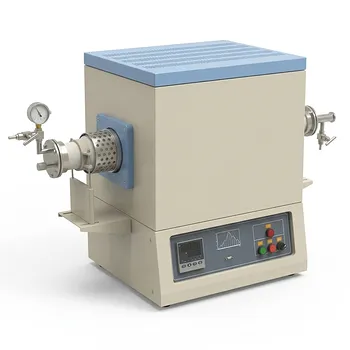
1750°C High Temperature Benchtop Vacuum Atmosphere Tube Furnace with Kanthal Super 1800 Heating Elements and 60mm Alumina Processing Tube

Compact High Temperature 1600C Tube Furnace with 50mm Alumina Tube and Vacuum Flanges for Material Sintering
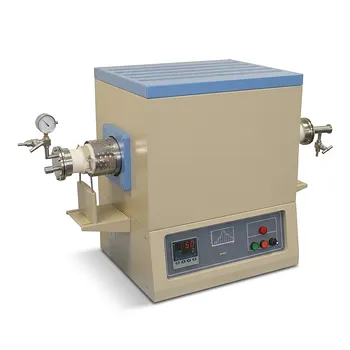
1700C High Temperature Alumina Tube Furnace with 18 Inch Heated Zone and Vacuum Sealing Flanges

1800C High Temperature Compact Vacuum Tube Furnace with 60mm OD Alumina Tube and Kanthal MoSi2 Heating Elements
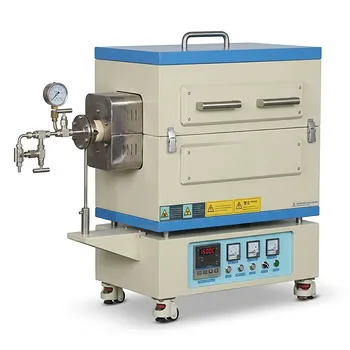
High Temperature Split Tube Furnace 1500C for Material Research Vacuum and Atmosphere Thermal Processing

High Temperature 1700C Vertical Tube Furnace for Powder Spherification and Material Sintering
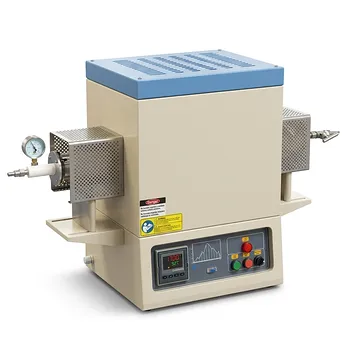
High Temperature Three Zone Tube Furnace 1700C with Alumina Tube and Water Cooled Flanges

High Temperature 1700C Six Zone Split Tube Furnace with Alumina Tube and Water Cooled Flanges
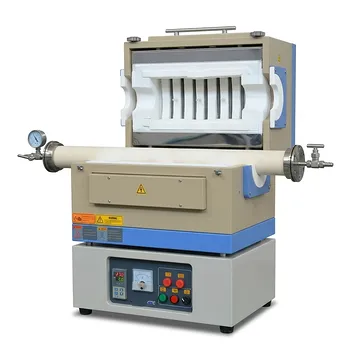
High Temperature 1600C Split Tube Furnace Vacuum Flanges Valves Optional 60mm 80mm Alumina Tube

High Temperature Automated 5 Inch Tube Furnace for Autonomous Material Research and Advanced Laboratory R&D

1100C Tube Furnace with Vacuum Flange and Programmable Temperature Controller for Material Science and Industrial Heat Treatment
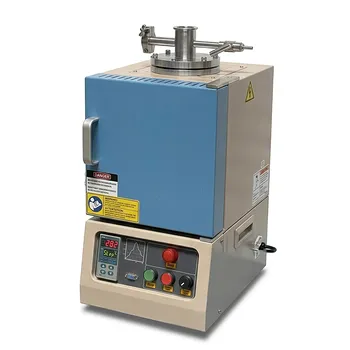
High Temperature Hybrid Muffle and Tube Furnace with Vacuum Capability and PID Control
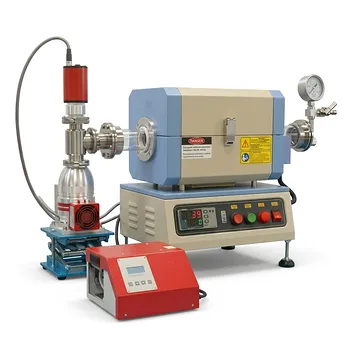
High Vacuum Compact Tube Furnace 1200C with Integrated Turbo Pump System and 8 Inch Heating Zone

1700C Hydrogen Gas Tube Furnace with 60mm Alumina Process Tube and Integrated Hydrogen Safety Detector
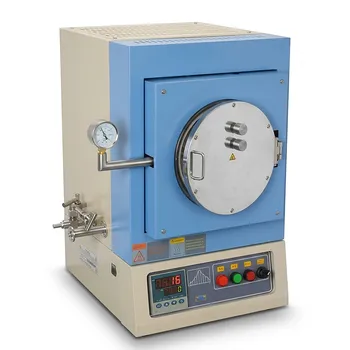
1100°C High Temperature Quartz Chamber Furnace 8 Inch OD with 7.6 Liter Capacity and Vacuum Atmosphere Capability
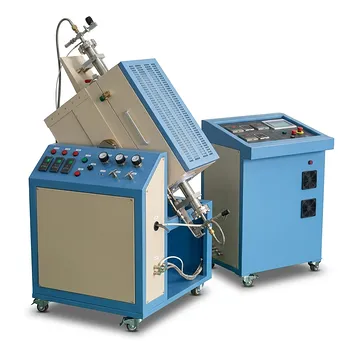
1100C High Pressure Rocking Tube Furnace with 2 Inch Super Alloy Processing Tube for Material Synthesis