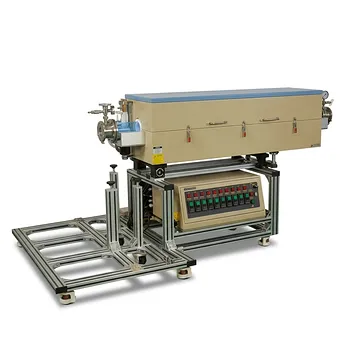
Why is a high-temperature tube furnace required for the calcination treatment of PEI coatings? Ensure Sensor Stability
Updated 3 months ago
The necessity of a high-temperature tube furnace for PEI coatings is driven by the need for a fundamental chemical transformation. Specifically, the furnace provides the controlled 500 °C air environment required to convert highly water-soluble polyethylenimine (PEI) polymers into structurally stable oxide films. This process is the critical bridge between a temporary coating and a durable, functional sensor capable of surviving immersion in aqueous environments.
Core Takeaway: A high-temperature tube furnace facilitates the thermal calcination of PEI, transforming it from a soluble polymer into a stable oxide phase. This transition is essential for preventing the coating from dissolving during use and ensuring a reliable optical response across a wide pH range.
From Soluble Polymer to Stable Oxide
The Chemical Transition at 500 °C
In its raw state, polyethylenimine (PEI) is a polymer known for its high water solubility, which makes it unsuitable for long-term use in liquid-phase pH sensing. The tube furnace subjects the PEI-coated fiber to a 500 °C air calcination environment, triggering a chemical shift. This thermal energy facilitates the transition of the organic polymer into a structurally stable oxide film.
Preventing Coating Dissolution
Without this high-temperature treatment, a PEI coating would immediately begin to flush away when exposed to aqueous solutions. The calcination process alters the material's physical properties so that it can withstand high-temperature flushing. By rendering the film insoluble, the furnace ensures the sensor maintains its integrity even in extreme or high-flow environments.
The Role of the Tube Furnace in Sensor Performance
Maintaining Linear Optical Response
The stability provided by the tube furnace directly impacts the accuracy of the data collected by the optical fiber. A properly calcined oxide film allows the sensor to maintain a linear optical response within a broad pH range of 2 to 11. This consistency is vital for applications requiring precise measurements in both highly acidic and highly alkaline conditions.
Precision Control and Uniformity
The use of a tube furnace, rather than a standard heating element, is critical for temperature uniformity across the length of the optical fiber. Consistent heat ensures that the entire sensing area undergoes the same degree of phase transformation. This prevents the formation of "weak spots" or secondary impurity phases that could lead to signal drift or premature sensor failure.
Understanding the Trade-offs
Balancing Temperature and Material Integrity
While 500 °C is necessary for the PEI-to-oxide transition, it requires careful management of heating rates. Rapid temperature changes can induce thermal stress in the underlying optical fiber, potentially leading to micro-fractures. Precise control via the furnace’s programming is necessary to balance chemical transformation with structural preservation.
The Risk of Incomplete Transformation
If the calcination temperature is too low or the holding time is insufficient, the PEI may not fully convert to a stable oxide. This results in a "hybrid" coating that may still exhibit partial solubility, leading to baseline drift during pH monitoring. Conversely, exceeding the required temperature can damage the fiber's delicate cladding or core geometry.
How to Apply This to Your Sensor Fabrication
Actionable Recommendations for Development
- If your primary focus is long-term durability: Prioritize a strictly controlled 500 °C air atmosphere to ensure the complete conversion of PEI into an insoluble oxide film.
- If your primary focus is wide-range sensitivity: Ensure the furnace provides high temperature uniformity to guarantee a linear optical response across the full pH 2 to 11 spectrum.
- If your primary focus is fiber structural integrity: Implement a gradual heating and cooling curve (such as 5 °C/min to 7 °C/min) to prevent thermal shock to the optical fiber.
The high-temperature tube furnace is the indispensable tool that transforms a sensitive polymer into a rugged, industrial-grade sensing material.
Summary Table:
| Process Parameter | Requirement | Role in Sensor Fabrication |
|---|---|---|
| Calcination Temp | 500 °C (Air Atmosphere) | Converts soluble PEI polymer into a stable oxide film. |
| Temperature Uniformity | High Precision | Prevents impurity phases and ensures a linear optical response. |
| Heating Rate | Controlled (5-7 °C/min) | Protects fiber structural integrity and prevents micro-fractures. |
| Functional Goal | Phase Transformation | Ensures durability in aqueous environments across pH 2–11. |
Maximize Your Research Precision with THERMUNITS
At THERMUNITS, we understand that material science R&D requires absolute thermal accuracy. As a leading manufacturer of high-temperature laboratory equipment, we provide the specialized Tube furnaces and Atmosphere furnaces necessary for the critical calcination of PEI and other advanced coatings.
Our comprehensive range of thermal solutions—including Muffle, Vacuum, Rotary, and Hot Press furnaces, CVD/PECVD systems, and Vacuum Induction Melting (VIM) furnaces—is engineered to deliver the temperature uniformity and programmed cooling rates your sensors demand.
Ready to upgrade your lab's capabilities? Contact our technical experts today to find the ideal furnace for your high-temperature heat treatment needs.
References
- Alexander Shumski, Ruishu Wright. Calcined polyethyleneimine-coated optical fibers for distributed pH monitoring at high pressures and temperatures. DOI: 10.1117/12.3013421
Mentioned Products
- High Temperature Tube Furnace 1500C with Sliding Flanges and 50mm OD for Rapid Thermal Processing Fast Heating and Cooling
- High Temperature 1700C Tube Furnace with High Vacuum Turbomolecular Pump System and Multi Channel Mass Flow Controller Gas Mixer
- High Temperature 1700C Benchtop Tube Furnace with 5 Inch Heating Zone High Purity Alumina Tube and Vacuum Sealing Flanges
- 1750°C High Temperature Benchtop Vacuum Atmosphere Tube Furnace with Kanthal Super 1800 Heating Elements and 60mm Alumina Processing Tube
- Compact High Temperature 1600C Tube Furnace with 50mm Alumina Tube and Vacuum Flanges for Material Sintering
People Also Ask
- How are high-temperature tube furnaces utilized to repair etching damage? Precision Lattice Restoration Solutions
- What core conditions does a high-temperature tube furnace provide for rGO aerogels? Mastering Precision Synthesis.
- What role does a high-temperature tube furnace play in CVD synthesis of silicon nanowires? Master VLS Growth Precision.
- How does precision tube furnace control influence CoFe nanoparticle formation? Master Your Bimetallic Synthesis.
- What role does a high-temperature tube furnace play in the sulfidation heat treatment of CoS@C/MXene nanocomposites? Guide

Tech Team · ThermUnits
Last updated on Jun 02, 2026
Related Products

High Temperature Tube Furnace 1500C with Sliding Flanges and 50mm OD for Rapid Thermal Processing Fast Heating and Cooling

High Temperature 1700C Tube Furnace with High Vacuum Turbomolecular Pump System and Multi Channel Mass Flow Controller Gas Mixer

High Temperature 1700C Benchtop Tube Furnace with 5 Inch Heating Zone High Purity Alumina Tube and Vacuum Sealing Flanges
1750°C High Temperature Benchtop Vacuum Atmosphere Tube Furnace with Kanthal Super 1800 Heating Elements and 60mm Alumina Processing Tube

Compact High Temperature 1600C Tube Furnace with 50mm Alumina Tube and Vacuum Flanges for Material Sintering
1700C High Temperature Alumina Tube Furnace with 18 Inch Heated Zone and Vacuum Sealing Flanges

1800C High Temperature Compact Vacuum Tube Furnace with 60mm OD Alumina Tube and Kanthal MoSi2 Heating Elements
High Temperature Split Tube Furnace 1500C for Material Research Vacuum and Atmosphere Thermal Processing

High Temperature 1700C Vertical Tube Furnace for Powder Spherification and Material Sintering
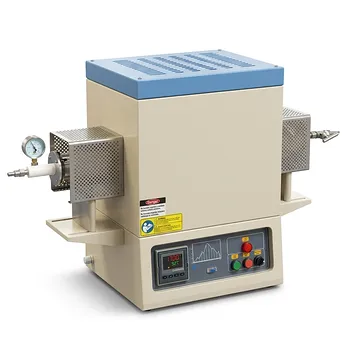
High Temperature Three Zone Tube Furnace 1700C with Alumina Tube and Water Cooled Flanges

High Temperature 1700C Six Zone Split Tube Furnace with Alumina Tube and Water Cooled Flanges
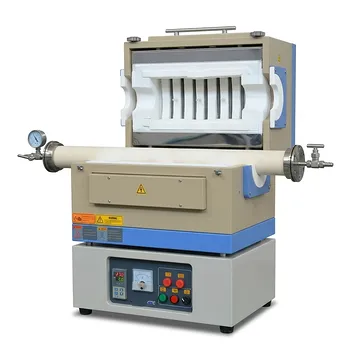
High Temperature 1600C Split Tube Furnace Vacuum Flanges Valves Optional 60mm 80mm Alumina Tube

High Temperature Automated 5 Inch Tube Furnace for Autonomous Material Research and Advanced Laboratory R&D

1100C Tube Furnace with Vacuum Flange and Programmable Temperature Controller for Material Science and Industrial Heat Treatment
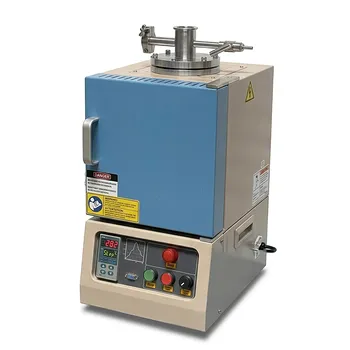
High Temperature Hybrid Muffle and Tube Furnace with Vacuum Capability and PID Control
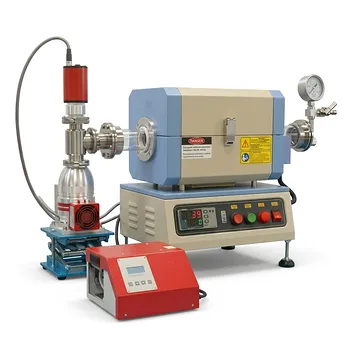
High Vacuum Compact Tube Furnace 1200C with Integrated Turbo Pump System and 8 Inch Heating Zone
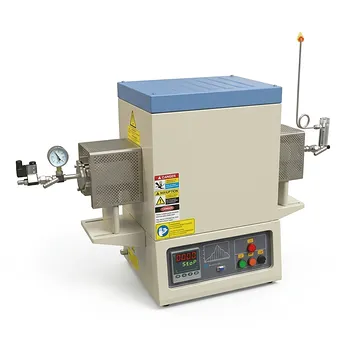
1700C Hydrogen Gas Tube Furnace with 60mm Alumina Process Tube and Integrated Hydrogen Safety Detector
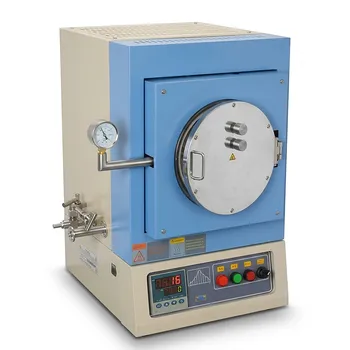
1100°C High Temperature Quartz Chamber Furnace 8 Inch OD with 7.6 Liter Capacity and Vacuum Atmosphere Capability
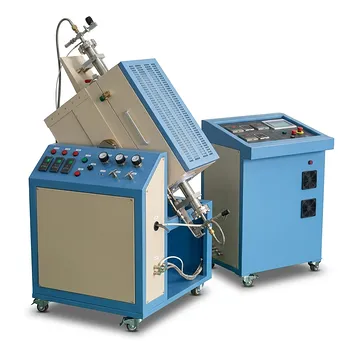
1100C High Pressure Rocking Tube Furnace with 2 Inch Super Alloy Processing Tube for Material Synthesis