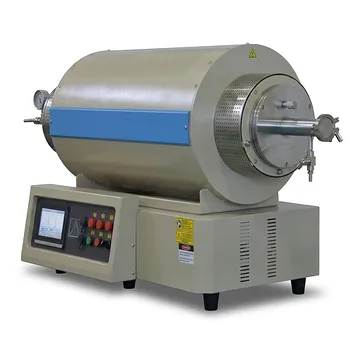
Why Use High-Temp Tube Furnaces for MgO Substrate Pre-treatment? Ensure Precision in Pd/MgO Catalyst Systems
Updated 6 months ago
The use of a high-temperature tube furnace is essential for transforming the MgO substrate from a raw, machined material into a precise, atomically ordered template. This thermal treatment at 1273 K (1000°C) eliminates internal mechanical stresses and induces surface reconstruction, creating a stable environment for the growth of Pd nanoparticles with high structural regularity.
High-temperature annealing is the critical bridge between a bulk ceramic substrate and a functional model catalyst support. By facilitating atomic-level restructuring, the furnace ensures that the resulting Pd/MgO system is both reproducible and structurally well-defined.
Eliminating Substrate Impurities and Stress
Removal of Mechanical Processing Strains
During the manufacturing and machining of MgO substrates, significant internal mechanical stresses are introduced into the crystal lattice. A tube furnace provides the sustained high temperatures (1273 K) necessary to relax these stresses, preventing future structural failure or unpredictable behavior during catalyst testing.
Thermal Cleaning of Surface Contaminants
MgO surfaces are highly prone to adsorbing moisture, carbon dioxide, and organic residues from the environment. The high-temperature environment effectively desorbs these volatile impurities, providing a chemically clean surface that is vital for the direct interaction between the palladium and the substrate.
Inducing Surface Reconstruction and Morphology
Formation of Atomically Flat Terraces
At temperatures around 1000°C, surface atoms on the MgO (100) crystal gain enough mobility to rearrange themselves. This process promotes the formation of an atomically flat terrace structure, which serves as an ideal platform for the heteroepitaxial growth of metal nanoparticles.
Improving Crystalline Quality
The high-temperature environment facilitates the transition of the MgO surface from a disordered or "as-polished" state to a high-quality crystalline state. This structural integrity is fundamental because the lattice parameters of the substrate directly influence the orientation and shape of the deposited palladium.
Optimizing Palladium (Pd) Loading
Ensuring Structural Regularity of Nanoparticles
A well-ordered MgO surface dictates how Pd atoms nucleate and grow into nanoparticles. By providing a reconstructed, regular surface, the tube furnace ensures that the resulting Pd particles exhibit uniform size and crystal orientation across the entire substrate.
Enhancing Experimental Reproducibility
In model catalyst studies, the ability to replicate results is paramount. Pre-treating the substrate under controlled conditions in a tube furnace standardizes the starting point of every experiment, eliminating variables related to substrate surface defects or hidden mechanical strain.
Understanding the Trade-offs
Temperature Precision vs. Sintering Risks
While high temperatures are necessary for reconstruction, excessive heat can lead to unwanted grain growth or the loss of specific high-energy surface sites. The process requires precise control, as temperatures that are too low will fail to remove stresses, while temperatures that are too high may degrade the substrate's specific surface area.
Atmospheric Control Challenges
Using a tube furnace allows for controlled atmospheres (such as air or oxygen flow), which is critical for MgO. However, if the atmosphere is not strictly managed, the substrate can react with trace contaminants in the gas stream, potentially introducing new impurities even as others are being removed.
How to Apply This to Your Project
To achieve the best results in your catalyst fabrication, tailor your furnace parameters to your specific material goals.
- If your primary focus is epitaxial film growth: Prioritize annealing at 1000°C under a constant flow of high-purity oxygen to ensure a perfectly reconstructed, atomically flat template.
- If your primary focus is nanoparticle stability: Focus on a longer annealing duration at slightly lower temperatures (approx. 950°C) to fully eliminate residual machining stresses without over-sintering the surface.
- If your primary focus is chemical reactivity: Ensure the furnace environment is strictly controlled to prevent the MgO from reacting with ambient CO2 or moisture during the cooling phase.
By mastering the high-temperature pre-treatment of the MgO substrate, you lay the foundation for a highly controlled and scientifically rigorous model catalyst system.
Summary Table:
| Treatment Goal | Process Mechanism | Benefit to Pd/MgO Catalyst |
|---|---|---|
| Stress Relief | Lattice relaxation at 1273 K | Prevents structural failure during testing |
| Surface Cleaning | Desorption of H2O, CO2, & organic residues | Provides a chemically pure interaction site |
| Reconstruction | Surface atom rearrangement | Creates atomically flat terraces for growth |
| Morphology Control | High-quality crystallization | Uniform nanoparticle size and orientation |
Elevate Your R&D Precision with THERMUNITS Thermal Solutions
Achieving atomically ordered templates for model catalysts requires uncompromising temperature control and atmospheric purity. THERMUNITS is a leading manufacturer specializing in high-performance thermal equipment designed for the rigorous demands of material science and industrial research.
From high-temperature Tube Furnaces for substrate pre-treatment to advanced CVD/PECVD systems, Vacuum Induction Melting (VIM), and Hot Press furnaces, we provide the tools necessary to ensure your experimental reproducibility. Our comprehensive range also includes Muffle, Atmosphere, Rotary, and Dental furnaces, along with premium thermal elements.
Ready to optimize your laboratory's heat treatment protocols?
Contact THERMUNITS today to discuss your project requirements and find the perfect thermal processing solution for your research.
References
- Simon Chung, Andreas Stierle. Transient heating of Pd nanoparticles studied by x-ray diffraction with time of arrival photon detection. DOI: 10.1063/5.0189052
Mentioned Products
- Compact High Temperature 1600C Tube Furnace with 50mm Alumina Tube and Vacuum Flanges for Material Sintering
- High Temperature Tube Furnace 1500C with Sliding Flanges and 50mm OD for Rapid Thermal Processing Fast Heating and Cooling
- High Magnetic Field Compatible Tube Furnace for 1100C Material Research with Controlled Atmosphere and Water Cooled Non Magnetic Case
- 1800C High Temperature Compact Vacuum Tube Furnace with 60mm OD Alumina Tube and Kanthal MoSi2 Heating Elements
- 1100C Tube Furnace with Vacuum Flange and Programmable Temperature Controller for Material Science and Industrial Heat Treatment
People Also Ask
- What is the function of a high-temperature tube furnace in Fe-BN-C pyrolysis? Optimize Catalyst Active Site Formation
- Function of tube furnaces in cellulose aerogel carbonization? Achieve High-Performance Materials
- How does a high-temperature tube furnace contribute to MoS2/CNT photocathode formation? Optimizing Phase & Interface
- What role does a high-temperature tube furnace play in executing nitrogen absorption kinetic experiments? Expert Insights
- What role does a high-temperature tube furnace play in the sulfidation heat treatment of CoS@C/MXene nanocomposites? Guide

Tech Team · ThermUnits
Last updated on Apr 14, 2026
Related Products
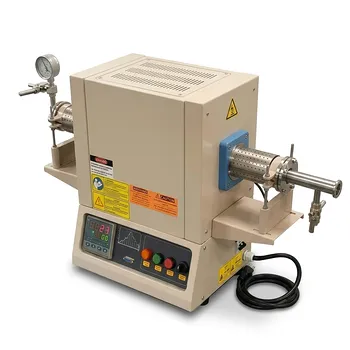
Compact High Temperature 1600C Tube Furnace with 50mm Alumina Tube and Vacuum Flanges for Material Sintering
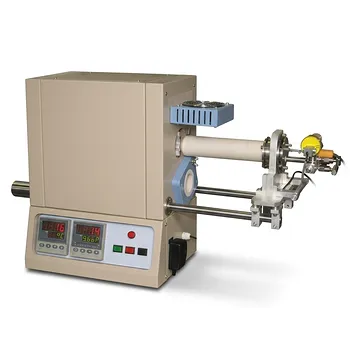
High Temperature Tube Furnace 1500C with Sliding Flanges and 50mm OD for Rapid Thermal Processing Fast Heating and Cooling
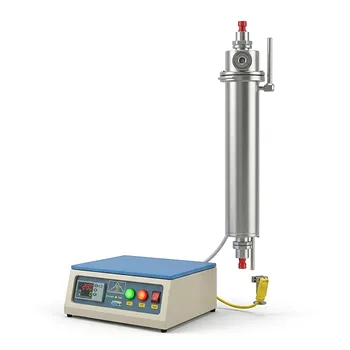
High Magnetic Field Compatible Tube Furnace for 1100C Material Research with Controlled Atmosphere and Water Cooled Non Magnetic Case
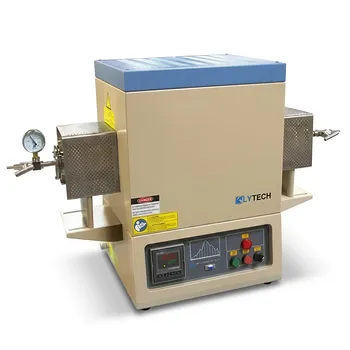
1800C High Temperature Compact Vacuum Tube Furnace with 60mm OD Alumina Tube and Kanthal MoSi2 Heating Elements
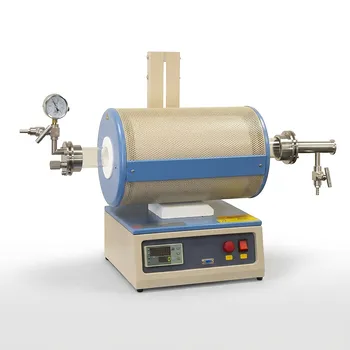
1100C Tube Furnace with Vacuum Flange and Programmable Temperature Controller for Material Science and Industrial Heat Treatment
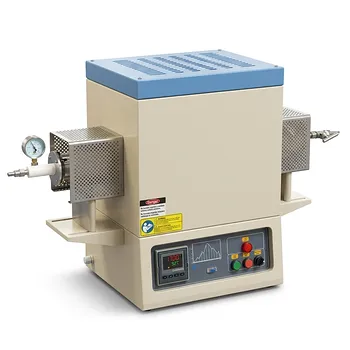
High Temperature Three Zone Tube Furnace 1700C with Alumina Tube and Water Cooled Flanges
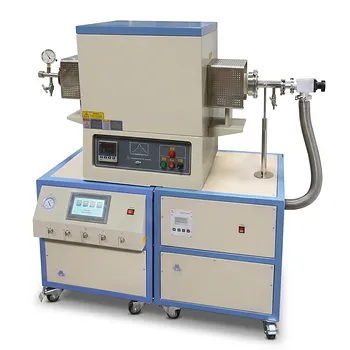
High Temperature 1700C Tube Furnace with High Vacuum Turbomolecular Pump System and Multi Channel Mass Flow Controller Gas Mixer
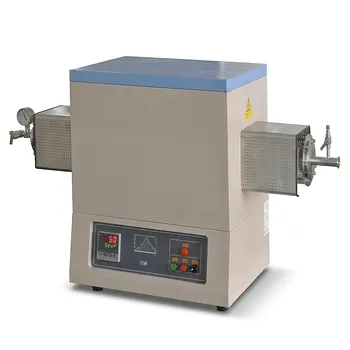
High Temperature 1700C Tube Furnace with 4 Inch OD Alumina Tube and Vacuum Sealing Flanges
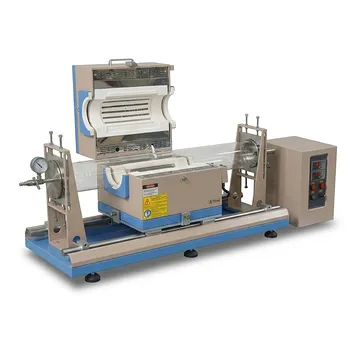
1200C High Temperature 5 Inch Sliding Tube Furnace for Rapid Thermal Processing RTP and Wafer Annealing
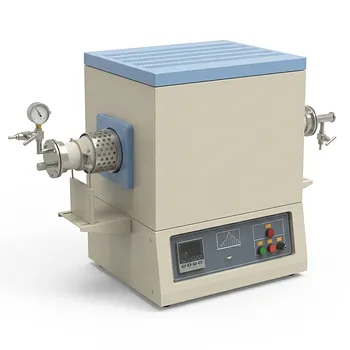
1750°C High Temperature Benchtop Vacuum Atmosphere Tube Furnace with Kanthal Super 1800 Heating Elements and 60mm Alumina Processing Tube
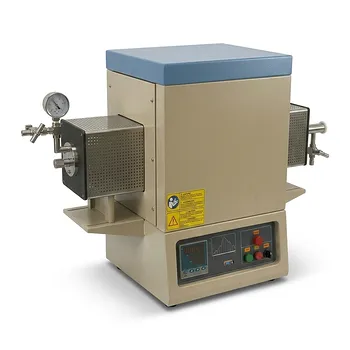
High Temperature 1700C Benchtop Tube Furnace with 5 Inch Heating Zone High Purity Alumina Tube and Vacuum Sealing Flanges
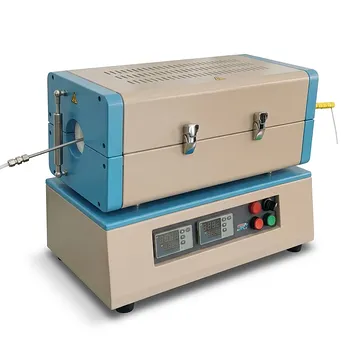
Gas Pre-Heating Tube Furnace for High Temperature Pyrolysis Reactors and Material Science Research
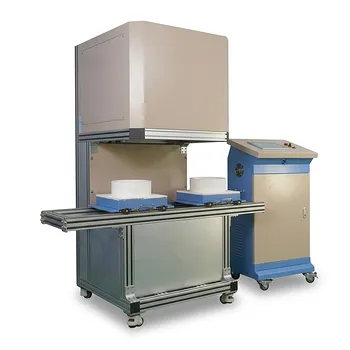
High Temperature Bottom Loading Vertical Furnace 1700C Dual Stage Sample Processing System 18L Large Capacity Thermal Treatment Equipment
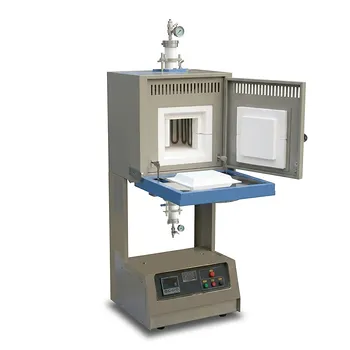
Vertical Hybrid High Temperature Furnace 1500C Alumina Tube SOFC Fuel Cell Testing Laboratory Heat Treatment Research Equipment
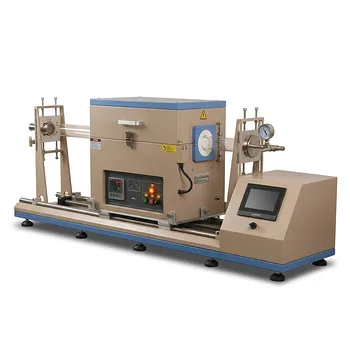
1200C Sliding Tube Furnace for Rapid Thermal Processing and CVD Graphene Growth with 100mm OD Capacity
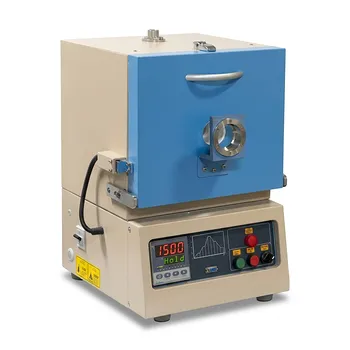
1500C Hybrid Muffle Tube Furnace 1.7L Box with 2 Inch Mullite Tube and Programmable PID Controller
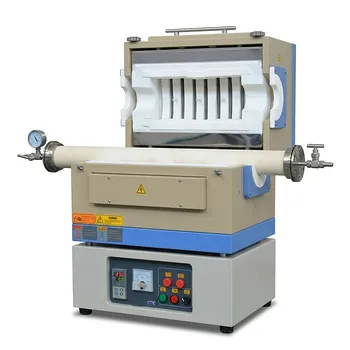
High Temperature 1600C Split Tube Furnace Vacuum Flanges Valves Optional 60mm 80mm Alumina Tube
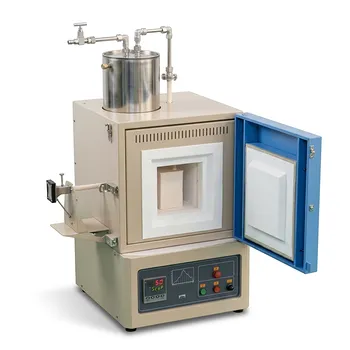
High Temperature Bench Top Muffle Furnace 1700C with Integrated Evaporating Particle Collection and 8x8x8 Alumina Fiber Chamber
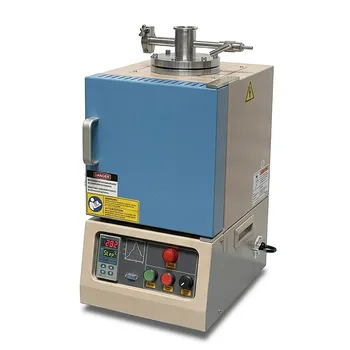
High Temperature Hybrid Muffle and Tube Furnace with Vacuum Capability and PID Control