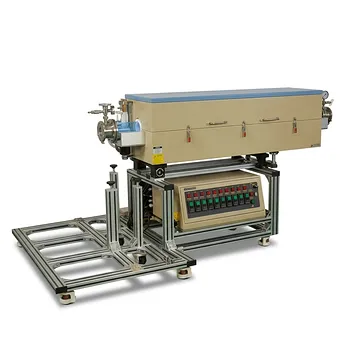
Why is a high-temperature tube furnace used for the pre-treatment of raw alumina fibers? Optimize GAF Graphene Quality
Updated 3 months ago
The pre-treatment of raw alumina fibers in a high-temperature tube furnace is a critical purification step designed to eliminate surface contaminants that would otherwise inhibit graphene growth. By heating the fibers to approximately 800 °C in an air atmosphere, manufacturers can thoroughly remove polymer sizing agents and organic lubricants used during the fiber's initial production. This process ensures the alumina surface is chemically "clean," providing the necessary foundation for the subsequent deposition of high-quality graphene.
Core Takeaway: Pre-treatment in a high-temperature furnace is essential for stripping away organic residues that interfere with graphene nucleation. This step transforms raw industrial fibers into a pristine substrate capable of supporting uniform, "metal-like" catalytic growth during the CVD process.
Eliminating Organic Processing Agents
The Role of Polymer Sizing and Lubricants
Raw alumina fibers are typically manufactured with polymer sizing agents or organic lubricants to improve handling and prevent breakage during industrial processing. While beneficial for mechanical handling, these organic compounds act as significant barriers to chemical bonding and surface reactions at the microscopic level.
Thermal Oxidation at 800 °C
The high-temperature tube furnace provides a controlled environment where these organic residues are subjected to thermal oxidation. At 800 °C in an air atmosphere, the polymer chains are completely decomposed and vaporized, leaving behind a surface free of carbonaceous "trash" that could compromise the final GAF product.
Establishing Surface Uniformity
Beyond mere cleaning, this thermal treatment stabilizes the fiber surface, ensuring that any adsorbed moisture or volatile impurities are removed. This creates a consistent physicochemical foundation, which is vital for achieving repeatable results across different batches of raw material.
Creating a Foundation for Graphene Nucleation
Facilitating Metal-Like Catalytic Growth
The synthesis of Graphene-Alumina Fiber (GAF) often relies on Chemical Vapor Deposition (CVD), a process that traditionally requires a metal catalyst. By providing a clean alumina surface through pre-treatment, the system can better facilitate "metal-like" growth conditions where graphene layers can form directly on the ceramic substrate.
Preventing Nucleation Interference
If organic impurities remain on the fiber, they create "poisoned" sites that interfere with the graphene nucleation process. These residues can cause non-uniform growth, structural defects in the graphene lattice, or even complete failure of the graphene to adhere to the alumina fiber.
Optimizing the Gas Flow Field
Using a tube furnace specifically allows for a precisely controlled gas flow field, ensuring that the heat and air reach all fibers equally. This uniformity is essential for ensuring that every fiber in a batch has been equally prepared for the subsequent high-temperature reaction gases like methane and hydrogen.
Understanding the Trade-offs and Pitfalls
Temperature Sensitivity and Phase Integrity
While 800 °C is effective for cleaning, exceeding specific temperature thresholds can inadvertently trigger phase transitions in the alumina. If the temperature is too high, the fiber may transition into a different crystal structure (such as alpha-alumina), which might alter its mechanical properties or its compatibility with the graphene layer.
Atmospheric Control Errors
Performing this pre-treatment in an inert atmosphere (like Argon) rather than air may fail to fully remove organic sizing. Without oxygen to facilitate oxidation, polymer residues might simply char into amorphous carbon rather than vaporizing, which can permanently contaminate the fiber surface.
Handling and Re-contamination
Once the fibers have been cleaned in the furnace, they are highly hydrophilic and reactive. Any delay between pre-treatment and the CVD process, or improper handling after cooling, can lead to the re-adsorption of moisture or ambient pollutants, nullifying the benefits of the furnace treatment.
How to Apply This to Your Project
When integrating high-temperature pre-treatment into your GAF preparation workflow, consider your primary objective:
- If your primary focus is maximum graphene quality: Prioritize the 800 °C air oxidation step to ensure a zero-residue surface, as even trace organics will cause lattice defects in the graphene.
- If your primary focus is mechanical fiber strength: Monitor the furnace dwell time closely to prevent excessive grain growth within the alumina fiber, which can lead to brittleness.
- If your primary focus is batch-to-batch consistency: Utilize a three-zone tube furnace to maintain a perfectly uniform thermal field across the entire length of the fiber bundle during cleaning.
Effective pre-treatment in a high-temperature furnace is the non-negotiable prerequisite for transforming inert ceramic fibers into high-performance, graphene-coated conductors.
Summary Table:
| Process Parameter | Action in Tube Furnace | Impact on GAF Preparation |
|---|---|---|
| Temperature (800 °C) | Thermal decomposition of polymers | Removes sizing agents and lubricants that inhibit growth |
| Atmosphere (Air) | Facilitates thermal oxidation | Vaporizes organic residues instead of leaving carbon char |
| Gas Flow Control | Uniform air distribution | Ensures consistent surface cleaning across the entire fiber batch |
| Surface State | Purification & Stabilization | Creates a pristine substrate for uniform graphene nucleation |
| Quality Control | Controlled cooling/handling | Prevents phase transitions and re-contamination of the fiber |
Elevate Your Graphene Research with THERMUNITS
Precise pre-treatment is the foundation of high-performance Graphene-Alumina Fiber (GAF). THERMUNITS is a leading manufacturer of high-temperature laboratory equipment, providing the precision and reliability required for advanced material science and industrial R&D.
Whether you need High-Temperature Tube Furnaces for thermal oxidation, or advanced CVD/PECVD systems for graphene deposition, our comprehensive range—including Muffle, Vacuum, Atmosphere, and Rotary furnaces—is designed to deliver uniform results and exceptional durability.
Ready to optimize your thermal processing workflow? Contact our technical experts today to discuss your specific requirements and discover how our laboratory heat treatment equipment can accelerate your research success.
References
- Wenjuan Li, Zhongfan Liu. Graphene-skinned alumina fiber fabricated through metalloid-catalytic graphene CVD growth on nonmetallic substrate and its mass production. DOI: 10.1038/s41467-024-51118-x
Mentioned Products
- High Temperature Tube Furnace 1500C with Sliding Flanges and 50mm OD for Rapid Thermal Processing Fast Heating and Cooling
- High Temperature 1700C Tube Furnace with High Vacuum Turbomolecular Pump System and Multi Channel Mass Flow Controller Gas Mixer
- High Temperature 1700C Benchtop Tube Furnace with 5 Inch Heating Zone High Purity Alumina Tube and Vacuum Sealing Flanges
- 1750°C High Temperature Benchtop Vacuum Atmosphere Tube Furnace with Kanthal Super 1800 Heating Elements and 60mm Alumina Processing Tube
- Compact High Temperature 1600C Tube Furnace with 50mm Alumina Tube and Vacuum Flanges for Material Sintering
People Also Ask
- How are high-temperature tube furnaces utilized to repair etching damage? Precision Lattice Restoration Solutions
- What core conditions does a high-temperature tube furnace provide for rGO aerogels? Mastering Precision Synthesis.
- What role does a high-temperature tube furnace play in CVD synthesis of silicon nanowires? Master VLS Growth Precision.
- How does precision tube furnace control influence CoFe nanoparticle formation? Master Your Bimetallic Synthesis.
- What role does a high-temperature tube furnace play in the sulfidation heat treatment of CoS@C/MXene nanocomposites? Guide

Tech Team · ThermUnits
Last updated on Jun 02, 2026
Related Products

High Temperature Tube Furnace 1500C with Sliding Flanges and 50mm OD for Rapid Thermal Processing Fast Heating and Cooling

High Temperature 1700C Tube Furnace with High Vacuum Turbomolecular Pump System and Multi Channel Mass Flow Controller Gas Mixer

High Temperature 1700C Benchtop Tube Furnace with 5 Inch Heating Zone High Purity Alumina Tube and Vacuum Sealing Flanges

1750°C High Temperature Benchtop Vacuum Atmosphere Tube Furnace with Kanthal Super 1800 Heating Elements and 60mm Alumina Processing Tube

Compact High Temperature 1600C Tube Furnace with 50mm Alumina Tube and Vacuum Flanges for Material Sintering

1700C High Temperature Alumina Tube Furnace with 18 Inch Heated Zone and Vacuum Sealing Flanges

1800C High Temperature Compact Vacuum Tube Furnace with 60mm OD Alumina Tube and Kanthal MoSi2 Heating Elements
High Temperature Split Tube Furnace 1500C for Material Research Vacuum and Atmosphere Thermal Processing

High Temperature 1700C Vertical Tube Furnace for Powder Spherification and Material Sintering
High Temperature Three Zone Tube Furnace 1700C with Alumina Tube and Water Cooled Flanges

High Temperature 1700C Six Zone Split Tube Furnace with Alumina Tube and Water Cooled Flanges
High Temperature 1600C Split Tube Furnace Vacuum Flanges Valves Optional 60mm 80mm Alumina Tube

High Temperature Automated 5 Inch Tube Furnace for Autonomous Material Research and Advanced Laboratory R&D

1100C Tube Furnace with Vacuum Flange and Programmable Temperature Controller for Material Science and Industrial Heat Treatment
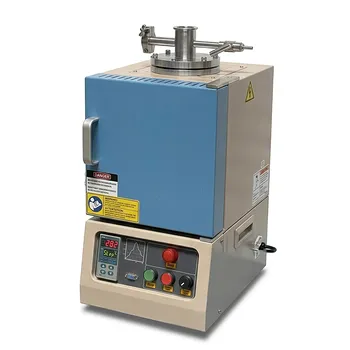
High Temperature Hybrid Muffle and Tube Furnace with Vacuum Capability and PID Control
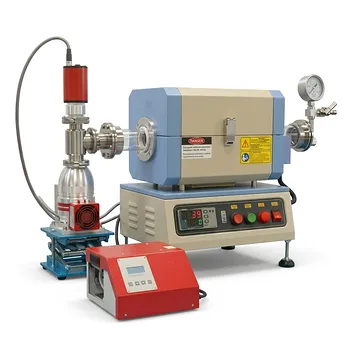
High Vacuum Compact Tube Furnace 1200C with Integrated Turbo Pump System and 8 Inch Heating Zone

1700C Hydrogen Gas Tube Furnace with 60mm Alumina Process Tube and Integrated Hydrogen Safety Detector
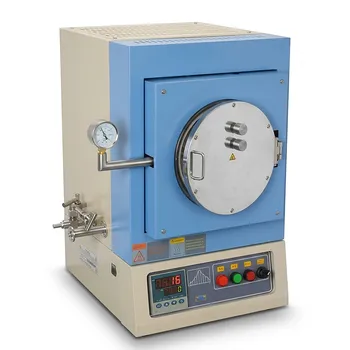
1100°C High Temperature Quartz Chamber Furnace 8 Inch OD with 7.6 Liter Capacity and Vacuum Atmosphere Capability
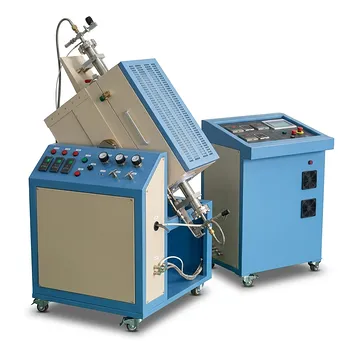
1100C High Pressure Rocking Tube Furnace with 2 Inch Super Alloy Processing Tube for Material Synthesis