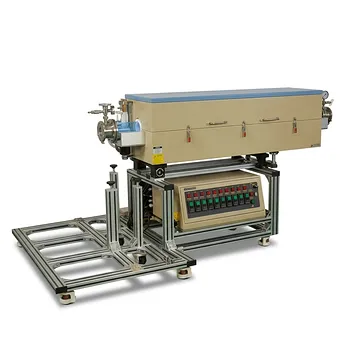
Why is nitrogen control vital for Fe2SiO4 synthesis in tube furnaces? Achieve 99.999% Purity and Phase Integrity.
Updated 3 months ago
Precise nitrogen atmosphere control is the defining factor in Fe2SiO4 synthesis. In the solid-state synthesis of Fayalite (Fe2SiO4) at temperatures exceeding 700°C, nitrogen serves as an inert shield that isolates the reaction from oxygen. This isolation is mandatory to keep iron in its divalent (Fe2+) state and prevent it from oxidizing into ferric oxide (Fe2O3), which would compromise the chemical integrity of the final product.
Core Takeaway: To successfully synthesize Fe2SiO4, a tube furnace must utilize a high-purity nitrogen flow to create an oxygen-free environment. This prevents the oxidation of ferrous ions (Fe2+) into ferric ions (Fe3+), ensuring the phase purity of the target silicate.
Preventing the Oxidation of Ferrous Ions
The Vulnerability of Iron at High Temperatures
In the synthesis of Fe2SiO4, the iron must remain in a specific divalent state (Fe2+).
When temperatures climb above 700°C, iron becomes highly reactive to even trace amounts of oxygen.
Without precise control, the iron will transition into ferric oxide (Fe2O3), resulting in a failed synthesis and an impure material.
Nitrogen as a Chemical Barrier
A high-purity nitrogen atmosphere effectively displaces oxygen within the furnace chamber.
By maintaining a continuous flow, the system ensures that the partial pressure of oxygen remains low enough to prevent the transformation of the ferrous ions.
This inert environment is the only way to guarantee the chemical integrity and stoichiometry of the target Fayalite phase.
Maintaining Thermodynamic Stability and Homogeneity
Uniformity of the Reaction Environment
A tube furnace provides a controlled thermochemical environment that is essential for solid-state reactions.
Precise atmosphere control ensures that the nitrogen flow is stable, which helps in maintaining a constant temperature across the sample.
This stability prevents localized "hot spots" where oxidation might occur despite the presence of inert gas.
Gas Flow and Contaminant Removal
Continuous gas flow, often calibrated to specific rates like 200 mL/min, does more than just block oxygen.
It acts as a carrier gas that sweeps away any volatile byproducts or residual moisture that could interfere with the crystal growth.
This process ensures that the surface chemical properties of the Fe2SiO4 remain consistent throughout the entire heating cycle.
Understanding the Trade-offs
Purity vs. Flow Rate
While a high flow rate of nitrogen ensures an oxygen-free environment, it can introduce thermal gradients.
If the gas is too cool or the flow is too aggressive, it may cause the temperature near the inlet to drop, leading to non-uniform synthesis.
The Risk of Impure Nitrogen
Using standard-grade nitrogen instead of high-purity nitrogen is a common pitfall.
Trace amounts of oxygen in low-grade nitrogen can still cause the formation of ferric ions, even if the furnace appears to be properly sealed.
How to Apply This to Your Project
Recommendations for Successful Synthesis
The following guidelines should be considered based on your specific synthesis objectives:
- If your primary focus is phase purity: Utilize high-purity (99.999%) nitrogen and a dual-stage regulator to ensure a consistent, oxygen-free environment throughout the heating and cooling phases.
- If your primary focus is crystal morphology: Maintain a stable heating rate (e.g., 10°C/min) and a moderate gas flow to prevent thermal shocks while ensuring the removal of volatile contaminants.
- If your primary focus is equipment longevity: Always initiate the nitrogen flow before the temperature exceeds 200°C to protect both your sample and the furnace’s heating elements from oxidation.
By masterfully controlling the nitrogen atmosphere, you transition from simple heating to precise molecular engineering, ensuring the successful synthesis of pure Fe2SiO4.
Summary Table:
| Feature | Role in Fe2SiO4 Synthesis | Key Benefit |
|---|---|---|
| Nitrogen Shield | Isolates reaction from O2 at >700°C | Prevents Fe2+ → Fe2O3 oxidation |
| Controlled Flow | Sweeps volatile byproducts away | Ensures chemical homogeneity |
| High-Purity Gas | Eliminates trace oxygen contamination | Guarantees phase purity |
| Stable Gradient | Maintains uniform thermal environment | Prevents localized oxidation |
Elevate Your Material Research with THERMUNITS Precision
As a leading manufacturer of high-temperature laboratory equipment, THERMUNITS understands the critical nature of atmosphere control in material science and industrial R&D. Our specialized Tube Furnaces, CVD/PECVD systems, and Vacuum Atmosphere Furnaces are engineered to deliver the precise nitrogen flow and thermal stability required for complex syntheses like Fe2SiO4.
Whether you are focusing on phase purity, crystal morphology, or equipment longevity, our thermal processing solutions—including Muffle, Rotary, and Hot Press furnaces—provide the reliability your research demands.
Unlock superior heat treatment results today.
Contact THERMUNITS Expert Support
References
- Yue Lai, Mujun Long. Syngas Production by Fe2SiO4 Oxygen Carrier in Chemical Looping Partial Oxidation of Methane. DOI: 10.3390/catal14120866
Mentioned Products
- High Temperature Tube Furnace 1500C with Sliding Flanges and 50mm OD for Rapid Thermal Processing Fast Heating and Cooling
- High Temperature 1700C Tube Furnace with High Vacuum Turbomolecular Pump System and Multi Channel Mass Flow Controller Gas Mixer
- High Temperature 1700C Benchtop Tube Furnace with 5 Inch Heating Zone High Purity Alumina Tube and Vacuum Sealing Flanges
- 1750°C High Temperature Benchtop Vacuum Atmosphere Tube Furnace with Kanthal Super 1800 Heating Elements and 60mm Alumina Processing Tube
- Compact High Temperature 1600C Tube Furnace with 50mm Alumina Tube and Vacuum Flanges for Material Sintering
People Also Ask
- How are high-temperature tube furnaces utilized to repair etching damage? Precision Lattice Restoration Solutions
- What core conditions does a high-temperature tube furnace provide for rGO aerogels? Mastering Precision Synthesis.
- What role does a high-temperature tube furnace play in CVD synthesis of silicon nanowires? Master VLS Growth Precision.
- How does precision tube furnace control influence CoFe nanoparticle formation? Master Your Bimetallic Synthesis.
- What role does a high-temperature tube furnace play in the sulfidation heat treatment of CoS@C/MXene nanocomposites? Guide

Tech Team · ThermUnits
Last updated on Jun 02, 2026
Related Products

High Temperature Tube Furnace 1500C with Sliding Flanges and 50mm OD for Rapid Thermal Processing Fast Heating and Cooling

High Temperature 1700C Tube Furnace with High Vacuum Turbomolecular Pump System and Multi Channel Mass Flow Controller Gas Mixer

High Temperature 1700C Benchtop Tube Furnace with 5 Inch Heating Zone High Purity Alumina Tube and Vacuum Sealing Flanges

1750°C High Temperature Benchtop Vacuum Atmosphere Tube Furnace with Kanthal Super 1800 Heating Elements and 60mm Alumina Processing Tube

Compact High Temperature 1600C Tube Furnace with 50mm Alumina Tube and Vacuum Flanges for Material Sintering
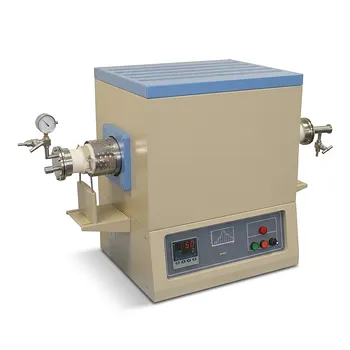
1700C High Temperature Alumina Tube Furnace with 18 Inch Heated Zone and Vacuum Sealing Flanges

1800C High Temperature Compact Vacuum Tube Furnace with 60mm OD Alumina Tube and Kanthal MoSi2 Heating Elements
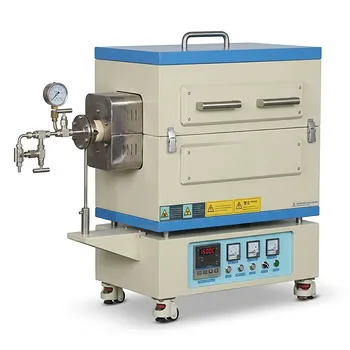
High Temperature Split Tube Furnace 1500C for Material Research Vacuum and Atmosphere Thermal Processing

High Temperature 1700C Vertical Tube Furnace for Powder Spherification and Material Sintering
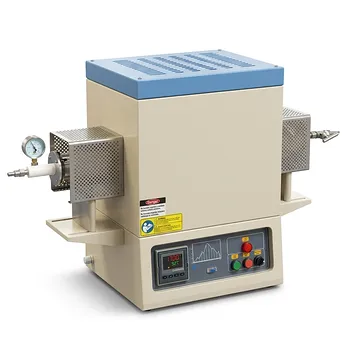
High Temperature Three Zone Tube Furnace 1700C with Alumina Tube and Water Cooled Flanges

High Temperature 1700C Six Zone Split Tube Furnace with Alumina Tube and Water Cooled Flanges
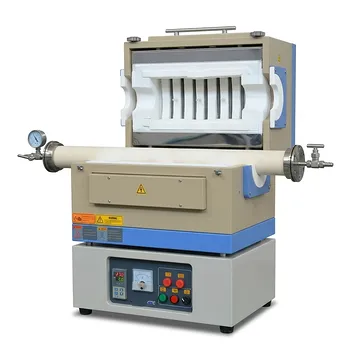
High Temperature 1600C Split Tube Furnace Vacuum Flanges Valves Optional 60mm 80mm Alumina Tube

High Temperature Automated 5 Inch Tube Furnace for Autonomous Material Research and Advanced Laboratory R&D

1100C Tube Furnace with Vacuum Flange and Programmable Temperature Controller for Material Science and Industrial Heat Treatment
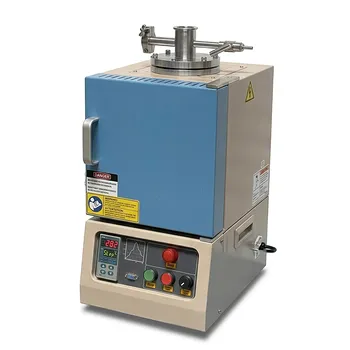
High Temperature Hybrid Muffle and Tube Furnace with Vacuum Capability and PID Control
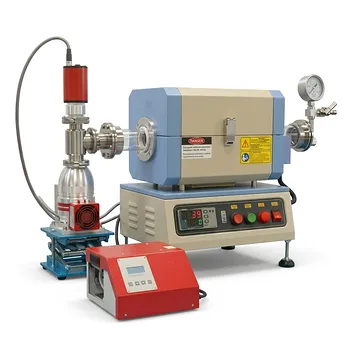
High Vacuum Compact Tube Furnace 1200C with Integrated Turbo Pump System and 8 Inch Heating Zone

1700C Hydrogen Gas Tube Furnace with 60mm Alumina Process Tube and Integrated Hydrogen Safety Detector
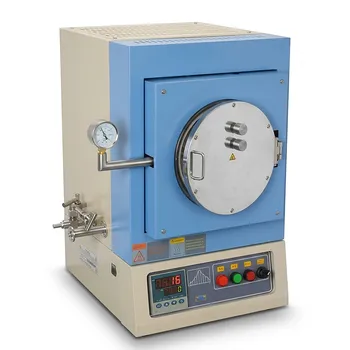
1100°C High Temperature Quartz Chamber Furnace 8 Inch OD with 7.6 Liter Capacity and Vacuum Atmosphere Capability
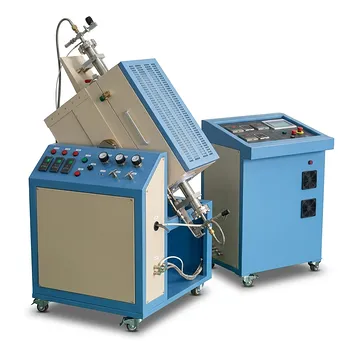
1100C High Pressure Rocking Tube Furnace with 2 Inch Super Alloy Processing Tube for Material Synthesis