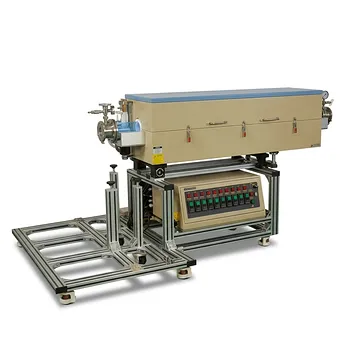
Why use a tube furnace for CuFe2O4/Am-rGO pyrolysis? Achieve Superior Bonding & Structural Integrity
Updated 3 months ago
The high-temperature tube furnace is the critical catalyst for structural transformation. It provides the precisely controlled thermal environment necessary to facilitate the pyrolysis of CuFe2O4/Am-rGO composites, which enhances interfacial bonding and stabilizes the material's chemical structure. This process ensures that the synergistic effects between the amine functional groups and the inorganic oxides are fully realized while simultaneously optimizing the composite's pore structure.
Core Takeaway: A high-temperature tube furnace acts as a controlled thermochemical reactor that anchors nanoparticles to their substrate, reduces graphene oxide, and optimizes pore architecture to create a stable, high-performance composite material.
Optimizing Structural Integrity and Synergetic Effects
Enhancing Interfacial Bonding Strength
The primary role of the tube furnace is to provide the thermal energy required to create a permanent bond between the Copper Ferrite (CuFe2O4) nanoparticles and the Aminated Reduced Graphene Oxide (Am-rGO).
Without this precise heat treatment, the nanoparticles would remain loosely attached, leading to poor stability and performance during use.
Pyrolysis induces a high-strength interfacial bond that ensures the nanoparticles remain securely anchored to the carbon carrier, even under demanding operational conditions.
Activating Synergistic Chemical Sites
The tube furnace environment is essential for ensuring that the amine functional groups on the graphene interact correctly with the inorganic oxides.
This thermal treatment "locks in" the chemical synergy between these two components, which is vital for the material’s intended catalytic or electronic functions.
By maintaining a stable, constant temperature, the furnace allows these complex chemical relationships to reach equilibrium throughout the entire material.
Precise Pore Structure Engineering
A high-temperature tube furnace allows researchers to optimize the pore structure of the composite.
Through controlled heating, the organic precursors are carbonized and volatile components are removed, leaving behind a porous framework that increases the surface area.
This rich pore structure is critical for performance, as it allows for better accessibility to active sites within the composite.
The Role of Controlled Atmosphere and Reduction
Thermal Reduction of Graphene Oxide
A major function of the tube furnace is facilitating the thermal reduction reaction of graphene oxide (GO) into reduced graphene oxide (RGO).
This reduction is necessary to restore the electrical conductivity of the carbon substrate and create a more elastic, durable framework for the nanoparticles.
In many cases, this transformation requires temperatures as high as 700°C to 900°C to ensure the oxygen functional groups are properly removed.
Atmospheric Control and Oxygen Exclusion
Tube furnaces are uniquely suited for this task because they allow for the introduction of inert gases like nitrogen or argon.
By purging the tube of oxygen, the furnace creates an oxygen-free environment that prevents the organic components from burning away.
This controlled atmosphere allows for carbonization and reduction rather than combustion, which is essential for preserving the Am-rGO carrier.
Understanding the Trade-offs
Temperature Precision vs. Sintering
While high temperatures are necessary for bonding, excessive heat can lead to sintering, where nanoparticles aggregate into larger, less effective clumps.
Precise temperature control (often within ±1°C) is required to find the "sweet spot" where bonding is maximized but particle dispersion is maintained.
If the heating rate is too fast, the material may suffer from thermal stress or uneven carbonization, leading to structural defects.
Atmosphere Integrity
Any leak in the furnace seals can introduce oxygen, which may lead to the premature oxidation of the metal particles or the total loss of the graphene carrier.
Maintaining a consistent flow of inert gas is a technical requirement that adds complexity to the preparation process compared to standard ovens.
How to Apply This to Your Project
Making the Right Choice for Your Goal
- If your primary focus is maximizing catalytic activity: Use a slow heating rate (approximately 3°C/min) to ensure high dispersion of active sites and prevent nanoparticle clumping.
- If your primary focus is electrical conductivity: Aim for higher pyrolysis temperatures (above 700°C) to ensure the complete thermal reduction of graphene oxide.
- If your primary focus is structural stability: Prioritize a longer "soak time" at the target temperature to allow for the full development of interfacial bonds between the oxide and the carrier.
By mastering the controlled environment of a high-temperature tube furnace, you can precisely engineer the microscopic architecture of CuFe2O4/Am-rGO composites for peak performance.
Summary Table:
| Pyrolysis Factor | Functional Role | Impact on Composite |
|---|---|---|
| Interfacial Bonding | Anchors nanoparticles to Am-rGO | Enhances long-term structural stability |
| Thermal Reduction | Removes oxygen groups from GO | Restores high electrical conductivity |
| Atmosphere Control | Purges oxygen via inert gas | Prevents combustion of organic components |
| Pore Engineering | Controls volatile removal | Increases surface area for active sites |
| Precision Control | Minimizes particle sintering | Maintains high dispersion of nanoparticles |
Elevate Your Material Research with THERMUNITS
As a leading manufacturer of high-temperature laboratory equipment, THERMUNITS provides the precision thermal processing solutions required for advanced material science and industrial R&D. Our specialized Tube Furnaces, Vacuum Furnaces, and Atmosphere Furnaces are engineered to deliver the ±1°C accuracy and rigorous atmospheric control essential for the synthesis of complex composites like CuFe2O4/Am-rGO.
From CVD/PECVD systems to high-performance dental and rotary kilns, we empower researchers to achieve perfect structural integrity and synergistic performance in every sample.
Ready to optimize your heat treatment process? Contact our technical team today to find the ideal thermal solution for your lab.
References
- Hisham S. M. Abd‐Rabboh, Ayman H. Kamel. Aminated reduced graphene oxide-CuFe <sub>2</sub> O <sub>4</sub> nanohybride adsorbent for efficient removal of imidacloprid pesticide. DOI: 10.1039/d4ra03720k
Mentioned Products
- High Temperature Tube Furnace 1500C with Sliding Flanges and 50mm OD for Rapid Thermal Processing Fast Heating and Cooling
- High Temperature 1700C Tube Furnace with High Vacuum Turbomolecular Pump System and Multi Channel Mass Flow Controller Gas Mixer
- High Temperature 1700C Benchtop Tube Furnace with 5 Inch Heating Zone High Purity Alumina Tube and Vacuum Sealing Flanges
- 1750°C High Temperature Benchtop Vacuum Atmosphere Tube Furnace with Kanthal Super 1800 Heating Elements and 60mm Alumina Processing Tube
- Compact High Temperature 1600C Tube Furnace with 50mm Alumina Tube and Vacuum Flanges for Material Sintering
People Also Ask
- How are high-temperature tube furnaces utilized to repair etching damage? Precision Lattice Restoration Solutions
- What core conditions does a high-temperature tube furnace provide for rGO aerogels? Mastering Precision Synthesis.
- What role does a high-temperature tube furnace play in CVD synthesis of silicon nanowires? Master VLS Growth Precision.
- How does precision tube furnace control influence CoFe nanoparticle formation? Master Your Bimetallic Synthesis.
- What role does a high-temperature tube furnace play in the sulfidation heat treatment of CoS@C/MXene nanocomposites? Guide

Tech Team · ThermUnits
Last updated on Jun 02, 2026
Related Products
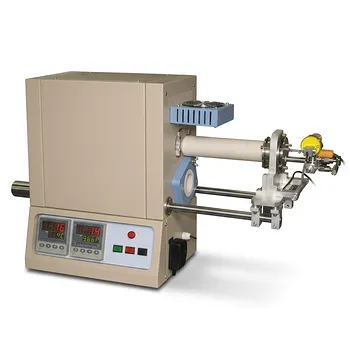
High Temperature Tube Furnace 1500C with Sliding Flanges and 50mm OD for Rapid Thermal Processing Fast Heating and Cooling

High Temperature 1700C Tube Furnace with High Vacuum Turbomolecular Pump System and Multi Channel Mass Flow Controller Gas Mixer

High Temperature 1700C Benchtop Tube Furnace with 5 Inch Heating Zone High Purity Alumina Tube and Vacuum Sealing Flanges
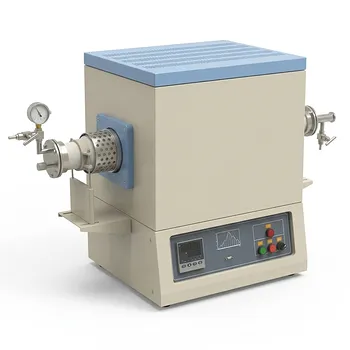
1750°C High Temperature Benchtop Vacuum Atmosphere Tube Furnace with Kanthal Super 1800 Heating Elements and 60mm Alumina Processing Tube

Compact High Temperature 1600C Tube Furnace with 50mm Alumina Tube and Vacuum Flanges for Material Sintering
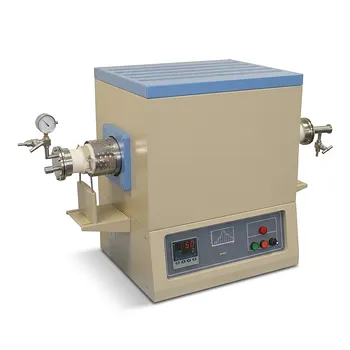
1700C High Temperature Alumina Tube Furnace with 18 Inch Heated Zone and Vacuum Sealing Flanges

1800C High Temperature Compact Vacuum Tube Furnace with 60mm OD Alumina Tube and Kanthal MoSi2 Heating Elements
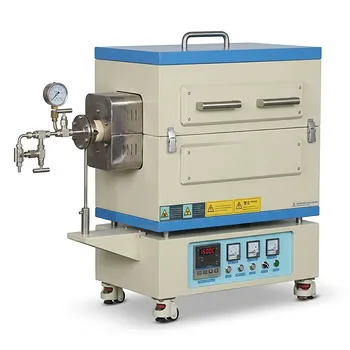
High Temperature Split Tube Furnace 1500C for Material Research Vacuum and Atmosphere Thermal Processing

High Temperature 1700C Vertical Tube Furnace for Powder Spherification and Material Sintering
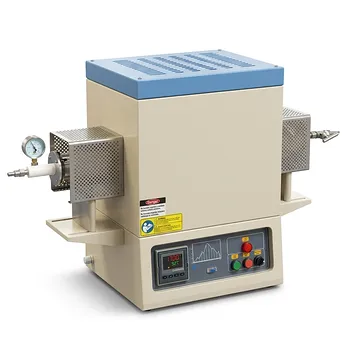
High Temperature Three Zone Tube Furnace 1700C with Alumina Tube and Water Cooled Flanges
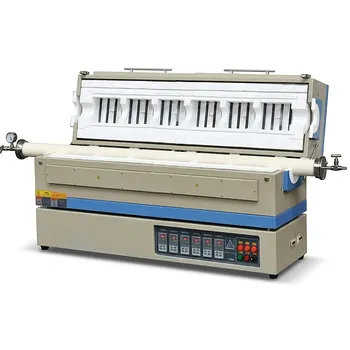
High Temperature 1700C Six Zone Split Tube Furnace with Alumina Tube and Water Cooled Flanges
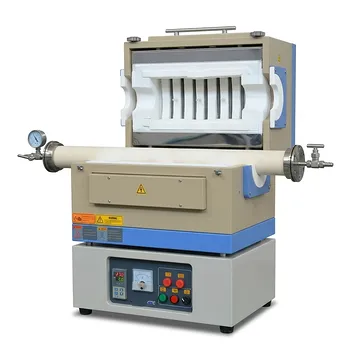
High Temperature 1600C Split Tube Furnace Vacuum Flanges Valves Optional 60mm 80mm Alumina Tube

High Temperature Automated 5 Inch Tube Furnace for Autonomous Material Research and Advanced Laboratory R&D

1100C Tube Furnace with Vacuum Flange and Programmable Temperature Controller for Material Science and Industrial Heat Treatment
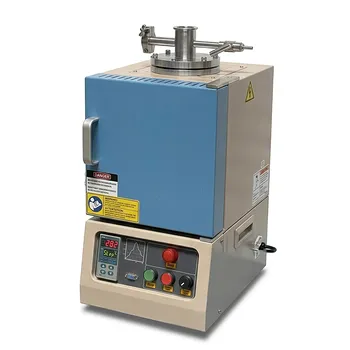
High Temperature Hybrid Muffle and Tube Furnace with Vacuum Capability and PID Control
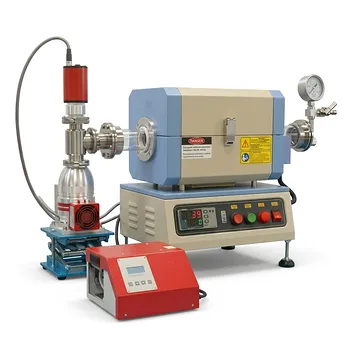
High Vacuum Compact Tube Furnace 1200C with Integrated Turbo Pump System and 8 Inch Heating Zone
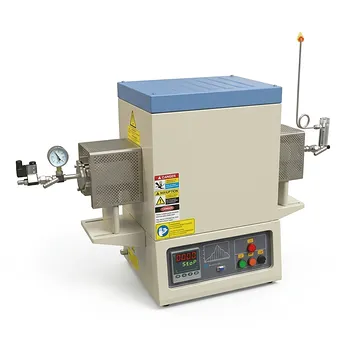
1700C Hydrogen Gas Tube Furnace with 60mm Alumina Process Tube and Integrated Hydrogen Safety Detector
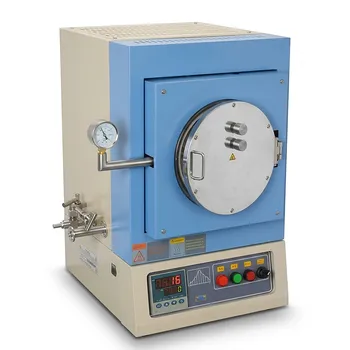
1100°C High Temperature Quartz Chamber Furnace 8 Inch OD with 7.6 Liter Capacity and Vacuum Atmosphere Capability
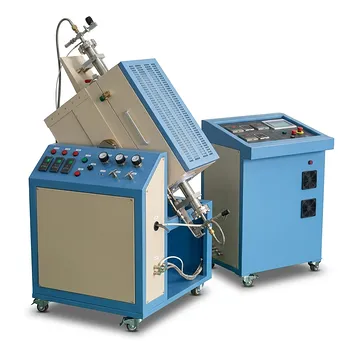
1100C High Pressure Rocking Tube Furnace with 2 Inch Super Alloy Processing Tube for Material Synthesis