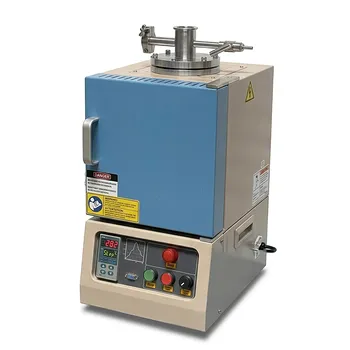
Why is a high-temperature tube furnace with argon protection necessary for SA508 steel? Solve Micro-segregation
Updated 3 months ago
Addressing micro-segregation in SA508 steel requires precise environmental control at extreme temperatures. To eliminate micro-chemical segregation in the fusion zone, the material must undergo long-term diffusion at temperatures reaching 1200°C. A high-temperature tube furnace with argon protection is mandatory because it provides the necessary thermal energy for internal homogenization while shielding the steel from oxygen-driven degradation.
Core Takeaway: A high-temperature tube furnace using argon gas is essential because it allows SA508 steel to reach the 1200°C threshold required for chemical diffusion while preventing the surface oxidation and decarburization that would otherwise destroy the sample's integrity.
The Necessity of High-Temperature Diffusion
Driving Chemical Homogenization
To resolve micro-segregation, atoms within the fusion zone must be mobile enough to redistribute themselves uniformly across the metallic lattice. This process, known as long-term diffusion, only becomes effective at extreme temperatures near 1200°C.
Overcoming Fusion Zone Segregation
During the welding or casting of SA508 steel, alloying elements often cluster inconsistently, creating weak points in the material's microstructure. High-temperature treatment provides the activation energy required to break these clusters and achieve a stable, homogenous state.
The Critical Role of Argon Protection
Preventing Surface Oxidation and Decarburization
At 1200°C, steel reacts violently with even trace amounts of oxygen, leading to the formation of thick oxide scales. An argon gas shield displaces oxygen and moisture, ensuring the specimen does not lose its surface integrity during the hours required for diffusion.
Maintaining Trace Element Consistency
Argon protection ensures that the original design content of trace elements remains intact throughout the core and surface. Without this inert barrier, carbon and other critical elements would migrate to the surface and react with the atmosphere, altering the steel's mechanical properties.
Isolating Thermodynamic Processes
By using an inert atmosphere, researchers ensure that microstructural changes, such as carbide dissolution, are driven solely by thermodynamic laws. This prevents "interference" from surface chemical reactions that could lead to misleading experimental results.
Advantages of the Tube Furnace Design
Creating a Uniform Thermal Field
A tube furnace provides a highly controlled and uniform thermal field, which is critical for consistent diffusion across the entire specimen. This uniformity prevents localized overheating or under-treatment, which could introduce new stresses into the SA508 steel.
Establishing a Controlled, Anaerobic Environment
The sealed nature of a tube furnace allows for the creation of a strictly anaerobic environment. This setup is superior to open furnaces because it enables the continuous flow of high-purity argon, effectively flushing out contaminants before they can react with the metal.
Understanding the Technical Trade-offs
Argon Purity and Flow Rate
The effectiveness of the protection depends entirely on the purity of the argon gas. Even minor leaks or low-grade gas can introduce enough oxygen to cause "tinting" or light oxidation, which can affect the precision of surface-sensitive measurements.
Cost and Complexity of High-Temp Operations
Operating at 1200°C for extended periods places significant thermal stress on the furnace heating elements and the quartz or ceramic work tube. This necessitates a balance between the speed of the diffusion process and the longevity of the laboratory equipment.
How to Apply This to Your Project
To successfully address micro-segregation in high-strength steels like SA508, your experimental setup must prioritize both thermal reach and atmospheric purity.
- If your primary focus is internal chemical homogeneity: Prioritize long-duration hold times at 1200°C in a furnace with high thermal stability to ensure full atom migration.
- If your primary focus is maintaining surface hardness: Ensure a high flow rate of high-purity argon (99.999%) to prevent decarburization, which would otherwise soften the steel's outer layer.
- If your primary focus is trace element analysis: Use a sealed tube furnace environment to prevent any interaction between the furnace atmosphere and the specific alloying elements in the fusion zone.
By combining extreme heat with an inert argon shield, you can achieve a perfectly homogenous steel microstructure without compromising the material's surface or chemical identity.
Summary Table:
| Feature | Requirement | Benefit for SA508 Steel |
|---|---|---|
| Temperature | 1200°C | Provides activation energy for chemical diffusion |
| Atmosphere | High-Purity Argon | Prevents surface oxidation and decarburization |
| Thermal Field | Uniform Heating | Ensures consistent homogenization across the zone |
| Environment | Sealed Tube | Maintains trace element integrity and anaerobic conditions |
| Process Goal | Long-term Diffusion | Resolves micro-segregation and eliminates weak points |
Optimize Your Material Research with THERMUNITS
Achieving perfect chemical homogeneity in high-strength steels like SA508 requires equipment that offers both extreme thermal stability and rigorous atmospheric control. THERMUNITS is a leading manufacturer of high-temperature laboratory equipment, providing the precision needed for advanced material science and industrial R&D.
Whether you are addressing micro-segregation or developing new alloys, our comprehensive range of solutions—including Tube, Vacuum, Atmosphere, Muffle, and Rotary furnaces, as well as CVD/PECVD and Hot Press systems—is designed to meet your strictest experimental parameters.
Ready to elevate your heat treatment precision?
Contact our technical experts today to find the ideal furnace solution for your laboratory.
References
- Kenneth D. Bruce, E.J. Pickering. Heat Treatment Optimisation of Electron Beam Welded Reactor Pressure Vessel Steel. DOI: 10.1007/s11661-024-07674-4
Mentioned Products
- High Temperature Tube Furnace 1500C with Sliding Flanges and 50mm OD for Rapid Thermal Processing Fast Heating and Cooling
- 1700C Hydrogen Gas Tube Furnace with 60mm Alumina Process Tube and Integrated Hydrogen Safety Detector
- High Temperature 1700C Tube Furnace with High Vacuum Turbomolecular Pump System and Multi Channel Mass Flow Controller Gas Mixer
- High Temperature 1700C Vertical Tube Furnace for Powder Spherification and Material Sintering
- Compact High Temperature 1600C Tube Furnace with 50mm Alumina Tube and Vacuum Flanges for Material Sintering
People Also Ask
- How are high-temperature tube furnaces utilized to repair etching damage? Precision Lattice Restoration Solutions
- What core conditions does a high-temperature tube furnace provide for rGO aerogels? Mastering Precision Synthesis.
- What role does a high-temperature tube furnace play in CVD synthesis of silicon nanowires? Master VLS Growth Precision.
- How does precision tube furnace control influence CoFe nanoparticle formation? Master Your Bimetallic Synthesis.
- What role does a high-temperature tube furnace play in the sulfidation heat treatment of CoS@C/MXene nanocomposites? Guide

Tech Team · ThermUnits
Last updated on Jun 03, 2026
Related Products
High Temperature Tube Furnace 1500C with Sliding Flanges and 50mm OD for Rapid Thermal Processing Fast Heating and Cooling
1700C Hydrogen Gas Tube Furnace with 60mm Alumina Process Tube and Integrated Hydrogen Safety Detector

High Temperature 1700C Tube Furnace with High Vacuum Turbomolecular Pump System and Multi Channel Mass Flow Controller Gas Mixer

High Temperature 1700C Vertical Tube Furnace for Powder Spherification and Material Sintering

Compact High Temperature 1600C Tube Furnace with 50mm Alumina Tube and Vacuum Flanges for Material Sintering
High Temperature Three Zone Tube Furnace 1700C with Alumina Tube and Water Cooled Flanges
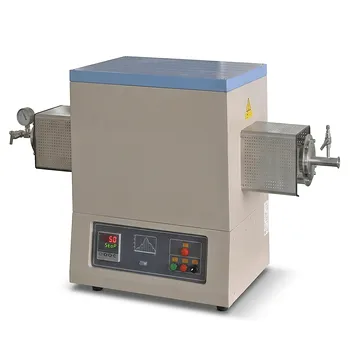
High Temperature 1700C Tube Furnace with 4 Inch OD Alumina Tube and Vacuum Sealing Flanges
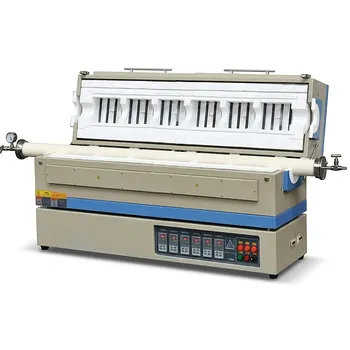
High Temperature 1700C Six Zone Split Tube Furnace with Alumina Tube and Water Cooled Flanges

1800C High Temperature Compact Vacuum Tube Furnace with 60mm OD Alumina Tube and Kanthal MoSi2 Heating Elements

High Temperature 1700C Benchtop Tube Furnace with 5 Inch Heating Zone High Purity Alumina Tube and Vacuum Sealing Flanges
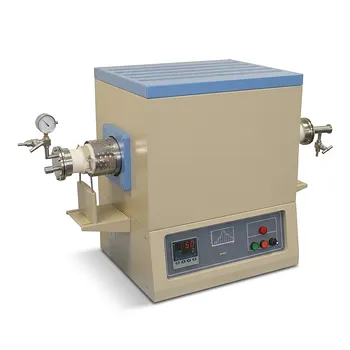
1700C High Temperature Alumina Tube Furnace with 18 Inch Heated Zone and Vacuum Sealing Flanges
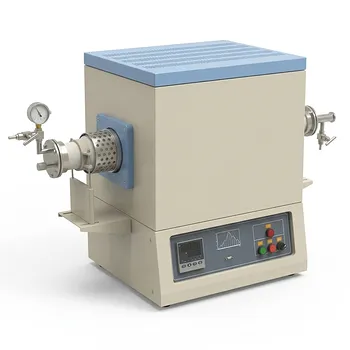
1750°C High Temperature Benchtop Vacuum Atmosphere Tube Furnace with Kanthal Super 1800 Heating Elements and 60mm Alumina Processing Tube
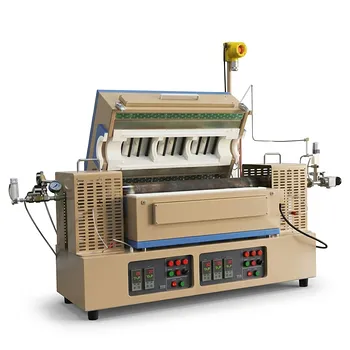
Three Zone Hydrogen Gas Tube Furnace with 82mm Superalloy Tube and Dual Hydrogen Detectors 1200C High Temperature Material Processing System
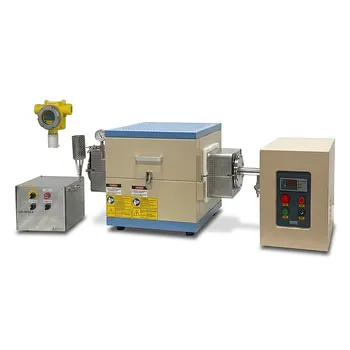
1100C Hydrogen Gas Atmosphere Tube Furnace with 5 Inch Fused Quartz Tube and Integrated Safety Monitoring System
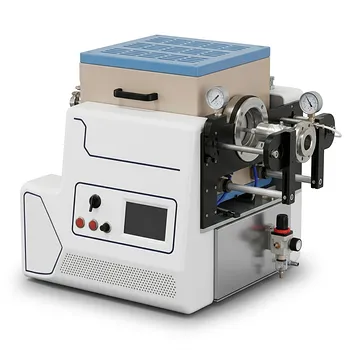
High Temperature Automated 5 Inch Tube Furnace for Autonomous Material Research and Advanced Laboratory R&D
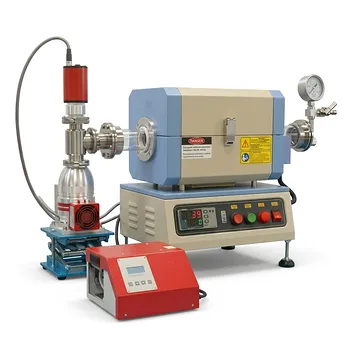
High Vacuum Compact Tube Furnace 1200C with Integrated Turbo Pump System and 8 Inch Heating Zone
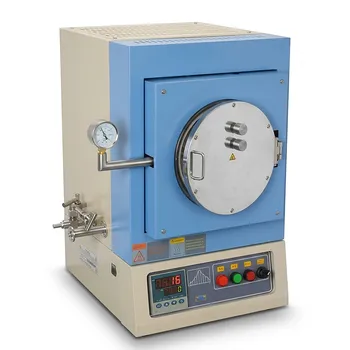
1100°C High Temperature Quartz Chamber Furnace 8 Inch OD with 7.6 Liter Capacity and Vacuum Atmosphere Capability
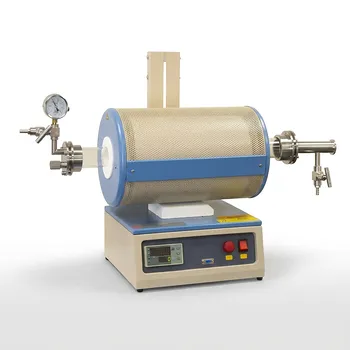
1100C Tube Furnace with Vacuum Flange and Programmable Temperature Controller for Material Science and Industrial Heat Treatment
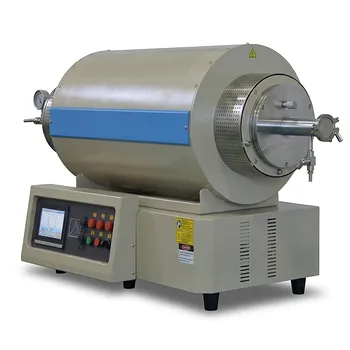
1200C Max Three Zone Tube Furnace 6 Inch OD Max with Tube and Flange