Why is a quartz tube atmosphere furnace required for PSS grafting on silicon? Ensure Precision & Prevent Oxidation
Updated 3 months ago
A quartz tube atmosphere furnace is indispensable for PSS grafting because it provides a strictly anaerobic environment and precise thermal regulation. This setup allows sodium polystyrene sulfonate (PSS) to undergo controlled thermal cleavage into phenyl radicals at temperatures below 400°C without oxidizing the silicon surface. By excluding oxygen and moisture, the furnace facilitates the formation of robust Si-C or Si-O-C covalent bonds, ensuring a stable polymer coating on the porous silicon.
The quartz tube atmosphere furnace acts as a high-precision chemical reactor that prevents silicon oxidation while enabling the specific thermal decomposition pathways required for covalent polymer grafting. It balances the need for high-energy radical formation with the delicate requirement of preserving the material's chemical integrity.
Protecting the Silicon Surface through Atmosphere Control
Preventing Unwanted Oxidation
Porous silicon is highly susceptible to oxidation when heated in the presence of even trace amounts of oxygen. The atmosphere furnace allows for high-purity nitrogen flow or vacuum levels that shield the silicon surface from forming an insulating silica layer.
Maintaining Chemical Purity
The sealed quartz environment excludes moisture and atmospheric contaminants that could interfere with the grafting process. This ensures that the resulting surface chemistry is dominated by the intended polymer fragments rather than environmental impurities.
Avoiding Excessive Carbonization
A controlled environment prevents the PSS from undergoing uncontrolled combustion or excessive carbonization. By regulating the gas flow, the furnace ensures the polymer decomposes into the specific phenyl fragments needed for grafting rather than turning into inert bulk carbon.
Managing Radical Chemistry with Thermal Precision
Targeted Thermal Cleavage
The furnace provides the precise temperature control necessary to initiate the thermal cleavage of PSS at specific temperatures, typically below 400°C. This specific window is narrow; too low, and radicals won't form; too high, and the polymer chain degrades completely.
Promoting Phenyl Radical Formation
Under these controlled conditions, the PSS molecules break down into active phenyl radicals. These radicals are highly reactive and serve as the "bridge" between the organic polymer and the inorganic silicon substrate.
Establishing Stable Covalent Bonds
The stable thermal gradient within the tube allows these radicals to interact with the silicon surface long enough to form Si-C or Si-O-C covalent bonds. These bonds are significantly stronger than physical adsorption, providing the material with superior mechanical and chemical stability.
Understanding the Trade-offs
Equipment Throughput vs. Precision
While a tube furnace offers unmatched environmental control, it is often a batch process with limited volume. Scaling this to industrial levels requires significant energy and specialized infrastructure compared to open-air thermal treatments.
Material Limitations of Quartz
Quartz tubes are excellent for purity and thermal shock resistance but have maximum temperature thresholds. While 400°C is well within limits, using the same equipment for higher-temperature processes (like certain silane treatments) can eventually lead to tube devitrification or sagging.
Cooling Rates and Structural Stress
Rapid cooling in a vacuum or inert flow can induce thermal stress on the porous silicon structure. Care must be taken to program cooling ramps that preserve the delicate pore network of the micron silicon while maintaining the vacuum seal.
How to Apply This to Your Project
When utilizing a quartz tube atmosphere furnace for silicon grafting, your primary objective should dictate your operational parameters:
- If your primary focus is Maximum Bond Density: Prioritize a slow temperature ramp and a long "soak" time just below 400°C to allow maximum radical interaction with the silicon surface.
- If your primary focus is Silicon Core Purity: Utilize a high-purity Argon/Hydrogen mix or a high-vacuum setting to ensure absolutely no oxide layer forms during the heating cycle.
- If your primary focus is Polymer Integrity: Keep the maximum temperature strictly regulated to the lowest effective cleavage point to prevent the PSS from degrading into amorphous carbon.
Precision in both atmosphere and temperature is the only way to transform simple physical mixing into a robust, covalently bonded hybrid material.
Summary Table:
| Key Feature | Function in PSS Grafting | Primary Benefit |
|---|---|---|
| Atmosphere Control | Provides inert gas flow (N2/Ar) or vacuum | Prevents silicon oxidation and insulating silica layers |
| Thermal Precision | Maintains tight regulation below 400°C | Enables specific radical cleavage without polymer degradation |
| Quartz Tube Purity | High-purity, sealed heating environment | Eliminates moisture and contaminants for stable Si-C bonds |
| Cooling Regulation | Controlled temperature ramp-down | Preserves the delicate pore network of micron silicon |
Elevate Your Material Research with THERMUNITS Precision
As a leading manufacturer of high-temperature laboratory equipment for material science and industrial R&D, THERMUNITS provides the advanced thermal solutions necessary for complex processes like thermally initiated grafting and CVD.
Our comprehensive range of equipment is designed to deliver the rigorous atmosphere control and temperature stability your research demands, including:
- Tube & Atmosphere Furnaces (Ideal for Silicon Grafting)
- Vacuum & Hot Press Furnaces
- CVD/PECVD Systems
- Muffle, Rotary, and Dental Furnaces
- Vacuum Induction Melting (VIM) Furnaces and Thermal Elements
Whether you are optimizing polymer-inorganic interfaces or developing next-generation semiconductor materials, THERMUNITS ensures your lab has the reliability and precision to succeed.
Contact THERMUNITS today to consult with our experts and find the perfect heat treatment solution for your specific application!
References
- Y.N. Lee, Sang‐Wha Lee. Interface Engineering of Styrenic Polymer Grafted Porous Micro-Silicon/Polyaniline Composite for Enhanced Lithium Storage Anode Materials. DOI: 10.3390/polym16243544
Mentioned Products
- Compact Vertical Split Quartz Tube Furnace with Stainless Steel Vacuum Flanges for Rapid Thermal Quenching and Controlled Atmosphere Material Processing
- 1100°C High Temperature Quartz Chamber Furnace 8 Inch OD with 7.6 Liter Capacity and Vacuum Atmosphere Capability
- 1200C High Temperature Atmosphere Controlled Vertical Quenching Tube Furnace with 4 Inch Quartz Tube
- 1200°C Atmosphere Controlled Automatic Bottom Loading Furnace with 6 Inch Quartz Tube
- 1200C Atmosphere Controlled Automatic Bottom Loading Furnace with 6 Inch Quartz Tube Dual Zone System
People Also Ask
- Why integrate a vertical split tube furnace with hydraulic loading for HSECC? Essential for In-Situ Fire Simulation.
- What is the role of a split vertical tube furnace during flash sintering of 8YSZ and 20SDC? Master Ultra-Fast R&D
- What is the primary engineering purpose for using a customized ventilation hood when operating a split tube furnace? RCF Safety
- Why is a quartz tube furnace necessary for phosphorus-doped MoS2/GO preparation? Ensure Purity & Precise Synthesis
- What is the primary function of a Quartz Tube Furnace in ZnO VLS growth? Master High-Precision Nanowire Synthesis

Tech Team · ThermUnits
Last updated on Jun 03, 2026
Related Products

Compact Vertical Split Quartz Tube Furnace with Stainless Steel Vacuum Flanges for Rapid Thermal Quenching and Controlled Atmosphere Material Processing
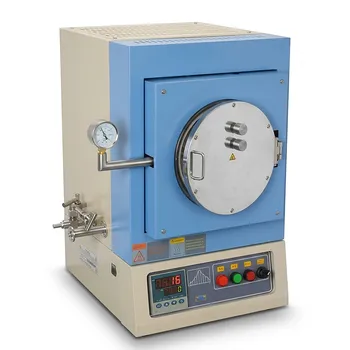
1100°C High Temperature Quartz Chamber Furnace 8 Inch OD with 7.6 Liter Capacity and Vacuum Atmosphere Capability
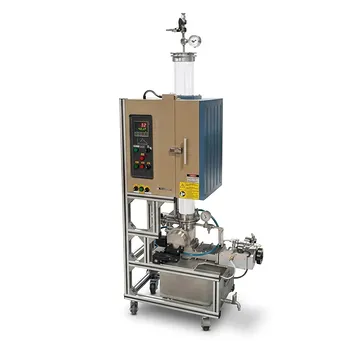
1200C High Temperature Atmosphere Controlled Vertical Quenching Tube Furnace with 4 Inch Quartz Tube
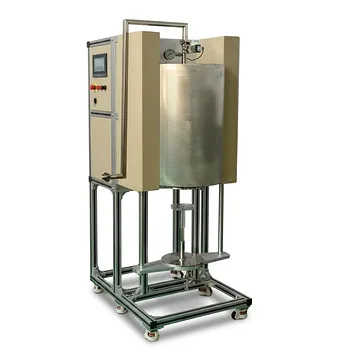
1200°C Atmosphere Controlled Automatic Bottom Loading Furnace with 6 Inch Quartz Tube
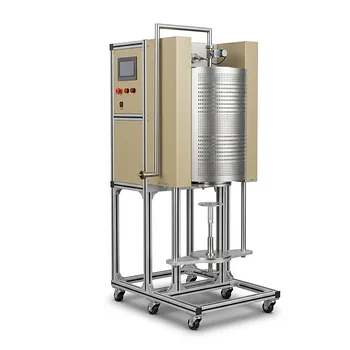
1200C Atmosphere Controlled Automatic Bottom Loading Furnace with 6 Inch Quartz Tube Dual Zone System
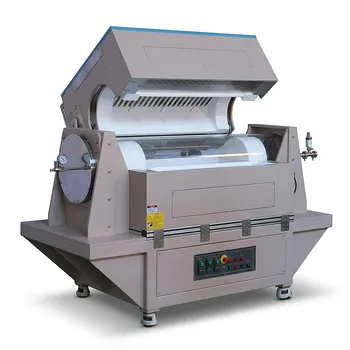
Three Zone Tube Furnace with 11 Inch or 15 Inch Quartz Tube and Hinged Flanges for Vacuum Atmosphere Heat Treatment
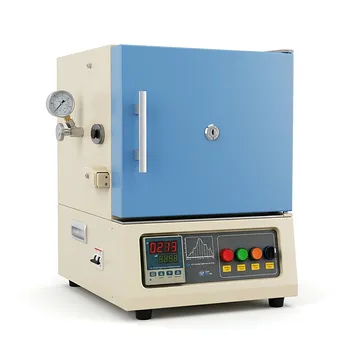
1200C Hybrid Muffle and Tube Furnace for Material Research with Dual Atmosphere Control Quartz Tubes
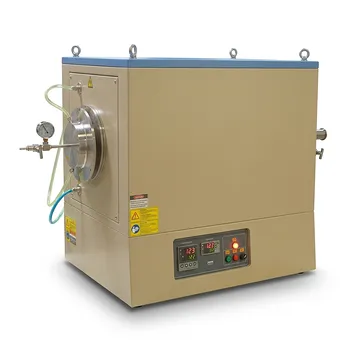
1100°C Large Diameter Quartz Tube Furnace with 24 Inch Heating Zone and Water Cooled Flanges

1200°C 5 Inch Vertical Quartz Tube Furnace with Stainless Steel Vacuum Flanges
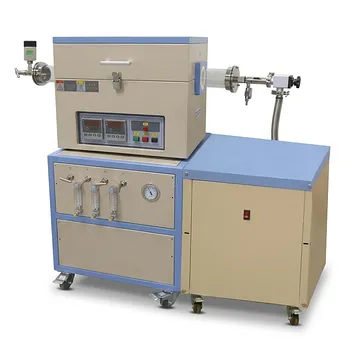
Dual Zone Quartz Tube Furnace with 80mm Diameter 1200C Max Temperature 3 Channel Gas Mixer and Vacuum Pump System
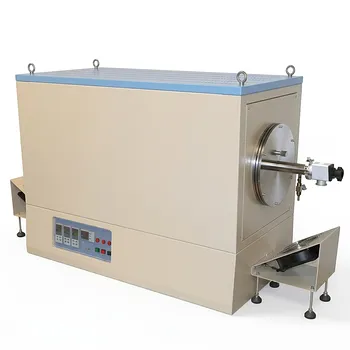
1100°C Three Zone Tube Furnace with 8.5 to 11 Inch OD Quartz Tube and Vacuum Flanges for Large Wafer Processing
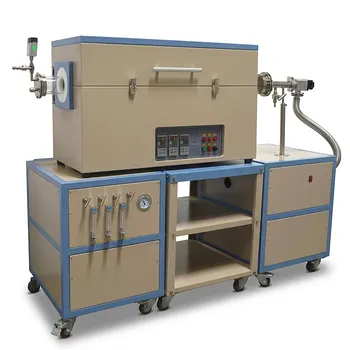
Three Zone Quartz Tube Furnace with 3 Channel Gas Mixer Vacuum Pump and Anti Corrosive Vacuum Gauge
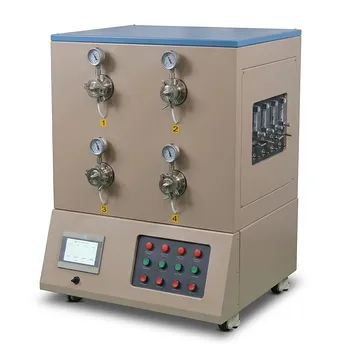
High Throughput 1200C Four Channel Tube Furnace with 3 Inch Quartz Tubes for Multi Zone Annealing and Material Research
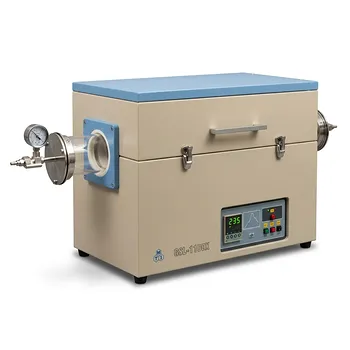
Single Zone Tube Furnace 5 Inch Quartz Tube 36 Inch Heating Zone Vacuum Flanges
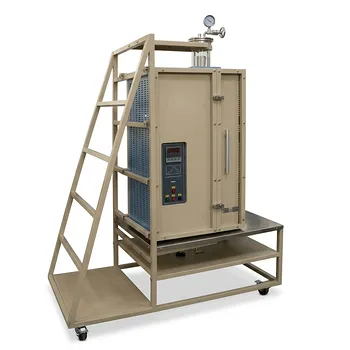
Split Vertical Tube Furnace with 1200C Quartz Tube and Stainless Steel Vacuum Flanges for Rapid Thermal Processing
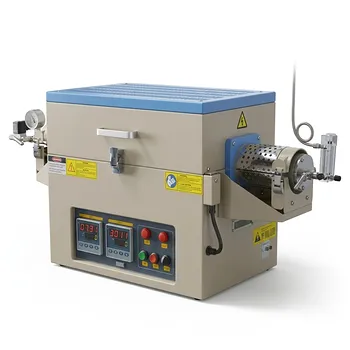
1100C Dual Zone Hydrogen Gas Tube Furnace with Quartz Tube and Integrated H2 Leak Detection System
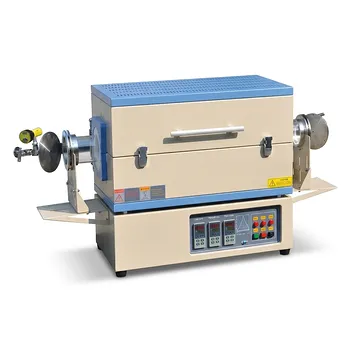
Three Zone Tube Furnace with 24 Inch Heating Length and Hinged Flange Quartz Tube System
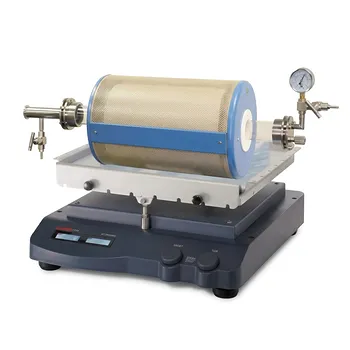
High Temperature Rocking Tube Furnace with Quartz Tube and Vacuum Flange for Materials Synthesis
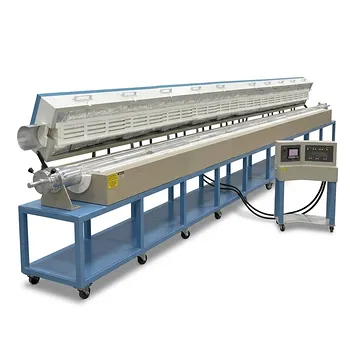
12 Zone Ultra Long Split Tube Furnace with 20 Foot Quartz Tube and 1100C Max Temperature
