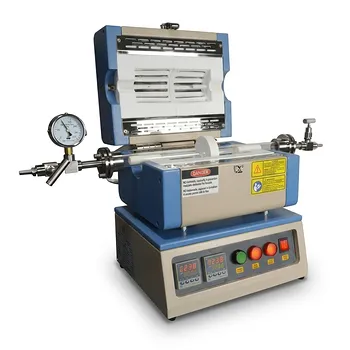
Why is a quartz tube furnace with dual gas path control required for Ti4AlN3 etching? Optimize MXene Synthesis
Updated 3 months ago
The requirement for dual gas path control is driven by the necessity of sequential atmospheric switching within a single reaction cycle. A quartz tube furnace facilitates an initial inert argon environment to safely melt the salts, followed by a precise transition to a controlled oxygen flow for oxygen-assisted etching. This specific sequence is the only way to achieve the selective removal of aluminum layers from the $Ti_4AlN_3$ precursor to form multilayered $Ti_4N_3T_x$ MXene structures.
Core Takeaway: Dual gas path control transforms a standard furnace into a precision chemical reactor, allowing researchers to alternate between protective and reactive environments to facilitate the delicate transition from bulk MAX phases to 2D nanomaterials.
The Role of Atmospheric Sequencing in Etching
The synthesis of $Ti_4N_3T_x$ MXenes is a two-stage chemical process that takes place within the molten salt medium. Each stage requires a distinct chemical environment that can only be managed through a dual-path gas system.
Stage 1: The Inert Melting Phase
Before etching can begin, the eutectic salts must be brought to their melting point without introducing premature oxidation. High-purity argon gas is introduced through the first gas path to purge the tube of oxygen and moisture.
This inert atmosphere ensures that the $Ti_4AlN_3$ MAX phase and the surrounding salts remain chemically stable during the heating ramp. Without this protection, the precursor could oxidize into unwanted titanium oxides before the aluminum is even removed.
Stage 2: Controlled Oxygen-Assisted Etching
Once the salts reach a molten state, the second gas path is activated to introduce a controlled oxygen flow. This oxygen acts as a chemical trigger that assists the molten salt in selectively targeting and removing the aluminum atomic layers.
The dual-path system allows for a "hard switch" between gases without opening the furnace or exposing the sample to the ambient atmosphere. This precision is vital for maintaining the structural integrity of the resulting multilayered $Ti_4N_3T_x$ structures.
Engineering Requirements for $Ti_4AlN_3$ Processing
Processing $Ti_4AlN_3$ requires more than just heat; it requires a stable environment that can withstand the corrosive nature of molten salts and reactive gases.
High-Temperature Stability and Purity
Quartz tube furnaces are preferred because they provide a high-purity, non-reactive reaction space. These tubes can handle the high-temperature solid-state reactions—often reaching up to 1400°C for precursor synthesis—while remaining transparent to monitor the process.
Precision Gas Flow Regulation
The dual-path control system must maintain a constant flow rate (such as 50 mL/min) to ensure uniform nitridation or etching. Fluctuations in gas pressure or flow can lead to incomplete etching or the formation of impurities within the MXene lattice.
Understanding the Trade-offs and Risks
While dual gas path furnaces provide superior control, there are technical limitations and risks that operators must manage.
Thermal Shock and Quartz Degradation
Frequent switching between gas paths can lead to slight temperature fluctuations within the tube. Over time, the combination of high heat and exposure to corrosive molten salt vapors can cause the quartz tube to become brittle or undergo devitrification.
Cross-Contamination of Gas Lines
If the dual-path system is not equipped with high-quality check valves, argon can bleed into the oxygen line or vice versa. This lack of "atmospheric purity" can result in inconsistent etching rates and lower the crystallinity of the final $Ti_4N_3T_x$ product.
How to Apply This to Your Synthesis Goals
Choosing the right furnace configuration depends on your specific material requirements and desired purity levels.
- If your primary focus is high-purity MXene yield: Use a system with digital mass flow controllers (MFCs) on both gas paths to ensure the oxygen-to-argon ratio is perfectly balanced during the etching switch.
- If your primary focus is precursor sintering (MAX phase): Prioritize a furnace capable of maintaining a stable 1400°C environment for 30+ hours with a dedicated argon path to prevent oxidation of the titanium and aluminum powders.
- If your primary focus is surface functionalization: Ensure the furnace can handle specialized gases like ammonia ($NH_3$) or hydrogen/argon mixes to modulate the interlayer spacing and surface groups of the $Ti_4N_3T_x$ structure.
The ability to switch atmospheres in situ is the fundamental bridge between bulk material science and the precise engineering of 2D functional nanomaterials.
Summary Table:
| Process Stage | Atmosphere Type | Primary Function |
|---|---|---|
| Inert Melting | High-Purity Argon | Prevents precursor oxidation during salt melting |
| Selective Etching | Controlled Oxygen | Triggers Al layer removal for MXene formation |
| Sintering/Cooling | Inert/Vacuum | Maintains structural integrity and purity |
Elevate Your Material Research with THERMUNITS
Need high-precision equipment for your MXene or material science R&D? THERMUNITS is a leading manufacturer of high-temperature laboratory equipment, providing the specialized thermal processing solutions required for complex synthesis like $Ti_4AlN_3$ etching.
Our comprehensive product range includes:
- Tube Furnaces (with precise dual gas path control & MFCs)
- Muffle, Vacuum, and Atmosphere Furnaces
- CVD/PECVD Systems and Vacuum Induction Melting (VIM)
- Hot Press, Rotary, and Dental Furnaces
- Electric Rotary Kilns and Thermal Elements
Whether you are focusing on precursor sintering or delicate surface functionalization, our systems offer the reliability and atmospheric control your laboratory demands.
Contact us today to find the perfect heat treatment solution for your lab!
References
- Cheng-Che Hsiao, Abdoulaye Djire. Switchable Charge Storage Mechanism via in Situ Activation of MXene Enables High Capacitance and Stability in Aqueous Electrolytes. DOI: 10.1021/acsnano.3c12226
Mentioned Products
- Dual Zone Quartz Tube Furnace with 80mm Diameter 1200C Max Temperature 3 Channel Gas Mixer and Vacuum Pump System
- 1100C Dual Zone Hydrogen Gas Tube Furnace with Quartz Tube and Integrated H2 Leak Detection System
- 1200C Atmosphere Controlled Automatic Bottom Loading Furnace with 6 Inch Quartz Tube Dual Zone System
- 1200°C Atmosphere Controlled Automatic Bottom Loading Furnace with 6 Inch Quartz Tube
- 1200C Dual Zone Split Tube Furnace with Fused Quartz Tube and Vacuum Flanges Available in 60mm 80mm and 100mm Diameters
People Also Ask
- How do dual-zone quartz tube furnaces achieve controllable material preparation? Optimize Perovskite VD Processes
- What are the technical advantages of using a dual-zone tube furnace for growing large PdCoO2 crystals via CVT? Expert Tips
- Purpose of the reverse gradient step in CVT growth? Master Crystal Purity with Dual-Zone Furnaces
- Why is it necessary to place MoS2 devices in a dual-zone tube furnace for annealing? Optimize Lattice Repair & Doping
- Why is a dual-zone tube furnace necessary for ReO3-doped Cu2Te CVD? Essential for precise precursor synchronization.

Tech Team · ThermUnits
Last updated on Jun 03, 2026
Related Products
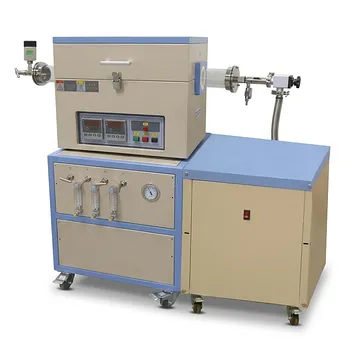
Dual Zone Quartz Tube Furnace with 80mm Diameter 1200C Max Temperature 3 Channel Gas Mixer and Vacuum Pump System
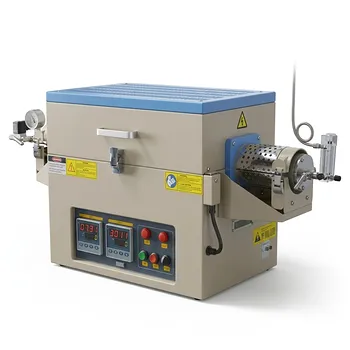
1100C Dual Zone Hydrogen Gas Tube Furnace with Quartz Tube and Integrated H2 Leak Detection System
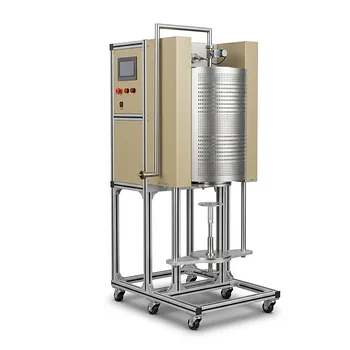
1200C Atmosphere Controlled Automatic Bottom Loading Furnace with 6 Inch Quartz Tube Dual Zone System
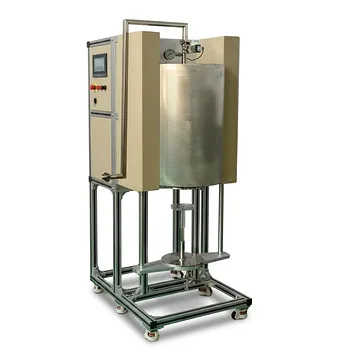
1200°C Atmosphere Controlled Automatic Bottom Loading Furnace with 6 Inch Quartz Tube
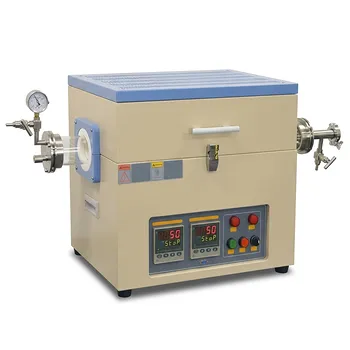
1200C Dual Zone Split Tube Furnace with Fused Quartz Tube and Vacuum Flanges Available in 60mm 80mm and 100mm Diameters
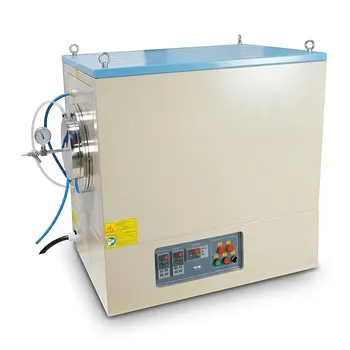
Dual Zone Tube Furnace 1100C with 11 Inch Quartz Tube and Vacuum Flanges for 8 Inch Wafer Processing
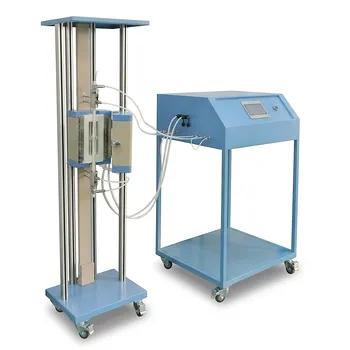
High Temperature Vertical Tube Furnace for Small Solid Oxide Fuel Cell Testing with Four Channel Gas Control
Three Zone Quartz Tube Furnace with 3 Channel Gas Mixer Vacuum Pump and Anti Corrosive Vacuum Gauge

Compact Vertical Split Quartz Tube Furnace with Stainless Steel Vacuum Flanges for Rapid Thermal Quenching and Controlled Atmosphere Material Processing
Dual Zone Split Tube Quenching Furnace with High Vacuum Atmosphere Control and Rapid Cooling
High Temperature Dual Zone Tube Furnace for Material Science Research and Professional Thermal Processing
1200C Four Zone Split Tube Furnace with Touch Screen Control and High Purity Quartz Tube and Vacuum Sealing Flanges
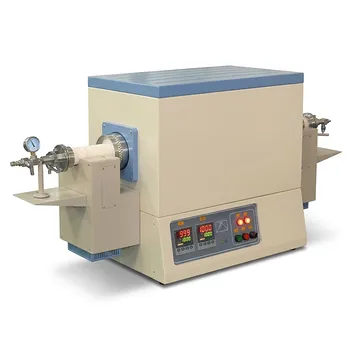
High Temperature 1700C Dual Zone Rotary Tube Furnace with 60mm Alumina Tube and Precision Rotation Control

1200C High Throughput Multi Channel Tube Furnace with 50mm Quartz Tubes for Annealing and Material Phase Diagram Research
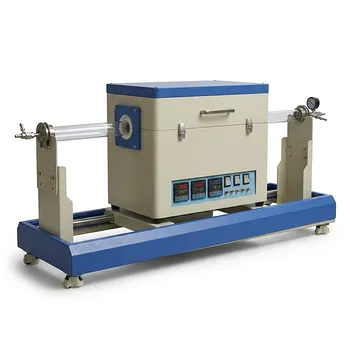
Double Temperature Zone Double Cover Tube Furnace for High Temperature CVD and Vacuum Annealing
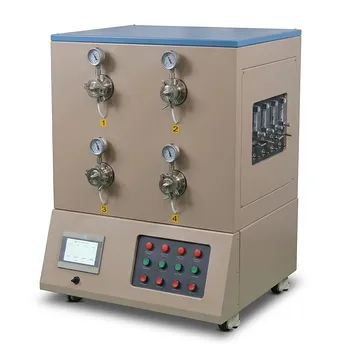
High Throughput 1200C Four Channel Tube Furnace with 3 Inch Quartz Tubes for Multi Zone Annealing and Material Research
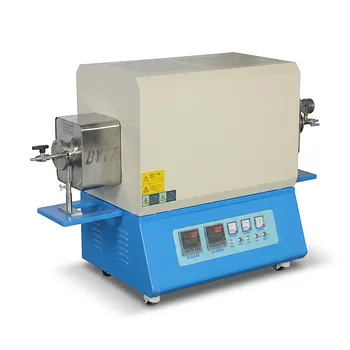
High Temperature Dual Zone Split Tube Furnace for Advanced Atmosphere Sintering and Vacuum CVD Applications

Three Zone Tube Furnace with 11 Inch or 15 Inch Quartz Tube and Hinged Flanges for Vacuum Atmosphere Heat Treatment

1200°C 5 Inch Vertical Quartz Tube Furnace with Stainless Steel Vacuum Flanges