What is the role of CO2 gas flow in Freon-assisted CNT purification? Achieve Ultra-Pure Carbon Nanotubes
Updated 3 months ago
Controlling carbon dioxide (CO2) flow is the critical mechanism for exposing encapsulated impurities during the purification of carbon nanotubes. In a Freon-CO2 assisted process, CO2 serves as a selective oxidizing agent that "peels away" the protective graphitized carbon layers surrounding metal catalyst particles at 800 °C. This precise exposure is the prerequisite step that allows in-situ generated chlorine gas to react with and remove internal metallic contaminants that are otherwise unreachable by traditional acid washing.
Core Takeaway: Precise CO2 flow control acts as a "selective etch," removing the carbon shells shielding metal impurities without destroying the carbon nanotubes themselves. This enables the subsequent chemical conversion of solid metal impurities into volatile gases for complete removal.
The Mechanism of Selective Oxidation
Peeling the Graphitized Carbon Shell
Metal impurities in carbon nanotubes (CNTs) are often "encapsulated" within dense, graphitized carbon layers. These shells act as a physical barrier, protecting the metal from chemical reagents. At 800 °C, controlled CO2 flow reacts with these specific carbon layers, effectively stripping the shell through oxidation.
Facilitating Impurity Exposure
The primary goal of CO2 flow regulation is to achieve "exposure" rather than total combustion. By maintaining a specific flow rate, the atmosphere inside the furnace remains consistently oxidizing enough to break the outer shells of the impurities. Once these shells are breached, the internal iron or metal oxides are no longer shielded and become accessible for the next phase of the purification reaction.
Synergy with In-Situ Chlorine Generation
The Role of Freon Decomposition
While CO2 handles the carbon shell, Freon (CHClF2) provides the cleaning agent. At the high-temperature zone of 800 °C, Freon undergoes thermal decomposition to generate chlorine gas (Cl2) directly within the reactor. This in-situ generation is safer and more efficient than using pressurized chlorine cylinders, which pose significant corrosion and safety risks.
Chemical Conversion to Volatile Chlorides
Once the CO2 has exposed the iron impurities, the newly generated chlorine gas reacts with the metal to form ferric chloride (FeCl3). Ferric chloride has a low boiling point, meaning it transitions into a gas phase at these high temperatures. This allows the impurities to be carried out of the system by the gas flow, leaving behind purified CNTs.
Understanding the Trade-offs and Pitfalls
The Risk of Over-Oxidation
The most significant risk in this process is "over-etching." If the CO2 flow is too high or the exposure time is too long, the gas will begin to oxidize the carbon nanotubes themselves, leading to structural defects or significant mass loss. Precision gas flow control is non-negotiable to maintain the balance between removing impurities and preserving the integrity of the CNTs.
Flow Stability and Reaction Consistency
Fluctuations in gas flow can lead to non-uniform purification. If the flow of CO2 or the Freon carrier gas is unstable, some sections of the material may remain encapsulated while others are over-processed. Using high-precision Mass Flow Controllers (MFCs) is the industry standard to ensure the reaction atmosphere remains constant, which governs the final morphology and crystallinity of the purified product.
How to Optimize Your Purification Process
To achieve the highest purity levels while maintaining the structural integrity of your carbon nanotubes, focus on the following flow control strategies:
- If your primary focus is maximizing purity: Increase the CO2 flow rate slightly to ensure even the thickest graphitic shells are breached, but monitor the total mass yield to detect CNT degradation.
- If your primary focus is preserving CNT structure: Use a lower, highly stabilized CO2 flow rate and extend the reaction time to allow for a gentler "peeling" of the carbon shells.
- If your primary focus is equipment longevity: Ensure the Freon-to-CO2 ratio is strictly managed to prevent an excess of unreacted chlorine gas, which can lead to downstream corrosion even with in-situ generation.
By mastering the delicate balance of CO2-driven oxidation, you can unlock the full potential of Freon-assisted purification to produce ultra-pure carbon nanotubes.
Summary Table:
| Component | Primary Role | Effect on Process | Key Control Parameter |
|---|---|---|---|
| CO2 Gas | Selective Oxidizer | Peels graphitized shells to expose catalysts | Flow Rate (sccm) |
| Freon (CHClF2) | Cl2 Source | Converts metal impurities to volatile chlorides | Gas Concentration |
| Temperature | Reaction Catalyst | Enables oxidation & thermal decomposition (800°C) | Thermal Uniformity |
| MFC Control | System Stability | Prevents over-oxidation & structural CNT damage | Flow Precision |
Optimize Your CNT Purification with THERMUNITS Precision Heating
Achieving the perfect balance between impurity removal and structural integrity requires world-class thermal stability and gas regulation. THERMUNITS is a leading manufacturer of high-temperature laboratory equipment specifically designed for material science and industrial R&D.
Our advanced systems empower your research with:
- Precise Atmosphere Control: Integrated gas mixing and MFC systems for stable CO2/Freon delivery.
- Comprehensive Thermal Solutions: A full range of equipment including Atmosphere Furnaces, CVD/PECVD systems, Tube Furnaces, and Rotary Kilns.
- Industrial Durability: Specialized Vacuum, Muffle, and Hot Press furnaces engineered to withstand complex chemical reactions.
Whether you are working on carbon nanotubes, semiconductor materials, or advanced metallurgy, THERMUNITS provides the reliability you need to scale from lab to production.
Ready to enhance your lab's efficiency? Contact our technical team today!
References
- Yiman Huang, Xilai Jia. Freon–CO<sub>2</sub>-assisted purification of single-walled carbon nanotubes. DOI: 10.1039/d4na00610k
Mentioned Products
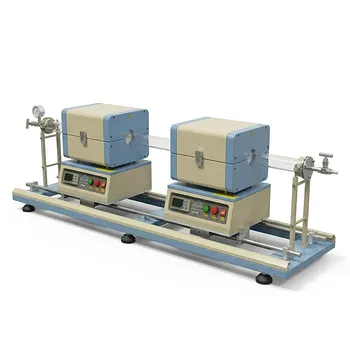
- 5 Inch Three Zone Rotary Tube Furnace with Integrated Gas Delivery System and 1200C Capability for Advanced Material CVD Processing
- Rapid Thermal Processing Sliding Tube Furnace with 4 Inch OD Quartz Tube and 900C IR Heating
- High Temperature Dual Zone Vacuum Tube Furnace for Material Research and CVD Processing
- Split Chamber CVD Tube Furnace with Vacuum Station Chemical Vapor Deposition System Machine
- High Temperature 1700C Benchtop Tube Furnace with 5 Inch Heating Zone High Purity Alumina Tube and Vacuum Sealing Flanges
People Also Ask
- What is the primary function of a three-zone tube furnace in the synthesis process of corn-derived carbon nanotubes?
- Why Use a Three-Zone vs. Single-Zone Furnace for Fe-Ni-Cu Diffusion? Key Benefits for Lab Accuracy
- What role does an industrial-grade three-zone tube furnace play in VOx@VACNT synthesis? Precision Phase-State Control
- What advantages does a three-zone tube furnace offer for nanoparticle synthesis? Unlock Superior Thermal Precision.
- What is the core function of an industrial-grade three-zone tube furnace in MgCO3 layer formation?

Tech Team · ThermUnits
Last updated on Jun 02, 2026
Related Products

5 Inch Three Zone Rotary Tube Furnace with Integrated Gas Delivery System and 1200C Capability for Advanced Material CVD Processing
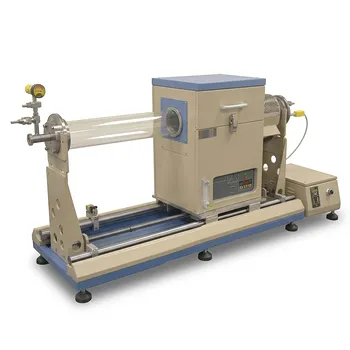
Rapid Thermal Processing Sliding Tube Furnace with 4 Inch OD Quartz Tube and 900C IR Heating
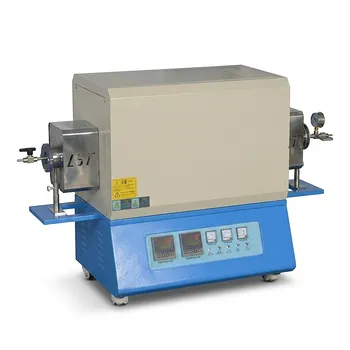
High Temperature Dual Zone Vacuum Tube Furnace for Material Research and CVD Processing
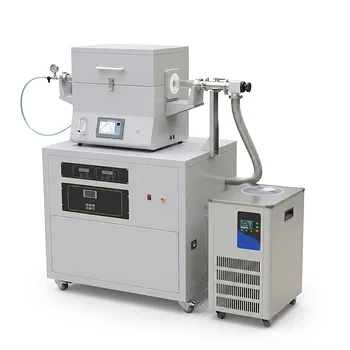
Split Chamber CVD Tube Furnace with Vacuum Station Chemical Vapor Deposition System Machine

High Temperature 1700C Benchtop Tube Furnace with 5 Inch Heating Zone High Purity Alumina Tube and Vacuum Sealing Flanges
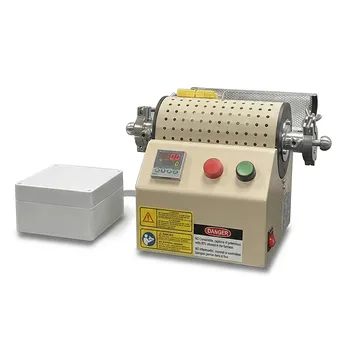
1000C Mini Tube Furnace with 20mm Quartz Tube and Vacuum Flanges for Material Science Research and Controlled Atmosphere Small Sample Processing

Vertical 1700C Vacuum and Atmosphere Tube Furnace with 80mm Alumina Tube

High Temperature 1700C Tube Furnace with High Vacuum Turbomolecular Pump System and Multi Channel Mass Flow Controller Gas Mixer

1800C High Temperature Compact Vacuum Tube Furnace with 60mm OD Alumina Tube and Kanthal MoSi2 Heating Elements
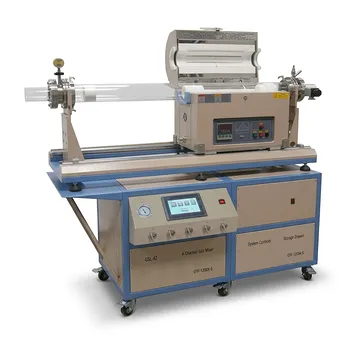
Dual Tube 100mm 80mm CVD Sliding Furnace with 4 Channel Gas Mixing and Vacuum System
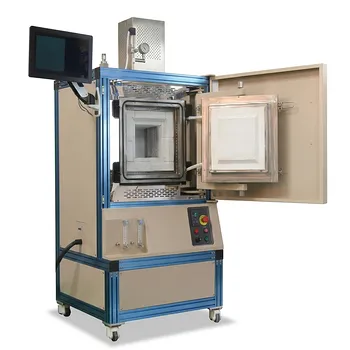
High Temperature Hydrogen Atmosphere Box Furnace 1650C Max Reducing Environment Material Synthesis System 8x8x8 Chamber
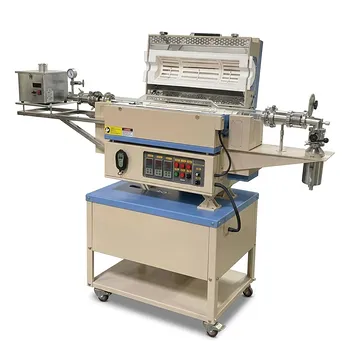
5 Inch Rotary Tube Furnace with Automatic Feeding and Receiving System 1200C Three Zone CVD Powder Processing
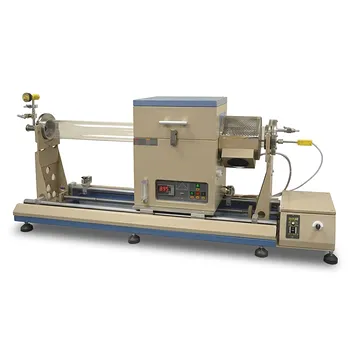
900 ºC Max Sliding RTP Tube Furnace with Rapid IR Heating and 4 Inch OD Quartz Tube
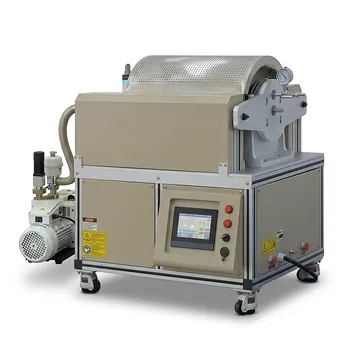
Automated 1200 C Tube Furnace for AI Material Research with 6 Inch OD and Sliding Flange

1200°C 5 Inch Vertical Quartz Tube Furnace with Stainless Steel Vacuum Flanges
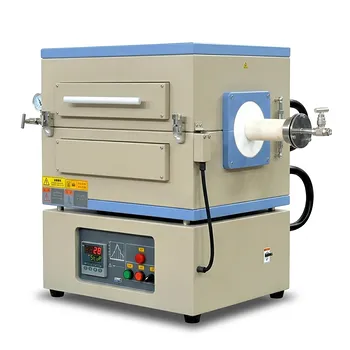
1500°C Split Tube Furnace with Alumina Tube and Vacuum Sealing Flanges for Material Research

Compact Vertical Split Quartz Tube Furnace with Stainless Steel Vacuum Flanges for Rapid Thermal Quenching and Controlled Atmosphere Material Processing
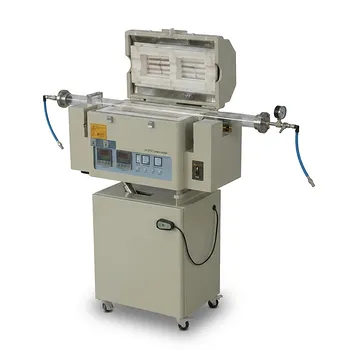
Double Temperature Revolving Tube Furnace with Precision Rotation and Adjustable Inclination for Advanced Material Research
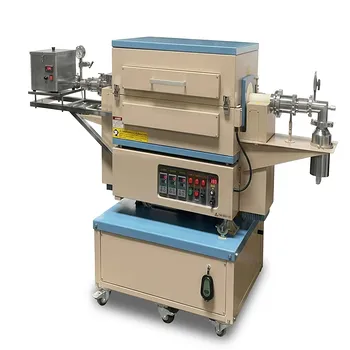
1500C 3-Zone Rotary Tube Furnace 60mm with Automatic Powder Feeding and Receiving System for Continuous Material Synthesis