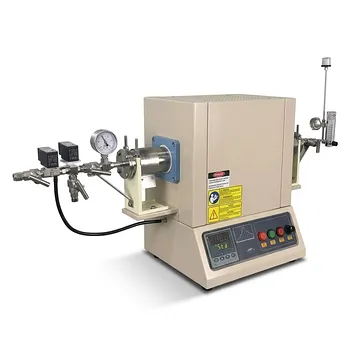
Why is a tube atmosphere furnace equipped with nitrogen protection required for the preparation of CCB?
Updated 3 months ago
The use of a nitrogen-protected tube atmosphere furnace is the decisive factor in transforming raw cuttlebone into a high-performance functional material. By providing a strictly inert environment, this equipment prevents the violent oxidative combustion of organic components at high temperatures. This allows the material to undergo anaerobic pyrolysis, preserving a conductive carbon skeleton that is essential for advanced electrochemical applications.
Core Takeaway: A nitrogen-protected tube furnace ensures that cuttlebone precursors undergo controlled carbonization rather than burning, which is necessary to retain residual conductive carbon and achieve the specific crystal structures required for catalytic and adsorption performance.
Preserving the Structural Integrity of Biomass
Prevention of Oxidative Combustion
At the high temperatures required for calcination (typically 700°C to 900°C), the organic components of cuttlebone would ignite and vanish if exposed to oxygen. Nitrogen protection displaces oxygen, ensuring the biomass undergoes anaerobic pyrolysis instead of combustion.
Retention of Conductive Carbon Networks
The primary goal of using an inert atmosphere is to keep the residual carbon intact within the material matrix. This conductive carbon is critical for improving charge transfer performance, particularly in applications like methanol electro-oxidation.
Maximizing Heteroatom Retention
Cuttlebone contains natural nitrogen and other elements that enhance its chemical activity. An oxygen-free environment maximizes the retention of nitrogen heteroatoms, allowing them to integrate into the carbon skeleton and create active defect sites.
Facilitating Material Transformation
Controlled Thermal Decomposition
In a nitrogen environment, calcium carbonates in the cuttlebone can thermally decompose into oxides without losing the surrounding carbon structure. This stable pyrolysis environment allows for a synchronized transformation of both the organic and inorganic phases.
Phase Transformation and Crystallinity
The precise temperature control of a tube furnace induces the crystalline transformation of calcium carbonate from aragonite to calcite. Calcite possesses superior ion-exchange capabilities, which significantly enhances the material's ability to adsorb heavy metals like lead.
Development of Porous Architectures
The continuous flow of high-purity nitrogen helps sweep away volatile impurities generated during the heating process. This "cleaning" effect ensures that the resulting Calcined Cuttlebone (CCB) develops the highly organized microporous and mesoporous structures required for catalysis.
Understanding the Trade-offs
The use of a nitrogen-protected tube furnace introduces specific complexities that must be managed. High-purity nitrogen (99.99% or higher) is required to ensure no trace oxygen causes partial oxidation, which can increase operational costs. Additionally, the gas flow rate must be precisely calibrated; a flow that is too slow may fail to remove inhibitory by-products, while a flow that is too fast may lead to uneven heating or cooling of the precursor.
How to Apply This to Your Project
When preparing Calcined Cuttlebone, your furnace parameters should align with your final performance goals.
- If your primary focus is electrical conductivity: Maintain temperatures between 800°C and 900°C under a steady nitrogen flow to maximize graphitization and carbon retention.
- If your primary focus is adsorption capacity: Prioritize the aragonite-to-calcite phase transition by focusing on stable heating above 400°C while ensuring the nitrogen atmosphere prevents pore clogging from burnt organics.
- If your primary focus is catalytic activity: Use the nitrogen flow to facilitate the in-situ doping of nitrogen atoms into the carbon framework to create active Fe-Nx or similar coordination sites.
The nitrogen-protected tube furnace is not merely a heater, but a chemical reactor that dictates the final utility of the calcined material.
Summary Table:
| Key Factor | Role in CCB Preparation | Critical Outcome |
|---|---|---|
| Inert Atmosphere | Displaces oxygen to prevent combustion | Anaerobic pyrolysis of biomass |
| Nitrogen Protection | Preserves nitrogen heteroatoms | Enhanced catalytic active sites |
| Precise Temperature | Controlled aragonite-to-calcite transition | Superior heavy metal adsorption |
| Gas Flow Control | Removes volatile impurities | Highly organized porous architecture |
| Carbon Retention | Prevents loss of organic components | High electrical conductivity |
Elevate Your Material Research with Precision Thermal Solutions
Achieving the perfect carbonization of biomass like Calcined Cuttlebone requires uncompromising atmosphere control and thermal stability. THERMUNITS is a leading manufacturer of high-performance laboratory equipment tailored for material science and industrial R&D.
We provide a comprehensive range of solutions, including Tube, Atmosphere, Vacuum, Muffle, and Rotary furnaces, as well as CVD/PECVD systems and Vacuum Induction Melting (VIM) furnaces. Our equipment is engineered to ensure high-purity nitrogen protection and precise gas flow management, empowering you to create next-generation functional materials.
Ready to optimize your heat treatment process?
Contact our technical experts today to find the ideal furnace for your research goals.
References
- Hala Mohamed, Rehab Mahmoud. Waste Biomass Utilization for the Production of Adsorbent and Value-Added Products for Investigation of the Resultant Adsorption and Methanol Electro-Oxidation. DOI: 10.3390/catal14090574
Mentioned Products
- Compact Vertical Split Quartz Tube Furnace with Stainless Steel Vacuum Flanges for Rapid Thermal Quenching and Controlled Atmosphere Material Processing
- 1200C High Temperature Atmosphere Controlled Vertical Quenching Tube Furnace with 4 Inch Quartz Tube
- 900°C Max Rotary Tube Furnace with 8 Inch 310S Alloy Tube and Optional Multi Zone Heating for Industrial Material Calcination
- High Temperature Dual Zone Split Tube Furnace for Advanced Atmosphere Sintering and Vacuum CVD Applications
- 1200°C Atmosphere Controlled Automatic Bottom Loading Furnace with 6 Inch Quartz Tube
People Also Ask
- Why integrate a vertical split tube furnace with hydraulic loading for HSECC? Essential for In-Situ Fire Simulation.
- What is the role of a split vertical tube furnace during flash sintering of 8YSZ and 20SDC? Master Ultra-Fast R&D
- What is the primary engineering purpose for using a customized ventilation hood when operating a split tube furnace? RCF Safety
- Why is a quartz tube furnace necessary for phosphorus-doped MoS2/GO preparation? Ensure Purity & Precise Synthesis
- What is the primary function of a Quartz Tube Furnace in ZnO VLS growth? Master High-Precision Nanowire Synthesis

Tech Team · ThermUnits
Last updated on Jun 03, 2026
Related Products

Compact Vertical Split Quartz Tube Furnace with Stainless Steel Vacuum Flanges for Rapid Thermal Quenching and Controlled Atmosphere Material Processing
1200C High Temperature Atmosphere Controlled Vertical Quenching Tube Furnace with 4 Inch Quartz Tube
900°C Max Rotary Tube Furnace with 8 Inch 310S Alloy Tube and Optional Multi Zone Heating for Industrial Material Calcination
High Temperature Dual Zone Split Tube Furnace for Advanced Atmosphere Sintering and Vacuum CVD Applications
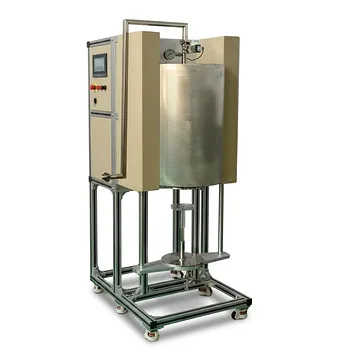
1200°C Atmosphere Controlled Automatic Bottom Loading Furnace with 6 Inch Quartz Tube
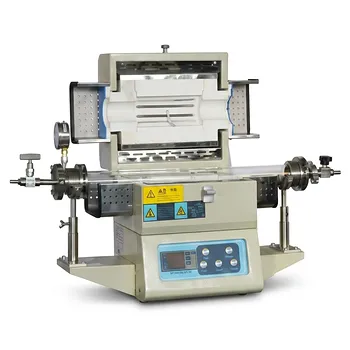
High Temperature 1200C Split Tube Furnace for CVD Research and Vacuum Atmosphere Heat Treatment
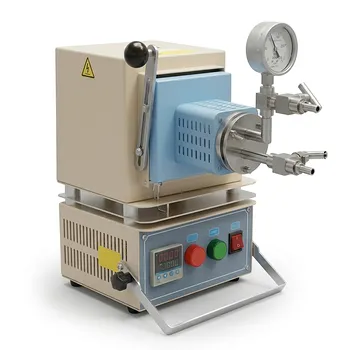
Compact Hybrid Muffle and Tube Furnace for 1000C Controlled Atmosphere Laboratory Material Sintering
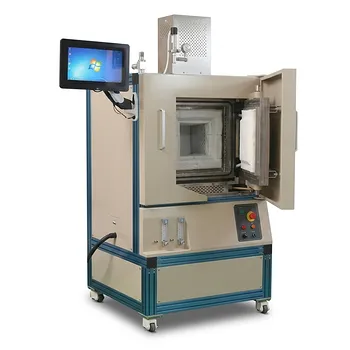
High Temperature Oxygen and Inert Atmosphere Controlled Furnace 8 Liter 1700C Sintering System for Advanced Materials RD
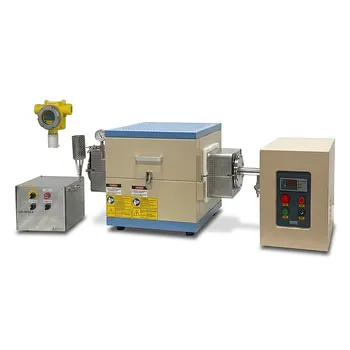
1100C Hydrogen Gas Atmosphere Tube Furnace with 5 Inch Fused Quartz Tube and Integrated Safety Monitoring System
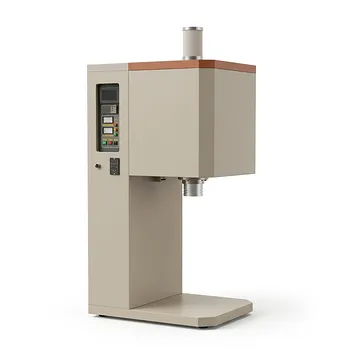
Vertical Openable Tube Furnace 0-1700c High Temperature Laboratory System for CVD and Vacuum Heat Treatment

Vertical 1700C Vacuum and Atmosphere Tube Furnace with 80mm Alumina Tube
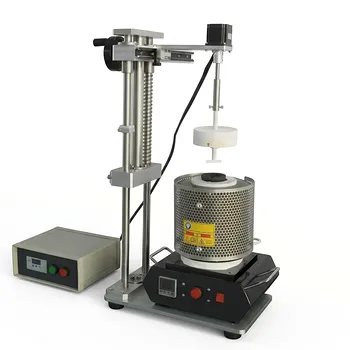
1100C Crucible Melting Furnace with Stirring Function for Glovebox and Air Sensitive Alloy Research
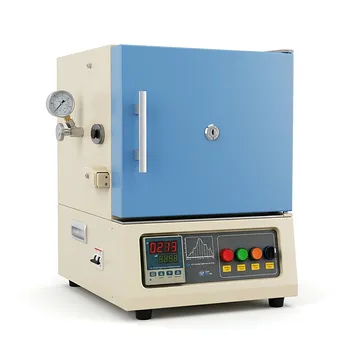
1200C Hybrid Muffle and Tube Furnace for Material Research with Dual Atmosphere Control Quartz Tubes
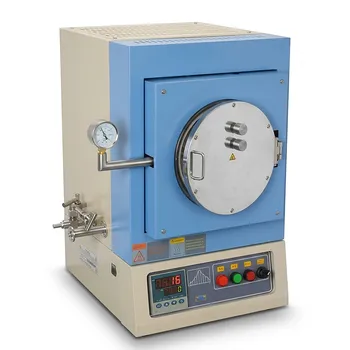
1100°C High Temperature Quartz Chamber Furnace 8 Inch OD with 7.6 Liter Capacity and Vacuum Atmosphere Capability
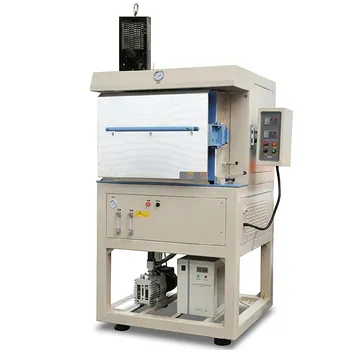
1200C Hydrogen Atmosphere Box Furnace with 5 Heated Sides and 64L Chamber
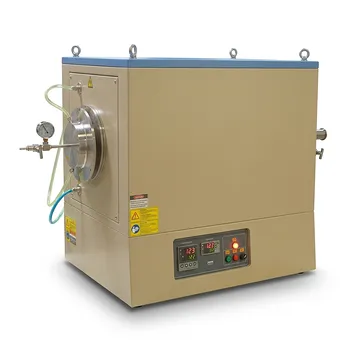
1100°C Large Diameter Quartz Tube Furnace with 24 Inch Heating Zone and Water Cooled Flanges
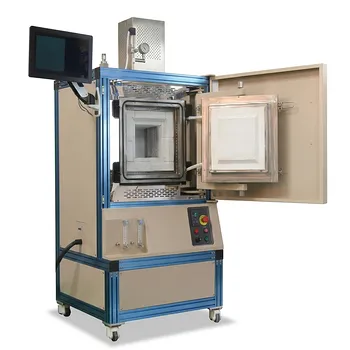
High Temperature Hydrogen Atmosphere Box Furnace 1650C Max Reducing Environment Material Synthesis System 8x8x8 Chamber
1400C Bottom Loaded Inert Gas Atmosphere Box Furnace with 125L Capacity and Precision Hydraulic Lift

Compact High Temperature 1600C Tube Furnace with 50mm Alumina Tube and Vacuum Flanges for Material Sintering