Why is a tube furnace equipped with flowing Argon gas utilized for the heat treatment of Bismuth Tungstate powders?
Updated 3 months ago
Utilizing a tube furnace with flowing Argon for Bismuth Tungstate powders ensures the formation of a pure orthorhombic crystal phase while preventing atmospheric contamination. This specific configuration provides an inert environment that excludes moisture and oxygen, allowing for precise control over the material's chemical purity and structural transition during the 400 °C to 600 °C annealing process.
The core advantage of this setup is the isolation of the thermal process from the surrounding environment. By displacing reactive gases with Argon, the furnace allows thermal energy to drive phase transformation and crystallinity without the interference of unintended chemical reactions.
Protecting Chemical Purity and Phase Integrity
Exclusion of Atmospheric Contaminants
A flowing Argon atmosphere acts as a protective shield by continuously displacing oxygen and moisture from the furnace chamber. This is critical because Bismuth Tungstate is highly sensitive to its environment; exposure to air during heating can introduce impurities or lead to non-target oxidation.
Facilitating the Orthorhombic Transition
The primary goal of annealing between 400 °C and 600 °C is to move the material from an amorphous or metastable state to a stable orthorhombic crystal structure. The inert Argon environment ensures that this transition is driven solely by thermal energy, maintaining the high chemical purity required for high-performance applications.
Maintenance of Trace Element Content
In a sealed tube environment, the original design content of the material is preserved. Just as in specialized steel treatments, preventing oxidation and decarburization is essential to ensure that the surface and core properties of the powder remains consistent after the heat treatment.
Precision Control of Material Defects
Induction of Oxygen Vacancies
A tube furnace allows for the precise introduction of specific gas mixtures, such as Hydrogen/Argon, to induce oxygen vacancies in the lattice. These defects are often intentional, as they can be used to tune the material's electronic properties and defect concentrations for specific research goals.
Balancing Carrier Concentrations
By accurately adjusting the temperature and duration in a controlled atmosphere, researchers can facilitate recrystallization and grain growth. This optimization is vital for balancing lattice defects with carrier concentrations, which directly impacts the material's electrical and catalytic performance.
Stabilization of Ionic States
Maintaining an inert atmosphere prevents the unwanted oxidation of specific ions within a material's structure. In many bismuth-based compounds, preventing a transition to a higher oxidation state is necessary to preserve the electronic and scintillation performance of the final product.
Engineering Advantages of the Tube Furnace
Uniform Temperature Fields
Tube furnaces provide a linear heating space that offers excellent temperature uniformity. This consistency is vital for powder materials to ensure that every particle undergoes the same phase transition kinetics simultaneously.
Flexibility and Sealing
The highly sealed nature of quartz or ceramic furnace tubes allows for a stable, high-temperature environment that is easily switched between different process gases. This flexibility makes the tube furnace the "core hardware" for researching phase transition kinetics and eliminating internal processing stresses.
Simulation of Isolated Environments
By injecting Argon, the furnace can simulate environments where only thermal stress affects the material. This ensures that any observed microstructural evolution is a result of thermal decomposition or recrystallization rather than a reaction with external gases.
Understanding the Trade-offs
Operational Limitations and Costs
While Argon provides an ideal inert environment, the continuous gas flow increases operational costs compared to static air annealing. Additionally, the sealed nature of the tube furnace limits the volume of material that can be processed in a single batch compared to larger industrial kilns.
Risk of Seal Failure
The effectiveness of the inert atmosphere is entirely dependent on the integrity of the tube seals. Any minor leak can introduce oxygen, which at high temperatures can cause significant deviations from the target phase or introduce unwanted surface defects.
Heating and Cooling Rate Constraints
Tube furnaces, particularly those using quartz tubes, have specific limits on heating and cooling rates to prevent thermal shock. Rapidly changing temperatures can lead to tube breakage or inconsistent crystallization within the powder samples.
How to Apply This to Your Project
When choosing a heat treatment protocol for Bismuth Tungstate or similar powders, align your atmosphere settings with your final material requirements:
- If your primary focus is Phase Purity: Use a high-purity Argon flow to ensure the material reaches the orthorhombic phase without oxygen interference.
- If your primary focus is Electronic Tuning: Consider a mixture of Argon and a reducing gas to precisely control oxygen vacancies and defect concentrations.
- If your primary focus is Microstructural Analysis: Utilize the tube furnace's uniform temperature field to ensure that grain growth is consistent across the entire sample batch.
By mastering the balance between inert gas flow and precise temperature control, you ensure the production of Bismuth Tungstate with predictable and high-quality characteristics.
Summary Table:
| Feature | Purpose in Bismuth Tungstate Treatment | Key Technical Benefit |
|---|---|---|
| Argon Gas Flow | Displaces oxygen and moisture | Prevents unwanted oxidation and maintains chemical purity |
| Sealed Tube Design | Isolates the thermal process | Ensures a stable, inert environment for phase integrity |
| Temp. Range (400-600°C) | Drives orthorhombic transition | Achieves stable crystal structure from amorphous states |
| Atmosphere Control | Tuning oxygen vacancies | Precise adjustment of electronic and catalytic properties |
| Linear Heating Field | Uniform thermal distribution | Ensures consistent grain growth across the powder batch |
Elevate Your Material Research with THERMUNITS Precision
Are you looking to achieve perfect phase purity in your Bismuth Tungstate or other advanced materials? THERMUNITS is a leading manufacturer of high-temperature laboratory equipment specifically designed for material science and industrial R&D. We provide the control and reliability you need to master complex thermal processes.
Our comprehensive range of thermal solutions includes:
- Advanced Tube & Atmosphere Furnaces for precise gas-controlled annealing.
- Vacuum, Muffle, and Rotary Furnaces for versatile heat treatments.
- High-Tech CVD/PECVD Systems for thin-film and nanomaterial synthesis.
- Specialized Equipment: Hot Press, Vacuum Induction Melting (VIM), and Dental Furnaces.
Ready to optimize your lab’s efficiency? Our experts are here to help you select the ideal furnace configuration for your specific research goals.
Contact THERMUNITS Today to Get a Expert Consultation
References
- Aicha El aouni, Hassan Ait Ahsaine. Design of Bismuth Tungstate Bi2WO6 Photocatalyst for Enhanced and Environmentally Friendly Organic Pollutant Degradation. DOI: 10.3390/ma17051029
Mentioned Products
- 1100C Tube Furnace with Vacuum Flange and Programmable Temperature Controller for Material Science and Industrial Heat Treatment
- High Temperature Dual Zone Tube Furnace for Material Science Research and Professional Thermal Processing
- 500C Vacuum Vertical Tube Furnace 84mm OD Sample Rotation Lifting System
- Laboratory Tilting Rotary Tubular Furnaces for Material Science and Industrial Heat Treatment
- High Temperature Tube Furnace 1500C with Sliding Flanges and 50mm OD for Rapid Thermal Processing Fast Heating and Cooling
People Also Ask
- What are the advantages of 1100°C tube furnaces for ORR catalysts? Boost Conductivity and Structural Stability.
- What role does a tube furnace play in PS template removal? Ensure ZnO/SiO2 Structural Integrity & High Performance.
- What core functions does a high-temperature vacuum tube furnace provide? Optimize np-CuSn Sintering & Joint Integrity
- What is the role of a high-temperature tube furnace in the calcination process of ZnO/In2O3 nanocomposites?
- What impact does the heating rate of a tube furnace have on biochar microstructure? Optimize Your Material R&D.

Tech Team · ThermUnits
Last updated on Jun 03, 2026
Related Products

1100C Tube Furnace with Vacuum Flange and Programmable Temperature Controller for Material Science and Industrial Heat Treatment
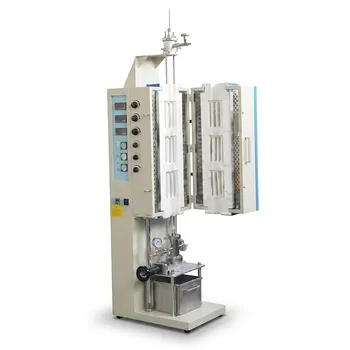
High Temperature Dual Zone Tube Furnace for Material Science Research and Professional Thermal Processing
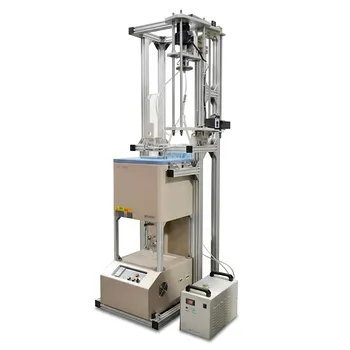
500C Vacuum Vertical Tube Furnace 84mm OD Sample Rotation Lifting System
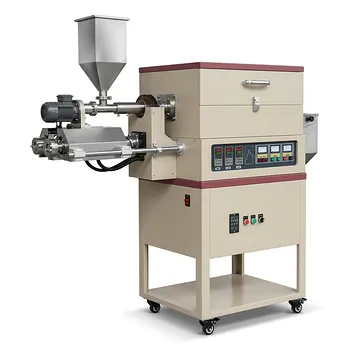
Laboratory Tilting Rotary Tubular Furnaces for Material Science and Industrial Heat Treatment

High Temperature Tube Furnace 1500C with Sliding Flanges and 50mm OD for Rapid Thermal Processing Fast Heating and Cooling
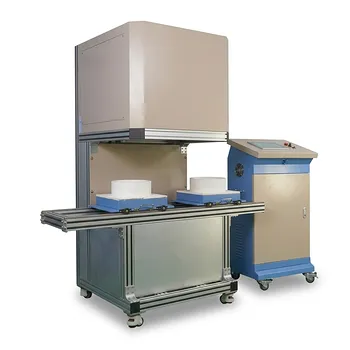
High Temperature Bottom Loading Vertical Furnace 1700C Dual Stage Sample Processing System 18L Large Capacity Thermal Treatment Equipment
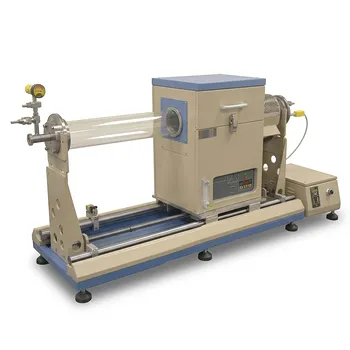
Rapid Thermal Processing Sliding Tube Furnace with 4 Inch OD Quartz Tube and 900C IR Heating

1800C High Temperature Compact Vacuum Tube Furnace with 60mm OD Alumina Tube and Kanthal MoSi2 Heating Elements
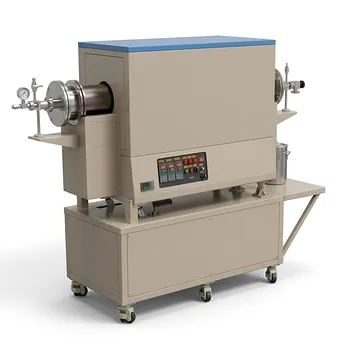
900°C Max Rotary Tube Furnace with 8 Inch 310S Alloy Tube and Optional Multi Zone Heating for Industrial Material Calcination
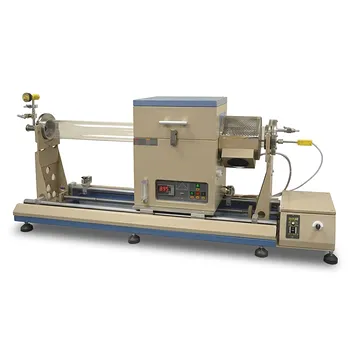
900 ºC Max Sliding RTP Tube Furnace with Rapid IR Heating and 4 Inch OD Quartz Tube
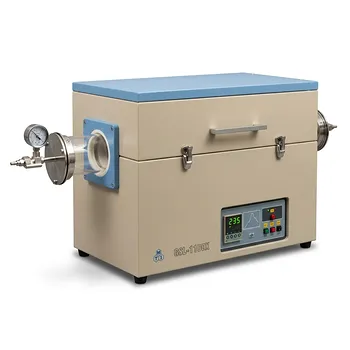
Single Zone Tube Furnace 5 Inch Quartz Tube 36 Inch Heating Zone Vacuum Flanges
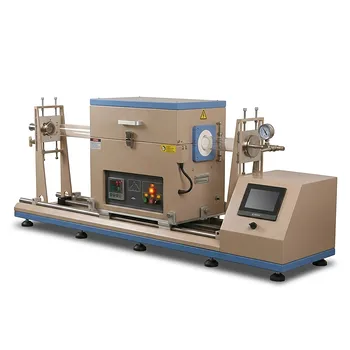
1200C Sliding Tube Furnace for Rapid Thermal Processing and CVD Graphene Growth with 100mm OD Capacity

High Temperature 1700C Benchtop Tube Furnace with 5 Inch Heating Zone High Purity Alumina Tube and Vacuum Sealing Flanges
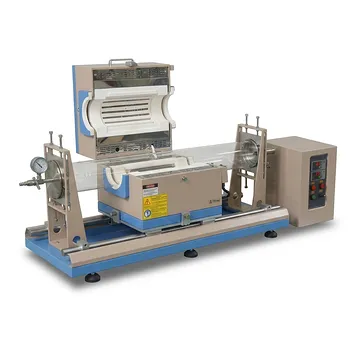
1200C High Temperature 5 Inch Sliding Tube Furnace for Rapid Thermal Processing RTP and Wafer Annealing
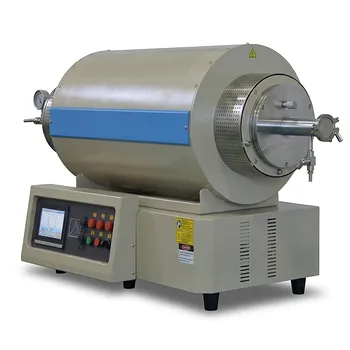
1200C Max Three Zone Tube Furnace 6 Inch OD Max with Tube and Flange
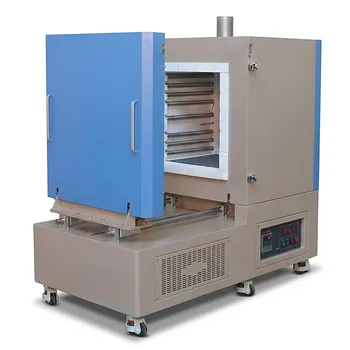
1200C Five Side Heating Muffle Furnace with Sliding Door 125L Volume High Temperature Heat Treatment System for Large Scale Sintering and Annealing

Compact High Temperature 1600C Tube Furnace with 50mm Alumina Tube and Vacuum Flanges for Material Sintering
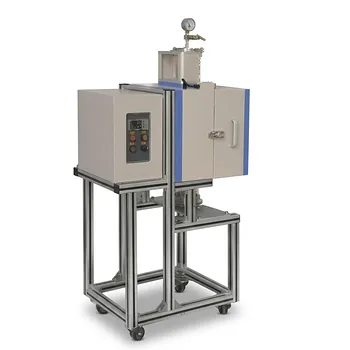
1200°C 5 Inch Vertical Quartz Tube Furnace with Stainless Steel Vacuum Flanges

Vertical 1700C Vacuum and Atmosphere Tube Furnace with 80mm Alumina Tube
