Why is a vacuum tube furnace utilized for the degassing treatment of NdFeB powder? - Preserve Magnetic Coercivity
Updated 3 months ago
The vacuum tube furnace is utilized for NdFeB powder degassing to remove excess hydrogen and stabilize the material’s hydride state at approximately 500 °C. This specific pretreatment ensures the powder retains enough hydrogen to resist carbon impurities during subsequent processing, effectively preventing the formation of neodymium carbides which would otherwise degrade the magnet's coercivity.
This degassing process acts as a chemical safeguard; by maintaining a controlled hydride state under vacuum, the furnace protects the powder's magnetic integrity from carbon-based degradation during thermal debinding and extrusion.
The Chemistry of Coercivity Preservation
Stabilizing the Hydride State
Unlike a full dehydrogenation, the vacuum tube furnace is tuned to reach roughly 500 °C, a temperature that leaves a specific amount of hydrogen within the NdFeB lattice.
This residual hydrogen is critical because hydride-containing powders are chemically less reactive toward carbon impurities than fully dehydrogenated powders.
By stabilizing this state, the furnace prepares the powder to survive the high temperatures of thermal debinding without losing its magnetic potential.
Preventing Neodymium Carbides
If carbon enters the NdFeB structure during heating, it reacts with the neodymium to form neodymium carbides.
These carbides are detrimental because they consume the rare-earth-rich phase required for magnetic isolation between grains.
The vacuum environment within the tube furnace ensures that excess hydrogen is removed while the "shielding" hydrides remain, blocking carbon from compromising the final magnetic coercivity.
Technical Advantages of the Tube Furnace Design
Precise Atmosphere and Vacuum Control
A high vacuum horizontal tube furnace can achieve vacuum levels exceeding $10^{-5}$ mbar, which is vital for preventing oxidation during high-temperature cycles.
The sealed quartz or ceramic tube allows for a linear heating space where specific process gases can be introduced or removed with high precision.
This environment ensures that the phase transition kinetics of the NdFeB powder are managed without interference from atmospheric oxygen or moisture.
Temperature Uniformity and Stress Relief
The tube furnace provides excellent temperature field uniformity, which is necessary for the consistent degassing of bulk powder quantities.
Beyond degassing, the uniform heat helps in the redistribution of the neodymium-rich phase and the release of residual stresses from previous processing steps.
This uniformity results in a more homogenous powder, leading to improved squareness of the magnetic hysteresis loop after the extrusion process.
Understanding the Trade-offs
The Balance of Hydrogen Retention
There is a critical trade-off in the timing and temperature of the degassing process.
If the temperature is too low, excess hydrogen remains, which can lead to structural brittleness or gas pockets during extrusion.
Conversely, if the temperature exceeds the optimal range and causes full dehydrogenation, the powder becomes highly susceptible to carbon contamination, leading to a permanent loss of magnetic performance.
Oxidation vs. Throughput
Maintaining a high vacuum ($10^{-5}$ mbar) significantly slows down the cooling rate compared to gas-quenched systems.
While this slow cooling can help in the uniform redistribution of grain boundary phases, it increases the total processing time.
Operators must balance the need for extreme purity and oxide prevention against the industrial requirement for faster production cycles.
How to Apply This to Your Project
Selecting the Right Process Parameters
Determining the exact settings for your vacuum tube furnace depends on your specific alloy composition and the purity of your binder system.
- If your primary focus is maximizing coercivity: Ensure the furnace maintains a stable vacuum of at least $10^{-2}$ mbar and keep the temperature strictly near 500 °C to preserve the hydride "shield."
- If your primary focus is reducing carbon contamination: Prioritize a vacuum tube furnace with high atmosphere flexibility to allow for the introduction of inert purging gases during the initial ramp-up.
- If your primary focus is recycling NdFeB material: Utilize the furnace at higher temperatures (approximately 750 °C) for demagnetization before attempting chemical dissolution or extrusion of recycled powders.
By precisely controlling the degassing environment, you ensure that your NdFeB magnets maintain the high-performance characteristics required for modern technical applications.
Summary Table:
| Process Objective | Key Mechanism | Optimal Parameter |
|---|---|---|
| Hydrogen Stabilization | Preserves hydride 'shield' | ~500 °C |
| Purity Control | Prevents neodymium carbides | < 10^-5 mbar vacuum |
| Oxidation Prevention | Sealed atmosphere control | High-purity inert gas/vacuum |
| Magnetic Quality | Grain boundary phase redistribution | Temperature uniformity |
Elevate Your Material Research with THERMUNITS
THERMUNITS is a leading manufacturer of high-temperature laboratory equipment for material science and industrial R&D. We provide the precise thermal environments required for sensitive processes like NdFeB powder degassing, ensuring your materials reach their maximum magnetic potential.
Our comprehensive range of thermal processing solutions includes:
- Vacuum, Atmosphere, and Tube Furnaces for precise degassing and sintering.
- Muffle, Rotary, and Hot Press Furnaces for versatile material synthesis.
- CVD/PECVD systems and Vacuum Induction Melting (VIM) for advanced thin-film and alloy production.
- Dental Furnaces, Electric Rotary Kilns, and high-quality Thermal Elements.
Ready to optimize your lab's heat treatment efficiency? Contact our technical experts today to find the perfect furnace solution for your application!
References
- Stefan Rathfelder, Carlo Burkhardt. Production of Permanent Magnets from Recycled NdFeB Powder with Powder Extrusion Moulding. DOI: 10.3390/jmmp8020081
Mentioned Products
- High Temperature 1700C Vertical Tube Furnace for Powder Spherification and Material Sintering
- Mini Rotary Tubular Furnaces for Precision Powder Heat Treatment and Thermogravimetric Analysis
- High Temperature Rotary Tube Furnace with Integrated Ball Milling and Gas Flow Function for Powder Nitriding
- Three Zone Rotary Tube Furnace for High Temperature Powder Processing and Material Research
- Compact High Temperature 1600C Tube Furnace with 50mm Alumina Tube and Vacuum Flanges for Material Sintering
People Also Ask
- What role does a high-temperature vertical tube furnace play in simulating high-carbon ferromanganese slag formation?
- What functions does a vertical high-temperature tube furnace perform? Master Industrial Sintering & R&D Simulation
- What is the primary function of a high-temperature tube furnace in Cu1-N-C synthesis? Precision Thermal Control.
- High-Temp Tube Furnace Role in Converting Microbial Proteins to Iron Single-Atom Sites: Expert Synthesis Guide
- What impact does the heating rate of a tube furnace have on biochar microstructure? Optimize Your Material R&D.

Tech Team · ThermUnits
Last updated on Jun 02, 2026
Related Products

High Temperature 1700C Vertical Tube Furnace for Powder Spherification and Material Sintering
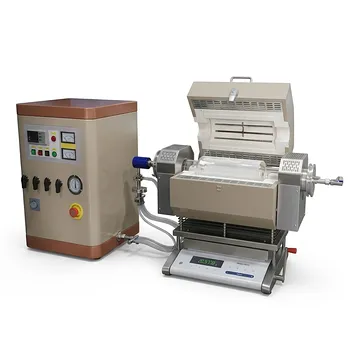
Mini Rotary Tubular Furnaces for Precision Powder Heat Treatment and Thermogravimetric Analysis
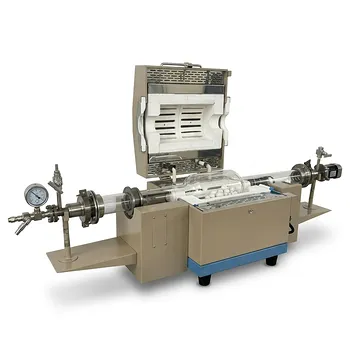
High Temperature Rotary Tube Furnace with Integrated Ball Milling and Gas Flow Function for Powder Nitriding
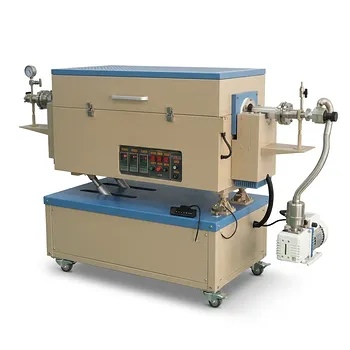
Three Zone Rotary Tube Furnace for High Temperature Powder Processing and Material Research

Compact High Temperature 1600C Tube Furnace with 50mm Alumina Tube and Vacuum Flanges for Material Sintering
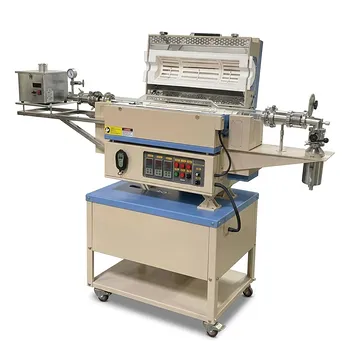
5 Inch Rotary Tube Furnace with Automatic Feeding and Receiving System 1200C Three Zone CVD Powder Processing
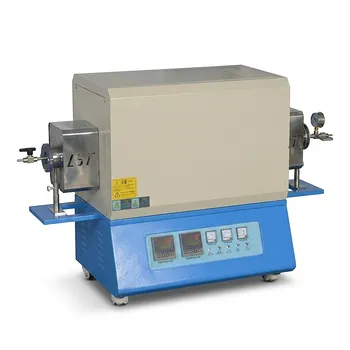
High Temperature Dual Zone Vacuum Tube Furnace for Material Research and CVD Processing
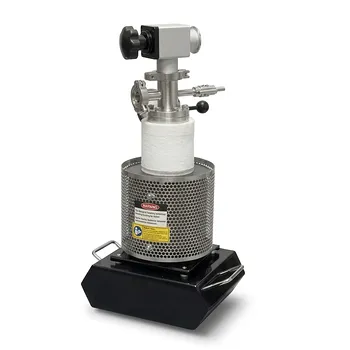
High Temperature 1100C Compact Top Loading Vertical Vacuum Tube Furnace for High Vacuum Noble Metal Melting and Material Research
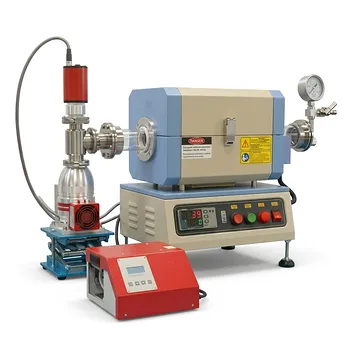
High Vacuum Compact Tube Furnace 1200C with Integrated Turbo Pump System and 8 Inch Heating Zone

Compact Vertical Split Quartz Tube Furnace with Stainless Steel Vacuum Flanges for Rapid Thermal Quenching and Controlled Atmosphere Material Processing
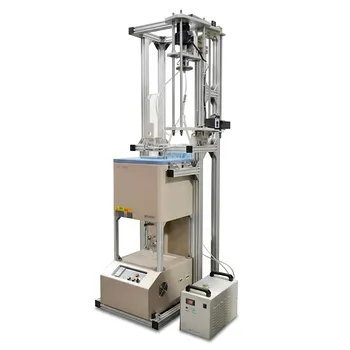
500C Vacuum Vertical Tube Furnace 84mm OD Sample Rotation Lifting System

1800C High Temperature Compact Vacuum Tube Furnace with 60mm OD Alumina Tube and Kanthal MoSi2 Heating Elements

Vertical 1700C Vacuum and Atmosphere Tube Furnace with 80mm Alumina Tube
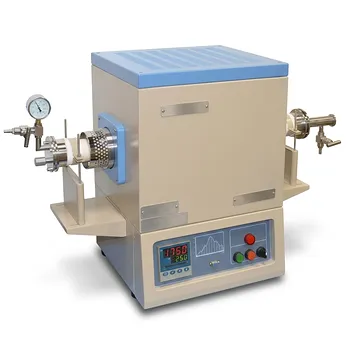
High Temperature Compact Vacuum Tube Furnace 1750C Max 60mm OD Alumina Tube
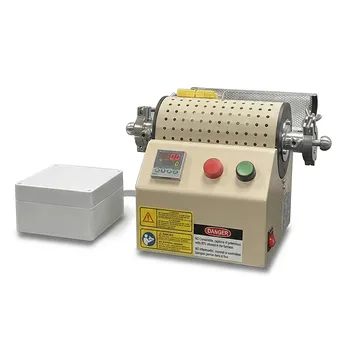
1000C Mini Tube Furnace with 20mm Quartz Tube and Vacuum Flanges for Material Science Research and Controlled Atmosphere Small Sample Processing
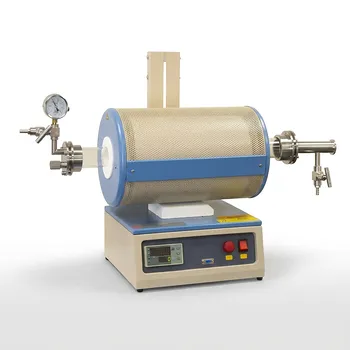
1100C Tube Furnace with Vacuum Flange and Programmable Temperature Controller for Material Science and Industrial Heat Treatment
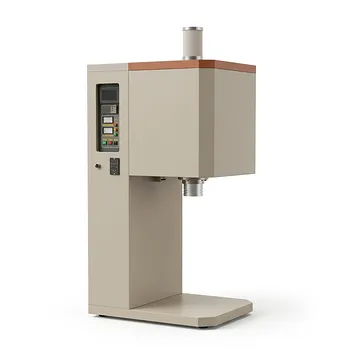
Vertical Openable Tube Furnace 0-1700c High Temperature Laboratory System for CVD and Vacuum Heat Treatment
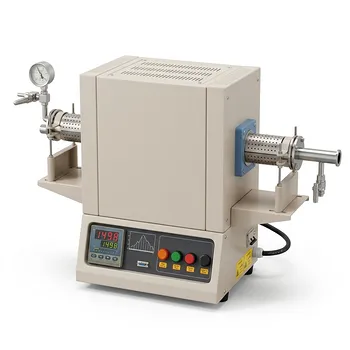
1500C High Temperature Compact Tube Furnace 2 Inch OD with Vacuum Flanges and Complete Accessories

High Temperature Automated 5 Inch Tube Furnace for Autonomous Material Research and Advanced Laboratory R&D
