Why is an atmosphere-controlled tube furnace required for carbonizing sulfur-doped carbon nanofibers? Ensure High Purity
Updated 3 months ago
The requirement for an atmosphere-controlled tube furnace is driven by the need to prevent the immediate oxidative combustion of carbon materials at high temperatures. In an oxygen-rich environment, carbon nanofibers would simply burn away into carbon dioxide; the furnace provides a sealed, inert environment—typically using argon or nitrogen—to facilitate pyrolysis rather than combustion. This controlled setting is essential for transforming polymer precursors into a stable, sulfur-doped conductive carbon skeleton while preserving the material's delicate fiber morphology.
An atmosphere-controlled tube furnace acts as a hermetically sealed reactor that isolates oxygen and applies precise thermal energy to facilitate anaerobic pyrolysis. This ensures that polymer precursors undergo orderly carbonization and heteroatom doping rather than being destroyed by high-temperature oxidation.
Preventing Oxidative Destruction
The Role of Oxygen Isolation
At temperatures often exceeding 500°C to 1000°C, carbon-based materials become highly reactive with oxygen. An atmosphere-controlled furnace provides a strict inert gas environment (such as argon or nitrogen) to displace oxygen entirely. This prevents the "oxidative loss" or total combustion of the nanofibers during the heating process.
Maximizing Carbon Yield
By maintaining an oxygen-free environment, the furnace ensures that biomass or polymer precursors undergo dehydration and carbonization rather than burning. This maximizes the carbon yield by forcing the organic components to decompose into a solid carbon skeleton. Without this control, the precursor would be converted into ash and gaseous byproducts.
Facilitating Structural Transformation
Orderly Dehydrogenation and Cross-linking
The furnace uses high-precision temperature control to follow specific heating curves. This allows for the orderly dehydrogenation and cross-linking of the polymer chains. This gradual chemical reorganization is what transforms high-molecular polymers into robust, conductive carbon structures.
Morphology Preservation
The physical structure of a nanofiber is extremely fragile during the transition from polymer to carbon. Controlled heating in an inert atmosphere ensures that the fiber morphology is preserved. This prevents the fibers from melting together or collapsing, maintaining the high surface area required for technical applications.
Enabling Heteroatom Doping and Pore Development
Effective Sulfur and Nitrogen Incorporation
To create "sulfur-doped" fibers, sulfur atoms must be successfully integrated into the carbon lattice. An inert atmosphere ensures that these heteroatoms (N, P, S) are not lost to oxidation during the sintering stage. This leads to the formation of a distinct, functionalized carbon network with enhanced electrochemical properties.
Hierarchical Pore Formation
The controlled decomposition of organic precursors under inert gas allows for the emergence of hierarchical pore structures. These pores are critical for increasing the material's surface area and conductivity. Precision control over the "holding time" at peak temperatures allows researchers to fine-tune these microscopic structures.
Understanding Technical Constraints and Pitfalls
Gas Purity and Sealing Integrity
The effectiveness of the furnace depends entirely on its sealing performance and the purity of the gas used. If the furnace has even a minor leak, the introduction of trace oxygen at 1000°C can result in the partial oxidation of the fibers. This significantly reduces electrical conductivity and compromises the chemical stability of the final product.
Heating Rate Sensitivity
Applying heat too rapidly can cause the rapid release of volatile gases, which may rupture the fiber structure. A sophisticated tube furnace allows for precise heating rates, ensuring that the decomposition of the polymer framework is slow enough to maintain structural integrity. Failing to control this rate often leads to brittle or "clumped" nanofibers.
Strategic Implementation for Your Goal
How to Apply This to Your Project
To achieve the best results when carbonizing sulfur-doped nanofibers, your approach should vary based on your specific material objectives:
- If your primary focus is High Electrical Conductivity: Prioritize a high-purity nitrogen or argon atmosphere and higher temperatures (up to 1000°C) to ensure a more complete conversion to a graphitic carbon skeleton.
- If your primary focus is Maximum Surface Area (Porosity): Focus on the precise control of the heating rate and "holding time" to allow for the gradual development of the pore network without collapsing the fiber.
- If your primary focus is Heteroatom (Sulfur) Retention: Use a strictly controlled inert environment at moderate temperatures to prevent the sulfur precursors from volatilizing or oxidizing before they can bond with the carbon.
The atmosphere-controlled tube furnace is the fundamental tool that permits the delicate transition from organic precursor to high-performance carbon nanomaterial by replacing destructive combustion with constructive pyrolysis.
Summary Table:
| Key Requirement | Role in Carbonization Process | Primary Benefit for Nanofibers |
|---|---|---|
| Oxygen Isolation | Displaces oxygen with inert gases (Ar/N2) | Prevents oxidative combustion and material loss |
| Inert Atmosphere | Facilitates anaerobic pyrolysis | Maximizes carbon yield from polymer precursors |
| Thermal Precision | Orderly dehydrogenation and cross-linking | Preserves delicate fiber morphology and structure |
| Doping Control | Prevents heteroatom (S, N, P) oxidation | Ensures effective sulfur integration into lattice |
| Sealing Integrity | Maintains a hermetically sealed reactor | Guarantees high electrical conductivity and stability |
Elevate Your Advanced Material Research with THERMUNITS
Precise atmosphere control is the difference between successful carbonization and material failure. THERMUNITS is a leading manufacturer of high-temperature laboratory equipment for material science and industrial R&D. We provide the high-performance tools necessary for complex processes like sulfur-doped carbon nanofiber synthesis.
Our comprehensive range of thermal solutions includes:
- Atmosphere & Vacuum Tube Furnaces: Perfect for precise anaerobic pyrolysis and CVD/PECVD applications.
- Specialized Systems: Muffle, Rotary, Hot Press, and Dental furnaces designed for uniform heating.
- Advanced Metallurgy: Vacuum induction melting furnaces (VIM) and high-quality thermal elements.
Whether you are scaling up industrial R&D or conducting delicate laboratory heat treatments, our equipment ensures airtight integrity and superior temperature uniformity.
Ready to optimize your carbonization yield?
Contact our thermal processing experts today to find the ideal solution for your laboratory needs!
References
- Muge Ding, Wei Gao. Transforming Disposed Face Masks into S‐Doped Carbon Nanofibers for High Performance Supercapacitors. DOI: 10.1002/celc.202300751
Mentioned Products
- 1200°C Atmosphere Controlled Automatic Bottom Loading Furnace with 6 Inch Quartz Tube
- Compact Hybrid Muffle and Tube Furnace for 1000C Controlled Atmosphere Laboratory Material Sintering
- Compact Vertical Split Quartz Tube Furnace with Stainless Steel Vacuum Flanges for Rapid Thermal Quenching and Controlled Atmosphere Material Processing
- 1700C Compact Hybrid Furnace with Dual Layer Box Sintering and Controlled Atmosphere Alumina Tubes
- 1500°C Split Tube Furnace with Alumina Tube and Vacuum Sealing Flanges for Material Research
People Also Ask
- Why is a tube furnace required for FGM-PhG structural color ceramics? Key to Carbon Preservation & Vibrant Color
- Why is an atmosphere-controlled tube furnace required for 800 °C CNF annealing? Essential for Oxidative Protection.
- Why is an atmosphere-controlled tube furnace required for the pre-sulfidation of NiMo/gamma-Al2O3 catalysts?
- Why is an atmosphere-controlled tube furnace required for [email protected]/C preparation? Key for Purity & Structure
- Why is an atmosphere-controlled tube furnace required for single-atom sensor calcination? Ensure Atomic Dispersion.

Tech Team · ThermUnits
Last updated on Jun 03, 2026
Related Products
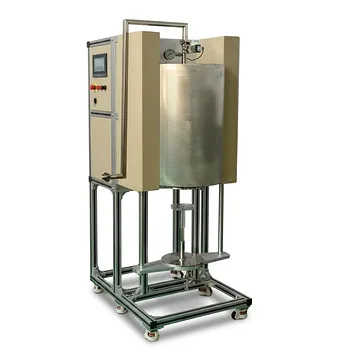
1200°C Atmosphere Controlled Automatic Bottom Loading Furnace with 6 Inch Quartz Tube
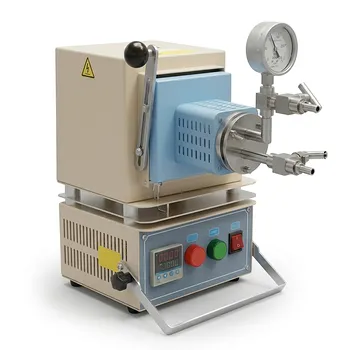
Compact Hybrid Muffle and Tube Furnace for 1000C Controlled Atmosphere Laboratory Material Sintering

Compact Vertical Split Quartz Tube Furnace with Stainless Steel Vacuum Flanges for Rapid Thermal Quenching and Controlled Atmosphere Material Processing
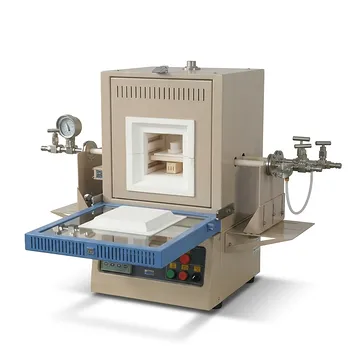
1700C Compact Hybrid Furnace with Dual Layer Box Sintering and Controlled Atmosphere Alumina Tubes
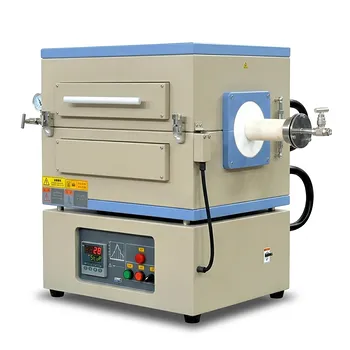
1500°C Split Tube Furnace with Alumina Tube and Vacuum Sealing Flanges for Material Research
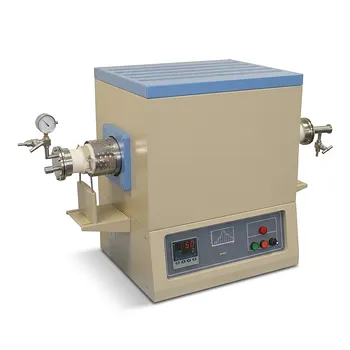
1700C High Temperature Alumina Tube Furnace with 18 Inch Heated Zone and Vacuum Sealing Flanges
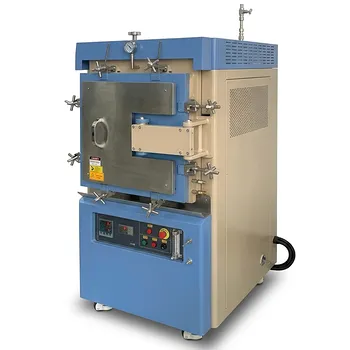
Atmosphere Controlled Muffle Furnace 1700C Maximum Temperature 80L High Capacity Vacuum Inert Gas Box Furnace

Vertical 1700C Vacuum and Atmosphere Tube Furnace with 80mm Alumina Tube
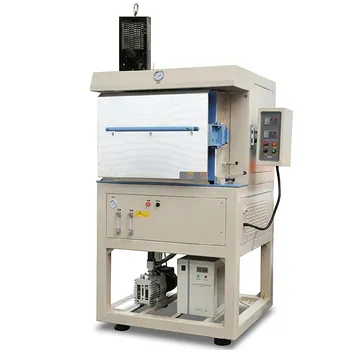
1200C Hydrogen Atmosphere Box Furnace with 5 Heated Sides and 64L Chamber
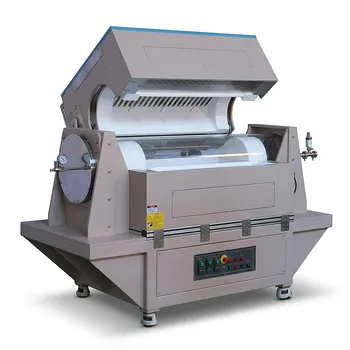
Three Zone Tube Furnace with 11 Inch or 15 Inch Quartz Tube and Hinged Flanges for Vacuum Atmosphere Heat Treatment
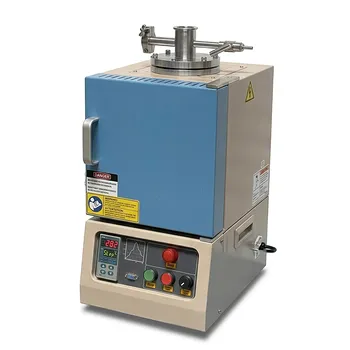
High Temperature Hybrid Muffle and Tube Furnace with Vacuum Capability and PID Control
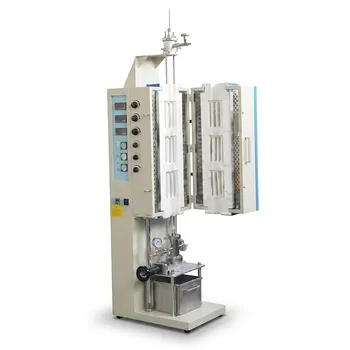
High Temperature Dual Zone Tube Furnace for Material Science Research and Professional Thermal Processing
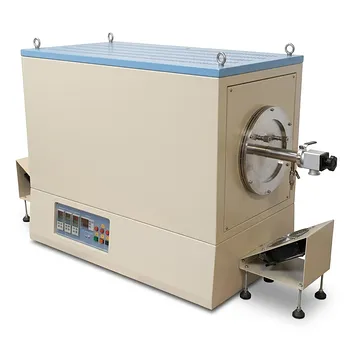
Four Zone Tube Furnace 1100C with 600mm Large Diameter Quartz Tube and Vacuum Flanges

High Temperature 1700C Tube Furnace with High Vacuum Turbomolecular Pump System and Multi Channel Mass Flow Controller Gas Mixer
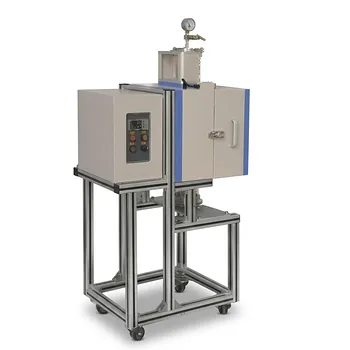
1200°C 5 Inch Vertical Quartz Tube Furnace with Stainless Steel Vacuum Flanges
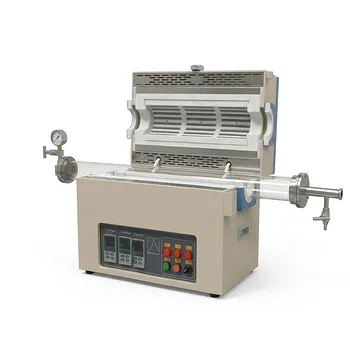
1200°C Three Zone Split Tube Furnace with 18 Inch Heating Length and Vacuum Flanges
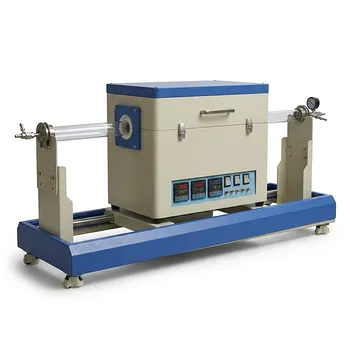
Double Temperature Zone Double Cover Tube Furnace for High Temperature CVD and Vacuum Annealing

High Temperature Automated 5 Inch Tube Furnace for Autonomous Material Research and Advanced Laboratory R&D
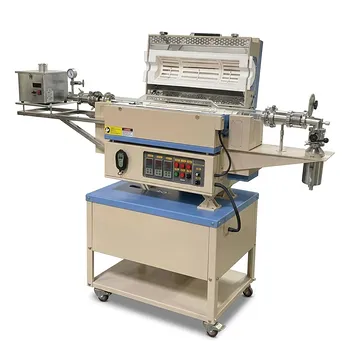
5 Inch Rotary Tube Furnace with Automatic Feeding and Receiving System 1200C Three Zone CVD Powder Processing
