Why is atmospheric control in a furnace critical when using SiO thermal evaporation? Master SiNW Growth & Stability
Updated 3 months ago
Atmospheric control is the fundamental driver of nanowire morphology and structural integrity. In the silicon monoxide (SiO) thermal evaporation and recrystallization method, a strictly controlled inert environment facilitates the disproportionation reaction of SiO across precise temperature gradients. This process not only initiates the growth of silicon nanowires (SiNWs) but also ensures the formation of a protective silicon dioxide ($SiO_2$) sheath that is critical for the material's long-term electrochemical stability.
The core takeaway is that atmospheric control in a furnace transforms the environment from a passive container into an active structural tool. By managing gas pressure and purity, you enable the specific chemical reactions required to grow nanowires while simultaneously "engineering" a surface sheath that protects the material from mechanical failure during use.
The Role of Atmosphere in the Growth Mechanism
Facilitating the SiO Disproportionation Reaction
The preparation of silicon nanowires via thermal evaporation relies on the disproportionation of silicon monoxide (SiO) into silicon (Si) and silicon dioxide ($SiO_2$). A strictly controlled atmosphere furnace provides the necessary environment for this reaction to occur predictably across specific temperature gradients. Without this precision, the phase separation required to form the nanowire core would be inconsistent, leading to defective or non-linear growth.
Maintaining High-Pressure Inert Environments
The furnace must maintain a high-pressure, inert gas environment—typically using high-purity argon—to act as a carrier and a stabilizer. This pressure prevents the volatile SiO from escaping too rapidly and ensures that the growth environment remains saturated enough to support continuous nanowire elongation. The inert nature of the gas prevents competing chemical reactions that could degrade the silicon core.
Structural Engineering via Surface Passivation
The Formation of the Silicon Dioxide Sheath
One of the primary functions of precise atmospheric control is the deliberate formation of a thin $SiO_2$ sheath on the surface of the growing nanowires. This oxide layer is not an accidental byproduct; it is a structural necessity created by the managed environment within the furnace. The thickness and uniformity of this sheath are directly dictated by the gas composition and pressure during the recrystallization phase.
Enhancing Electrochemical Stability and Cycle Life
The $SiO_2$ sheath serves as a vital structural aid that manages mechanical stress during electrochemical cycling, such as in lithium-ion battery applications. By providing a buffer against the volume expansion of silicon, the sheath prevents the nanowires from fracturing. This directly translates to an improved cycle life and higher durability for the resulting material.
Chemical Purity and Phase Integrity
Preventing Unintended Oxidation and Contamination
At high temperatures, silicon and its precursors are highly reactive; any trace of oxygen or nitrogen can lead to unintended oxidation or nitration. Precise atmosphere control displaces these contaminants, ensuring that the chemical purity of the SiNWs remains intact. This is decisive for maintaining the specific electrical properties and stability required for advanced electronics or energy storage.
Protecting the Material Infrastructure
Beyond the sample itself, a stable inert atmosphere protects the furnace's heating elements and the integrity of the substrate. For instance, in carbon-based or hybrid substrates, the atmosphere prevents "oxidative burnout" and protects delicate pore structures. This ensures that the nanowires are anchored onto a stable, high-quality foundation rather than a degraded surface.
Understanding the Trade-offs and Constraints
Balancing Gas Flow vs. Reaction Kinetics
While high-purity gas flow is necessary to prevent oxidation, excessive flow rates can disrupt the delicate temperature gradients required for disproportionation. If the carrier gas moves too quickly, it may carry away the SiO precursors before they can deposit, leading to low yields or irregular nanowire diameters.
Inert Gas Selection and Cost
Argon is often preferred for its total chemical inertia, but it is more expensive than nitrogen. While nitrogen is suitable for some carbonization processes, it can lead to unintended nitration in silicon-based systems at high temperatures. Selecting the wrong inert gas for the sake of cost can fundamentally alter the surface chemistry of the nanowires.
Optimizing Your Furnace Environment for Nanowire Growth
When configuring your atmospheric control system, your primary objective should dictate your gas handling and pressure settings.
- If your primary focus is maximizing cycle life in batteries: Prioritize the precise control of pressure to ensure the formation of a uniform $SiO_2$ structural sheath.
- If your primary focus is high electrical conductivity: Focus on absolute oxygen displacement using high-purity argon to prevent any resistive oxide layers beyond the minimum structural requirement.
- If your primary focus is uniform nanowire morphology: Implement multi-stage temperature programming alongside a constant, low-velocity inert gas flow to maintain stable temperature gradients.
By mastering the furnace atmosphere, you move from simply heating a material to precisely engineering a high-performance nanostructure.
Summary Table:
| Critical Factor | Role in SiNW Preparation | Key Technical Requirement |
|---|---|---|
| SiO Disproportionation | Drives the separation of Si core and $SiO_2$ sheath | Precise multi-stage temperature gradients |
| Inert Atmosphere | Prevents unintended oxidation and chemical contamination | Use of high-purity Argon gas |
| Gas Pressure | Stabilizes volatile SiO and supports continuous elongation | High-pressure environment control |
| $SiO_2$ Passivation | Provides structural buffer for electrochemical stability | Controlled gas composition and pressure |
| Gas Flow Rate | Ensures uniform morphology and phase integrity | Constant, low-velocity inert gas flow |
Precision Thermal Solutions for Advanced Material Science
At THERMUNITS, we understand that atmospheric precision is the key to engineering high-performance nanostructures. As a leading manufacturer of high-temperature laboratory equipment for material science and industrial R&D, we provide the specialized tools necessary for complex processes like SiO thermal evaporation and SiNW recrystallization.
Our comprehensive range of thermal processing solutions includes:
- Atmosphere & Vacuum Furnaces: For total control over gas purity and pressure.
- Tube & Rotary Furnaces: Ideal for uniform growth and continuous processing.
- CVD/PECVD Systems: Advanced platforms for precise vapor deposition.
- Specialized Equipment: Including Muffle, Hot Press, Dental Furnaces, and Vacuum Induction Melting (VIM) furnaces.
Enhance your research outcomes with equipment designed for stability and precision. Contact our technical experts today to find the perfect furnace configuration for your laboratory needs.
References
- Xinyu Chen, Lin Zeng. Advancing high‐performance one‐dimensional Si/carbon anodes: Current status and challenges. DOI: 10.1002/cnl2.118
Mentioned Products
- High Temperature Vertical Hybrid Furnace with Alumina Tube and SiC Heating for SOFC Coin Cell Testing and Atmosphere Processing
- 1650C High Temperature Atmosphere Controlled Box Furnace with 65L Chamber for Advanced Material Sintering and Industrial Heat Treatment
- Rapid Thermal Processing RTP Atmosphere Controlled Bottom Loading Furnace 1100C High Throughput 50C per Second Heating Rate
- Compact Vertical Split Quartz Tube Furnace with Stainless Steel Vacuum Flanges for Rapid Thermal Quenching and Controlled Atmosphere Material Processing
- Compact Atmosphere Controlled Rapid Thermal Processing RTP Furnace with 4 Inch ID Quartz Tube 1100C
People Also Ask
- Purpose of Nitrogen Flow in Carbon Activation? Optimize Yield with High-Purity Tube Furnace Environments
- Technical Value of Tube Furnaces for Pomegranate Peel Hard Carbon: Precision Carbonization & Battery Material Synthesis
- What technical conditions does a horizontal alumina tube furnace provide? Optimize Liquid Copper Infiltration
- What role do alumina preheating tubes and heating elements play in flash smelting simulation? Optimize Thermal Precision
- What critical process conditions does a high-temperature tube furnace provide? Mastering Catalyst Activation Success

Tech Team · ThermUnits
Last updated on Jun 02, 2026
Related Products
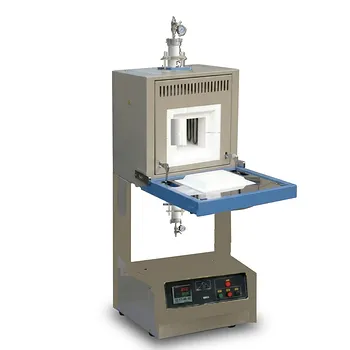
High Temperature Vertical Hybrid Furnace with Alumina Tube and SiC Heating for SOFC Coin Cell Testing and Atmosphere Processing
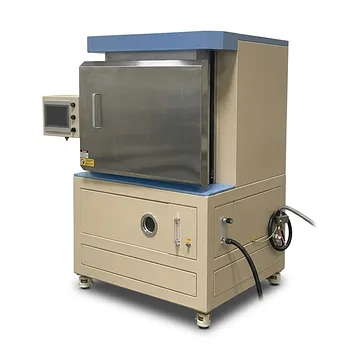
1650C High Temperature Atmosphere Controlled Box Furnace with 65L Chamber for Advanced Material Sintering and Industrial Heat Treatment
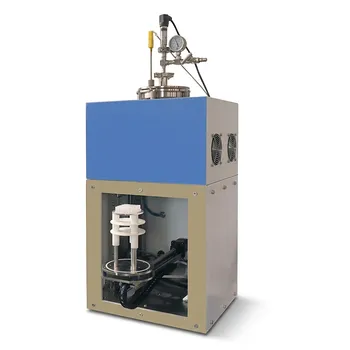
Rapid Thermal Processing RTP Atmosphere Controlled Bottom Loading Furnace 1100C High Throughput 50C per Second Heating Rate

Compact Vertical Split Quartz Tube Furnace with Stainless Steel Vacuum Flanges for Rapid Thermal Quenching and Controlled Atmosphere Material Processing
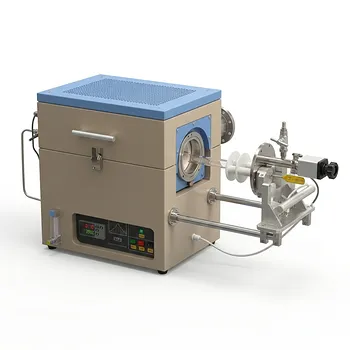
Compact Atmosphere Controlled Rapid Thermal Processing RTP Furnace with 4 Inch ID Quartz Tube 1100C
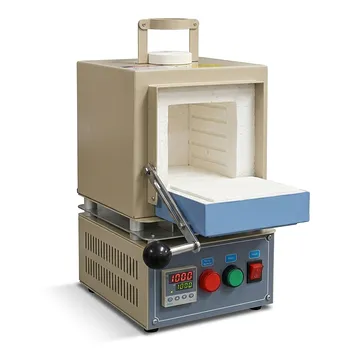
Compact 1000C Muffle Furnace with Programmable Controller and 2 Inch Top Port for Vacuum and Atmosphere Material Research
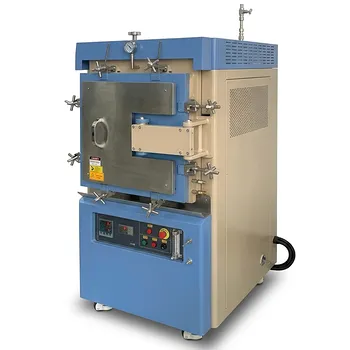
Atmosphere Controlled Muffle Furnace 1700C Maximum Temperature 80L High Capacity Vacuum Inert Gas Box Furnace
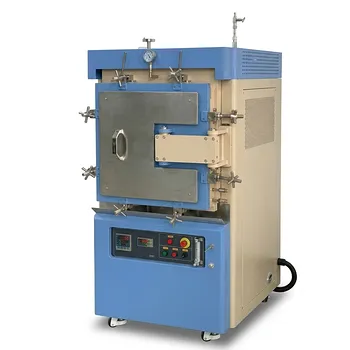
High Temperature Economic Hydrogen Gas Box Furnace 1600C Atmosphere Controlled Thermal Processing System 65L Capacity
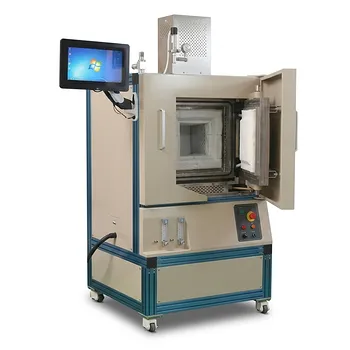
High Temperature Oxygen and Inert Atmosphere Controlled Furnace 8 Liter 1700C Sintering System for Advanced Materials RD
1200C Hydrogen Atmosphere Box Furnace with 5 Heated Sides and 64L Chamber
1700C Compact Hybrid Furnace with Dual Layer Box Sintering and Controlled Atmosphere Alumina Tubes
High Temperature Hydrogen Atmosphere Box Furnace 1650C Max Reducing Environment Material Synthesis System 8x8x8 Chamber
High Temperature Benchtop Muffle Furnace 1700C 10L Chamber Alumina Fiber Insulation MoSi2 Heating Elements

Vertical 1700C Vacuum and Atmosphere Tube Furnace with 80mm Alumina Tube
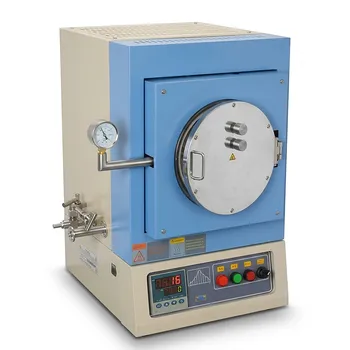
1100°C High Temperature Quartz Chamber Furnace 8 Inch OD with 7.6 Liter Capacity and Vacuum Atmosphere Capability
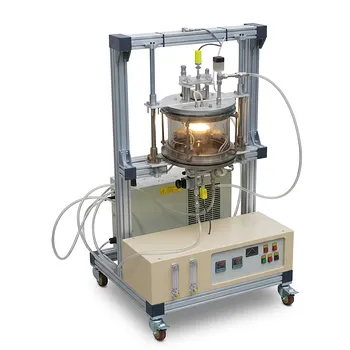
Two Zones CSS Furnace for Rapid Thermal Processing Thin Film Coating 3 Inch Diameter 650C
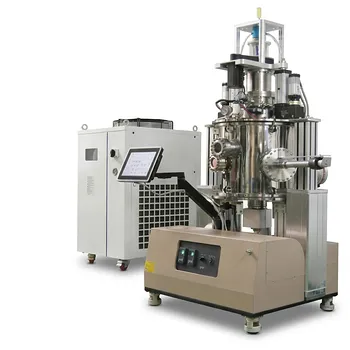
950C Rapid Thermal Processing Furnace for 12 Inch Wafer CSS Coating with Rotating Substrate Holder
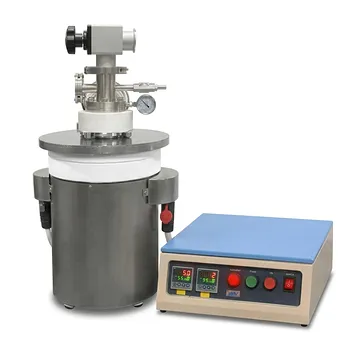
1100C High Temperature Vacuum Crucible Furnace with Quartz Chamber for Thermal Processing and Sintering
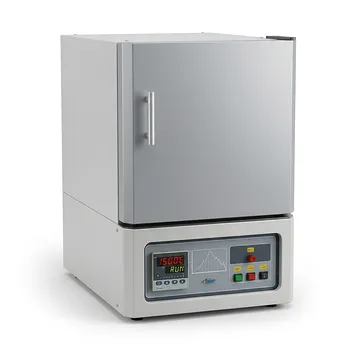
High Temperature 1500C Benchtop Muffle Furnace 3.6L Alumina Fiber Chamber Programmable Controller Sintering Annealing Carbonization Thermal Processing System
