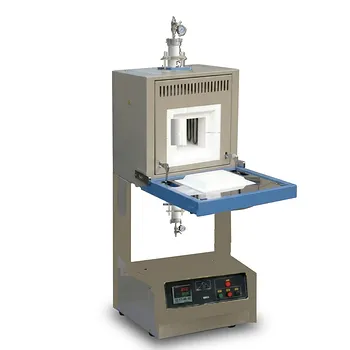
What is the primary objective of using a high-temp tube furnace for CrMnFeCoNiAlx alloys? Microstructural Homogenization
Updated 3 months ago
The primary objective is microstructural homogenization. Specifically, a high-temperature tube furnace provides the precisely controlled thermal environment necessary to eliminate residual internal stresses, drive phase transformations (such as FCC to BCC), and optimize the distribution of precipitated phases. This process is essential for refining the alloy's internal structure to achieve superior mechanical performance.
Using a high-temperature tube furnace for post-heat treatment transforms a raw sintered compact into a high-performance alloy by facilitating atomic diffusion. This step ensures that the elemental distribution is uniform and the phase composition is optimized for the intended application.
Achieving Microstructural Homogenization and Stability
Elimination of Residual Internal Stresses
The sintering process often leaves behind significant internal stresses due to uneven cooling or localized thermal gradients. A tube furnace allows the alloy to be held at temperatures like 1200°C, allowing the lattice to relax and removing these defects. This stabilization prevents premature failure or cracking when the alloy is later subjected to mechanical loads.
Facilitating Phase Transformations
In CrMnFeCoNiAlx alloys, the balance between Face-Centered Cubic (FCC) and Body-Centered Cubic (BCC) structures determines the material's strength and ductility. The furnace provides the sustained thermal energy required to drive these transformations, ensuring the alloy reaches its most stable or desired phase configuration.
Optimizing Precipitated Phases
The morphology and distribution of precipitates significantly influence the hardening of the alloy. By precisely controlling the heating and soaking periods, the tube furnace ensures that these precipitates are distributed uniformly rather than clustering at grain boundaries. This uniformity is critical for maintaining consistent mechanical properties across the entire sample.
The Critical Role of Atmospheric Control
Preventing Oxidation and Degradation
At temperatures exceeding 1000°C, transition metals like Chromium and Manganese are highly susceptible to oxidation. High-temperature tube furnaces allow for the introduction of inert gases like Argon or the creation of a vacuum environment. This protection ensures the alloy's surface and bulk chemistry remain pure during the long-duration thermal treatment.
Managing Volatile Elements
Elements such as Manganese have high vapor pressures and can evaporate during prolonged heating, which would alter the alloy's intended composition. The sealed environment of a tube furnace, often combined with specific pressure controls, helps minimize the loss of these volatile components. This keeps the final product's stoichiometry aligned with the original design.
Understanding the Trade-offs and Pitfalls
The Risk of Excessive Grain Growth
While high temperatures promote homogenization, staying at peak temperature for too long can lead to grain coarsening. Larger grains typically result in lower yield strength and toughness. Engineers must balance the need for diffusion with the necessity of maintaining a fine-grained microstructure.
Energy Consumption and Cooling Rates
Operating at 1200°C or higher requires significant energy and specialized equipment maintenance. Furthermore, the cooling rate after the furnace treatment is just as vital as the heating phase. Cooling too slowly might allow for the precipitation of brittle phases, while cooling too quickly could reintroduce the internal stresses the process was meant to eliminate.
How to Apply This to Your Project
When utilizing a high-temperature tube furnace for post-sintering treatment, your parameters should be dictated by the specific "x" value (Aluminum content) in your CrMnFeCoNiAlx alloy.
- If your primary focus is Maximum Ductility: Prioritize longer homogenization times at slightly lower temperatures to ensure a stable FCC matrix while avoiding grain coarsening.
- If your primary focus is High Yield Strength: Target the promotion of BCC phases or B2 ordered structures by carefully selecting a temperature range that favors these precipitates, followed by a controlled quench.
- If your primary focus is Chemical Purity: Ensure the tube furnace is thoroughly purged with high-purity Argon and use a vacuum-tight seal to prevent any oxygen ingress or Manganese loss.
By treating the tube furnace as a precision tool for atomic rearrangement rather than just a heat source, you can unlock the full potential of high-entropy alloys.
Summary Table:
| Key Parameter | Primary Objective / Benefit | Critical Considerations |
|---|---|---|
| Microstructure | Homogenization & Phase Stability | Facilitates FCC to BCC transformation |
| Internal Stress | Stress Relief & Lattice Relaxation | Prevents cracking under mechanical load |
| Atmosphere Control | Oxidation & Degradation Prevention | Uses Argon or Vacuum to maintain purity |
| Element Stability | Management of Volatile Elements | Minimizes Manganese loss to keep stoichiometry |
| Grain Control | Balanced Mechanical Properties | Avoids excessive grain growth and coarsening |
Elevate Your Material Research with THERMUNITS Precision
Unlock the full potential of your high-entropy alloys with THERMUNITS, a leading manufacturer of high-temperature laboratory equipment for material science and industrial R&D. We understand that microstructural homogenization requires absolute precision.
Our comprehensive range of thermal processing solutions—including Tube, Vacuum, Atmosphere, Muffle, Rotary, and Hot Press furnaces, CVD/PECVD systems, and Vacuum Induction Melting (VIM) furnaces—is designed to provide the stable thermal environments and strict atmospheric control necessary for advanced heat treatment.
Whether you are refining CrMnFeCoNiAlx alloys or exploring new metallurgical frontiers, our equipment ensures uniform elemental distribution and optimal phase composition.
Ready to optimize your lab’s thermal processing? Contact our technical experts today to find the perfect furnace solution tailored to your research needs.
References
- L Baylon-Garcia, R Martínez-Sánchez. Synthesis of CrMnFeCoNiAlx Alloy by Mechanical Alloying and Sintering by High-Frequency Induction. DOI: 10.1093/mam/ozae044.669
Mentioned Products
- High Temperature 1700C Three Zone Tube Furnace with Alumina Tube 50mm 60mm 80mm OD for Material Research and Industrial Heat Treatment
- High Temperature 1800C Atmosphere Tube Furnace for CVD Research and Vacuum Sintering Precision Heat Treatment
- High Temperature Tube Furnace 1500C with Sliding Flanges and 50mm OD for Rapid Thermal Processing Fast Heating and Cooling
- Vertical Hybrid High Temperature Furnace 1500C Alumina Tube SOFC Fuel Cell Testing Laboratory Heat Treatment Research Equipment
- 1100C Tube Furnace with Vacuum Flange and Programmable Temperature Controller for Material Science and Industrial Heat Treatment
People Also Ask
- What functions does a 3-zone tube furnace provide for graphene-coated alumina fibers? Expert CVD Heat Treatment Guide
- What is the primary function of a three-zone tube furnace in the synthesis process of corn-derived carbon nanotubes?
- Why Use a Three-Zone vs. Single-Zone Furnace for Fe-Ni-Cu Diffusion? Key Benefits for Lab Accuracy
- What advantages does a three-zone tube furnace offer for nanoparticle synthesis? Unlock Superior Thermal Precision.
- What role does an industrial-grade three-zone tube furnace play in VOx@VACNT synthesis? Precision Phase-State Control

Tech Team · ThermUnits
Last updated on Jun 03, 2026
Related Products
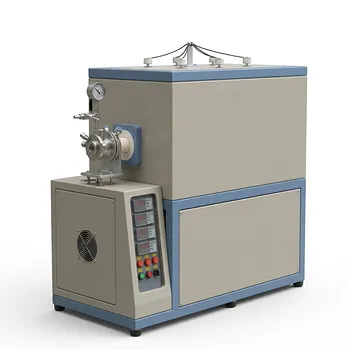
High Temperature 1700C Three Zone Tube Furnace with Alumina Tube 50mm 60mm 80mm OD for Material Research and Industrial Heat Treatment
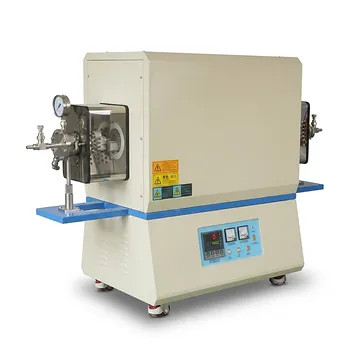
High Temperature 1800C Atmosphere Tube Furnace for CVD Research and Vacuum Sintering Precision Heat Treatment
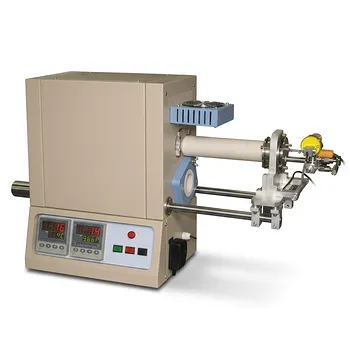
High Temperature Tube Furnace 1500C with Sliding Flanges and 50mm OD for Rapid Thermal Processing Fast Heating and Cooling
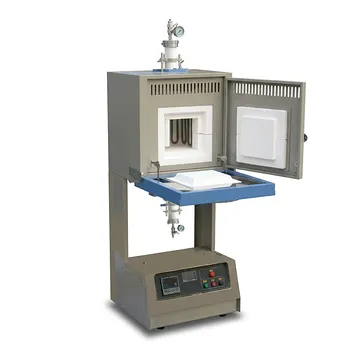
Vertical Hybrid High Temperature Furnace 1500C Alumina Tube SOFC Fuel Cell Testing Laboratory Heat Treatment Research Equipment
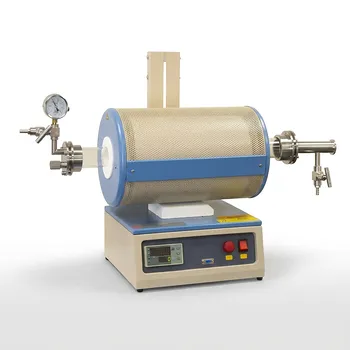
1100C Tube Furnace with Vacuum Flange and Programmable Temperature Controller for Material Science and Industrial Heat Treatment

1750°C High Temperature Benchtop Vacuum Atmosphere Tube Furnace with Kanthal Super 1800 Heating Elements and 60mm Alumina Processing Tube

Compact High Temperature 1600C Tube Furnace with 50mm Alumina Tube and Vacuum Flanges for Material Sintering

High Temperature 1700C Benchtop Tube Furnace with 5 Inch Heating Zone High Purity Alumina Tube and Vacuum Sealing Flanges

1800C High Temperature Compact Vacuum Tube Furnace with 60mm OD Alumina Tube and Kanthal MoSi2 Heating Elements
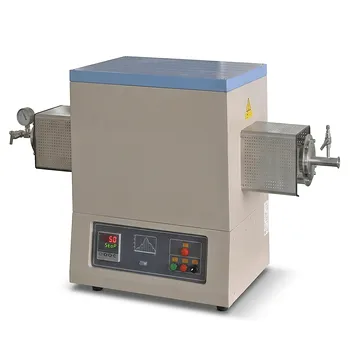
High Temperature 1700C Tube Furnace with 4 Inch OD Alumina Tube and Vacuum Sealing Flanges
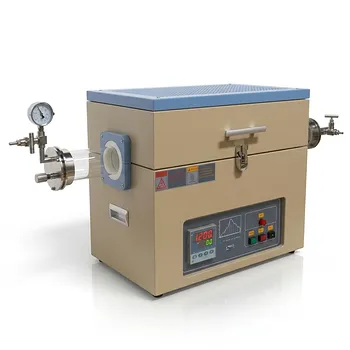
High Temperature 1200C Split Tube Furnace with Optional Quartz Tube Sizes and Vacuum Sealing Flanges for Material Science Research
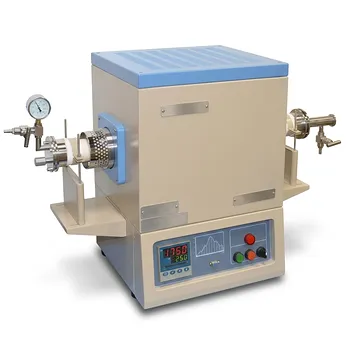
High Temperature Compact Vacuum Tube Furnace 1750C Max 60mm OD Alumina Tube

High Temperature 1700C Tube Furnace with High Vacuum Turbomolecular Pump System and Multi Channel Mass Flow Controller Gas Mixer
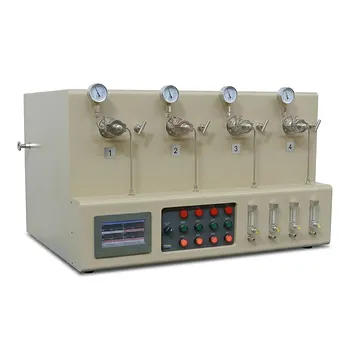
High Temperature 1700C 4 Channel Tube Furnace 1 Inch Alumina Tube for Hi-Throughput Annealing
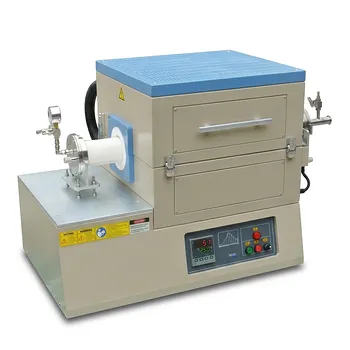
High Temperature 1700C Split Tube Furnace with Vacuum Flanges Valves and 60mm Alumina Tube
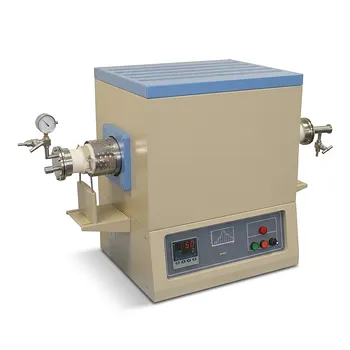
1700C High Temperature Alumina Tube Furnace with 18 Inch Heated Zone and Vacuum Sealing Flanges
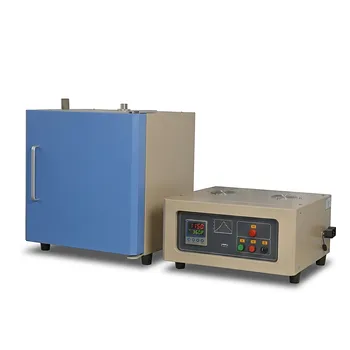
High Temperature Muffle Furnace with Alloy Chamber for Debinding and Sintering Applications
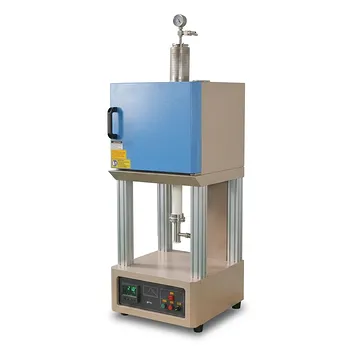
Hybrid High Temperature Tube and Box Furnace 1700C with 2 Inch Alumina Tube for Material Research
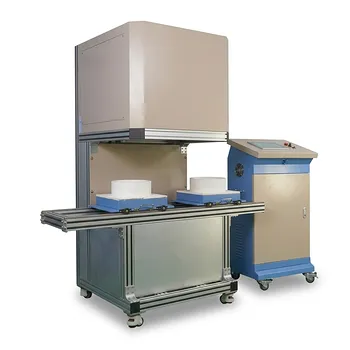
High Temperature Bottom Loading Vertical Furnace 1700C Dual Stage Sample Processing System 18L Large Capacity Thermal Treatment Equipment