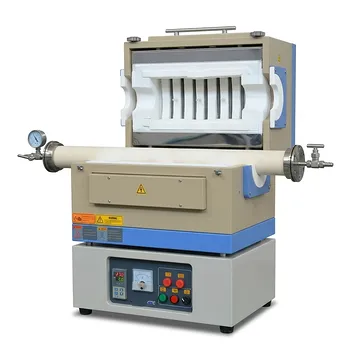
How does a high-temperature tube furnace affect the pore structure of Chlorella biomass during heat treatment?
Updated 3 months ago
The high-temperature tube furnace creates a porous structure in Chlorella biomass by providing a stable thermal environment for chemical etching and controlled volatile release. This process, typically occurring around 750°C, facilitates a redox reaction between an activator and the carbon skeleton, resulting in a dense network of micropores and mesopores that significantly boosts specific surface area.
The tube furnace acts as a precision reactor where the synergy of temperature and heating rates transforms raw biomass into a functional, hierarchical porous material. By controlling the speed of gas escape and the intensity of chemical etching, it prevents structural collapse and optimizes the biochar for high-performance applications.
The Mechanism of Pore Development
Chemical Etching and Redox Reactions
When Chlorella biomass is treated in a tube furnace with an activator like KOH, a redox reaction occurs at high temperatures. This reaction "etches" the carbon skeleton, physically carving out a vast network of micropores and mesopores.
The Role of High Temperatures
A stable thermal environment, often maintained at approximately 750°C, is necessary to sustain the carbonization and activation phases. This heat provides the energy required for the activator to penetrate the biomass and create the internal surface area needed for energy storage or adsorption.
Development of Hierarchical Structures
The furnace enables the formation of a hierarchical porous structure, which combines different pore sizes to improve material performance. This complexity is achieved because the uniform thermal field allows the chemical etching to proceed consistently across the entire biomass sample.
The Influence of Heating Rates on Pore Geometry
Preventing Structural Collapse
Maintaining a slow, steady heating rate—such as 3°C per minute—is critical for defining the final pore size distribution. This controlled approach ensures that gases generated during activation are released smoothly rather than in violent bursts.
Managing Volatile Release
A controlled heating rate prevents the rapid escape of volatile components that could otherwise lead to the coarsening of macropores. By slowing the release, the furnace facilitates the formation of more delicate and uniform microporous structures.
Optimizing Specific Surface Area
Research suggests that specific rates, such as 15°C/min, can be used to synchronize temperature and time to maximize adsorption capacity. The tube furnace’s ability to precisely adjust these rates allows researchers to "tune" the specific surface area to exceed hundreds of square meters per gram.
Understanding the Trade-offs
Pore Quality vs. Process Speed
While rapid heating might increase throughput, it carries a high risk of pore collapse or uneven pore distribution. Faster volatile escape often creates large, irregular voids (macropores) instead of the high-value micropores required for advanced technical applications.
Energy Consumption vs. Structural Integrity
Maintaining high temperatures for extended periods with slow heating rates is energy-intensive but necessary for structural integrity. Lower temperatures or shorter dwell times may result in incomplete activation, leaving the biomass with a lower-than-optimal specific surface area.
How to Apply This to Your Project
Before beginning your heat treatment, define the specific requirements of your final material to determine your furnace settings.
- If your primary focus is maximum surface area: Utilize a slow heating rate (3°C–5°C/min) and a high activation temperature (750°C) to ensure deep, uniform etching.
- If your primary focus is urea or gas adsorption: Opt for a moderate heating rate (approx. 15°C/min) to balance the formation of micropores with specific chemical adsorption sites.
- If your primary focus is structural stability: Ensure the furnace maintains a uniform thermal field to prevent localized overheating, which can fuse pores together.
By mastering the thermal precision of the tube furnace, you can transform simple biomass into a sophisticated, high-performance porous carbon.
Summary Table:
| Parameter | Recommended Setting | Impact on Pore Structure |
|---|---|---|
| Temperature | ~750°C | Sustains carbonization and enables deep chemical etching. |
| Heating Rate (Slow) | 3°C – 5°C/min | Prevents structural collapse; promotes uniform micropores. |
| Heating Rate (Fast) | ~15°C/min | Increases throughput; synchronizes time/temp for adsorption. |
| Atmosphere Control | Activator (e.g., KOH) | Creates redox reactions to carve micropore/mesopore networks. |
| Thermal Field | Uniform / Stable | Ensures consistent hierarchical structure across the sample. |
Unlock Precision in Your Material Research with THERMUNITS
Achieving the perfect hierarchical pore structure in biomass requires uncompromising thermal stability. THERMUNITS is a leading manufacturer of high-temperature laboratory equipment specifically designed for material science and industrial R&D.
Our advanced Tube Furnaces provide the precise heating rates and uniform thermal fields necessary to prevent structural collapse and optimize specific surface areas. Beyond tube furnaces, we offer a comprehensive suite of thermal solutions, including Muffle, Vacuum, Atmosphere, Rotary, and Hot Press furnaces, CVD/PECVD systems, and Vacuum Induction Melting (VIM) furnaces.
Ready to elevate your carbonization and activation processes? Contact us today to find the ideal furnace for your application and experience the THERMUNITS advantage in heat treatment excellence.
References
- Feiyan Wang, LI Wen-kui. Biochar from de-oiled <i>Chlorella vulgaris</i> and its adsorption on antibiotics. DOI: 10.1515/chem-2023-0178
Mentioned Products
- High Temperature Tube Furnace 1500C with Sliding Flanges and 50mm OD for Rapid Thermal Processing Fast Heating and Cooling
- Vertical Hybrid High Temperature Furnace 1500C Alumina Tube SOFC Fuel Cell Testing Laboratory Heat Treatment Research Equipment
- 1100C Tube Furnace with Vacuum Flange and Programmable Temperature Controller for Material Science and Industrial Heat Treatment
- High Temperature 1700C Benchtop Tube Furnace with 5 Inch Heating Zone High Purity Alumina Tube and Vacuum Sealing Flanges
- 500C Vacuum Vertical Tube Furnace 84mm OD Sample Rotation Lifting System
People Also Ask
- How are high-temperature tube furnaces utilized to repair etching damage? Precision Lattice Restoration Solutions
- What role does a high-temperature tube furnace play in CVD synthesis of silicon nanowires? Master VLS Growth Precision.
- What core conditions does a high-temperature tube furnace provide for rGO aerogels? Mastering Precision Synthesis.
- What role does a high-temperature tube furnace play in the sulfidation heat treatment of CoS@C/MXene nanocomposites? Guide
- How does precision tube furnace control influence CoFe nanoparticle formation? Master Your Bimetallic Synthesis.

Tech Team · ThermUnits
Last updated on Jun 02, 2026
Related Products
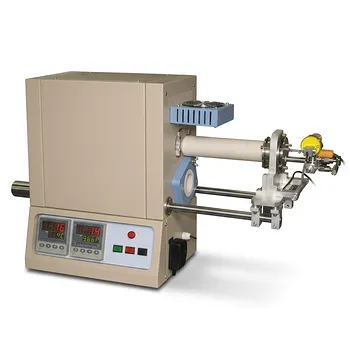
High Temperature Tube Furnace 1500C with Sliding Flanges and 50mm OD for Rapid Thermal Processing Fast Heating and Cooling
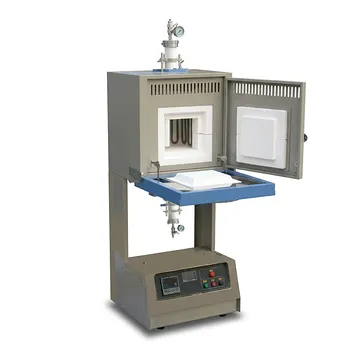
Vertical Hybrid High Temperature Furnace 1500C Alumina Tube SOFC Fuel Cell Testing Laboratory Heat Treatment Research Equipment

1100C Tube Furnace with Vacuum Flange and Programmable Temperature Controller for Material Science and Industrial Heat Treatment

High Temperature 1700C Benchtop Tube Furnace with 5 Inch Heating Zone High Purity Alumina Tube and Vacuum Sealing Flanges
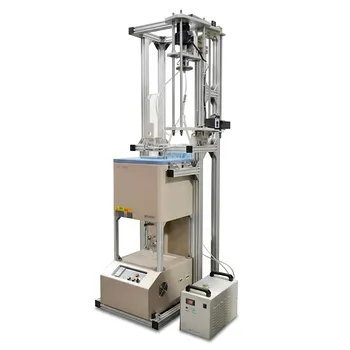
500C Vacuum Vertical Tube Furnace 84mm OD Sample Rotation Lifting System

1750°C High Temperature Benchtop Vacuum Atmosphere Tube Furnace with Kanthal Super 1800 Heating Elements and 60mm Alumina Processing Tube
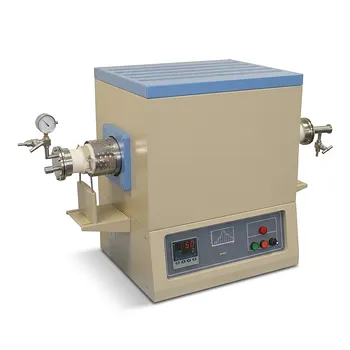
1700C High Temperature Alumina Tube Furnace with 18 Inch Heated Zone and Vacuum Sealing Flanges
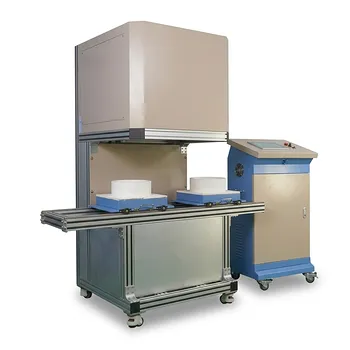
High Temperature Bottom Loading Vertical Furnace 1700C Dual Stage Sample Processing System 18L Large Capacity Thermal Treatment Equipment

High Temperature 1700C Tube Furnace with High Vacuum Turbomolecular Pump System and Multi Channel Mass Flow Controller Gas Mixer
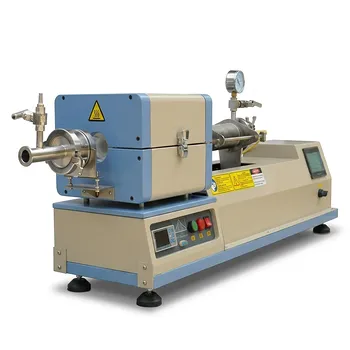
High Temperature 1200C Split Tube Furnace with Internal Travel Mechanism for HPCVD and Crystal Growth Research
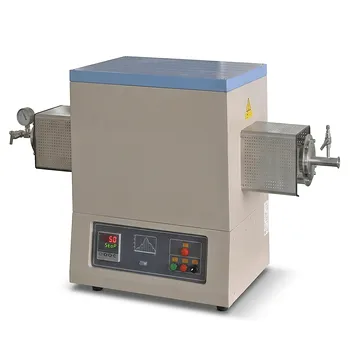
High Temperature 1700C Tube Furnace with 4 Inch OD Alumina Tube and Vacuum Sealing Flanges
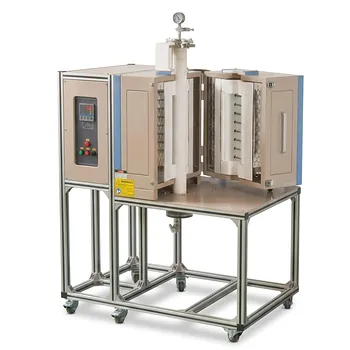
High Temperature 1700C Vertical Split Tube Furnace for Material Quenching and Single Crystal Growth
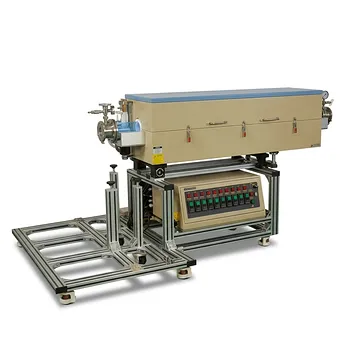
Ten Zone Multi Orientation Laboratory Tube Furnace for 1200C High Temperature Gradient Thermal Processing
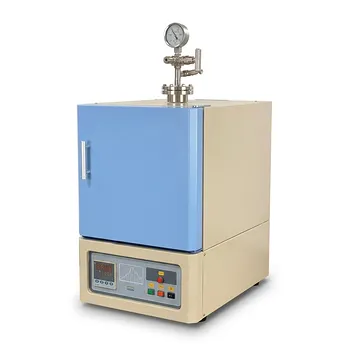
Hybrid High Temperature Muffle and Tube Furnace with 1500C Capability and Vacuum Flange Assembly
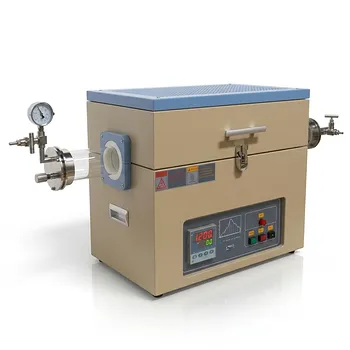
High Temperature 1200C Split Tube Furnace with Optional Quartz Tube Sizes and Vacuum Sealing Flanges for Material Science Research
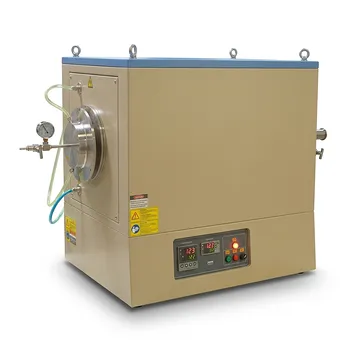
1100°C Large Diameter Quartz Tube Furnace with 24 Inch Heating Zone and Water Cooled Flanges
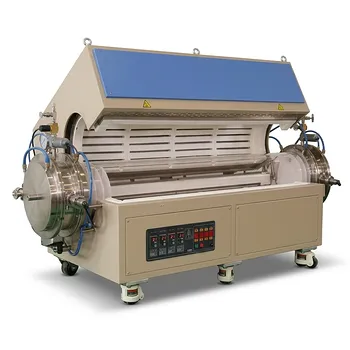
1200C Max Four Zone Split Tube Furnace with Optional Large Diameter Quartz Tubes
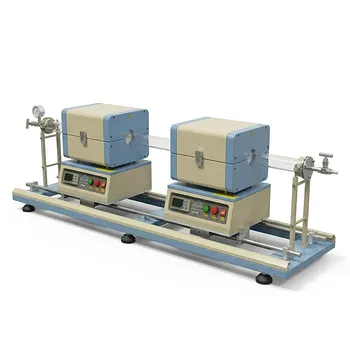
1200C Max Dual Sliding Tube Furnace with 50 mm Tube Flanges for CVD
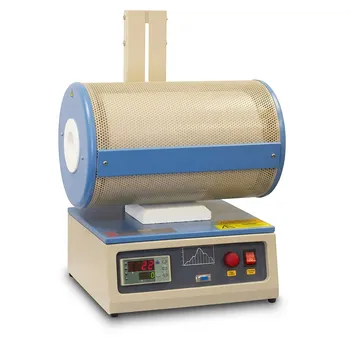
Multi Position Tube Furnace 1100C for Laboratory Material Research and Advanced Industrial Thermal Processing