Calcination in Tube Furnaces for High-Entropy Perovskite: Mastering Phase Purity and Morphological Engineering
Updated 3 months ago
Calcination in a high-temperature tube furnace is the critical thermal bridge that transforms amorphous precursors into stable, single-phase high-entropy perovskite crystals. This process provides the essential activation energy required for multi-element atomic diffusion, ensures the removal of volatile impurities, and allows for the precise engineering of particle morphologies like hollow nanospheres.
The calcination process acts as the primary catalyst for solid-state reactions, enabling diverse metallic elements to overcome diffusion barriers and settle into a unified $ABO_3$ lattice. Beyond mere heating, the tube furnace environment provides the atmospheric control and thermal stability necessary to achieve high phase purity and specific structural characteristics.
Driving Phase Transformation and Crystallization
Overcoming Diffusion Barriers
High-entropy perovskites involve multiple metallic components that must be integrated into a single lattice. The furnace provides temperatures typically ranging from 600 °C to 1200 °C, giving atoms the thermal energy needed to rearrange from independent oxide phases into a complex, unified structure.
Formation of the Perovskite Lattice
During calcination, solid-phase reactions induce the formation of the $ABO_3$ crystal structure. This transformation is essential for achieving the specific space groups (such as $Pm\bar{3}m$) and the tetragonal arrangements required for the material’s final electrochemical or optoelectronic properties.
Removal of Volatile Components
The high-temperature environment effectively drives off volatile components, such as carbon dioxide, solvent residues, and organic precursors. Eliminating these impurities is vital for ensuring high phase purity and preventing the formation of unwanted secondary phases that could interfere with performance.
Morphology and Structural Engineering
Optimization of Particle Shape
The tube furnace allows for the manipulation of heating rates to facilitate the transformation of hydrothermal products into porous structures. Secondary heat treatments can further refine these into specialized morphologies, such as hollow nanospheres with high specific surface areas.
Preserving Nanostructures
Precise temperature control ensures that materials like LSTCF fibers undergo complete crystallization without losing their unique one-dimensional (1D) nanomorphology. This balance between thermal activation and structural preservation is a hallmark of controlled tube furnace calcination.
Managing Volume and Stability
By conducting a controlled pre-heating or calcination step, researchers reduce the risk of volume shrinkage and cracking during later stages of production. This ensures the mechanical integrity and phase stability of the final high-entropy product.
Understanding the Trade-offs
While high-temperature calcination is essential for purity, it introduces significant technical trade-offs. Excessive temperatures or overly long dwell times can lead to undesired grain growth, which reduces the specific surface area and may collapse delicate porous or hollow structures.
Furthermore, the requirement for a reductive or specific oxidizing atmosphere (such as 5% $H_2$/95% $Ar$) adds complexity to the process. If the furnace seal or gas flow is inconsistent, the valence states of the metals may shift, resulting in a failed high-entropy phase or reduced electrochemical activity.
How to Apply This to Your Project
When utilizing a tube furnace for high-entropy perovskite synthesis, your parameters should be dictated by your specific structural requirements.
- If your primary focus is High Specific Surface Area: Use lower-range temperatures (600 °C–650 °C) and secondary heat treatments to promote the formation of porous or hollow nanosphere morphologies.
- If your primary focus is Phase Purity and Atomic Order: Aim for higher temperature ranges (900 °C–1200 °C) to ensure atoms have sufficient energy to overcome diffusion barriers and achieve a single-phase $ABO_3$ structure.
- If your primary focus is Chemical Stability in Complex Alloys: Prioritize a tube furnace with precise atmospheric control to manage valence states and prevent the oxidation of sensitive metallic components.
The precise orchestration of temperature and atmosphere within the tube furnace ultimately dictates whether a high-entropy precursor becomes a high-performance functional material.
Summary Table:
| Process Role | Temperature Range | Key Outcomes |
|---|---|---|
| Phase Transformation | 900 °C – 1200 °C | Achieves single-phase $ABO_3$ crystal lattice and atomic order. |
| Morphology Control | 600 °C – 650 °C | Promotes high specific surface areas and hollow nanospheres. |
| Impurity Removal | Variable | Drives off volatile solvents, carbon dioxide, and organic residues. |
| Structural Stability | Controlled Dwell | Preserves 1D nanomorphology and prevents volume cracking. |
Elevate Your Materials Research with THERMUNITS Precision
At THERMUNITS, we understand that high-entropy perovskite synthesis demands uncompromising thermal and atmospheric control. As a leading manufacturer of high-temperature laboratory equipment, we provide specialized solutions including Tube, Vacuum, Atmosphere, and Muffle furnaces, as well as CVD/PECVD systems and Electric Rotary Kilns.
Whether you are aiming for precise phase purity or complex morphological engineering like 1D nanostructures, our equipment is designed to meet the rigorous standards of industrial R&D and material science.
Ready to optimize your heat treatment process? Contact our technical experts today to discover how THERMUNITS can provide the advanced thermal processing your project requires.
References
- Yile Yang. The construction of an asymmetric hybrid supercapacitor with 2D materials MXene and perovskite. DOI: 10.54254/2755-2721/59/20240781
Mentioned Products
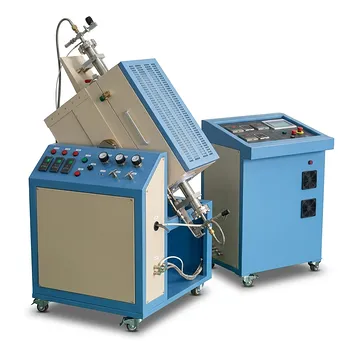
- 900°C Max Rotary Tube Furnace with 8 Inch 310S Alloy Tube and Optional Multi Zone Heating for Industrial Material Calcination
- High Temperature Tube Furnace 1500C with Sliding Flanges and 50mm OD for Rapid Thermal Processing Fast Heating and Cooling
- Compact High Temperature 1600C Tube Furnace with 50mm Alumina Tube and Vacuum Flanges for Material Sintering
- High Temperature Three Zone Tube Furnace 1700C with Alumina Tube and Water Cooled Flanges
- High Temperature 1700C Tube Furnace with High Vacuum Turbomolecular Pump System and Multi Channel Mass Flow Controller Gas Mixer
People Also Ask
- How does a rotary tube furnace improve the processing of granular materials? Enhance Uniformity and Reaction Kinetics
- Why use a rotary tube furnace for FACS carbonization? Ensure uniform morphology and prevent sphere agglomeration.
- Why is the precise optimization of residence time essential in the catalyst calcination process? Maximize Your Yields.
- In what ways do rotary tube furnaces enhance chemical and specialty mineral processing? Drive Precision and Uniformity.
- What parameters must operators control to maintain product quality in a rotary furnace? Master Your Heat Treatment.

Tech Team · ThermUnits
Last updated on Jun 03, 2026
Related Products
900°C Max Rotary Tube Furnace with 8 Inch 310S Alloy Tube and Optional Multi Zone Heating for Industrial Material Calcination

High Temperature Tube Furnace 1500C with Sliding Flanges and 50mm OD for Rapid Thermal Processing Fast Heating and Cooling

Compact High Temperature 1600C Tube Furnace with 50mm Alumina Tube and Vacuum Flanges for Material Sintering
High Temperature Three Zone Tube Furnace 1700C with Alumina Tube and Water Cooled Flanges

High Temperature 1700C Tube Furnace with High Vacuum Turbomolecular Pump System and Multi Channel Mass Flow Controller Gas Mixer
High Temperature 1700C Tube Furnace with 4 Inch OD Alumina Tube and Vacuum Sealing Flanges

High Temperature 1700C Benchtop Tube Furnace with 5 Inch Heating Zone High Purity Alumina Tube and Vacuum Sealing Flanges

1800C High Temperature Compact Vacuum Tube Furnace with 60mm OD Alumina Tube and Kanthal MoSi2 Heating Elements

1750°C High Temperature Benchtop Vacuum Atmosphere Tube Furnace with Kanthal Super 1800 Heating Elements and 60mm Alumina Processing Tube
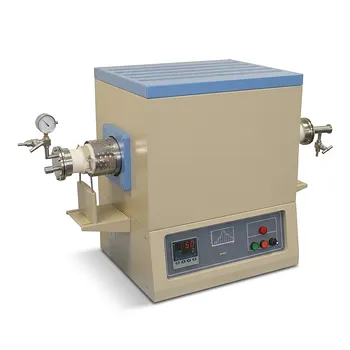
1700C High Temperature Alumina Tube Furnace with 18 Inch Heated Zone and Vacuum Sealing Flanges
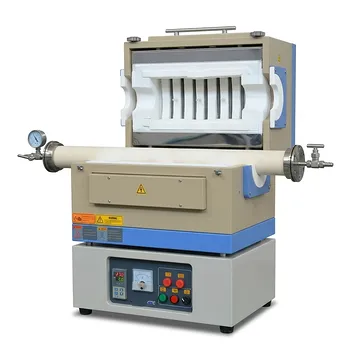
High Temperature 1600C Split Tube Furnace Vacuum Flanges Valves Optional 60mm 80mm Alumina Tube

High Temperature Automated 5 Inch Tube Furnace for Autonomous Material Research and Advanced Laboratory R&D
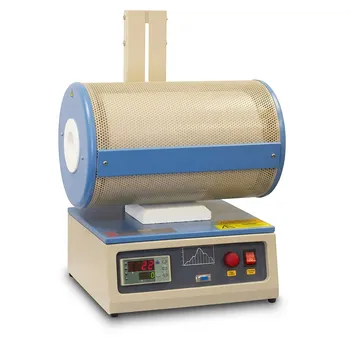
Multi Position Tube Furnace 1100C for Laboratory Material Research and Advanced Industrial Thermal Processing

1100C Tube Furnace with Vacuum Flange and Programmable Temperature Controller for Material Science and Industrial Heat Treatment
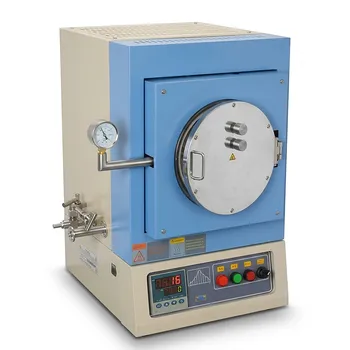
1100°C High Temperature Quartz Chamber Furnace 8 Inch OD with 7.6 Liter Capacity and Vacuum Atmosphere Capability
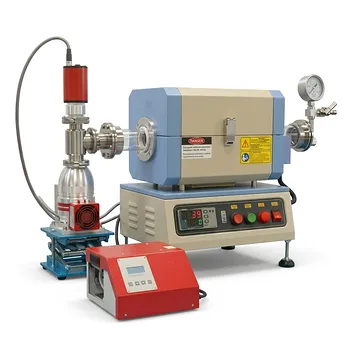
High Vacuum Compact Tube Furnace 1200C with Integrated Turbo Pump System and 8 Inch Heating Zone
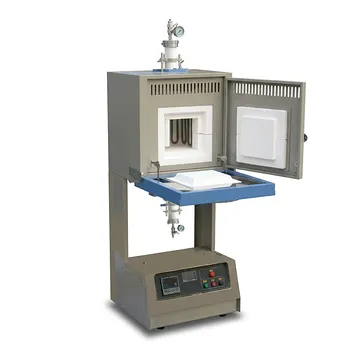
Vertical Hybrid High Temperature Furnace 1500C Alumina Tube SOFC Fuel Cell Testing Laboratory Heat Treatment Research Equipment
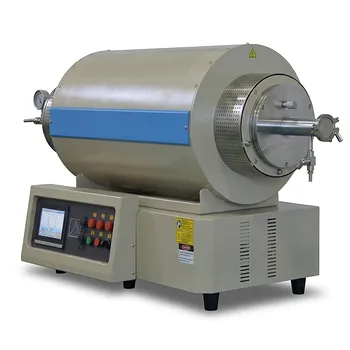
1200C Max Three Zone Tube Furnace 6 Inch OD Max with Tube and Flange
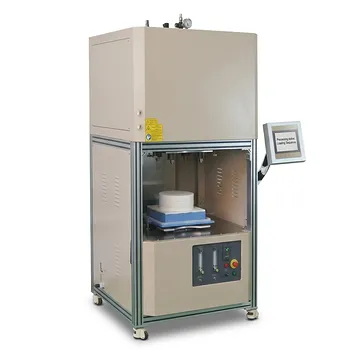
High Temperature Vertical Atmosphere Controlled Furnace with Automatic Bottom Loading and 1700°C Capacity for Advanced Material Research