Why is high-vacuum sealing of quartz tubes necessary for Ta2PdSe6 samples? Protect Purity & Carrier Mobility.
Updated 3 months ago
High-vacuum sealing is the fundamental barrier against chemical degradation during the synthesis of advanced semimetals. Achieving a vacuum level better than $10^{-3}$ Pa is mandatory to completely exclude atmospheric oxygen and moisture. This isolation prevents the raw material powders from oxidizing or incorporating non-target impurities when processed at temperatures near 900 °C.
The core necessity of high-vacuum sealing lies in creating a pristine micro-environment that preserves the material's intrinsic transport properties. Without this level of protection, the ultra-high carrier mobility of $Ta_2PdSe_6$ would be compromised by impurity-induced scattering and structural defects.
Preventing Chemical Contamination at 900 °C
Elimination of Atmospheric Reactants
At the high processing temperature of 900 °C, raw materials become exponentially more reactive. Even trace amounts of oxygen and moisture from the air will react with the powders to form oxides or hydroxides.
These secondary phases act as non-target impurities, fundamentally altering the chemical composition of the final $Ta_2PdSe_6$ sample.
Preservation of High-Purity Micro-environments
High-vacuum sealing in quartz tubes creates a controlled, closed system. This isolation ensures that the only elements present are the intended reactants, which is critical for ternary compounds where precise atomic ratios are required.
By removing air, you eliminate the risk of atmospheric nitrogen or carbon-based contaminants interfering with the delicate reaction kinetics of the semimetal.
Protecting Electronic Performance
Maintaining Ultra-High Carrier Mobility
$Ta_2PdSe_6$ is valued for its unique electronic characteristics, specifically its ultra-high carrier mobility. These properties are extremely sensitive to even minute levels of structural disorder.
If impurities are introduced due to poor sealing, they create scattering centers within the crystal lattice. These centers impede the flow of charge carriers, effectively destroying the material's performance as a high-performance semimetal.
Ensuring Lattice Integrity and Stoichiometry
The vacuum environment prevents the loss of volatile components, such as selenium, which can vaporize at high temperatures.
Maintaining the exact chemical stoichiometry is vital; any deviation caused by element depletion or oxidation leads to lattice vacancies and defects that degrade the material's transport properties.
Understanding the Trade-offs
Technical Rigor vs. Cost
Achieving a vacuum better than $10^{-3}$ Pa requires specialized equipment, such as diffusion or turbomolecular pumps. This increases the complexity and cost of the preparation process compared to simple inert gas flushing.
Quartz Tube Limitations
While quartz is chemically stable and heat-resistant up to 1000 °C, it is susceptible to devitrification if contaminated with oils or salts (like fingerprints). Furthermore, if the vacuum is not absolute, residual gases can expand at 900 °C, creating internal pressure that risks tube failure.
Process Duration
Maintaining high-vacuum integrity over long-duration heating cycles (often exceeding several days) is challenging. Any micro-leak in the seal will lead to gradual oxidation, meaning the quality of the initial seal is the single most important factor in the entire synthesis.
How to Apply This to Your Project
Recommendations for Material Synthesis
- If your primary focus is fundamental transport physics: You must prioritize the highest vacuum levels ($< 10^{-3}$ Pa) to ensure that carrier mobility measurements reflect the material's intrinsic nature rather than impurity scattering.
- If your primary focus is stoichiometric precision: Ensure the quartz tube is sized correctly to minimize the "dead volume" above the sample, which helps maintain a stable vapor pressure of volatile elements like Selenium.
- If your primary focus is structural uniformity: Use high-purity quartz and a multi-stage cleaning process (acid wash and deionized water) before sealing to prevent the tube itself from introducing contaminants during the 900 °C soak.
A rigorous vacuum-sealing protocol is the only way to guarantee that the resulting $Ta_2PdSe_6$ retains the high-purity characteristics necessary for advanced electronic research.
Summary Table:
| Key Requirement | Technical Specification | Primary Purpose |
|---|---|---|
| Vacuum Level | $< 10^{-3}$ Pa | Prevents oxidation and atmospheric contamination |
| Processing Temp | ~900 °C | Ensures reaction kinetics without secondary phases |
| Material Integrity | Stoichiometric Control | Prevents loss of volatile elements like Selenium |
| Electronic Quality | Carrier Mobility Protection | Minimizes scattering centers from structural defects |
Elevate Your Material Science Research with THERMUNITS
Precise control over high-temperature environments is non-negotiable for synthesizing advanced semimetals like $Ta_2PdSe_6$. THERMUNITS is a leading manufacturer of high-performance thermal processing solutions, including Vacuum and Tube furnaces, CVD/PECVD systems, and Rotary Kilns designed specifically for industrial R&D and material science laboratories.
Whether you need to maintain ultra-high vacuum levels or require uniform heating for delicate heat treatments, our equipment ensures the chemical purity and structural integrity of your samples.
Ready to optimize your synthesis process? Contact our experts today to find the perfect furnace solution for your laboratory!
References
- Fumiaki Kato, Ichiro Terasaki. Enhanced Cryogenic Thermoelectricity in Semimetal Ta<sub>2</sub>PdSe<sub>6</sub> through Non‐Fermi Liquid‐Like Charge and Heat Transport. DOI: 10.1002/apxr.202400063
Mentioned Products
- Vertical Vacuum Furnace 1100C High Temperature 8 Inch Quartz Chamber Water Cold Flange System
- High Temperature 1000C Vacuum Furnace with 8 Inch ID Chamber for Material Sintering and Research Annealing
- Ultra High Temperature Induction Heated Vacuum Furnace with Molten Salt Electrolysis Capability and 3000 Degree Precision Control
- High Temperature Vacuum Lamination Hot Press Furnace Machine for Semiconductor Wafer Bonding and Advanced Composite Thermal Processing
- High Temperature Cold Wall High Vacuum Chamber Furnace 1400C for Advanced Material Processing
People Also Ask
- How Vacuum Furnaces Heat Treat Fe32Cr33Ni29Al3Ti3? Optimizing HEA Microstructure & Stability
- Why is an integrated vacuum furnace necessary for RHEAs? Ensure data integrity and prevent oxidative embrittlement.
- What is a vacuum furnace and what are its primary functions? Master High-Purity Thermal Processing & Metallurgy
- How does material vapor pressure affect the operating limits of a vacuum furnace? Optimize Your Thermal Processes
- Why is a vacuum or atmosphere furnace necessary for the preparation of air-sensitive chemical materials? Ensure Purity.

Tech Team · ThermUnits
Last updated on Jun 03, 2026
Related Products
Vertical Vacuum Furnace 1100C High Temperature 8 Inch Quartz Chamber Water Cold Flange System
High Temperature 1000C Vacuum Furnace with 8 Inch ID Chamber for Material Sintering and Research Annealing
Ultra High Temperature Induction Heated Vacuum Furnace with Molten Salt Electrolysis Capability and 3000 Degree Precision Control
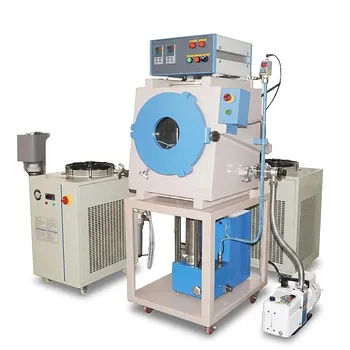
High Temperature Vacuum Lamination Hot Press Furnace Machine for Semiconductor Wafer Bonding and Advanced Composite Thermal Processing
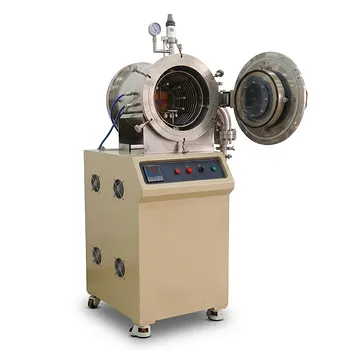
High Temperature Cold Wall High Vacuum Chamber Furnace 1400C for Advanced Material Processing
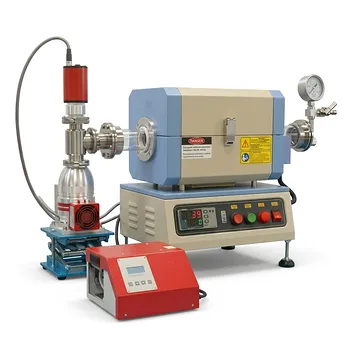
High Vacuum Compact Tube Furnace 1200C with Integrated Turbo Pump System and 8 Inch Heating Zone
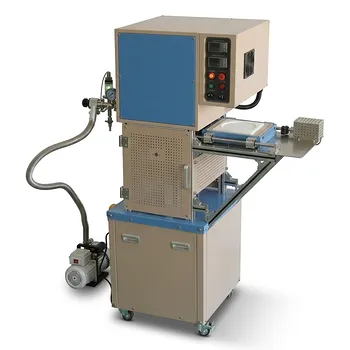
1200°C Bottom Loading Vacuum Furnace with Rapid Gas Cooling and 8.6 Inch Diameter Quartz Chamber
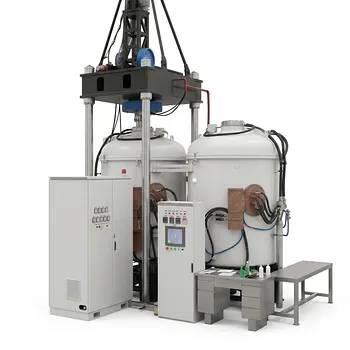
High Pressure 600T Vacuum Induction Hot Press Furnace for Advanced Material Heat Treatment and Sintering
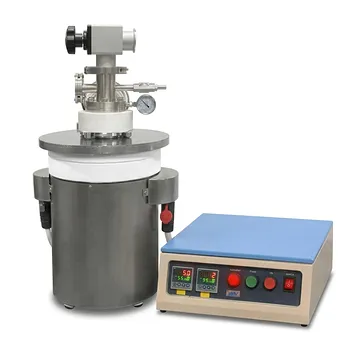
1100C High Temperature Vacuum Crucible Furnace with Quartz Chamber for Thermal Processing and Sintering
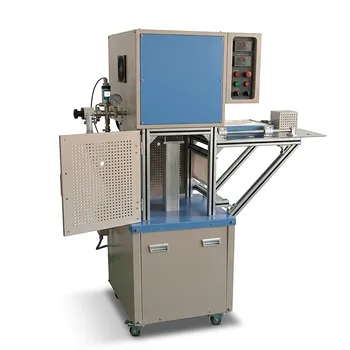
Bottom Loading Vacuum Furnace 1200C Rapid Cooling Atmosphere Control Quartz Chamber
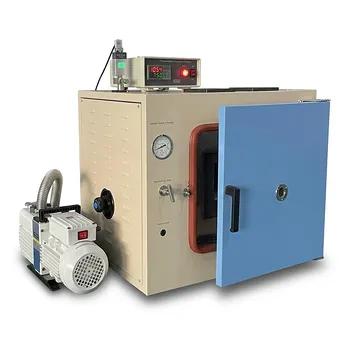
Compact High Vacuum Box Furnace 1050C Max 6.2L Ceramic Chamber Stainless Steel Shell Programmable Temperature Controller for Material Science Research

1750°C High Temperature Benchtop Vacuum Atmosphere Tube Furnace with Kanthal Super 1800 Heating Elements and 60mm Alumina Processing Tube
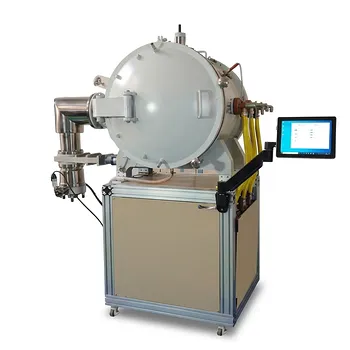
High Temperature Cold Wall Vacuum Furnace for Advanced Material Sintering and Annealing 1600C Heating Area 200x200x300mm

1800C High Temperature Compact Vacuum Tube Furnace with 60mm OD Alumina Tube and Kanthal MoSi2 Heating Elements
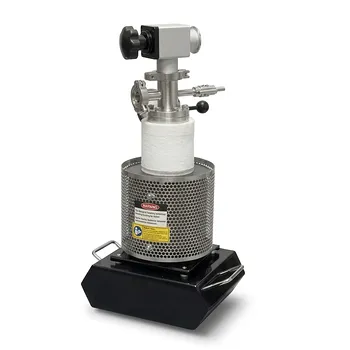
High Temperature 1100C Compact Top Loading Vertical Vacuum Tube Furnace for High Vacuum Noble Metal Melting and Material Research
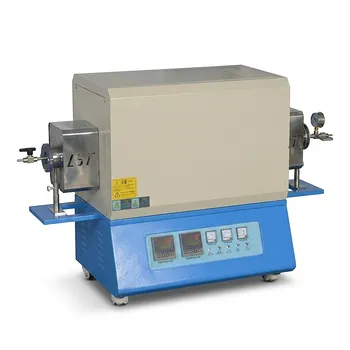
High Temperature Dual Zone Vacuum Tube Furnace for Material Research and CVD Processing
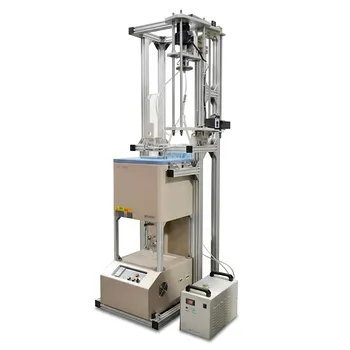
500C Vacuum Vertical Tube Furnace 84mm OD Sample Rotation Lifting System
High Vacuum Melting Casting Furnace with Mechanical Stirring and Secondary Charge for Metallic Alloy Research
Three Temperature Zone High Temperature Vacuum Tube Furnace for CVD and Material Sintering