How Vacuum Furnaces Heat Treat Fe32Cr33Ni29Al3Ti3? Optimizing HEA Microstructure & Stability
Updated 3 months ago
High-vacuum or protective atmosphere furnaces facilitate the post-heat treatment of Fe32Cr33Ni29Al3Ti3 high-entropy alloys by providing a precisely controlled, oxygen-free thermal environment. Operating typically between 1000°C and 1200°C, these furnaces enable the decomposition of internal dislocation networks and the release of lattice distortion energy accumulated during the Laser Powder Bed Fusion (LB-PBF) process. This thermal energy drives atomic diffusion, allowing the alloy to transition from a metastable columnar grain structure to a stable, equiaxed microstructure.
Core Takeaway: These furnaces serve as the critical medium for transforming raw, additive-manufactured HEAs into stable engineering materials by combining precise thermal energy for structural rearrangement with an inert environment to prevent chemical degradation.
Structural Homogenization and Stress Relief
Eliminating Lattice Distortion Energy
During the Laser Powder Bed Fusion (LB-PBF) process, the rapid cooling rates trap significant lattice distortion energy within the material. The high-temperature environment of a vacuum furnace provides the necessary activation energy to release these internal stresses, preventing future cracks or dimensional instability.
Transitioning from Columnar to Equiaxed Grains
As-built HEAs often exhibit columnar grain structures that lead to anisotropic mechanical properties. The furnace facilitates a recrystallization-like process where these grains rearrange into equiaxed structures, resulting in more uniform and predictable performance across all axes.
Decomposition of Dislocation Networks
The intense thermal field allows the high-density dislocation networks formed during rapid solidification to move and annihilate. This process "cleans" the internal structure of the alloy, softening the material where necessary and preparing it for final applications.
Driving Atomic Diffusion and Phase Stability
Promoting Long-Range Elemental Rearrangement
Fe32Cr33Ni29Al3Ti3 is a complex multi-element system where atomic diffusion is naturally sluggish. The constant high-temperature environment of the furnace provides the "dwell time" required for atoms to migrate, which eliminates micro-segregation and ensures a homogenous chemical distribution.
Facilitating Microstructural Equilibrium
By accurately controlling the heating temperature and holding time, these furnaces allow the alloy to reach a state close to thermodynamic equilibrium. This can involve the precipitation of specific phases (such as FCC or sigma phases) or the formation of duplex microstructures that optimize hardness and toughness.
Enhancing Density and Structural Integrity
Extended thermal treatment in a vacuum can improve the structural stability of the alloy component. This is particularly important for preventing failures during subsequent processes, such as coating deposition, where residual thermal stresses could otherwise cause catastrophic cracking.
Environmental Protection and Integrity
Preventing High-Temperature Oxidation
Fe32Cr33Ni29Al3Ti3 contains elements like Titanium (Ti) and Aluminum (Al), which are highly reactive with oxygen at elevated temperatures. A high-vacuum environment (often reaching levels like 1.5x10⁻⁵ mbar) ensures these elements do not oxidize, which would otherwise degrade the alloy's surface and bulk properties.
Maintaining Surface Chemistry
Because the furnace operates in a vacuum or protective atmosphere, there is no risk of decarburization or uncontrolled surface reactions. This ensures that the final part's chemical composition remains identical to the design specifications from the surface to the core.
Uniformity of the Thermal Field
A high-quality vacuum furnace provides extreme temperature uniformity across the entire part. This ensures that phase transformations occur simultaneously throughout the component, preventing localized variations in mechanical properties that could lead to weak points.
Understanding the Trade-offs
While vacuum and protective atmosphere furnaces are essential, they come with specific challenges. The cooling rate within a vacuum furnace is often slower than in open-air processes, which may lead to excessive grain growth if the "hold time" is not strictly monitored.
Additionally, the operational cost and complexity of maintaining high-vacuum seals and inert gas purity are significantly higher than traditional atmospheric furnaces. Engineers must also balance the need for high temperatures (to drive diffusion) against the risk of evaporating certain volatile alloying elements if the vacuum is too deep and the temperature is near the element's sublimation point.
How to Apply This to Your Project
Recommendations for Implementation
- If your primary focus is Stress Relief: Target the lower end of the temperature range (approx. 1000°C) with a longer soak time to allow dislocation movement without excessive grain coarsening.
- If your primary focus is Phase Transformation: Utilize precise temperature control (up to 1200°C) to drive the alloy toward a specific fully lamellar or duplex microstructure.
- If your primary focus is Surface Integrity: Ensure a high-vacuum threshold (at least 1.3 x 10⁻³ Pa) to protect reactive elements like Ti and Al from oxidation.
The strategic use of vacuum heat treatment turns the chaotic, non-equilibrium state of 3D-printed high-entropy alloys into a refined, high-performance material with stable metallurgical properties.
Summary Table:
| Heat Treatment Phase | Mechanism | Key Benefit for Fe32Cr33Ni29Al3Ti3 |
|---|---|---|
| Stress Relief | Lattice distortion energy release | Prevents cracking and dimensional instability |
| Recrystallization | Columnar to equiaxed grain transition | Achieves uniform, isotropic mechanical properties |
| Diffusion Dwell | Long-range elemental rearrangement | Eliminates micro-segregation; ensures phase stability |
| Inert Protection | High-vacuum/protective atmosphere | Prevents oxidation of reactive elements like Ti and Al |
Elevate Your HEA Research with THERMUNITS
Unlock the full potential of your high-entropy alloys with precision thermal processing. THERMUNITS is a leading manufacturer of high-temperature laboratory equipment specifically designed for material science and industrial R&D.
Our advanced Vacuum, Atmosphere, Tube, and CVD/PECVD systems provide the oxygen-free environments and extreme temperature uniformity essential for transforming Fe32Cr33Ni29Al3Ti3 into high-performance engineering materials. Whether you need Muffle, Rotary, or Hot Press furnaces, we offer comprehensive solutions tailored to your specific heat treatment requirements.
Ready to optimize your thermal workflows? Contact us today to discuss your project and discover how our equipment can enhance your lab's efficiency and material integrity.
References
- Xiaojun Tan, Qingmao Zhang. Effects of Heat Treatment on the Microstructure and Mechanical Properties of a Dual-Phase High-Entropy Alloy Fabricated via Laser Beam Power Bed Fusion. DOI: 10.3390/mi15040471
Mentioned Products
- Vertical Vacuum Furnace 1100C High Temperature 8 Inch Quartz Chamber Water Cold Flange System
- High Temperature 1000C Vacuum Furnace with 8 Inch ID Chamber for Material Sintering and Research Annealing
- Ultra High Temperature Induction Heated Vacuum Furnace with Molten Salt Electrolysis Capability and 3000 Degree Precision Control
- High Temperature Vacuum Lamination Hot Press Furnace Machine for Semiconductor Wafer Bonding and Advanced Composite Thermal Processing
- High Temperature Cold Wall High Vacuum Chamber Furnace 1400C for Advanced Material Processing
People Also Ask
- Why is high-vacuum sealing of quartz tubes necessary for Ta2PdSe6 samples? Protect Purity & Carrier Mobility.
- Why is an integrated vacuum furnace necessary for RHEAs? Ensure data integrity and prevent oxidative embrittlement.
- What is a vacuum furnace and what are its primary functions? Master High-Purity Thermal Processing & Metallurgy
- How does material vapor pressure affect the operating limits of a vacuum furnace? Optimize Your Thermal Processes
- Why is a vacuum or atmosphere furnace necessary for the preparation of air-sensitive chemical materials? Ensure Purity.

Tech Team · ThermUnits
Last updated on Jun 02, 2026
Related Products
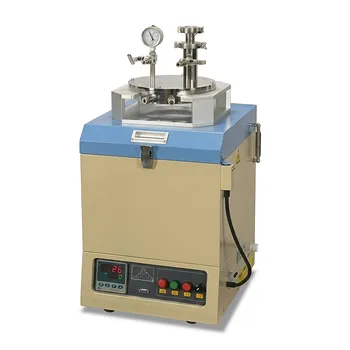
Vertical Vacuum Furnace 1100C High Temperature 8 Inch Quartz Chamber Water Cold Flange System
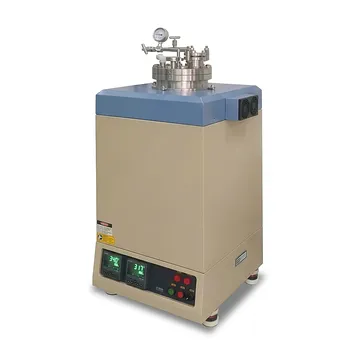
High Temperature 1000C Vacuum Furnace with 8 Inch ID Chamber for Material Sintering and Research Annealing
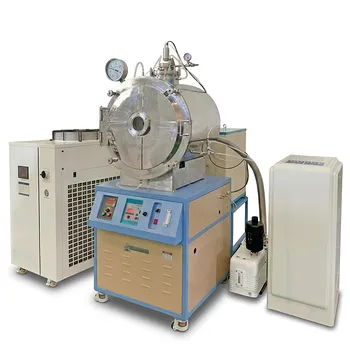
Ultra High Temperature Induction Heated Vacuum Furnace with Molten Salt Electrolysis Capability and 3000 Degree Precision Control
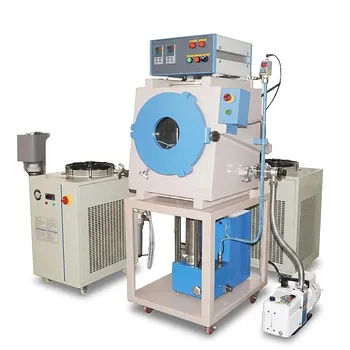
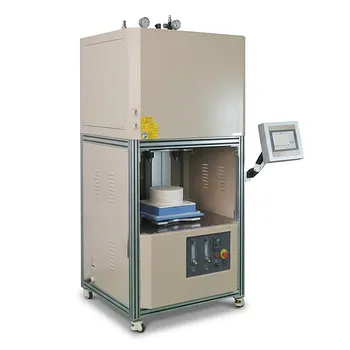
High Temperature Vacuum Lamination Hot Press Furnace Machine for Semiconductor Wafer Bonding and Advanced Composite Thermal Processing
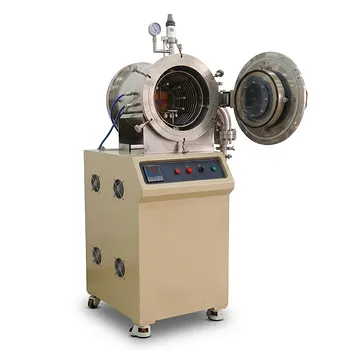
High Temperature Cold Wall High Vacuum Chamber Furnace 1400C for Advanced Material Processing
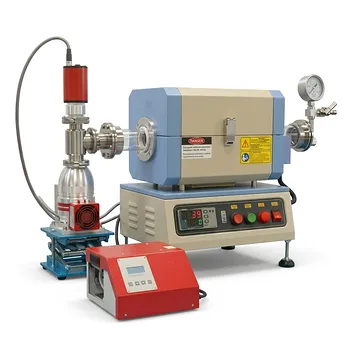
High Vacuum Compact Tube Furnace 1200C with Integrated Turbo Pump System and 8 Inch Heating Zone
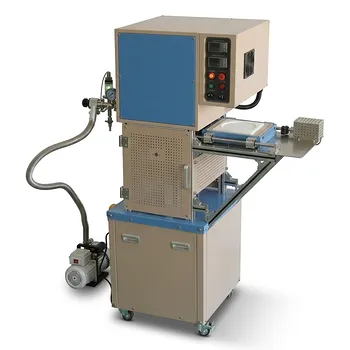
1200°C Bottom Loading Vacuum Furnace with Rapid Gas Cooling and 8.6 Inch Diameter Quartz Chamber
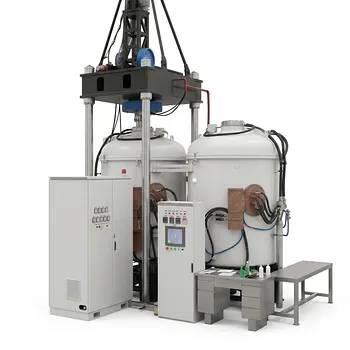
High Pressure 600T Vacuum Induction Hot Press Furnace for Advanced Material Heat Treatment and Sintering
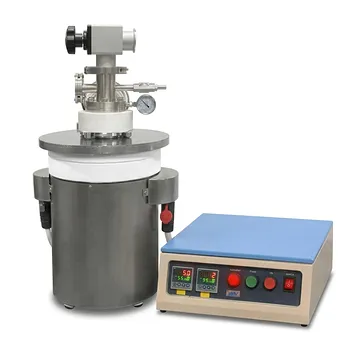
1100C High Temperature Vacuum Crucible Furnace with Quartz Chamber for Thermal Processing and Sintering
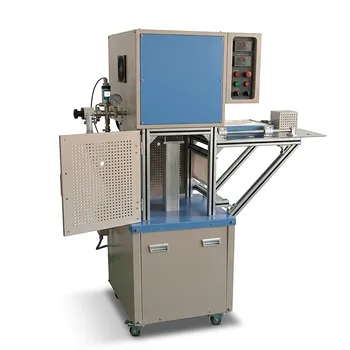
Bottom Loading Vacuum Furnace 1200C Rapid Cooling Atmosphere Control Quartz Chamber
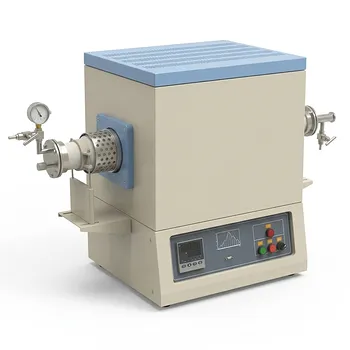
1750°C High Temperature Benchtop Vacuum Atmosphere Tube Furnace with Kanthal Super 1800 Heating Elements and 60mm Alumina Processing Tube
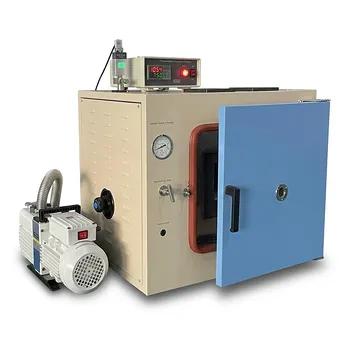
Compact High Vacuum Box Furnace 1050C Max 6.2L Ceramic Chamber Stainless Steel Shell Programmable Temperature Controller for Material Science Research
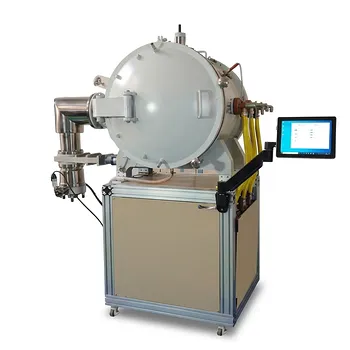
High Temperature Cold Wall Vacuum Furnace for Advanced Material Sintering and Annealing 1600C Heating Area 200x200x300mm

1800C High Temperature Compact Vacuum Tube Furnace with 60mm OD Alumina Tube and Kanthal MoSi2 Heating Elements
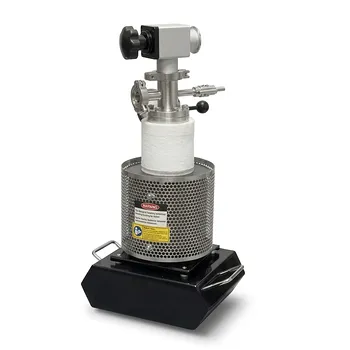
High Temperature 1100C Compact Top Loading Vertical Vacuum Tube Furnace for High Vacuum Noble Metal Melting and Material Research
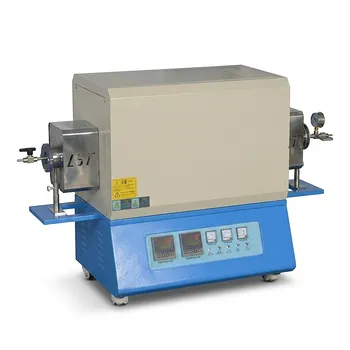
High Temperature Dual Zone Vacuum Tube Furnace for Material Research and CVD Processing
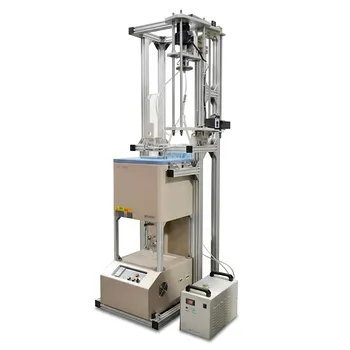
500C Vacuum Vertical Tube Furnace 84mm OD Sample Rotation Lifting System
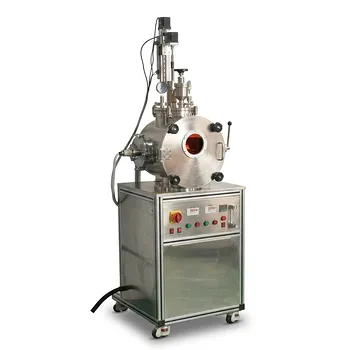
High Vacuum Melting Casting Furnace with Mechanical Stirring and Secondary Charge for Metallic Alloy Research
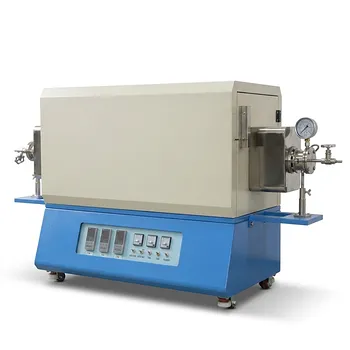
Three Temperature Zone High Temperature Vacuum Tube Furnace for CVD and Material Sintering