Why use high-purity quartz & vacuum argon for Cr0.83Te? Crucial steps for oxidation-free crystal synthesis.
Updated 3 months ago
The use of high-purity quartz and a vacuum-sealed argon environment is a non-negotiable requirement for maintaining the chemical integrity and phase purity of Cr0.83Te. This specific setup prevents the highly reactive chromium precursors from oxidizing and ensures that the quartz container does not introduce silicon or other contaminants into the crystal lattice during high-temperature synthesis exceeding 1000°C.
Core Takeaway: To synthesize high-purity Cr0.83Te single crystals, you must isolate the reaction from oxygen and moisture while providing a chemically inert, high-temperature-stable vessel. Failure to do so leads to oxidation of the chromium and contamination of the final material.
The Role of High-Purity Quartz Tubes
Superior Thermal Stability above 1000°C
Synthesis of Cr0.83Te requires temperatures that would cause standard glass to soften or fail. High-purity quartz is utilized because it maintains structural integrity at temperatures exceeding 1000°C, providing a reliable vessel for long-duration heating.
Chemical Inertness and Contamination Control
At elevated temperatures, many materials become reactive and can leach impurities into the sample. High-purity quartz is chemically stable and does not react with the Cr0.83Te precursors or common chemical vapor transport agents like iodine.
Isolation from External Impurities
The quartz tube acts as a physical barrier that isolates the reaction from the internal components of the furnace. This ensures that the only elements present in the final crystal are those specifically introduced as raw materials.
The Necessity of a Vacuum-Sealed Argon Environment
Prevention of Chromium Oxidation
Chromium is highly susceptible to oxidation at high temperatures, which can result in the formation of unwanted oxide phases instead of the desired telluride. Eliminating air through vacuum-sealing is the primary defense against this degradation.
Removal of Atmospheric Moisture
Even trace amounts of moisture in the air can introduce hydrogen or oxygen into the reaction mixture, leading to defects in the crystal structure. Achieving a high vacuum (often better than 10⁻³ Pa) effectively removes these volatile contaminants.
Argon as a Protective Inert Shield
Introducing high-purity argon before sealing provides a chemically inert atmosphere that further stabilizes the reaction. This protective gas prevents the oxidation of metal ions and ensures that any changes observed in the material result from crystal growth rather than chemical contamination.
Controlling Stoichiometry and Volatility
Inhibiting Component Volatilization
Some components of telluride mixtures can become volatile at high temperatures. A sealed environment creates a constant-pressure system that inhibits the escape of these elements, maintaining the precise chemical composition of Cr0.83Te.
Facilitating Solid-State Reactions
The enclosed, oxygen-free environment ensures that the chemical reaction between Chromium and Tellurium is thorough. This promotes the formation of a structurally stable compound and prevents the segregation of internal components.
Understanding the Trade-offs and Risks
Fragility and Handling Requirements
While quartz is thermally stable, it is physically brittle and sensitive to thermal shock. Rapid cooling or improper handling can lead to tube failure, which immediately compromises the vacuum and ruins the sample.
Sealing Complexity and Leaks
Achieving a high-performance vacuum seal (often requiring pressures as low as 3x10⁻⁵ mbar) requires specialized equipment and expertise. Micro-leaks in the seal can allow oxygen to enter during long-duration annealing, leading to "pre-oxidation" that might not be visible until the final analysis.
Cost of High-Purity Materials
The use of ultra-high-purity quartz and research-grade argon significantly increases the cost of production. However, using lower-grade materials risks the introduction of non-target impurities that can drastically alter the material's intrinsic transport properties.
How to Apply This to Your Synthesis Project
When preparing for a high-temperature synthesis of reactive metal tellurides, your procedural choices should be dictated by your purity requirements.
- If your primary focus is intrinsic transport properties: You must prioritize high-vacuum sealing (better than 10⁻³ Pa) to ensure carrier mobility is not hindered by defects or impurities.
- If your primary focus is precise stoichiometry: Ensure the quartz tube volume is minimized to reduce the headspace where volatile components could potentially accumulate away from the bulk mixture.
- If your primary focus is phase purity at temperatures above 1100°C: Use double-walled quartz ampules or thicker-walled tubing to mitigate the risk of deformation or atmospheric diffusion through the quartz.
Maintaining a rigorous, oxygen-free environment is the only way to ensure the reproducibility and scientific validity of your Cr0.83Te samples.
Summary Table:
| Component | Primary Function | Critical Benefit |
|---|---|---|
| High-Purity Quartz | Thermal stability (>1000°C) | Prevents leaching and silicon contamination |
| Vacuum Sealing | Atmosphere removal (<10⁻³ Pa) | Eliminates chromium oxidation and moisture defects |
| Argon Environment | Inert protective shield | Stabilizes reaction and prevents ion degradation |
| Sealed System | Pressure & Volatility control | Maintains precise stoichiometry and phase purity |
Elevate Your Material Research with THERMUNITS Precision Technology
Achieving the perfect crystal structure for materials like Cr0.83Te requires more than just high temperatures—it demands absolute environmental control. THERMUNITS is a leading manufacturer of high-temperature laboratory equipment, providing the advanced thermal processing solutions needed for cutting-edge material science and industrial R&D.
Our comprehensive range includes:
- Vacuum and Atmosphere Tube Furnaces: Perfect for sealed quartz ampoule synthesis.
- CVD/PECVD Systems: For high-purity chemical vapor deposition.
- Muffle & Rotary Kilns: High-uniformity heating for bulk processing.
- Specialized Equipment: Including Vacuum Induction Melting (VIM), Hot Press furnaces, and Dental furnaces.
Don't let oxidation or contamination compromise your results. Let our experts help you select the ideal furnace configuration to ensure the reproducibility and scientific validity of your high-purity samples.
Contact THERMUNITS today to optimize your lab's heat treatment performance!
References
- Shubham Purwar, S. Thirupathaiah. Intricate magnetic interactions and topological Hall effect observed in itinerant room-temperature layered ferromagnet Cr0.83Te. DOI: 10.1016/j.actamat.2024.119898
Mentioned Products
- High Temperature 1700C Vertical Tube Furnace for Powder Spherification and Material Sintering
- High Temperature Dual Zone Rotating Tube Furnace 1500C Silicon Carbide Heating for Advanced Material Synthesis
- High Temperature Tube Furnace 1500C with Sliding Flanges and 50mm OD for Rapid Thermal Processing Fast Heating and Cooling
- 1500C Max Dual Zone Rotary Tube Furnace with 60 mm OD Alumina Tube for High Temperature Material Synthesis
- Compact High Temperature 1600C Tube Furnace with 50mm Alumina Tube and Vacuum Flanges for Material Sintering
People Also Ask
- What role does a high-temperature vertical tube furnace play in simulating high-carbon ferromanganese slag formation?
- What functions does a vertical high-temperature tube furnace perform? Master Industrial Sintering & R&D Simulation
- What is the primary function of a high-temperature tube furnace in Cu1-N-C synthesis? Precision Thermal Control.
- High-Temp Tube Furnace Role in Converting Microbial Proteins to Iron Single-Atom Sites: Expert Synthesis Guide
- What impact does the heating rate of a tube furnace have on biochar microstructure? Optimize Your Material R&D.

Tech Team · ThermUnits
Last updated on Jun 02, 2026
Related Products

High Temperature 1700C Vertical Tube Furnace for Powder Spherification and Material Sintering
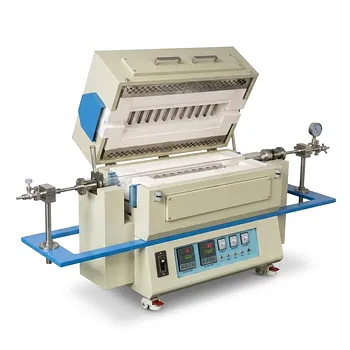
High Temperature Dual Zone Rotating Tube Furnace 1500C Silicon Carbide Heating for Advanced Material Synthesis

High Temperature Tube Furnace 1500C with Sliding Flanges and 50mm OD for Rapid Thermal Processing Fast Heating and Cooling
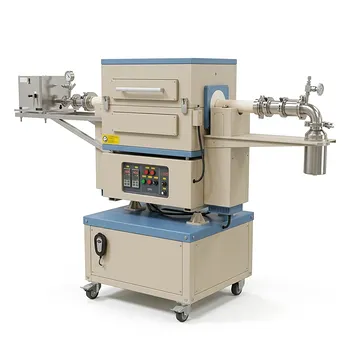
1500C Max Dual Zone Rotary Tube Furnace with 60 mm OD Alumina Tube for High Temperature Material Synthesis

Compact High Temperature 1600C Tube Furnace with 50mm Alumina Tube and Vacuum Flanges for Material Sintering
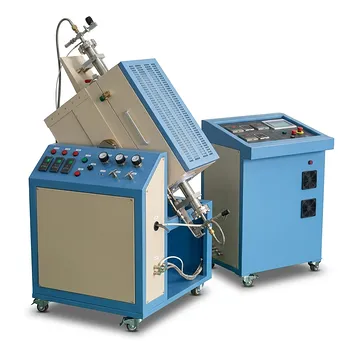
1100C High Pressure Rocking Tube Furnace with 2 Inch Super Alloy Processing Tube for Material Synthesis
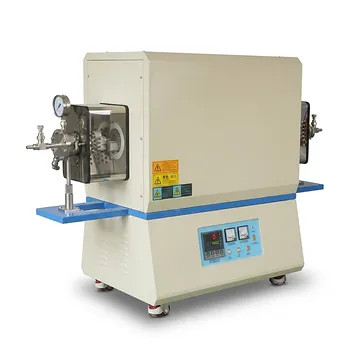
High Temperature 1800C Atmosphere Tube Furnace for CVD Research and Vacuum Sintering Precision Heat Treatment
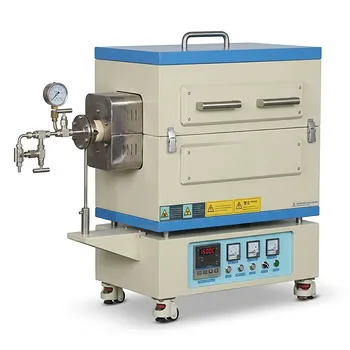
High Temperature Split Tube Furnace 1500C for Material Research Vacuum and Atmosphere Thermal Processing

High Temperature 1700C Tube Furnace with High Vacuum Turbomolecular Pump System and Multi Channel Mass Flow Controller Gas Mixer

1800C High Temperature Compact Vacuum Tube Furnace with 60mm OD Alumina Tube and Kanthal MoSi2 Heating Elements
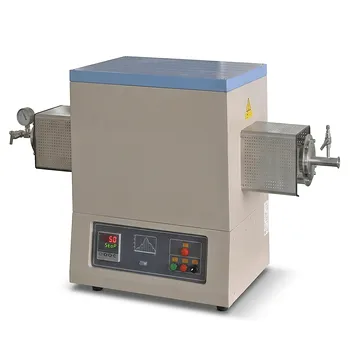
High Temperature 1700C Tube Furnace with 4 Inch OD Alumina Tube and Vacuum Sealing Flanges

1750°C High Temperature Benchtop Vacuum Atmosphere Tube Furnace with Kanthal Super 1800 Heating Elements and 60mm Alumina Processing Tube
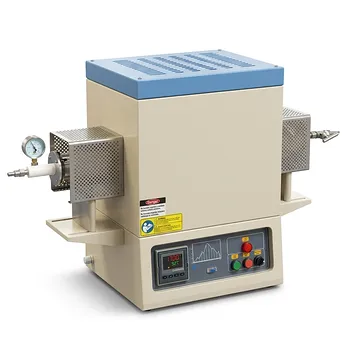
High Temperature Three Zone Tube Furnace 1700C with Alumina Tube and Water Cooled Flanges
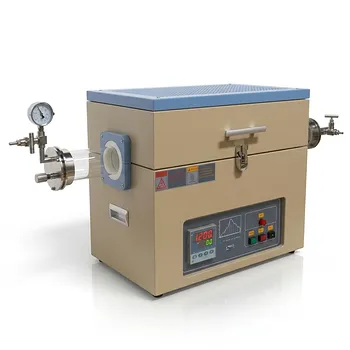
High Temperature 1200C Split Tube Furnace with Optional Quartz Tube Sizes and Vacuum Sealing Flanges for Material Science Research
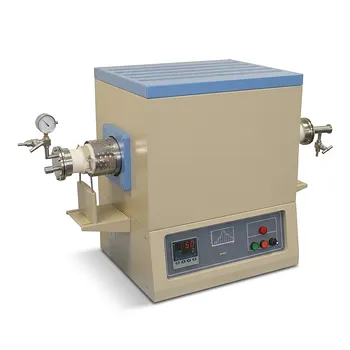
1700C High Temperature Alumina Tube Furnace with 18 Inch Heated Zone and Vacuum Sealing Flanges
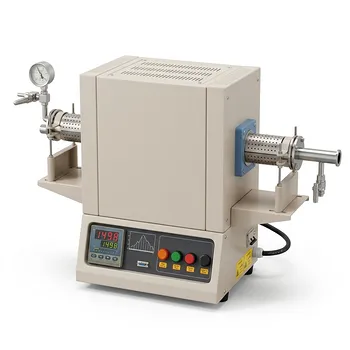
1500C High Temperature Compact Tube Furnace 2 Inch OD with Vacuum Flanges and Complete Accessories

High Temperature 1700C Benchtop Tube Furnace with 5 Inch Heating Zone High Purity Alumina Tube and Vacuum Sealing Flanges

1700C Hydrogen Gas Tube Furnace with 60mm Alumina Process Tube and Integrated Hydrogen Safety Detector

High Temperature Automated 5 Inch Tube Furnace for Autonomous Material Research and Advanced Laboratory R&D