Why is continuous gas flow necessary for boron evaporation research? Unlock Accurate Kinetics in Atmosphere Furnaces
Updated 5 months ago
Maintaining a continuous gas flow is essential to prevent local atmospheric saturation from halting the chemical process. In a closed or stagnant system, evaporated boron species like $\text{B}_2\text{O}_3$ or $\text{BO}_2$ accumulate near the sample surface, quickly reaching a partial pressure that inhibits further evaporation. By establishing an "open system" through constant flow, these gas-phase products are physically swept away, allowing researchers to measure the true intrinsic reaction rates of the material.
Core Takeaway: Continuous gas flow ensures that boron loss is governed by the sample's internal kinetics and diffusion rather than the limitations of the surrounding environment. Without this open system, researchers would measure an artificial "saturation limit" instead of the actual evaporation mechanism.
Preventing Gas-Phase Saturation at the Interface
The Mechanism of Evaporation Inhibition
As boron evaporates, it forms gaseous species such as $\text{B}_2\text{O}_3$ and $\text{BO}_2$ that hover directly above the sample surface. If these species are not removed, the local atmosphere becomes saturated, which significantly slows or completely stops the evaporation process.
Maintaining the Concentration Gradient
A continuous gas flow acts as a mechanical carrier that displaces these gaseous products from the reaction zone. This maintains a steep concentration gradient between the sample surface and the bulk atmosphere, ensuring the reaction continues at its natural pace.
Isolating Kinetic Control
When the environment is kept "clean" of reaction products, the measured weight loss reflects the material's internal properties. This allows researchers to determine if the rate-limiting step is the surface evaporation reaction or the diffusion of boron through the melt.
Ensuring Reaction Uniformity and Precision
Precision Flow Control via Mass Flow Controllers
To achieve reproducible results, researchers must use high-precision mass flow controllers to maintain a stable environment. Fluctuations in gas flow can lead to inconsistent "burn-off" rates, which obscure the underlying chemical mechanisms.
Managing Heterogeneous Reactions
In systems using activating agents like $\text{CO}_2$ or diluted $\text{O}_2$, stable flow is required to manage uniform heterogeneous reactions. This stability is critical for regulating hierarchical pore distribution and preventing excessive ablation of the carbon surface.
Avoiding Environmental Artifacts
Without an open system, the furnace environment becomes a variable that interferes with the data. Continuous flow ensures that the observed data points are a result of the sample's chemistry rather than the physical constraints of the furnace volume.
Understanding the Trade-offs
The Impact of Gas Velocity on the Boundary Layer
While flow is necessary, the velocity of the gas can alter the thickness of the stagnant boundary layer. If the flow is too low, saturation may still occur; if it is too high, it may cause localized cooling or mechanical disturbance of the sample.
Temperature Fluctuations and Heat Loss
Introducing a constant stream of gas into a high-temperature furnace can create thermal gradients. Researchers must balance the need for species removal with the risk of cooling the sample surface, which would inadvertently change the evaporation rate.
Gas Purity and Potential Side Reactions
An open system constantly introduces new gas molecules to the reaction zone. Any impurities in the carrier gas, such as trace moisture or oxygen, can react with the boron, potentially forming unintended oxides that complicate the analysis of the primary mechanism.
How to Apply This to Your Research Goal
Choosing the Right Strategy for Your Objectives
To obtain the most accurate data on boron evaporation, your experimental setup must align with your specific analytical focus.
- If your primary focus is isolating intrinsic reaction rates: Maintain a high, steady flow rate to ensure the partial pressure of boron species remains near zero at the interface.
- If your primary focus is studying hierarchical pore distribution: Use high-precision mass flow controllers to regulate the burn-off rate and prevent excessive ablation caused by flow fluctuations.
- If your primary focus is identifying rate-limiting diffusion: Keep the gas flow constant and vary the temperature to see if the evaporation rate follows an Arrhenius relationship or a diffusion-limited model.
By strictly controlling the atmospheric flow, you transform the furnace from a simple heating chamber into a precision reactor capable of revealing fundamental material behaviors.
Summary Table:
| Key Factor | Function in Boron Research | Research Benefit |
|---|---|---|
| Continuous Gas Flow | Sweeps away B2O3 and BO2 species | Prevents local atmospheric saturation |
| Open System | Maintains steep concentration gradient | Measures true intrinsic reaction rates |
| Flow Precision | Stable environment via Mass Flow Controllers | Ensures reproducible burn-off & pore data |
| Atmosphere Purity | Constant introduction of fresh carrier gas | Minimizes interference from stagnant impurities |
Elevate Your Material Research with THERMUNITS
Precision atmospheric control is essential for unlocking accurate boron evaporation data. As a leading manufacturer of high-temperature laboratory equipment for material science and industrial R&D, THERMUNITS provides the advanced thermal solutions necessary to isolate intrinsic kinetics and ensure experimental uniformity.
Our comprehensive product range includes:
- Atmosphere, Vacuum, and Tube Furnaces for precise gas management.
- CVD/PECVD Systems for advanced chemical vapor deposition.
- Muffle, Rotary, and Hot Press Furnaces for diverse heat treatments.
- Vacuum Induction Melting (VIM) and Electric Rotary Kilns for industrial-scale R&D.
- Dental Furnaces and high-quality Thermal Elements.
Don't let atmospheric saturation limit your insights. Explore how our precision-engineered furnaces can enhance your laboratory's efficiency and data accuracy.
Contact THERMUNITS today to find your ideal thermal solution!
References
- Stamatis Flemetakis, Stephan Klemme. The effect of oxygen fugacity on the evaporation of boron from aluminoborosilicate melt. DOI: 10.5194/ejm-36-173-2024
Mentioned Products
- 1400C Bottom Loaded Inert Gas Atmosphere Box Furnace with 125L Capacity and Precision Hydraulic Lift
- High Temperature Oxygen and Inert Atmosphere Controlled Furnace 8 Liter 1700C Sintering System for Advanced Materials RD
- High Temperature Vertical Atmosphere Controlled Furnace with Automatic Bottom Loading and 1700°C Capacity for Advanced Material Research
- 1200C Hydrogen Atmosphere Box Furnace with 5 Heated Sides and 64L Chamber
- 1200C High Temperature Atmosphere Controlled Vertical Quenching Tube Furnace with 4 Inch Quartz Tube
People Also Ask
- How does a box atmosphere furnace contribute to the pre-oxidation of MS-SOECs? Enhance Durability & Efficiency.
- How does a programmable Box Furnace facilitate the curing of silver inks? Expert Thermal Control for Silicon Substrates
- How does a box furnace facilitate the conversion of precursors in catalyst impregnation processes? Master Calcination
- How are electric heating elements designed to operate within carburizing atmospheres? Top Design Strategies Revealed
- What types of sealing systems are employed in atmosphere furnaces to ensure atmosphere integrity? Top Sealing Solutions

Tech Team · ThermUnits
Last updated on Apr 14, 2026
Related Products
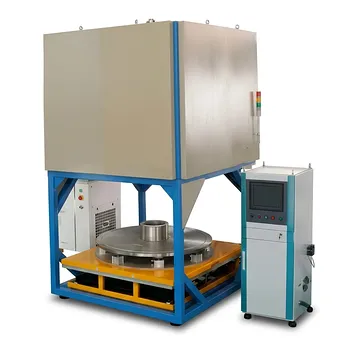
1400C Bottom Loaded Inert Gas Atmosphere Box Furnace with 125L Capacity and Precision Hydraulic Lift
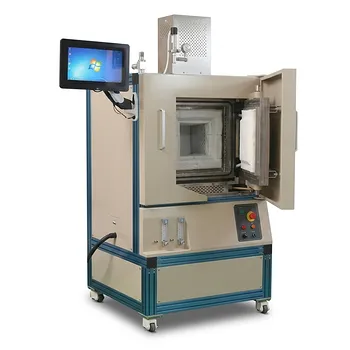
High Temperature Oxygen and Inert Atmosphere Controlled Furnace 8 Liter 1700C Sintering System for Advanced Materials RD
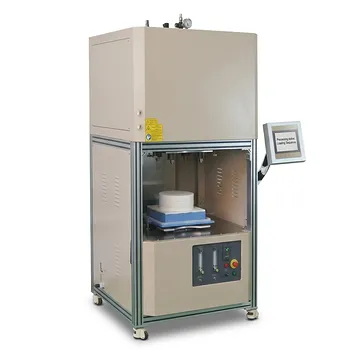
High Temperature Vertical Atmosphere Controlled Furnace with Automatic Bottom Loading and 1700°C Capacity for Advanced Material Research
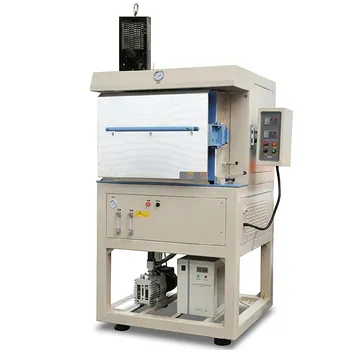
1200C Hydrogen Atmosphere Box Furnace with 5 Heated Sides and 64L Chamber
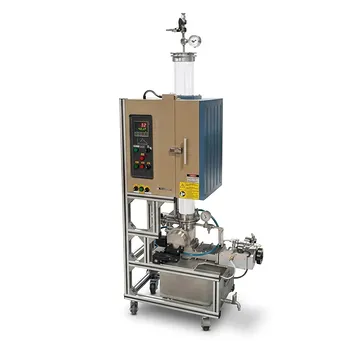
1200C High Temperature Atmosphere Controlled Vertical Quenching Tube Furnace with 4 Inch Quartz Tube
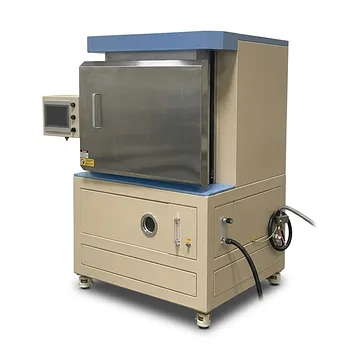
1650C High Temperature Atmosphere Controlled Box Furnace with 65L Chamber for Advanced Material Sintering and Industrial Heat Treatment
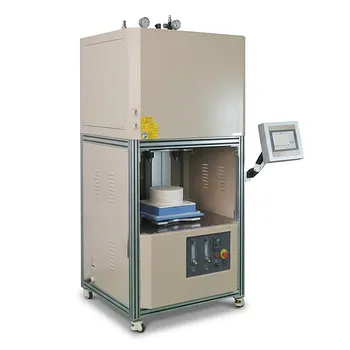
High Temperature Vertical Atmosphere Controlled Furnace 1700C Automatic Bottom Loading 13 Liter Vacuum Thermal System
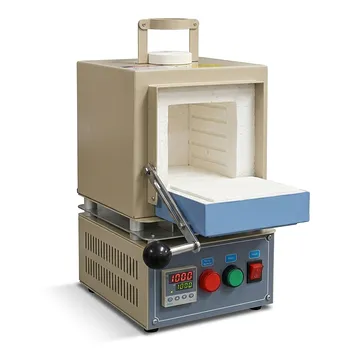
Compact 1000C Muffle Furnace with Programmable Controller and 2 Inch Top Port for Vacuum and Atmosphere Material Research
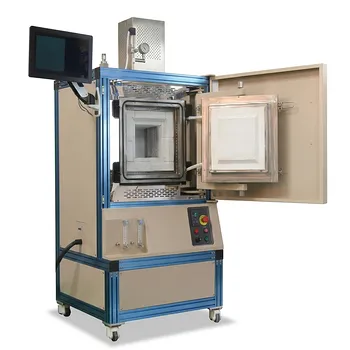
High Temperature Hydrogen Atmosphere Box Furnace 1650C Max Reducing Environment Material Synthesis System 8x8x8 Chamber
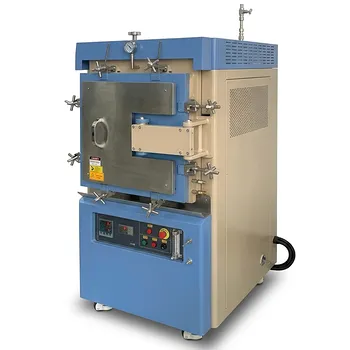
Atmosphere Controlled Muffle Furnace 1700C Maximum Temperature 80L High Capacity Vacuum Inert Gas Box Furnace
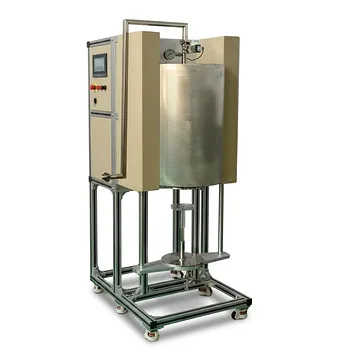
1200°C Atmosphere Controlled Automatic Bottom Loading Furnace with 6 Inch Quartz Tube

Vertical 1700C Vacuum and Atmosphere Tube Furnace with 80mm Alumina Tube
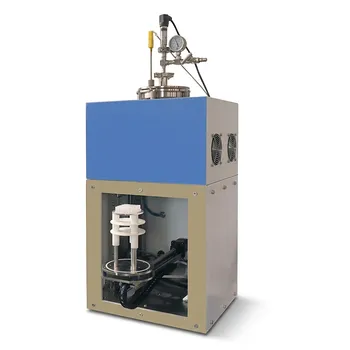
Rapid Thermal Processing RTP Atmosphere Controlled Bottom Loading Furnace 1100C High Throughput 50C per Second Heating Rate
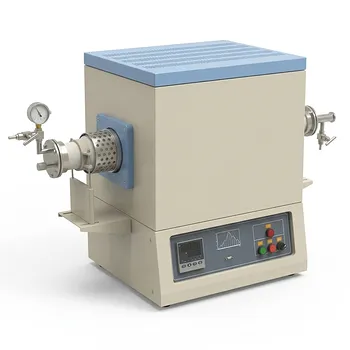
1750°C High Temperature Benchtop Vacuum Atmosphere Tube Furnace with Kanthal Super 1800 Heating Elements and 60mm Alumina Processing Tube
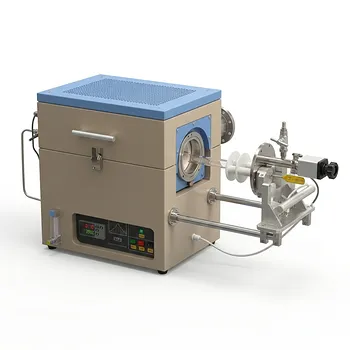
Compact Atmosphere Controlled Rapid Thermal Processing RTP Furnace with 4 Inch ID Quartz Tube 1100C

High Temperature 1700C Vertical Tube Furnace for Powder Spherification and Material Sintering
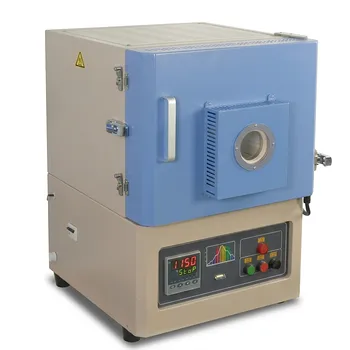
High Temperature Benchtop Muffle Furnace with Quartz Observation Window for Thermal Imaging and Material Analysis
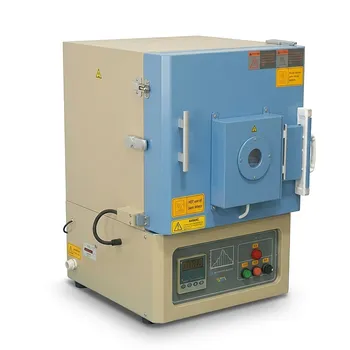
High Temperature Benchtop Muffle Furnace 1500C with 3.6L Chamber and Quartz Observation Window

High Temperature 1700C Six Zone Split Tube Furnace with Alumina Tube and Water Cooled Flanges