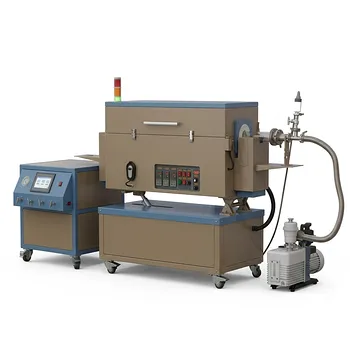
Why is precise temperature gradient control necessary for monolayer WSe2 synthesis? Master CVD Crystal Growth
Updated 3 months ago
Precise temperature gradient control is the foundational requirement for synthesizing high-quality monolayer $WSe_2$ because the process requires the simultaneous management of two vastly different thermal environments within a single heating chamber.
In a single-zone furnace, the center is maintained at approximately 950°C to drive the reduction and selenization of tungsten trioxide ($WO_3$). However, the selenium ($Se$) precursor requires a much lower temperature—roughly 220°C—to sublimate at a stable, controlled rate. Without precise spatial gradient control, the selenium would either fail to evaporate or flash-evaporate too quickly, leading to poor crystal quality or failed synthesis.
Core Takeaway: Stable $WSe_2$ synthesis relies on using the furnace's natural thermal decay to create specific "micro-climates" for each precursor. By accurately positioning materials relative to the heating center, you ensure that $Se$ sublimates steadily while the reaction zone provides the high energy required for chemical vapor deposition (CVD).
Managing Thermodynamic Disparity in a Single Zone
The Challenge of Dual Temperature Requisites
Monolayer $WSe_2$ synthesis requires a chemical vapor deposition (CVD) reaction where tungsten and selenium vapors meet on a substrate.
The $WO_3$ precursor typically stays in the high-temperature zone (800°C–950°C) to facilitate the reaction, but selenium must be kept significantly cooler.
Precise control ensures that the $Se$ powder, located upstream, transitions from solid to gas at a predictable rate without overwhelming the reaction chamber.
Utilizing Spatial Positioning for Gradients
In a single-zone furnace, the "gradient" refers to the drop in temperature as you move away from the heating elements toward the ends of the tube.
By adjusting the physical distance between the furnace center and the $Se$ source, researchers can find the exact spot where the temperature sits at the required 220°C.
Even a slight shift in position can cause a drastic change in selenium vapor pressure, which directly alters the stoichiometry of the resulting film.
Regulating Growth Kinetics and Morphology
Controlling Supersaturation and Transport
The rate at which selenium vapor is transported to the reaction zone determines the supersaturation levels on the substrate.
If the gradient is too steep or unstable, the transport kinetics become erratic, leading to uncontrolled nucleation.
Stable thermal fields ensure the vapor arrives at a consistent rate, allowing for the growth of large, high-crystallinity grains rather than small, defective clusters.
Impact on Layer Uniformity and Layer Count
The thickness of the $WSe_2$ (achieving a true monolayer) is highly sensitive to the concentration of precursors in the gas phase.
Precise temperature management at the reaction center regulates the selenization rate of the tungsten source.
This control allows the operator to stop the growth precisely when a single layer has formed, preventing the transition into bulk or multi-layer material.
Understanding the Trade-offs
The Multi-Zone vs. Single-Zone Conflict
While a single-zone furnace is simpler and more cost-effective, it forces a physical coupling between the precursor temperature and the growth temperature.
If you need to increase the reaction temperature at the center, the upstream temperature will naturally rise as well, potentially over-heating the selenium.
Sensitivity to External Flux
Single-zone gradients are highly susceptible to changes in gas flow rates (Ar/H2 mixture).
Increasing the carrier gas flow can "push" the heat further down the tube, shifting your 220°C "sweet spot" and requiring a recalibration of the precursor's physical position.
How to Optimize Your Synthesis Strategy
To achieve a successful synthesis, you must treat the furnace's internal geometry as a variable just as important as the electronic temperature setting.
- If your primary focus is Monolayer Uniformity: Prioritize stabilizing the furnace center at 950°C and use a slow heating rate (approx. 3°C/min) to prevent thermal shock and maintain a steady reaction front.
- If your primary focus is Large Grain Size: Focus on the upstream gradient to ensure a low, constant selenium vapor pressure, which limits the number of nucleation sites on the substrate.
- If your primary focus is Repeatability: Document the exact centimeter-scale position of both precursors and the substrate; even a 1cm shift can change the local temperature by 10-20°C in a steep gradient.
Precise thermal control transforms a standard tube furnace from a simple heater into a precision instrument capable of engineering materials at the atomic scale.
Summary Table:
| Parameter | Temperature | Role in Synthesis | Control Mechanism |
|---|---|---|---|
| Reaction Zone | ~950°C | Reduction & Selenization of $WO_3$ | Central Heating Elements |
| Selenium Source | ~220°C | Controlled sublimation of Se powder | Spatial positioning in thermal decay |
| Carrier Gas | Ambient | Precursor transport ($Ar/H_2$) | Mass Flow Controller (MFC) |
| Growth Kinetics | Stable Gradient | Uniformity & Large Grain Size | Position & Gas Flow calibration |
Elevate Your 2D Material Research with THERMUNITS Precision
Success in synthesizing high-quality monolayer $WSe_2$ and other advanced materials hinges on absolute thermal control. As a leading manufacturer of high-temperature laboratory equipment, THERMUNITS provides the precision instruments required for demanding material science and industrial R&D.
Our comprehensive range of thermal processing solutions includes:
- Tube Furnaces & CVD/PECVD Systems: Perfect for precise gradient control in monolayer synthesis.
- Muffle, Vacuum, & Atmosphere Furnaces: For versatile heat treatment applications.
- Specialized Equipment: Rotary kilns, Hot Press furnaces, Dental furnaces, and Vacuum Induction Melting (VIM) furnaces.
- High-Quality Components: Premium Thermal Elements and laboratory heat treatment accessories.
Whether you need to stabilize a complex spatial gradient or achieve rapid thermal processing, our expert team is ready to support your laboratory's efficiency.
Contact THERMUNITS Today to discuss your specific research requirements and find your ideal furnace solution!
References
- Xuemin Luo, Yong Liu. Impact of Carrier Gas Flow Rate on the Synthesis of Monolayer WSe2 via Hydrogen-Assisted Chemical Vapor Deposition. DOI: 10.3390/ma17102190
Mentioned Products
- Single Zone Tube Furnace 5 Inch Quartz Tube 36 Inch Heating Zone Vacuum Flanges
- 1200C Dual Temperature Zone Slidable Tube Furnace for 2D Material Growth and TCVD Synthesis
- 5 Inch Two Zone Rotary Tube Furnace 1100C for Powder CVD and Material Synthesis
- High Temperature 1200C Automatic Sliding Dual Zone Tube Furnace for 2D Transition Metal Dichalcogenides Growth and Material Sublimation Research
- Two Zone Rotary Tube Furnace for Powder CVD Coating and Core Shell Material Synthesis 1100C
People Also Ask
- Why is a quartz tube furnace necessary for phosphorus-doped MoS2/GO preparation? Ensure Purity & Precise Synthesis
- Why is high-temperature annealing in a quartz tube furnace done after HfO2 deposition? Unlock peak film performance.
- What role does a single-temperature zone quartz tube furnace play in the growth of monolayer MoS2? Optimize 2D Synthesis
- What is the function of a quartz tube furnace in simulating sulfate hot corrosion for turbine materials?
- What functions do quartz tube furnaces perform in NMC111 calcination? Enhance material purity and performance.

Tech Team · ThermUnits
Last updated on Jun 02, 2026
Related Products
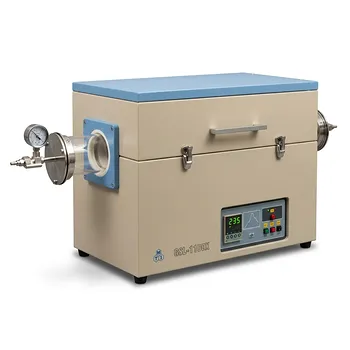
Single Zone Tube Furnace 5 Inch Quartz Tube 36 Inch Heating Zone Vacuum Flanges
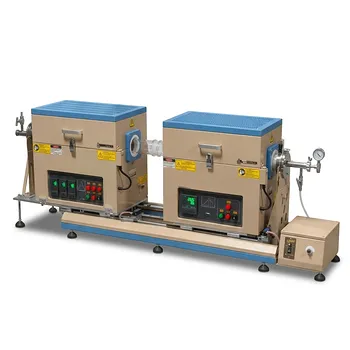
1200C Dual Temperature Zone Slidable Tube Furnace for 2D Material Growth and TCVD Synthesis
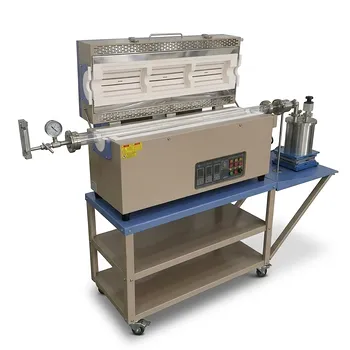
5 Inch Two Zone Rotary Tube Furnace 1100C for Powder CVD and Material Synthesis
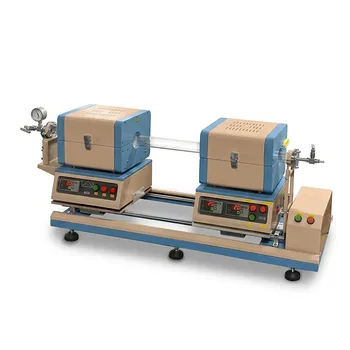
High Temperature 1200C Automatic Sliding Dual Zone Tube Furnace for 2D Transition Metal Dichalcogenides Growth and Material Sublimation Research
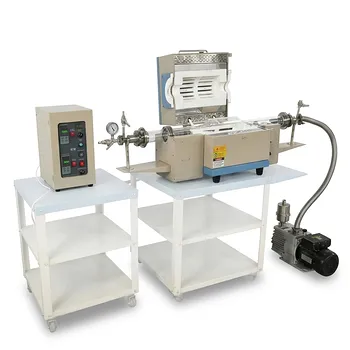
Two Zone Rotary Tube Furnace for Powder CVD Coating and Core Shell Material Synthesis 1100C
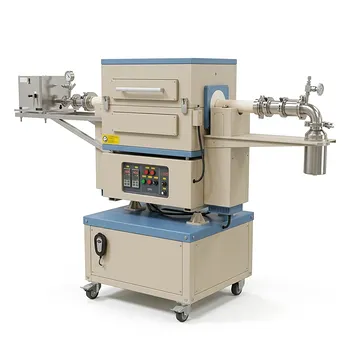
1500C Max Dual Zone Rotary Tube Furnace with 60 mm OD Alumina Tube for High Temperature Material Synthesis
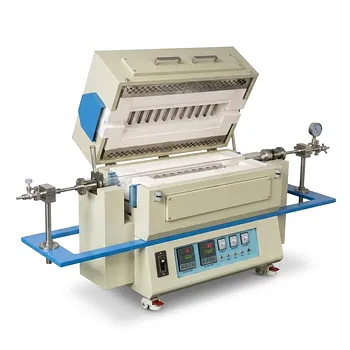
High Temperature Dual Zone Rotating Tube Furnace 1500C Silicon Carbide Heating for Advanced Material Synthesis
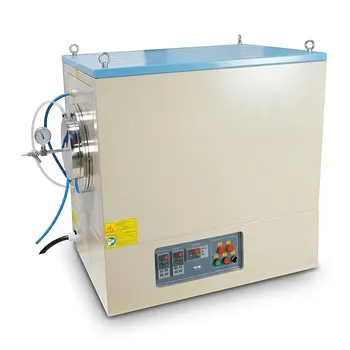
Dual Zone Tube Furnace 1100C with 11 Inch Quartz Tube and Vacuum Flanges for 8 Inch Wafer Processing
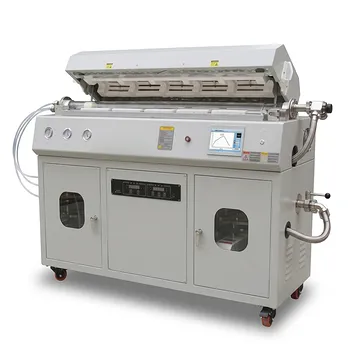
Multi Heating Zones CVD Tube Furnace System for Precision Chemical Vapor Deposition and Advanced Material Synthesis
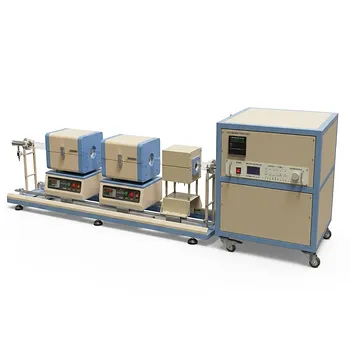
1200C Dual Sliding Tube Furnace with Dual Tubes and Flanges for PECVD Processes
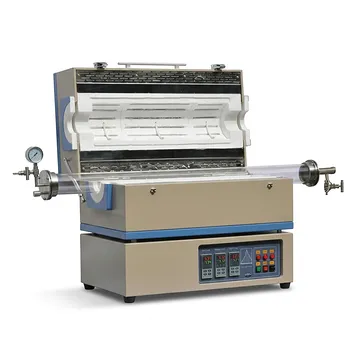
24 Inch Three Zone Split Tube Furnace with Optional Quartz Tube and Vacuum Flange System for High Temperature Material Synthesis
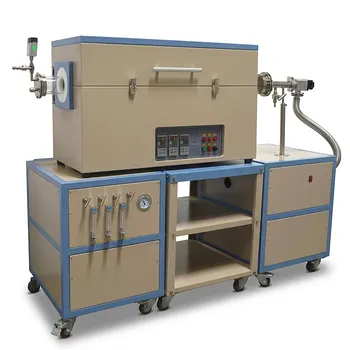
Three Zone Quartz Tube Furnace with 3 Channel Gas Mixer Vacuum Pump and Anti Corrosive Vacuum Gauge
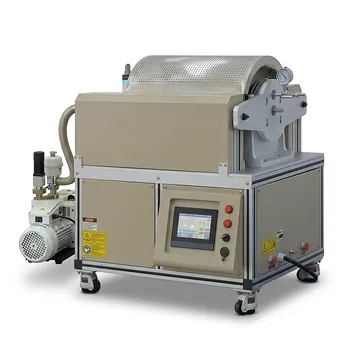
Automated 1200 C Tube Furnace for AI Material Research with 6 Inch OD and Sliding Flange
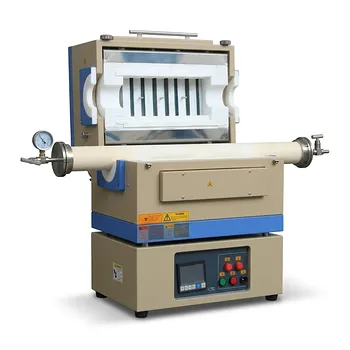
1500C Eight Zone Split Tube Furnace for Thermal Gradient Processing and Advanced Material Research
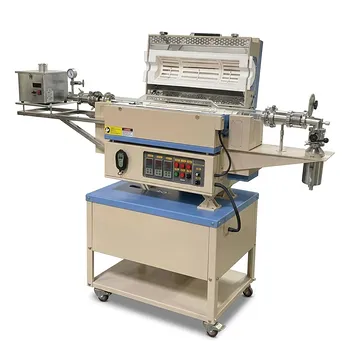
5 Inch Rotary Tube Furnace with Automatic Feeding and Receiving System 1200C Three Zone CVD Powder Processing
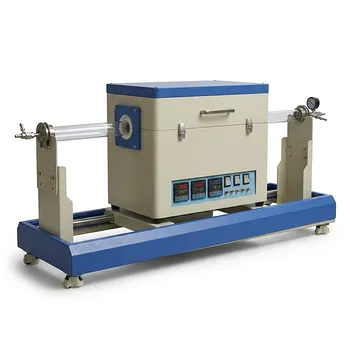
Double Temperature Zone Double Cover Tube Furnace for High Temperature CVD and Vacuum Annealing
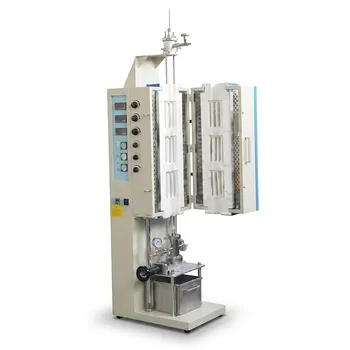
High Temperature Dual Zone Tube Furnace for Material Science Research and Professional Thermal Processing
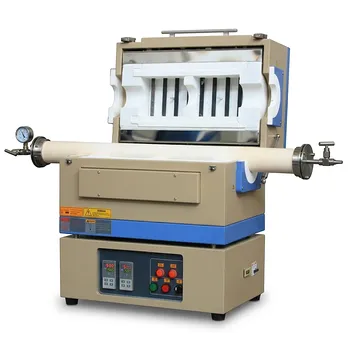
1500C Two Zone Split Tube Furnace with Vacuum Flange and 80mm Alumina Tube
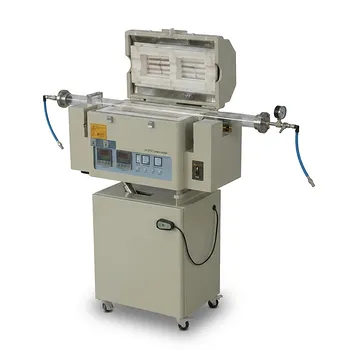
Double Temperature Revolving Tube Furnace with Precision Rotation and Adjustable Inclination for Advanced Material Research