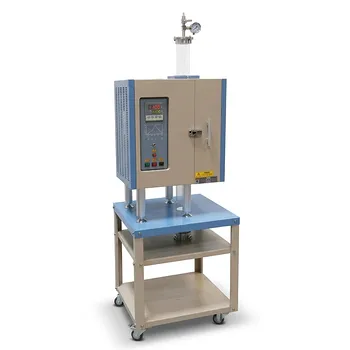
Why is the constant temperature zone of an industrial-grade tube furnace critical? Ensure Uniform KOH Activation
Updated 3 months ago
The constant temperature zone (CTZ) is the fundamental guarantor of structural uniformity during high-temperature chemical activation. At 800 °C, the CTZ ensures that the chemical reaction between the carbon material and potassium hydroxide (KOH) proceeds simultaneously and at an identical rate across the entire sample batch. This thermal equilibrium is the only way to achieve a predictable, high-density microporous network and consistent electrochemical performance throughout the material.
The critical nature of the constant temperature zone lies in its ability to synchronize the etching process, preventing localized variations in pore structure. By maintaining a stable thermal field, the furnace allows for a maximized specific surface area and a controlled pore size distribution essential for high-performance carbon applications.
The Mechanics of Simultaneous Activation
Achieving Batch-Wide Uniformity
In industrial-grade tube furnaces, the CTZ provides a stable environment where every part of the carbon precursor is exposed to the same thermal energy. This uniformity is decisive for ensuring that the KOH etching reaction is not more aggressive in one area than another.
Without a reliable CTZ, the material at the edges of the sample boat might reach 800 °C while the center remains cooler, leading to a "gradient" of activation. This results in a finished product with inconsistent properties, compromising its utility in precision applications like supercapacitors.
Precision Etching of the Carbon Skeleton
At 800 °C, KOH acts as a powerful chemical agent that carves out a dense network of micropores and mesopores within the carbon matrix. The CTZ ensures that this "etching" is orderly and pervasive, rather than localized or sporadic.
A stable thermal field allows the chemical reactions—such as dehydrogenation and decarboxylation—to occur predictably. This stability is what transforms a precursor with a low surface area (e.g., 10 m²/g) into an activated carbon with a specific surface area exceeding 1900 m²/g.
The Impact on Material Performance
Maximizing Specific Surface Area (SSA)
The primary goal of activation is to increase the area available for charge storage or molecular adsorption. A uniform 800 °C environment maximizes the activation effect, ensuring the highest possible BET surface area is reached.
If the temperature fluctuates, the total pore volume can become optimized in some grains while remaining underdeveloped in others. A consistent CTZ ensures that the entire batch reaches its theoretical maximum SSA, often exceeding 2400 m²/g for certain precursors.
Optimizing Electrochemical Storage
For materials used in electrodes, the density of micropores directly dictates the charge storage capacity. A stable CTZ ensures that the interlayer spacing and pore distribution are consistent across the batch.
When the carbonization and activation are uniform, the electrochemical response of the material is predictable. This prevents "dead zones" in the material that would otherwise contribute weight without contributing to energy storage.
Understanding Technical Trade-offs and Risks
Thermal Gradient Risks
Even in industrial furnaces, maintaining a perfect CTZ is challenging, and deviations can lead to uncontrolled pore size distribution. If the temperature rises too quickly or unevenly, the etching reaction can become too intense, causing the carbon walls to collapse and turning desirable micropores into less useful macropores.
Atmosphere Integrity and Oxidation
The high-temperature environment of a tube furnace requires a strict inert nitrogen (N2) atmosphere. While the CTZ manages the temperature, the atmosphere prevents the carbon from undergoing combustion or oxidation at 800 °C.
A failure in either temperature stability or atmosphere control will result in the loss of carbon components. This not only reduces the yield but can also alter the chemical surface functionality of the final activated carbon.
Optimizing Your Activation Process
Recommendations for Process Control
To achieve the best results during KOH activation, the furnace parameters must be aligned with the specific structural goals of the material.
- If your primary focus is Maximum Surface Area: Ensure the sample is placed strictly within the verified limits of the constant temperature zone to prevent localized under-activation.
- If your primary focus is Pore Size Control: Utilize a precise heating rate (e.g., 6°C/min) in conjunction with the CTZ to regulate the intensity of the thermochemical etching.
- If your primary focus is Material Yield: Maintain a continuous flow of high-purity nitrogen to create a completely oxygen-free environment, protecting the carbon matrix from oxidation at 800 °C.
By mastering the thermal stability of the constant temperature zone, you ensure that every milligram of processed carbon delivers the precise electrochemical performance required for advanced technical applications.
Summary Table:
| Feature | Role in KOH Activation (800 °C) | Impact on Final Carbon Material |
|---|---|---|
| Thermal Uniformity | Synchronizes etching across the entire batch | Prevents structural gradients and "dead zones" |
| Pore Control | Regulates chemical reaction intensity | Optimizes micropore and mesopore distribution |
| SSA Maximization | Ensures consistent activation energy | Achieves specific surface area exceeding 2400 m²/g |
| Atmosphere Integrity | Prevents carbon oxidation in inert N2 | Ensures high material yield and surface integrity |
Master Your Material Activation with THERMUNITS
Achieving a specific surface area exceeding 2400 m²/g requires uncompromising thermal precision. THERMUNITS is a leading manufacturer of high-temperature laboratory equipment for material science and industrial R&D. Our specialized Tube Furnaces, along with our range of Muffle, Vacuum, Atmosphere, Rotary, and Hot Press furnaces, are engineered to provide the ultra-stable constant temperature zones essential for uniform KOH activation.
From CVD/PECVD systems to vacuum induction melting furnaces (VIM), we provide the advanced thermal processing solutions needed to ensure your carbonized materials achieve high-density microporous networks and predictable electrochemical performance.
Contact our experts at THERMUNITS today to optimize your heat treatment process
References
- Shakila Parveen Asrafali, Jaewoong Lee. High-Performance Supercapacitors Using Compact Carbon Hydrogels Derived from Polybenzoxazine. DOI: 10.3390/gels10080509
Mentioned Products
- 1100C Tube Furnace with Vacuum Flange and Programmable Temperature Controller for Material Science and Industrial Heat Treatment
- 900°C Max Rotary Tube Furnace with 8 Inch 310S Alloy Tube and Optional Multi Zone Heating for Industrial Material Calcination
- High Temperature Tube Furnace 1500C with Sliding Flanges and 50mm OD for Rapid Thermal Processing Fast Heating and Cooling
- Compact High Temperature 1600C Tube Furnace with 50mm Alumina Tube and Vacuum Flanges for Material Sintering
- Ten Zone Multi Orientation Laboratory Tube Furnace for 1200C High Temperature Gradient Thermal Processing
People Also Ask
- What are the advantages of 1100°C tube furnaces for ORR catalysts? Boost Conductivity and Structural Stability.
- What role does a tube furnace play in PS template removal? Ensure ZnO/SiO2 Structural Integrity & High Performance.
- What core functions does a high-temperature vacuum tube furnace provide? Optimize np-CuSn Sintering & Joint Integrity
- What is the role of a high-temperature tube furnace in the calcination process of ZnO/In2O3 nanocomposites?
- What impact does the heating rate of a tube furnace have on biochar microstructure? Optimize Your Material R&D.

Tech Team · ThermUnits
Last updated on Jun 02, 2026
Related Products
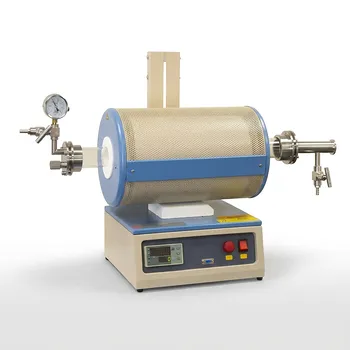
1100C Tube Furnace with Vacuum Flange and Programmable Temperature Controller for Material Science and Industrial Heat Treatment
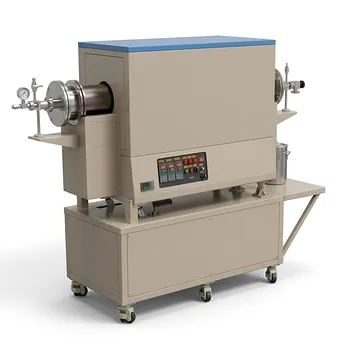
900°C Max Rotary Tube Furnace with 8 Inch 310S Alloy Tube and Optional Multi Zone Heating for Industrial Material Calcination
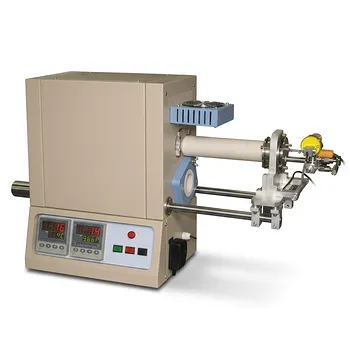
High Temperature Tube Furnace 1500C with Sliding Flanges and 50mm OD for Rapid Thermal Processing Fast Heating and Cooling

Compact High Temperature 1600C Tube Furnace with 50mm Alumina Tube and Vacuum Flanges for Material Sintering
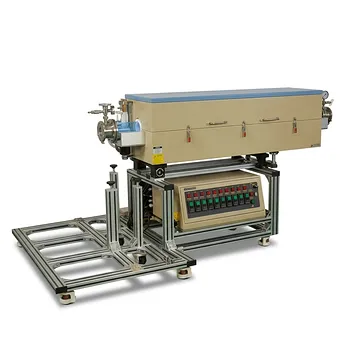
Ten Zone Multi Orientation Laboratory Tube Furnace for 1200C High Temperature Gradient Thermal Processing

High Temperature 1700C Tube Furnace with High Vacuum Turbomolecular Pump System and Multi Channel Mass Flow Controller Gas Mixer
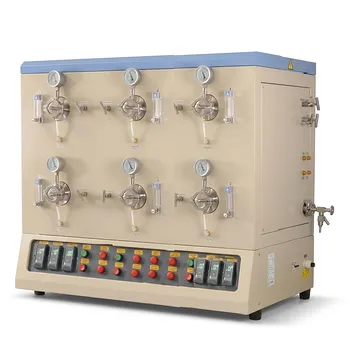
1200C High Throughput Multi Channel Tube Furnace with 50mm Quartz Tubes for Annealing and Material Phase Diagram Research

1800C High Temperature Compact Vacuum Tube Furnace with 60mm OD Alumina Tube and Kanthal MoSi2 Heating Elements

High Temperature Automated 5 Inch Tube Furnace for Autonomous Material Research and Advanced Laboratory R&D

Vertical 1700C Vacuum and Atmosphere Tube Furnace with 80mm Alumina Tube

High Temperature 1700C Benchtop Tube Furnace with 5 Inch Heating Zone High Purity Alumina Tube and Vacuum Sealing Flanges
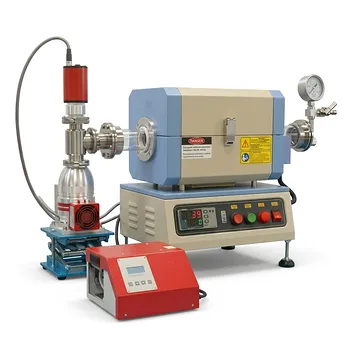
High Vacuum Compact Tube Furnace 1200C with Integrated Turbo Pump System and 8 Inch Heating Zone
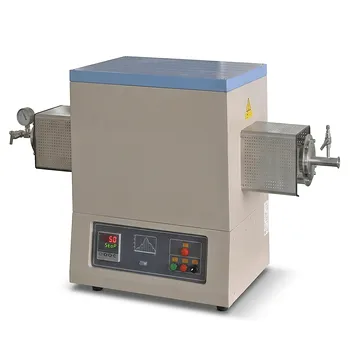
High Temperature 1700C Tube Furnace with 4 Inch OD Alumina Tube and Vacuum Sealing Flanges

High Temperature 1700C Vertical Tube Furnace for Powder Spherification and Material Sintering
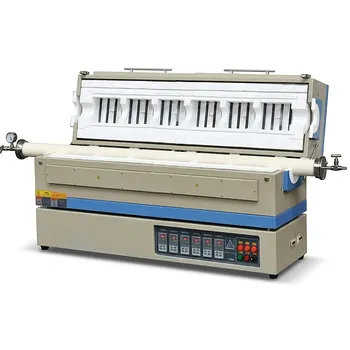
High Temperature 1700C Six Zone Split Tube Furnace with Alumina Tube and Water Cooled Flanges
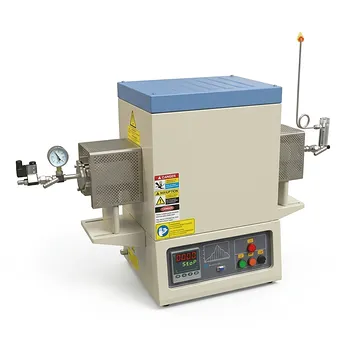
1700C Hydrogen Gas Tube Furnace with 60mm Alumina Process Tube and Integrated Hydrogen Safety Detector
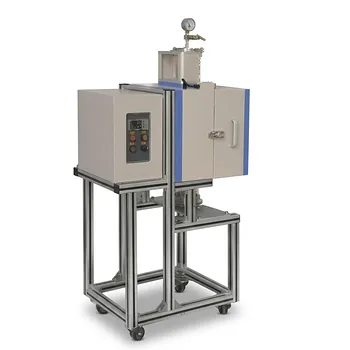
1200°C 5 Inch Vertical Quartz Tube Furnace with Stainless Steel Vacuum Flanges
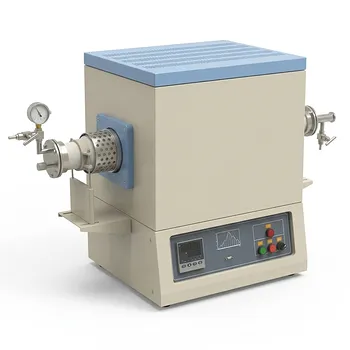
1750°C High Temperature Benchtop Vacuum Atmosphere Tube Furnace with Kanthal Super 1800 Heating Elements and 60mm Alumina Processing Tube
1200C Max Three Zone Tube Furnace 6 Inch OD Max with Tube and Flange